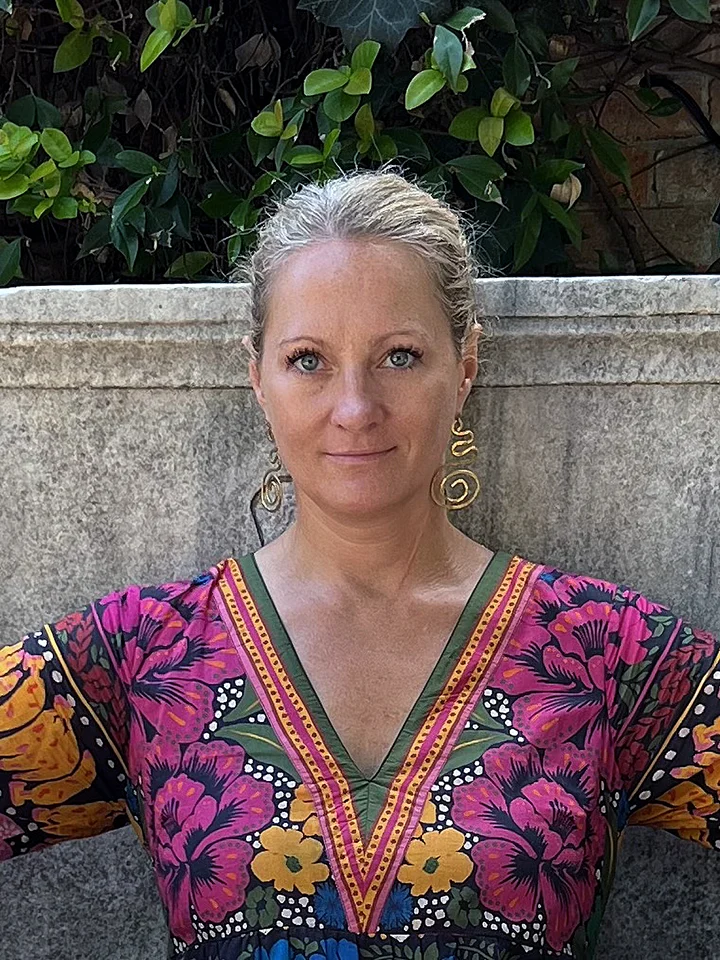
Susan Antoinette
Susan Antoinette is a St. Petersburg, Florida–based abstract expressionist painter exploring memory, geography, and human connection through layered color, gestural mark-making, embedded poetry, and deconstructed vintage maps. Having lived across the United States—from Wisconsin to Colorado, California, Virginia, Maryland, and now Florida—Antoinette transforms fragments of place into richly textured emotional landscapes that examine how personal histories and environments shape identity.
Primarily self-taught, Antoinette has further developed her practice through study at the Art League School in Alexandria, Virginia, and the Art Students League of New York. Her work has been exhibited nationally in museums and galleries including the Gadsden Arts Center & Museum, the Racine Art Museum / Wustum Fine Arts Museum, the Art Students League of New York, and LeMoyne Arts Center, among others. She has presented several solo exhibitions and maintains an active exhibition record spanning more than a decade.
What first drew you to abstract art instead of more traditional, representational styles?
Artists such as Alma Thomas, Helen Frankenthaler and Mark Rothko do it for me! I’ve always been more interested in evoking an experience or a feeling rather than recreating a scene. Abstract painting gave me the freedom to explore memory, movement, tension, and connection without being limited by literal representation. I love that abstraction allows viewers to bring their own histories and emotions into the work, so the conversation becomes personal for each person.
When you start a painting, do you have a plan, or does it evolve as you go?
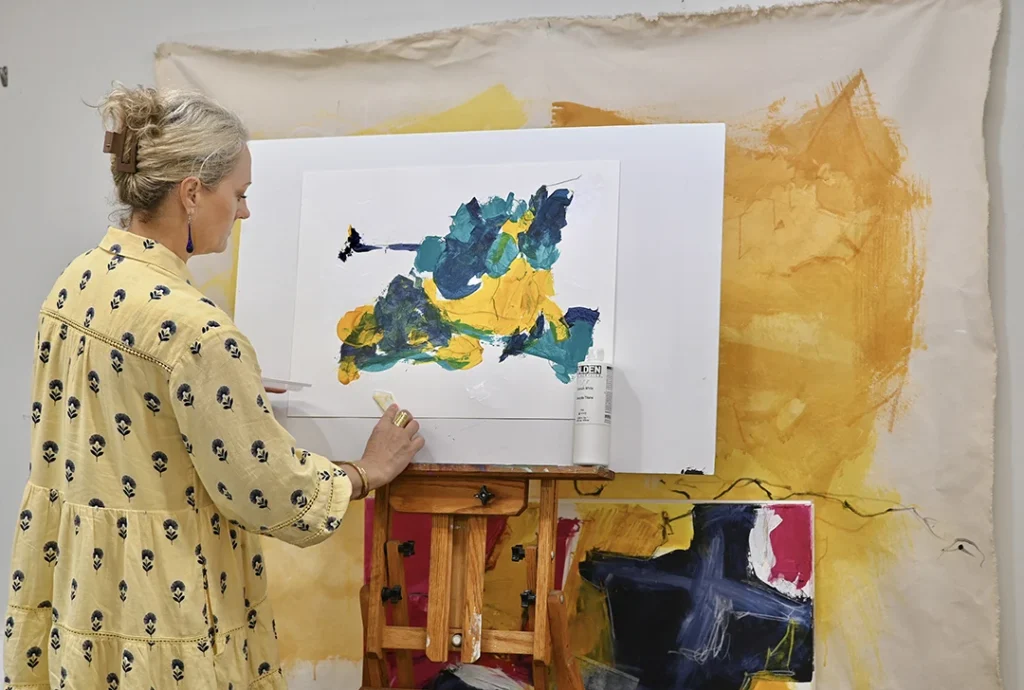
Usually both. I often begin with gestural mark making, an emotional tone, poetry, a palette, or compositional movement in mind, but the work evolves through the process of layering and responding. I think of painting as a kind of navigation. The piece reveals itself gradually, and part of the challenge is knowing when to guide it and when to let it lead. Some of the best moments come from letting go of too much control.
How do you decide when a piece is finished?
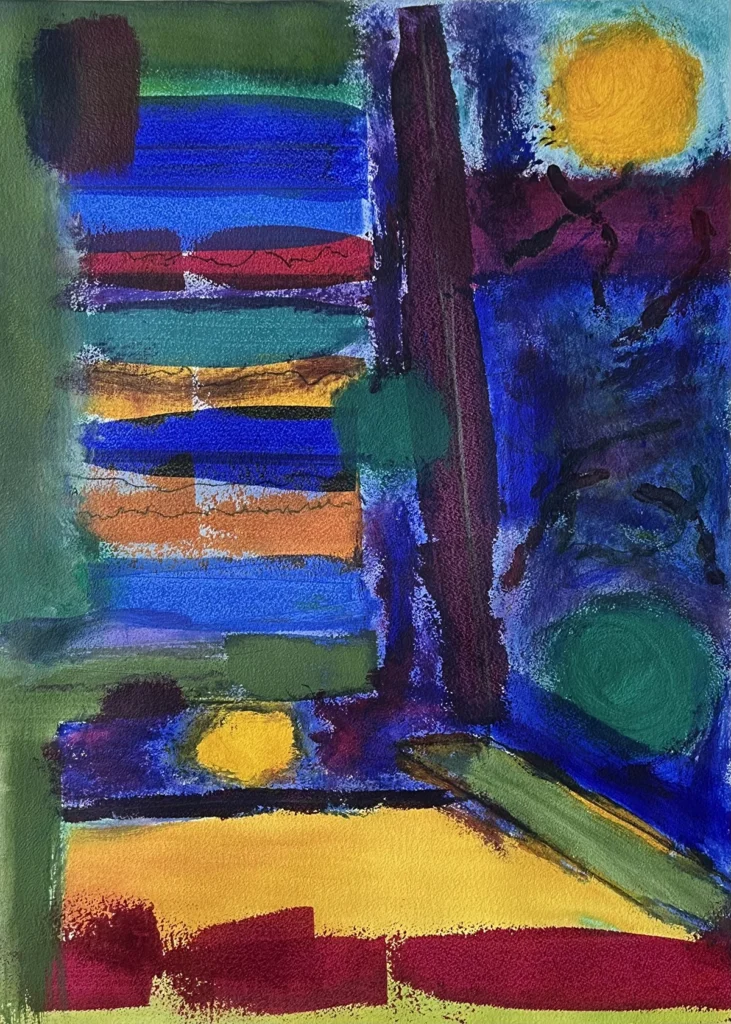
This is always, and I mean always the hardest part for me. A painting is finished when the surface feels balanced and nothing more needs to be forced into it. I’m looking for balance between tension and cohesion. Sometimes that means adding complexity, editing back and quieting it down and other times it means stopping before overworking it. There’s usually a moment when the painting begins to hold its own, starts speaking for itself. All easier said than done for me.
Your work has a strong sense of movement—what influences that energy?
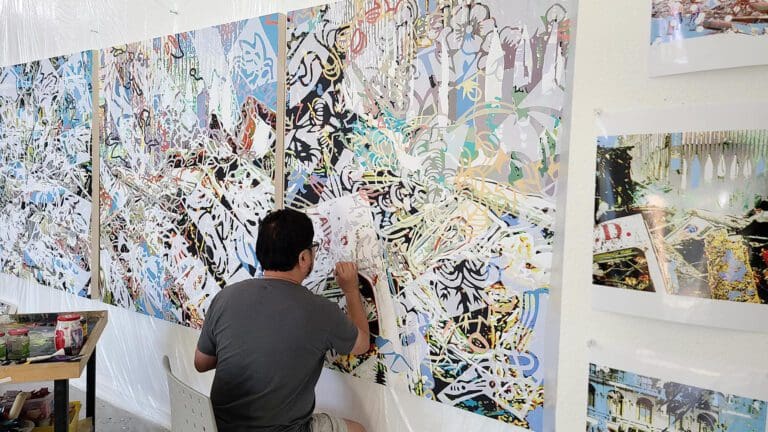
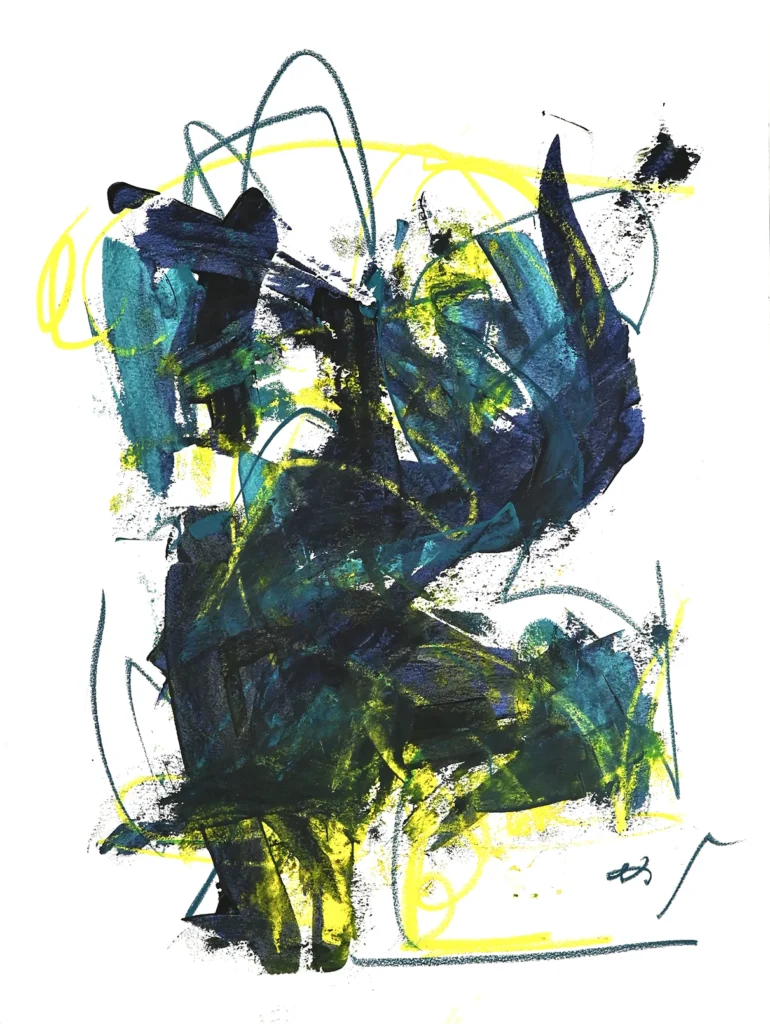
Movement comes from both the physical process and the ideas behind the work. I build surfaces through gestural mark-making, scraping back, layering, and constantly reworking the surface, so the paintings carry evidence of motion and tension. I’m also deeply influenced by geography, travels, maps, and the idea that human relationships themselves are constantly shifting over time. I want my paintings to feel alive and in motion.
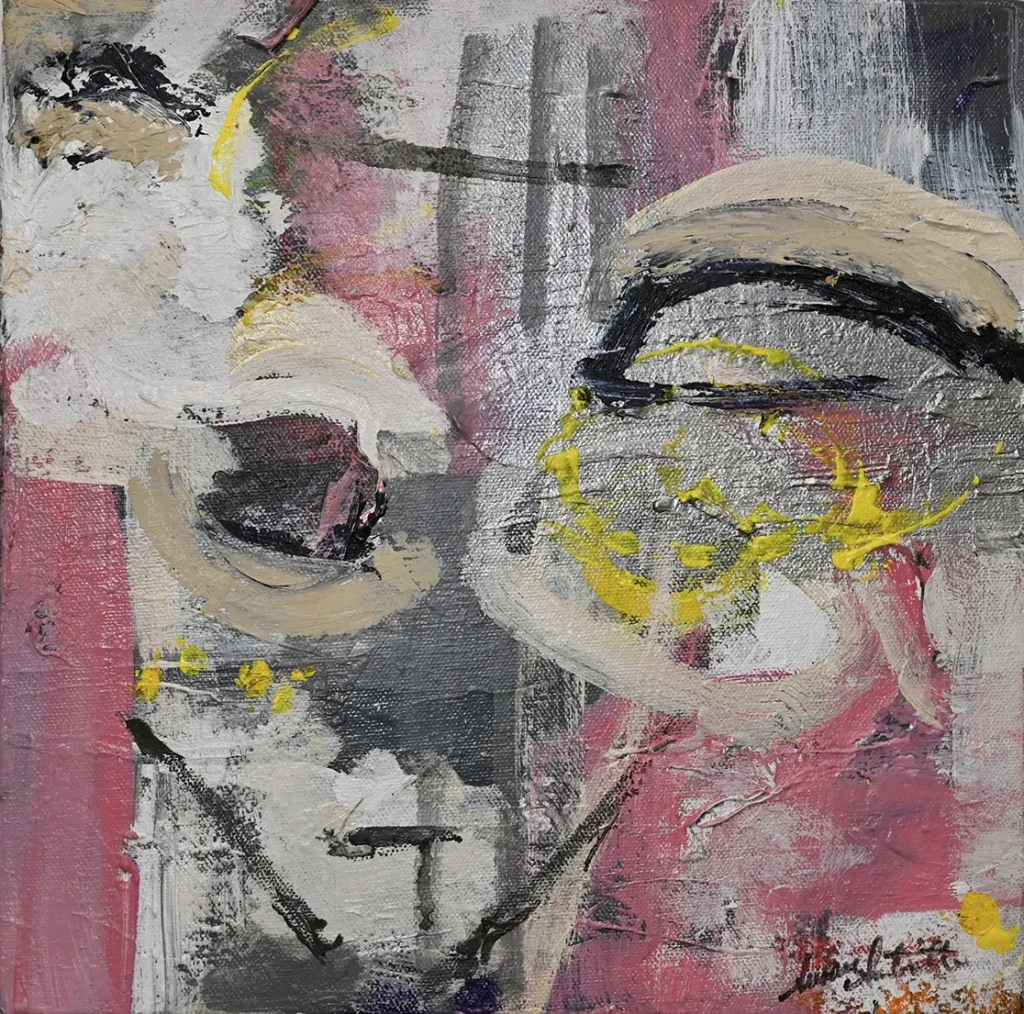
How important is emotion in your process, and do you paint based on how you’re feeling in the moment?
Emotion is definitely at the center of the work, but I wouldn’t describe the process as purely reactive or therapeutic. I’m interested in how emotion can be translated visually through color, texture, rhythm, and space. Sometimes my pieces grow out of something immediate, and other times they come from reflection over time.
Walk us through your layering technique and why it’s important to your work?
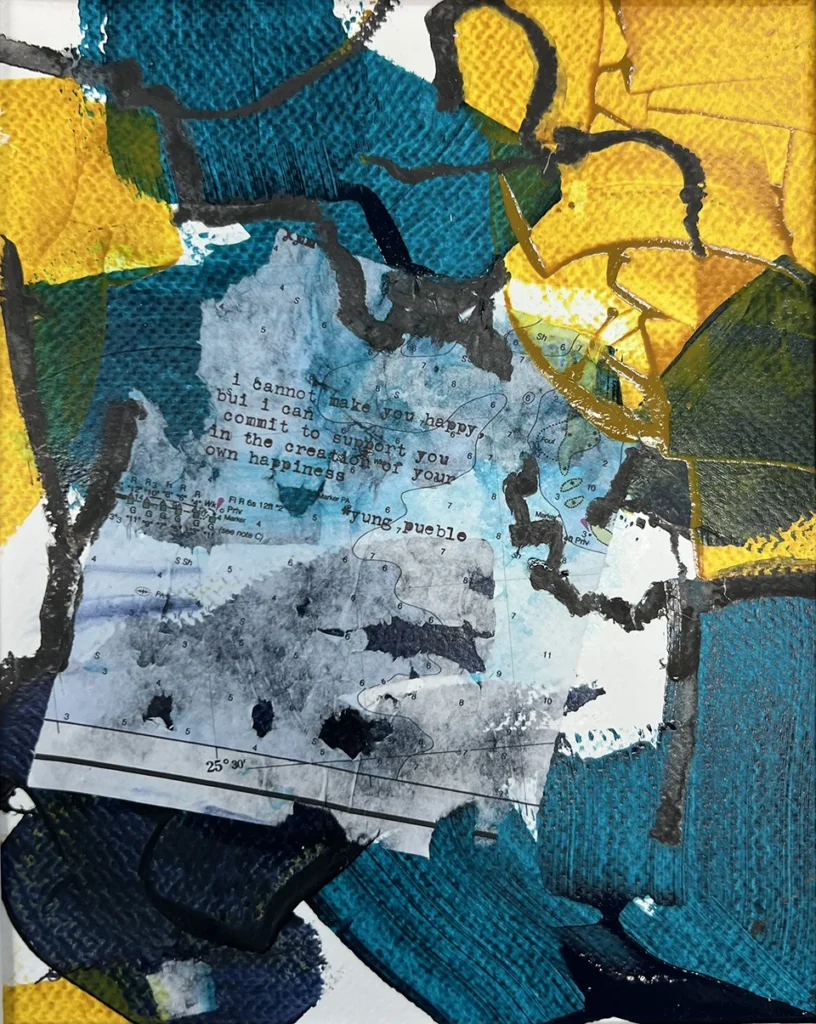
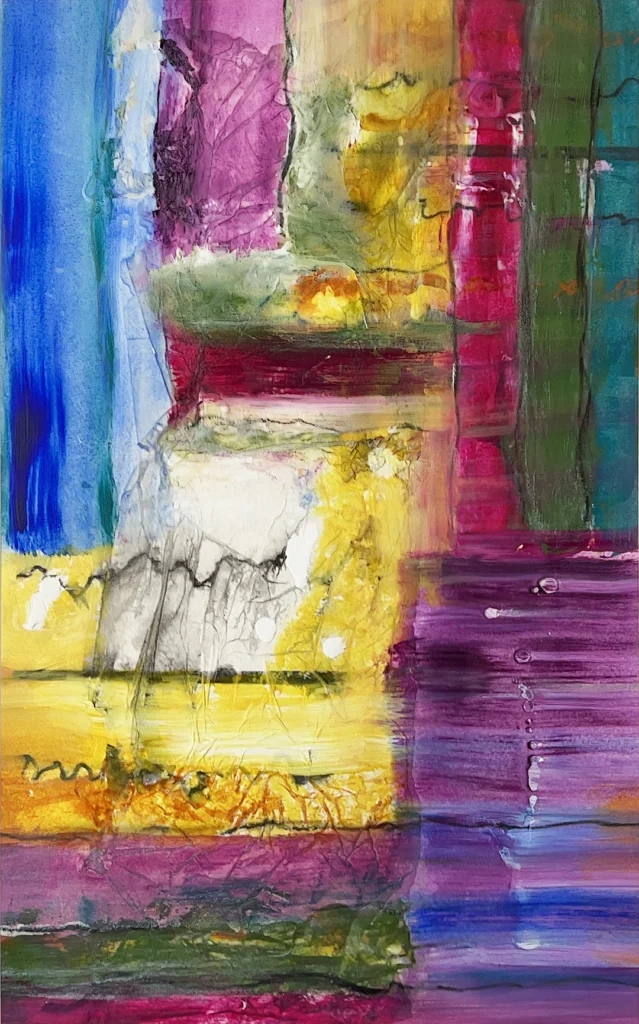
Layering is a huge part of my process. I build surfaces slowly, working through multiple stages using gestural mark-making, glazes and layers of paint, often embedded text and deconstructed vintage maps, allowing earlier decisions to partially disappear while still remaining present beneath the surface. I think it mirrors the way memory works—nothing completely disappears, even when it’s partially hidden beneath something new.
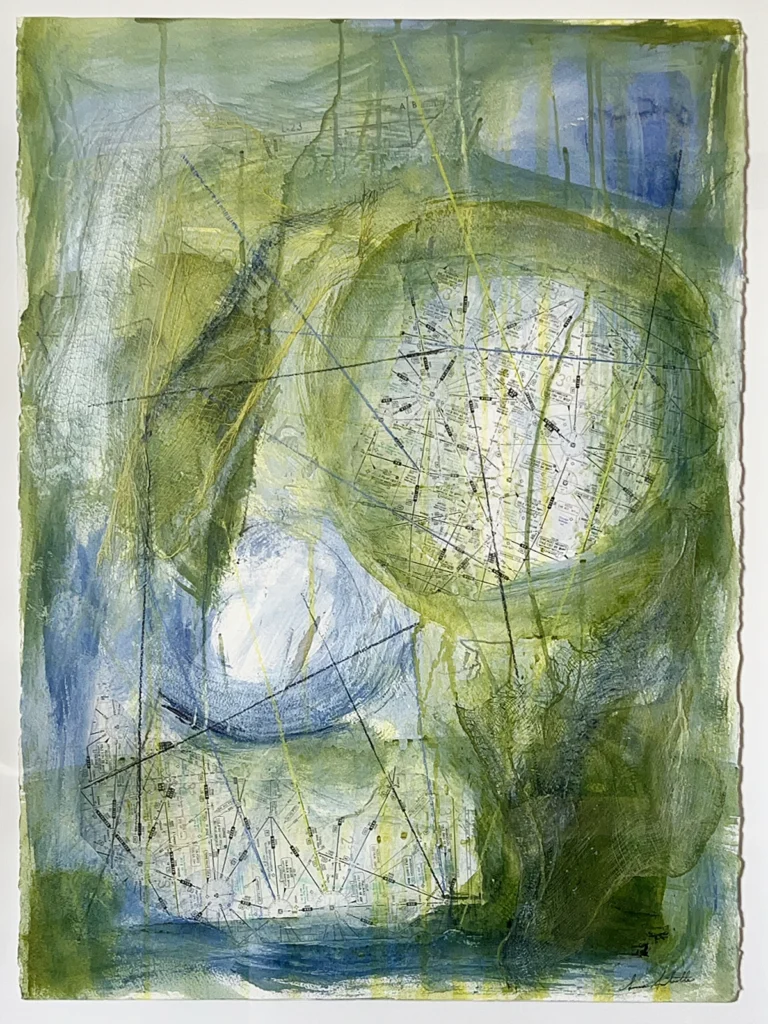
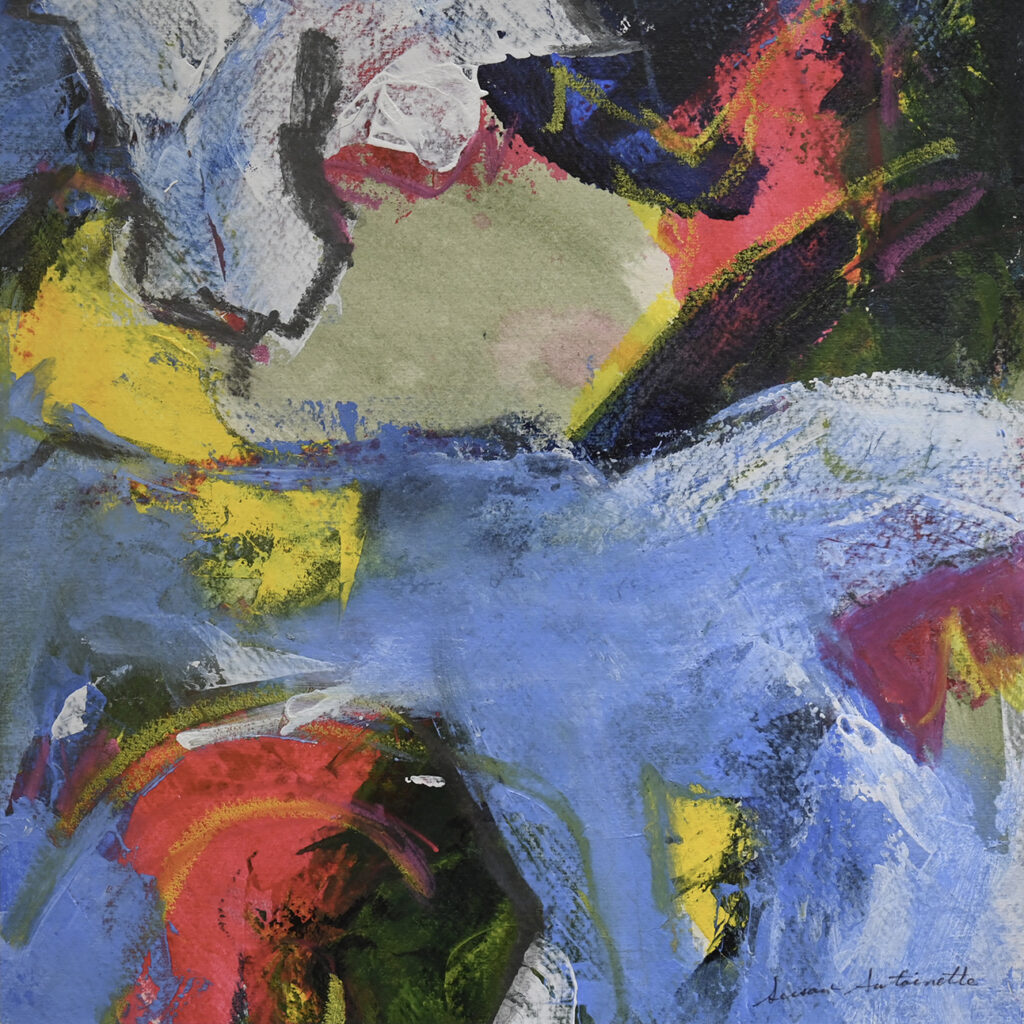
What role does color play for you—do you choose it intentionally or intuitively?
Both intuition and intention are involved. Color is very emotional for me, so there’s a strong intuitive side to it, but I’m also intentional about balance, the tension, calm, depth and movement across the surface. I respond instinctively while working, but from the beginning, I select my palette, often setting parameters and limiting my palette.
What do you hope viewers feel or experience when they see your work?
I hope viewers feel invited into the work rather than excluded by it. I’m less interested in delivering a fixed meaning than in creating space for reflection, curiosity, personal interpretation and connection. Ideally, the paintings become places people can emotionally enter and spend time with. I hope they feel something personal and immediate, even if they can’t fully explain it.
How do you think abstract art fits into today’s homes, businesses, and public spaces?
Abstract art has a unique ability to transform a space emotionally as well as visually. It can energize an environment, create contemplation, or establish atmosphere without dictating a single story, which allows different people to connect with it in different ways. In both public and private spaces, abstraction allows for broader connection because people engage with it through their own experiences and perspectives. I think that openness is part of why abstraction continues to resonate so strongly today.
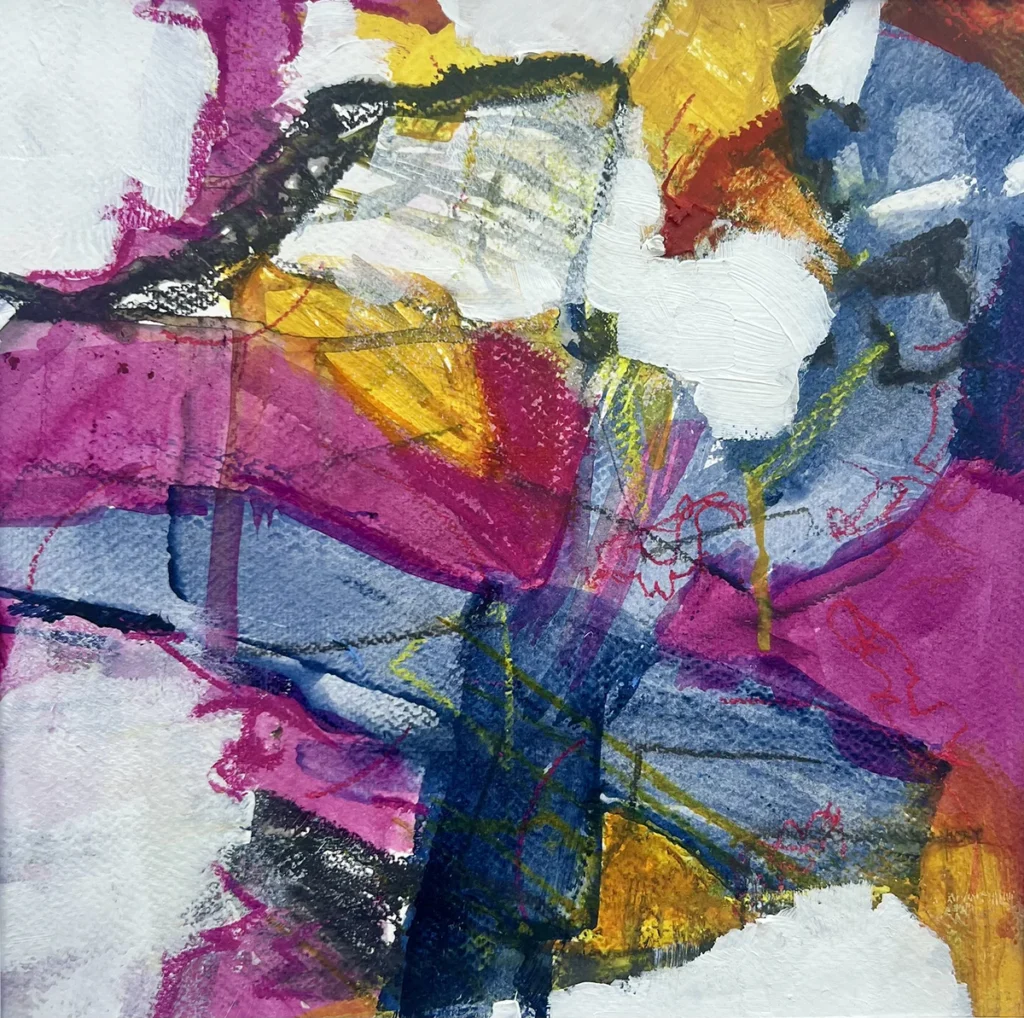
Have you ever surprised yourself with the direction a piece took, and what did that teach you about your process?
Absolutely. Some of the strongest paintings emerge when I stop trying to control every outcome. It’s taught me that uncertainty is actually an important part of the process and that pushing through uncomfortable stages usually leads to more interesting work.
How do you handle creative blocks or moments when the work isn’t flowing?
Not well! However I have learned not to panic during those periods. Sometimes creative blocks are actually necessary pauses where ideas are still forming beneath the surface. I usually keep working in some capacity—researching, writing, definitely time in the studio, visiting museums, art fairs or even just spending time with others’ art online. Sometimes stepping back for a moment is exactly what allows the next idea to surface.
What’s next for you—are there new directions, materials, or ideas you’re excited to explore?
Right now, I’m focused on my upcoming solo exhibition, Mapped Journeys in Color and Verse, opening this August at LeMoyne Arts in Tallahassee, which has allowed me to dive even deeper into the ideas that drive my work. The exhibition centers around the belief that while each of us moves through life on our own unique journey, there are universal experiences—connection, change, memory, love, loss, and growth—that tie us all together. Through this body of work, I hope to create space for reflection and remind viewers that, despite our different paths, there is so much of the human experience that we share.
Would you like to add anything?
I think one of the beautiful things about abstract art is that you don’t need to “understand” it in a traditional sense for it to have meaning. Sometimes a painting connects with someone simply through color, movement, energy, or the emotions it stirs—and that experience can be completely different for each person. For me, painting is ultimately about connection: between people, places, memories, and the experiences we all share as human beings. If the work creates a moment of reflection, joy, or even just makes someone feel something unexpected, then it has done exactly what I hoped it would do. •
You can find Susan at her studio in the ArtsXchange in St Pete by appointment
and every Second Saturday ArtWalk from 5-9pm at 515 22nd St. S. Studio 101
Socials @SusanantoinetteArt
Email: SusanantoinetteArt@gmail.com