A Discussion with Paul Wilborn, Author of The Everlasting Life of Charlie Wall
I sat outside the café on a fresh, spring morning in St. Petersburg, Florida. My iced coffee had condensation pooling at the base of its plastic cup. The air was warm, but a breeze brushed my arms and beneath the wispy hair on the nape of my neck. With me was my journal, a pen, and my phone to record. I was waiting for local author, Paul Wilborn, to begin a discussion around his newest novel, out now on the shelves, titled The Everlasting Life of Charlie Wall. Cars rushed by at an intersection that Paul later noted, needed a traffic light, and palm fronds swayed atop skinny trunks.
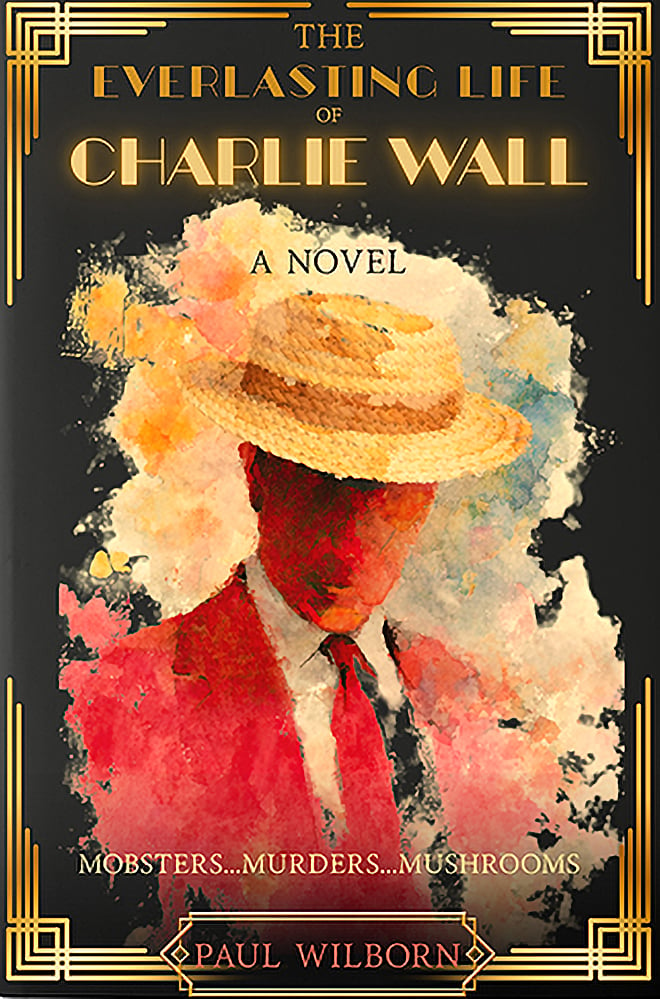
It was like this that Paul found his beginning for The Everlasting Life of Charlie Wall. With a scene. How could he tell the story of Tampa through renowned crime boss, Charlie Wall’s eyes? We begin in 1985 with one of the central characters, Trip, who starts a new job as the driver for retired mobster, Charlie Wall “White Shadow”, who in this fictionalized account, survived the four attempts on his life.
As Charlie copes with depression sparked by a lack of importance in the Tampa crime scene, Trip helps to rebuild his self-esteem by convincing him that people still want him dead. As Tampa’s first well-known crime boss, and a critical rival of the Trafficante family, Charlie Wall stands as a figurehead in organized crime history. Paul and I spoke in depth about the inspirations to write this book, his writing process, and advice for aspiring writers.

What inspired you to write this book now?
I began with a scene. And I loved that scene so much that I decided to make the mobster I’d written in it, Charlie Wall. I need a scene to get me into a book. Charlie had been on my mind from reading Ace Atkins, and no one knows how Charlie died. From there I said, wouldn’t it be cool to give him a personality. To explore the life of a former mobster. I really wanted to tell the story of Tampa through Charlie’s eyes because Tampa was one of the most corrupt places in America for most of the 20th century.
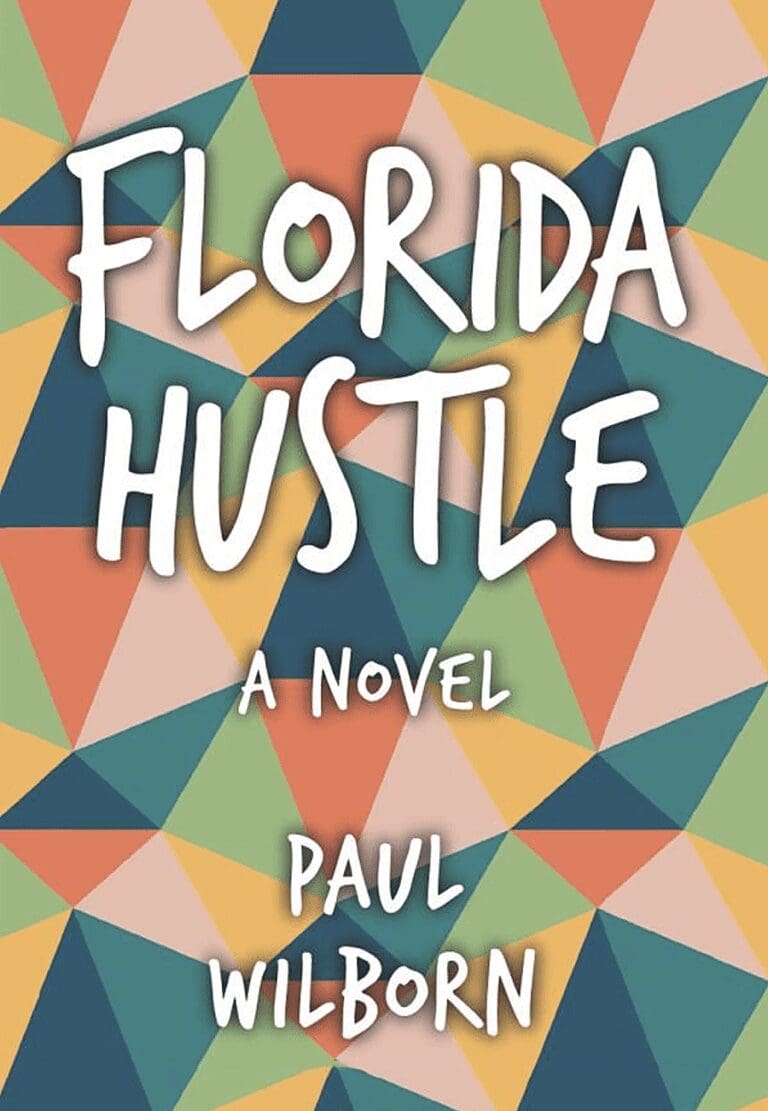
What can readers of your other books, Cigar City and Florida Hustle, expect to be different, or perhaps the same in this story?
In Florida Hustle, there are elements of crime and there’s the con man. What I feel is consistent from book to book is featuring strong, interesting male and female characters. Humor, and of course, there’s elements of adventure. I fall in love with my characters, and I try to make them as human as possible. I feel that you are going to find characters that aren’t cliches. Nobody is a stand-in for a symbol.
How do you find your characters’ voices?
Really, I get to know them by writing them. I try not to have too many and keep a reasonable ensemble of characters, giving them all a reason to be there. You have to be true to your character. If you’re making them do things you want them to do, that’s not real—it’s forced. So, I hope that my characters have freedom of choice.
The subconscious does so much for you. Your subconscious mind is where this power is. And when you are sitting there writing, and it comes from your subconscious, that’s when you go back and say, I didn’t even come up with that! It is not magic. It is just that you are open to receiving.
Did you find that with this novel, you needed a lot of rewrites to get to the final draft?
I think I pull from my old journalism techniques in that I usually revise what I wrote the day before, before moving forward to the next thing. When I get to the end, I look at the strengths and weaknesses of the book and go back to adjust. I moved chapters around, went back to write more scenes for Trip and focused the book a little more.
What have you learned about yourself in writing this novel in comparison to Cigar City and Florida Hustle?
Cigar City was a book that I needed to write based on being in a place. I needed to tell those stories. And while it was fiction, it was recreating a scene I was part of. Florida Hustle started as a screenplay in L.A. and was in process before I wrote Cigar City. Those two were natural to write about. For this novel, it was harder in a way because I started with nothing. Yet, it was also satisfying in the sense that I started from scratch, and I got here.
If you start anything, it doesn’t mean it will be great but don’t give up on it. This book was really a start from scratch, and I stayed at it.
Do you have any advice to give to creatives and aspiring writers?
Know your strengths. Make the most of the best thing you’ve got. Be fearless. I received so much rejection during the writing of my first book, Cigar City. Six months later, I got an e-mail saying the book won the gold medal in fiction for the Florida Book Awards. The world is going to try to tell you that you suck, but you need to believe in yourself and be fearless and keep going. Finish what you started. And bloom where you are planted. Wherever you are is where you are and make the most of it. •
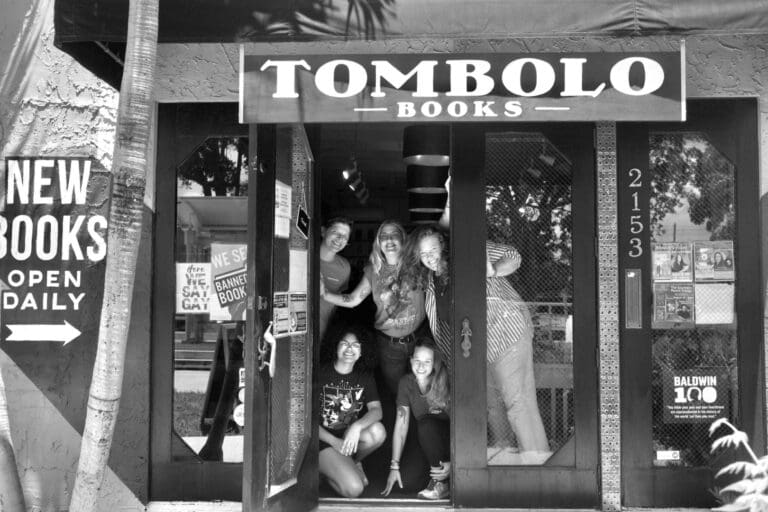
The Everlasting Life of Charlie Wall is out now. You can purchase a copy at Tombolo Books in St. Petersburg, and elsewhere.
If you are a creative reading this piece, remember that part of the creative process is finding and tuning your voice as much as the voice and story of the work you are creating. Remember to start, and of course, to finish. Believe in yourself enough to give it a shot.
Until next time.
Please note a correction in my previous article “Do Books Have Seasons?” The novel written by Nicky Gonzales is titled Marya.*