Paradise, Before Boarding
At St. Pete–Clearwater International Airport, Duncan McClellan and Carrie Jadus
offer travelers a reason to linger.
An airport is an institution devoted to persuading people to be somewhere else. Its signs point onward; its clocks encourage vigilance. Even a comfortable chair is understood to be a temporary arrangement. To install an art exhibition in such a place is to make a modest, wonderfully unreasonable request: stop moving for a moment. Look.
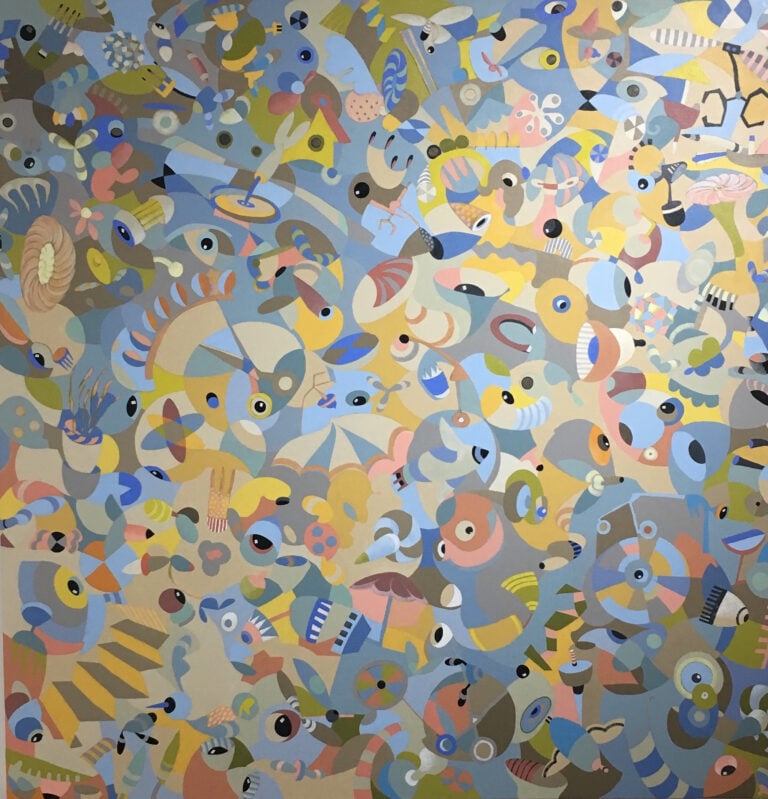
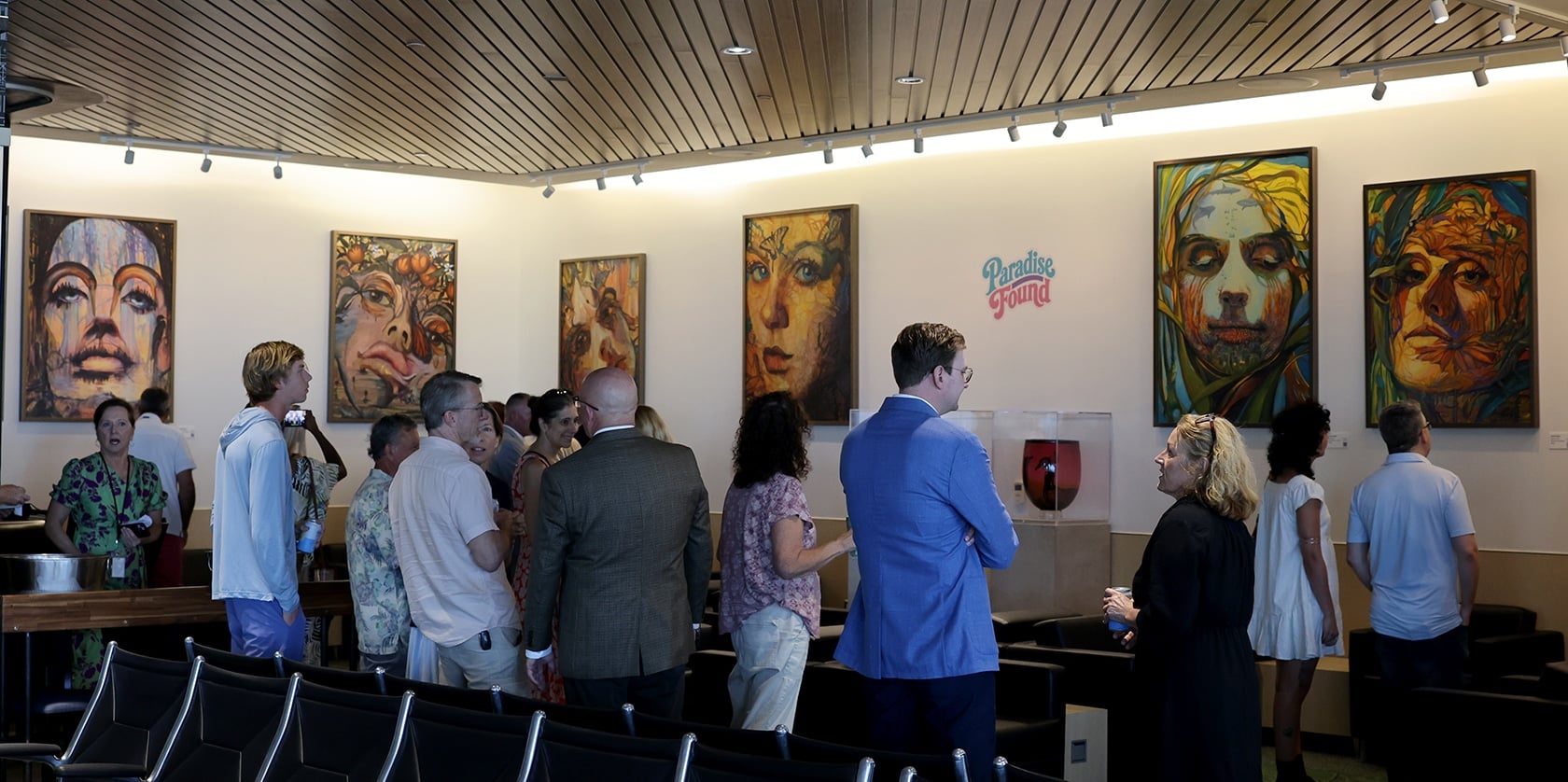
“Paradise Found,” at Sightline Gallery inside St. Pete–Clearwater International Airport, makes that request through the work of glass artist Duncan McClellan and painter Carrie Jadus. Presented by Creative Pinellas, the exhibition runs October 13, 2026, through February 8, 2027. Its subject is particularly appropriate for a Florida arrival hall: the natural world that visitors have presumably come some distance to enjoy.
Paradise is a word with considerable employment opportunities in Florida. It sells condominiums, beach vacations, and the possibility that one’s troubles are chiefly a matter of latitude. Artists have the advantage of being able to approach the proposition more personally. What does paradise look like when it belongs to someone, rather than to a marketing department?
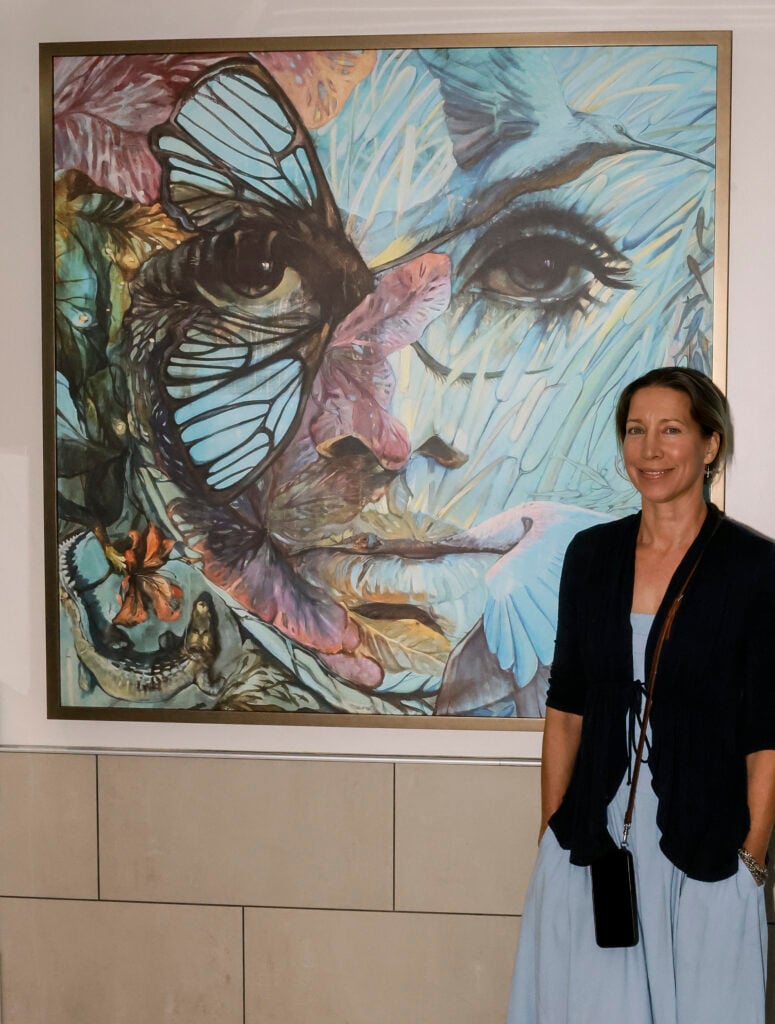
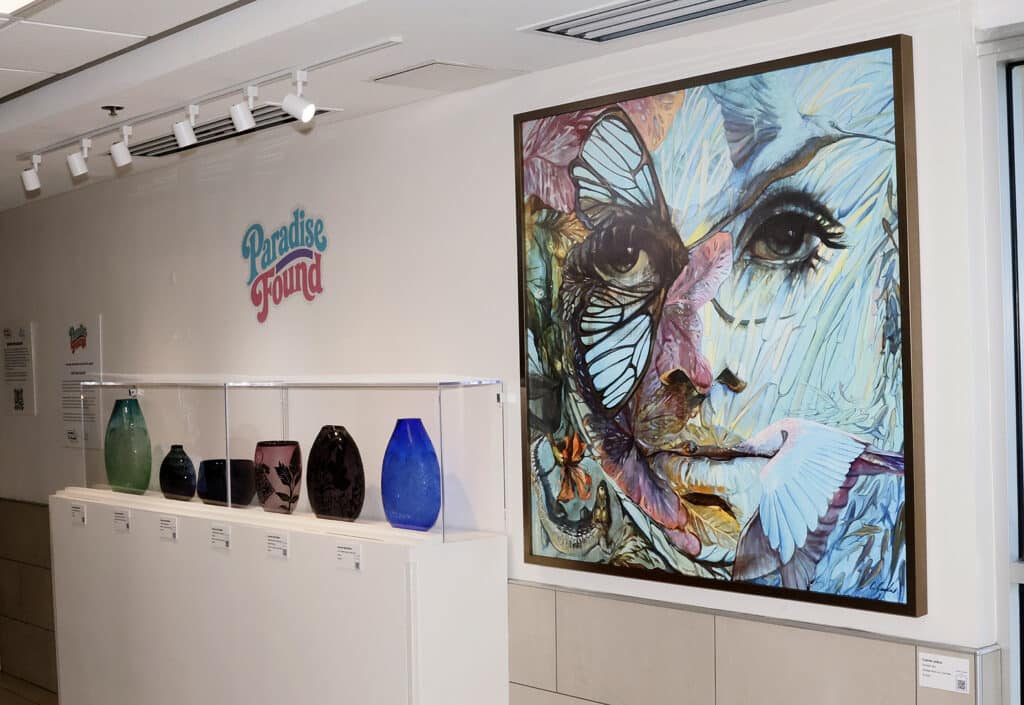
For McClellan, the exhibition’s inspiration comes from the gardens surrounding his St. Petersburg studio. For Jadus, whose “Florida Girl” series brings together surreal faces and native flora and fauna, the landscape becomes part of a human identity. Their pairing suggests two ways of belonging to a place: cultivating a world around oneself, and allowing that world to enter the imagination.
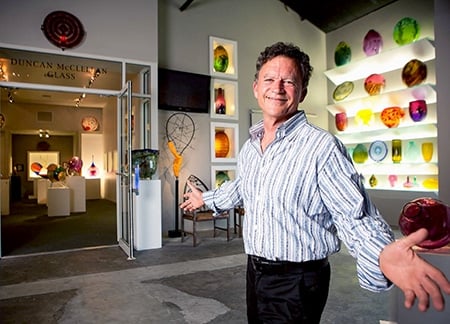
Glass is an especially suggestive medium for this encounter. It can hold an image while admitting the light around it, making the boundary between an object and its surroundings unusually active. McClellan’s practice involves elaborate sand carving, with imagery placed inside and outside blown-glass vessels. His finishing methods include acid etching, fire polishing, and successive stages of grinding and polishing. The apparent ease of a finished surface conceals a substantial history of work.
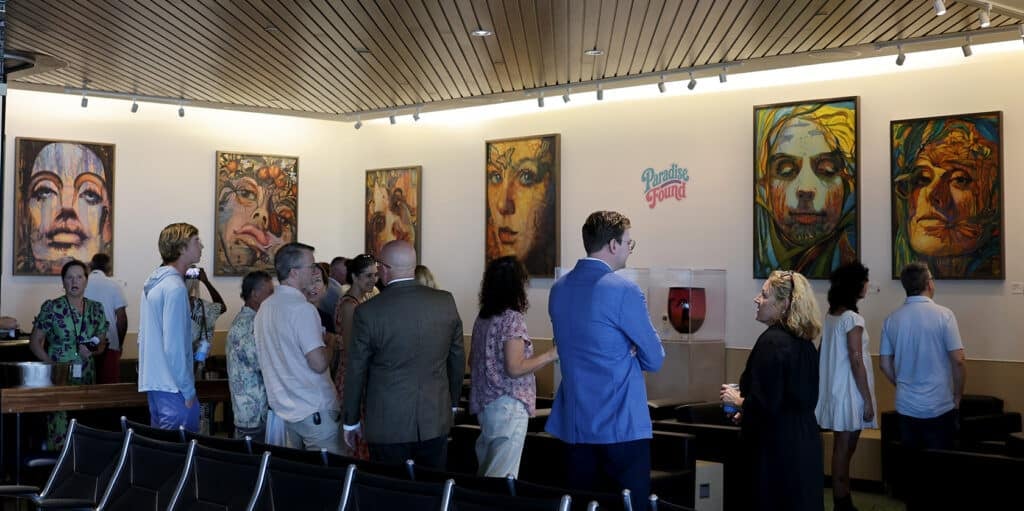
That relationship between discipline and invention also appears in Jadus’s biography. Before becoming a painter, she worked in electrical engineering; she now owns Soft Water Gallery in St. Petersburg’s Warehouse Arts District. In her “Florida Girl” paintings, the premise of portraiture expands to accommodate an ecosystem. A face becomes a way to think about a place, and a place becomes a way to think about a person.
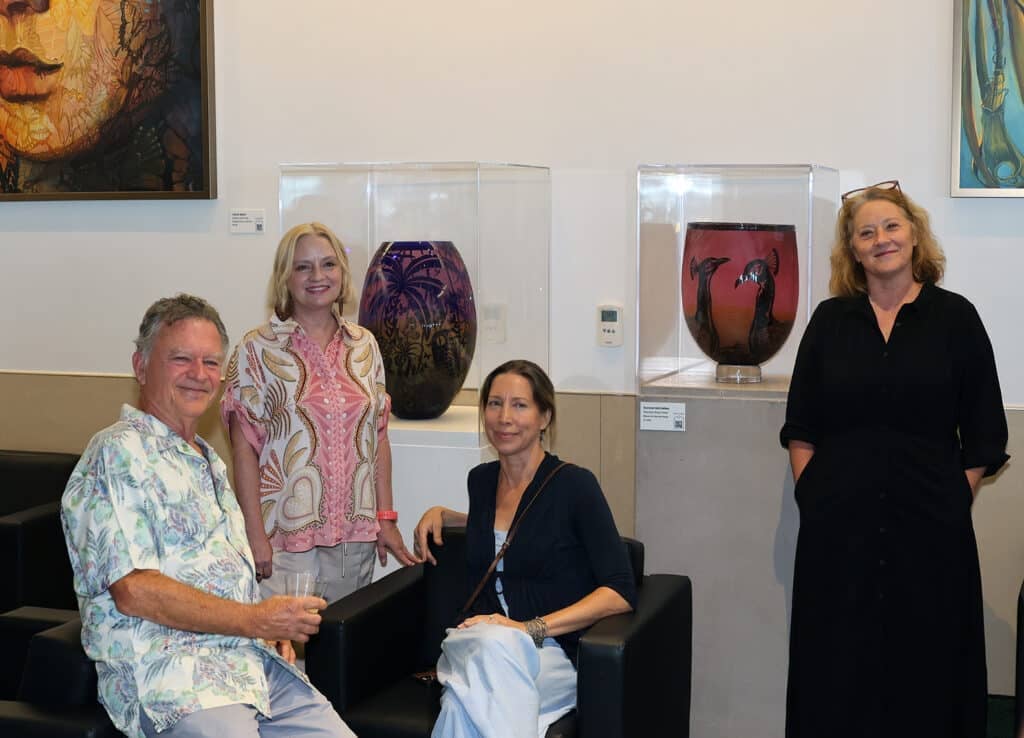
The airport setting gives the pairing an additional resonance. Travelers arrive with an idea of Florida already assembled. They leave with another, revised by weather, encounters, and whatever happened between checking in and checking out. Art can intervene in that process. It offers something more particular than a destination’s familiar symbols: evidence that people live here, pay attention here, and make things from what they notice.
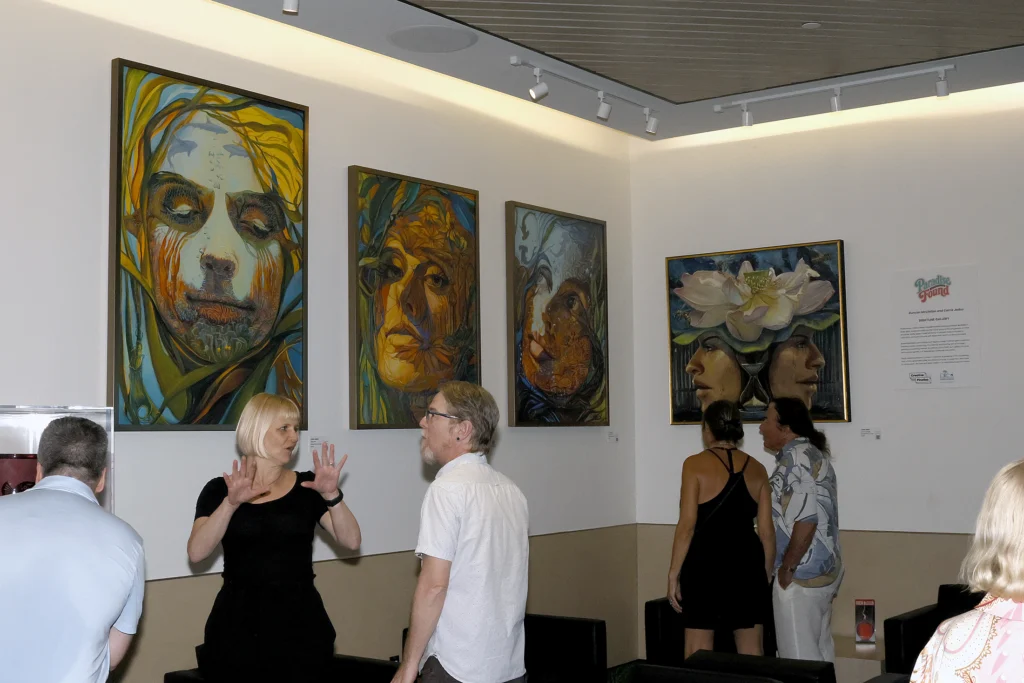
Sightline’s rotating exhibitions connect travelers with the county’s arts community. The audience may include people who never planned to visit a gallery at all. That accidental encounter is part of the appeal. Someone looking for a departure time might discover another measure of time—the patient duration of making, or the few unhurried minutes required to see.
“Paradise Found” is a fitting title for an exhibition encountered in transit. The discovery need not be grand. It might amount to a pause, an unexpected image, a small adjustment in attention.
The flight will still have a destination. For a moment, so does the waiting.
“Paradise Found,” Sightline Gallery, St. Pete–Clearwater International Airport, 14700 Terminal Boulevard, Clearwater. October 13, 2026–February 8, 2027. Exhibition information.