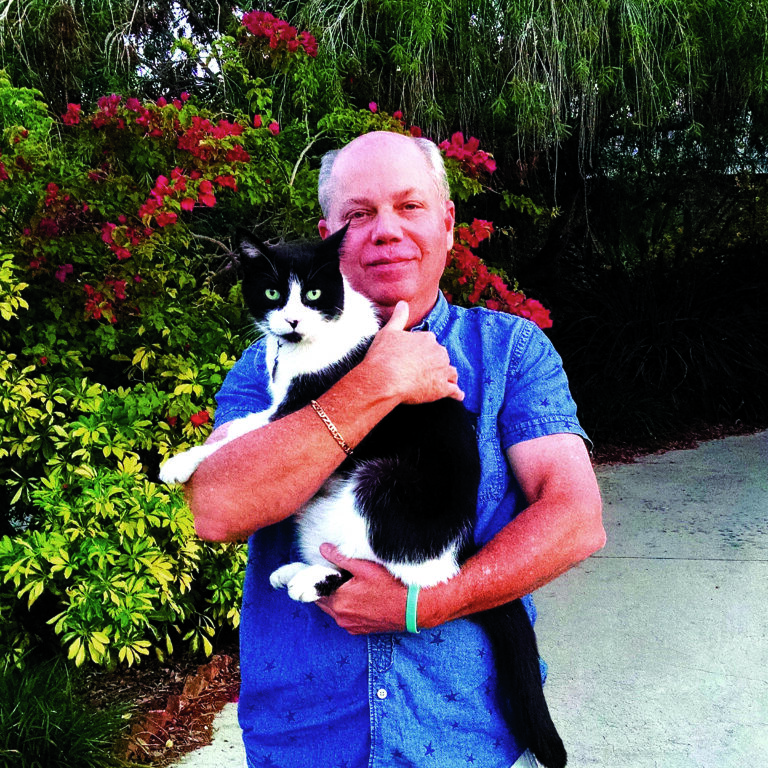
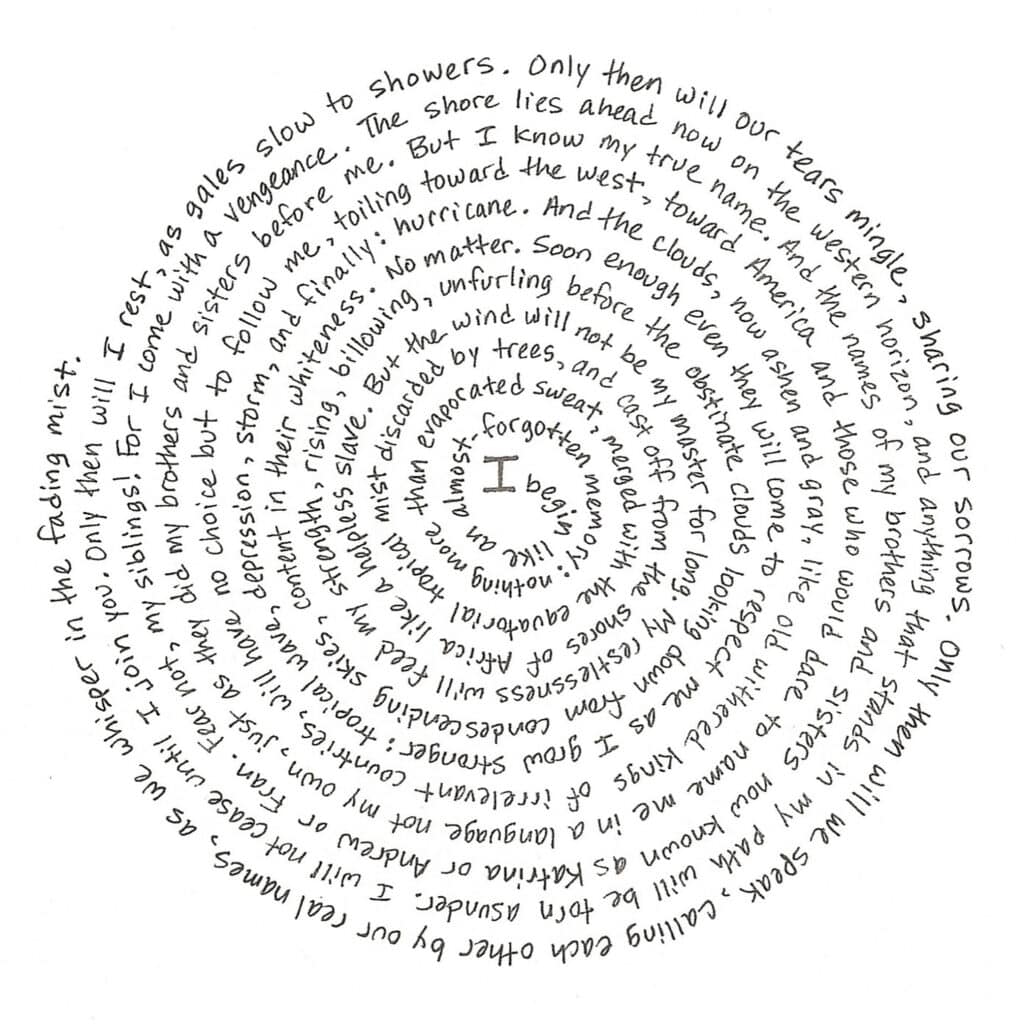
Malachi Sinlao is a Filipino-American author and poet from St. Petersburg, Florida. He has poetry published in St. Pete’s Neptune Magazine and will have his speculative fiction short story “The Stranger at the River Styx” featured in the inaugural issue of Eldritch Myth in early 2026. You can find more poems on his instagram @malachi_sinlao and short stories at malachisinlao.substack.com.
Scurrying away from the post-holiday silence of empty bedrooms.
Borrowing, for a few nights, a state park lot where we can shrink to essentials
and fill our lungs with now.
Winged Elms decorate our campsite, their naked limbs stretching and yawning overhead,
revealing the slim corky sails that give them their name.
They seem stark and appropriately subdued for the season.
Still, being Florida, the elms are surrounded by saw palms, outnumbered by live oaks
and shaded by southern magnolias.
All standing stubborn in their greenness, refusing to be undone.
Leaves lifted up to a sky that is rarely not blue.
Seemingly fierce in their determination to outlast the stunted days,
unwilling to acquiesce to a vibrant orange, a shock of yellow, or shriveled brown.
Instead, they cleave to what they know.
Green has never failed them.
The Canvas of This Evening
By Janet Blair
Tell me there is anything
anything at all more beautiful
than this watercolor pastel glow
spreading across the Pass-A-Grille sky
then swirling to a molten, red-tinged orange
and exploding lava-like onto the canvas of this evening.
Tell me each evening has been the same
across the miles and decades since I stood
age seven beside Grandma on Anastasia Island,
her bending to hold a bleached conch shell to my ear
asking if I could hear the ocean surging inside
then giving it to me to pack in my suitcase at the end of summer.
Tell me that science can explain it all.
That what I saw as the sun sliding down tonight
was simply the earth rotating.
That what I heard in the conch shell long ago
was just trapped air, echoing ambient sounds
inside a displaced casing.
That what I took as treasure, was merely
created to surround a mollusk in safety.
Tell me that there is no magic—
when what I know is that even in a
landlocked state like Texas or Idaho,
or wherever my family wandered next,
I could press my ear against the smooth
outer lip of that husk and always hear
the echoing sound of home.
Janet Blair lived in Trinidad, Germany, Ecuador and Guam along with several states across the U.S. before finding her home in the city of St Pete almost three decades ago.
Currently, Janet holds a position as a policy analyst for the State of Florida and spends her weekends writing poetry. Her most recent and upcoming work can be found in The Orchards Poetry Journal, South Florida Poetry Journal, New Verse News, The Florida Bards Anthology and The Eckerd Review.
As we start this journey into the fashion underground, I want to take us back.
Back to a St. Petersburg that was smaller, grungier, and a little bit hipster. Smoky bars and PBR. Beer pong and nightclubs. An edgy nightlife that felt hopeful and electric. The city was coming out of a recession and a BP oil spill, but something was happening… an energy building beneath the surface. A killer art scene on the water. Gritty, creative, and unpolished. What more could you ask for? (If only we’d bought all the real estate back then.)
Graffiti was taking off. Sebastian Coolidge and Derek Donnelly were tag‑teaming big walls. Chad Mize was running Blue Lucy Gallery on Central. Green Bench Brewing wasn’t even a thing yet. Rooftop parties popped up out of nowhere. Sidewalk fashion shows felt normal. I even shot Tampa Bay Fashion Week in Armature Works before it was Armature Works. It was an abandoned warehouse, raw and perfect for a fashion show.
I was hustling to become a full‑time photographer, working part‑time at a camera store loving the fact that I was getting a forty‑percent discount on gear. I went to every fashion‑adjacent event I could find. Every boutique. Every opening. I was building a portfolio and I needed wardrobe, hair, makeup, models. I needed collaborators.
That’s when I met Kimberly Hendrix.
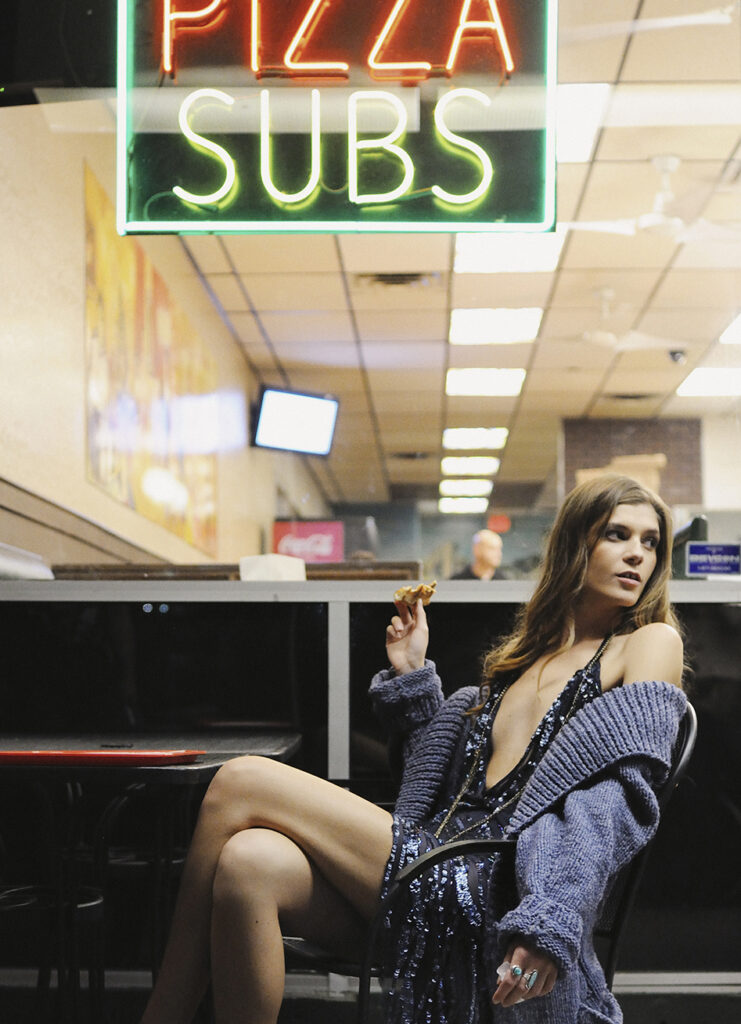
Even Models Eat Pizza.
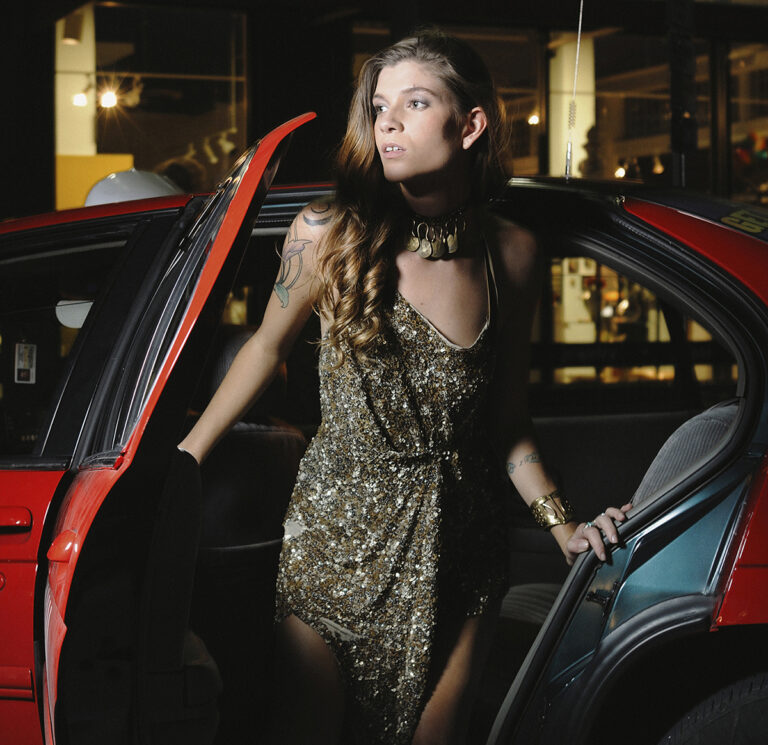
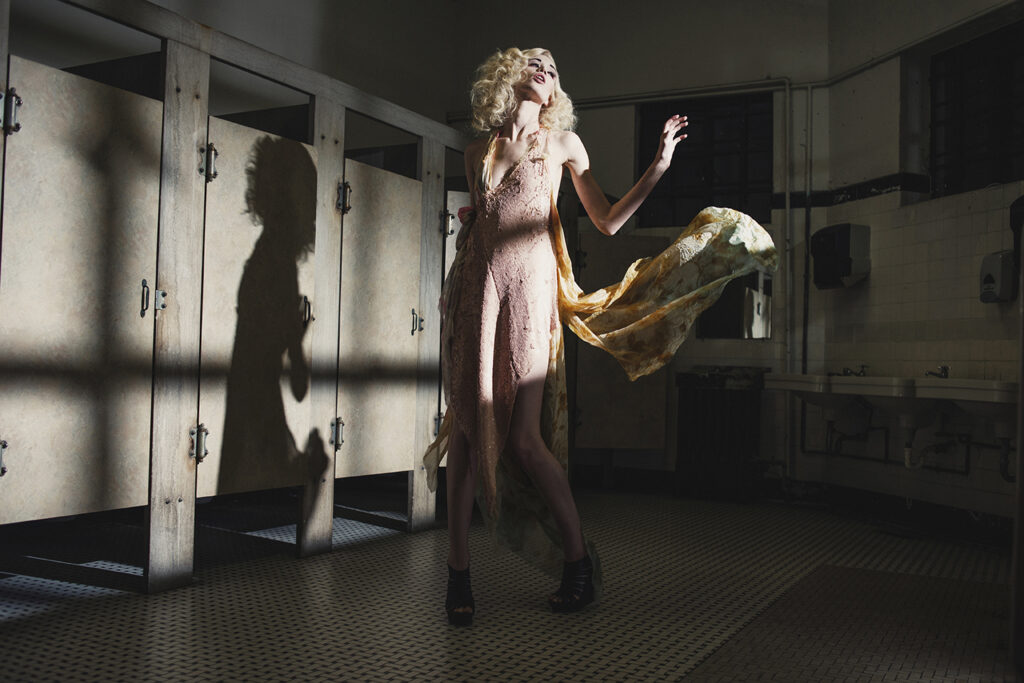
She didn’t just design clothes, she designed connections. Kimberly was a magnet. Models, musicians, photographers, hair stylists, makeup artists, DJs, painters, muralists, graffiti artists, jewelers, milliners, producers, and venue owners all orbited the same creative gravity. She brought people together effortlessly, and once you were in, you showed up. “I want to shoot my clothes in a dirty men’s bathroom.” “Yes,” I said. Immediately.
That juxtaposition of beauty where it didn’t belong was something I’d been exploring from the beginning of my photography career. With Kimberly, the contrast sharpened. Two creatives trusting instinct and pushing limits together.
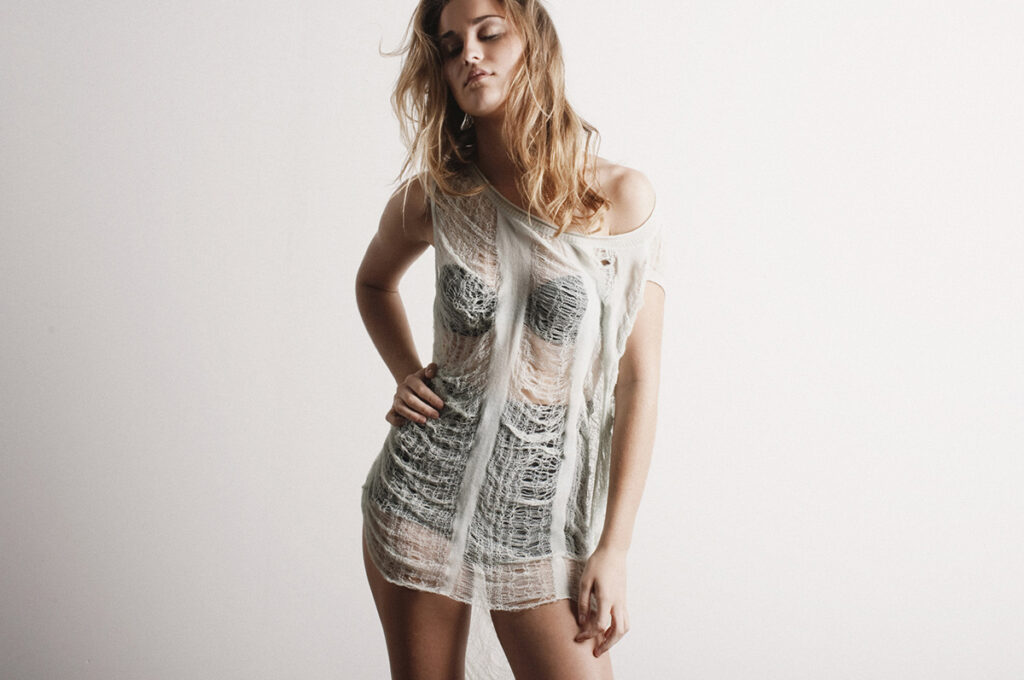
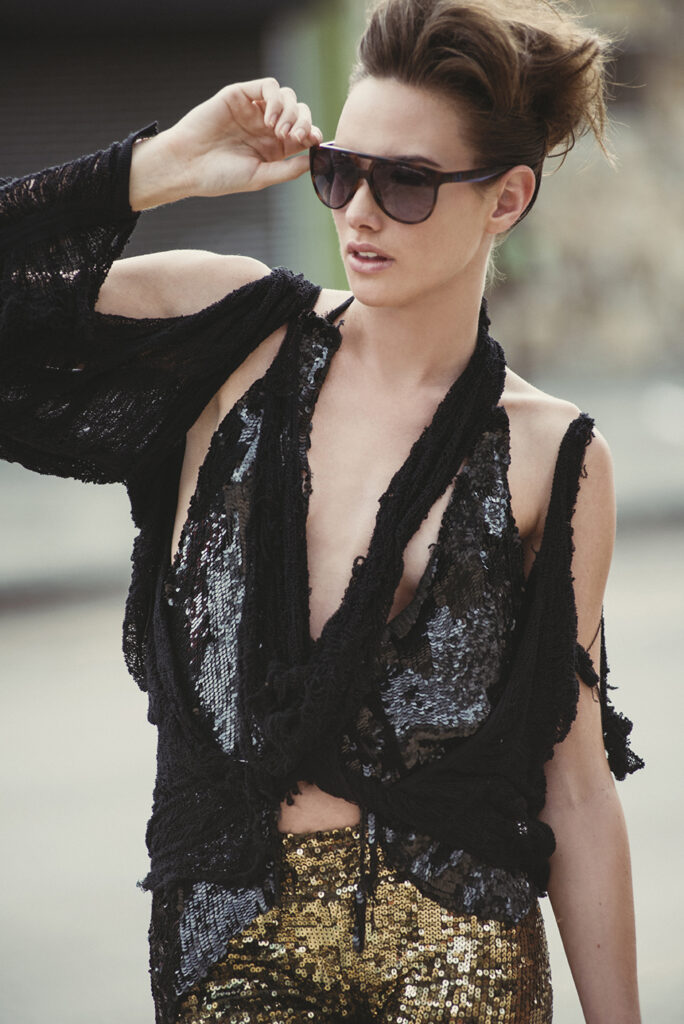
Her aesthetic was refined but never precious. She took something polished and muted it, gave it edge, and let natural beauty come through. My favorite pieces were the ones she deconstructed—shirts and sweaters pulled apart thread by thread, transformed into layered dresses. She would take sequined fabric and boil it, dulling the shine, creating something entirely new.
That process always felt human to me. We all carry scrapes and scars. That’s what makes us one of a kind. Her pieces reflected that truth…. nothing overly perfect, everything intentional. You could feel the passion in the work. What Kimberly created extended far beyond clothing. She helped shape a scene.
St. Pete felt like a big city that somehow functioned like a small town. We knew everybody, or at least it felt that way. Makers supporting makers. Real collaboration. Real production. Limited social media and limited video. If you missed something, you heard about it the next day and wished you’d been there. A reminder to not miss a wave when you see one.
So many household names were born in that era, and Kimberly’s fingerprints are still all over this city. When people talk about why they moved to St. Pete, they say the art, the culture, the music. She connected much of it. Her influence quietly lives on in studios, galleries, brands, and creative friendships that still exist today.
She’s no longer here in the way she once was, but her presence hasn’t faded. It’s embedded in the way we collaborate, in the way we welcome new creatives, in the way St. Pete became a destination instead of a vacation. That time can’t be repeated. We lived it.
Bathroom Fashion.
As Fashion Underground moves forward, this column will celebrate the people who build culture from the inside out—the connectors, the risk‑takers, the ones who make cities feel alive. Be the Kimberly. I’ll see you out there. — Brian James
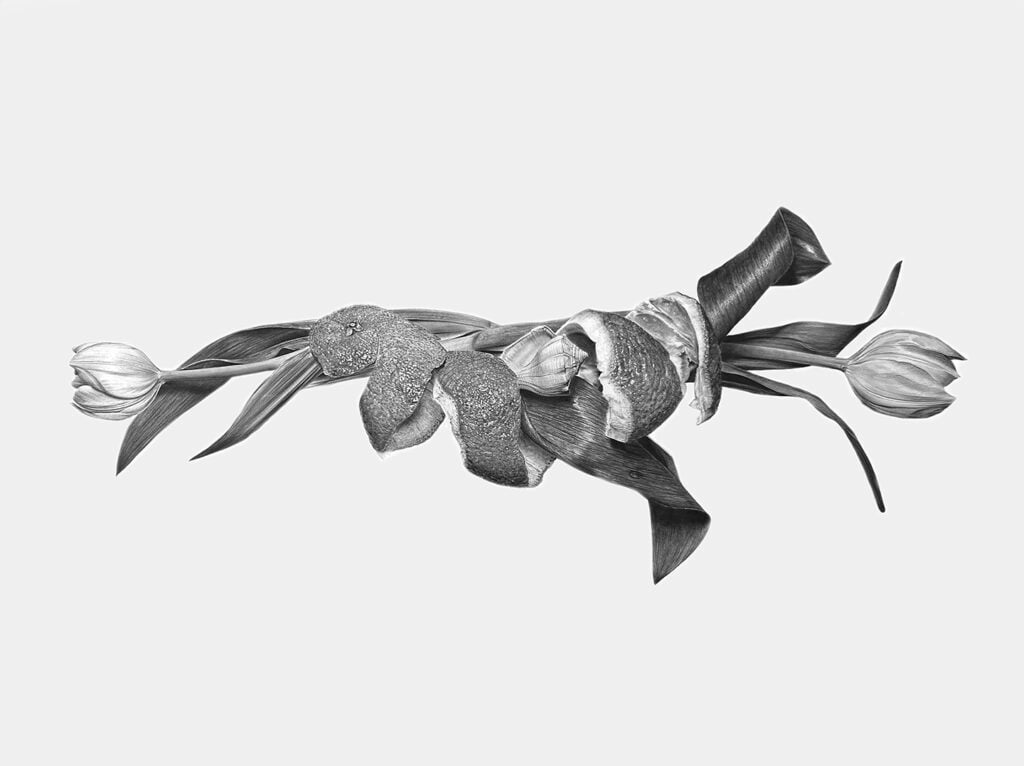
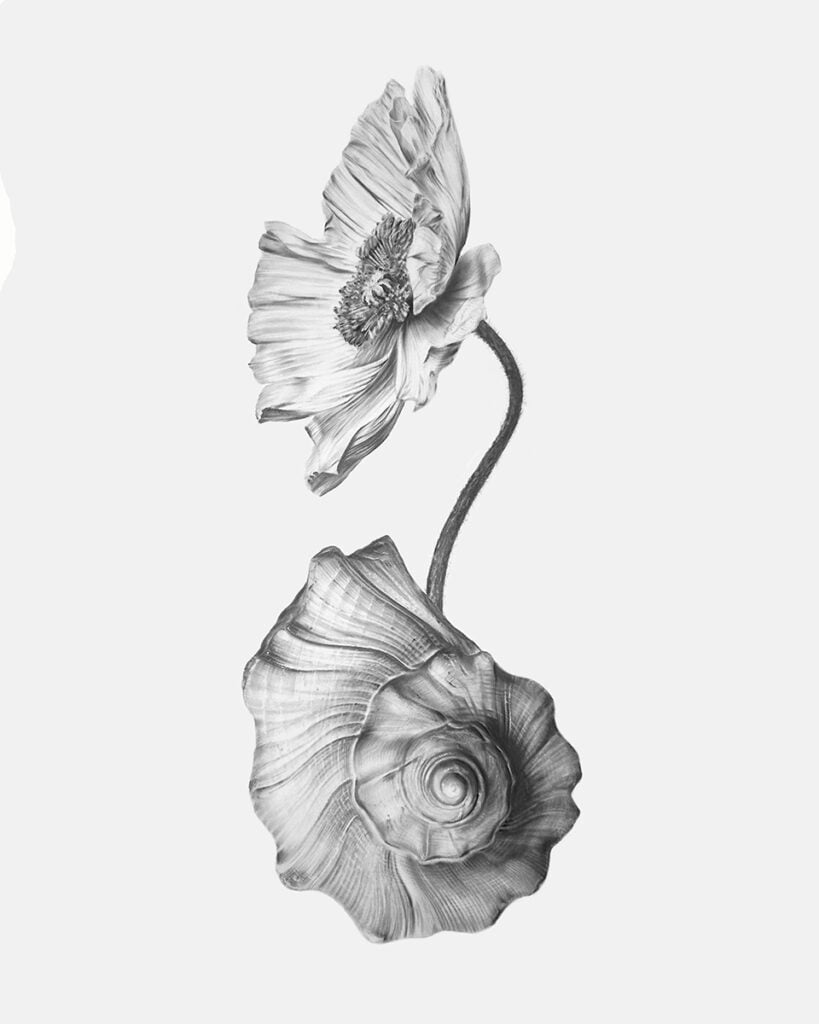
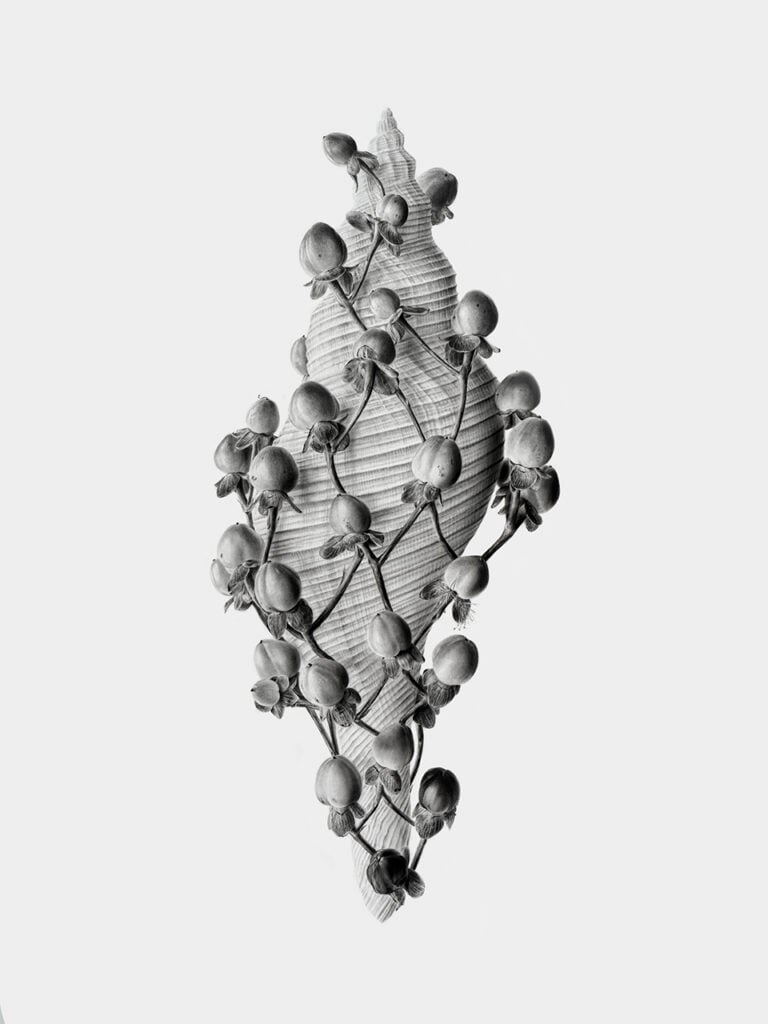
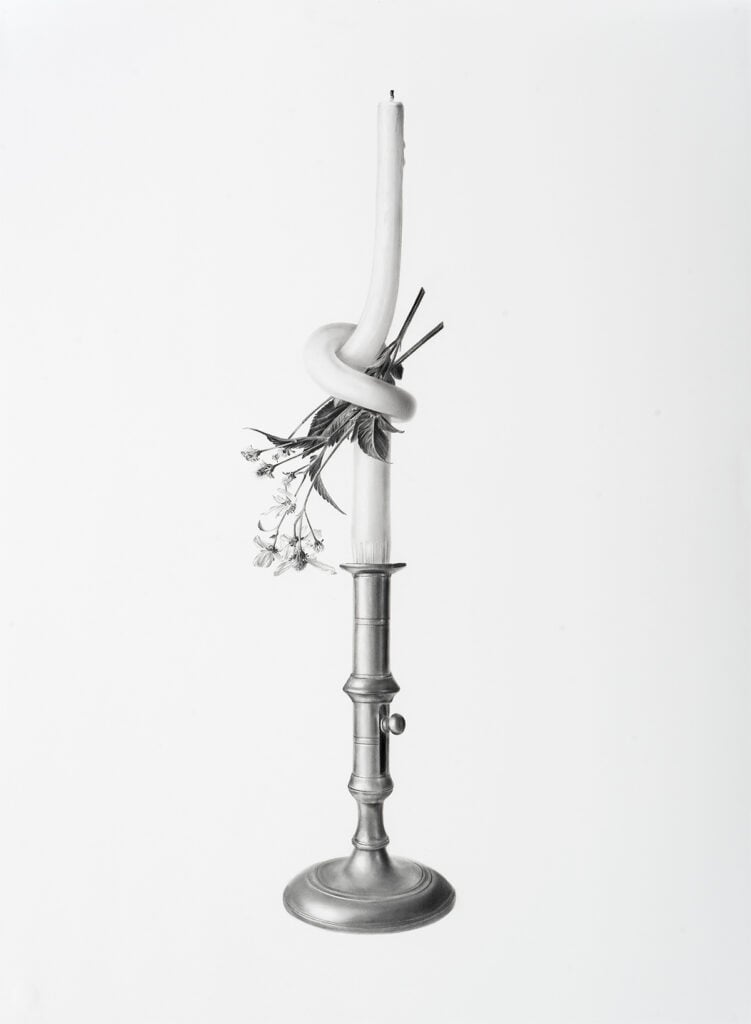
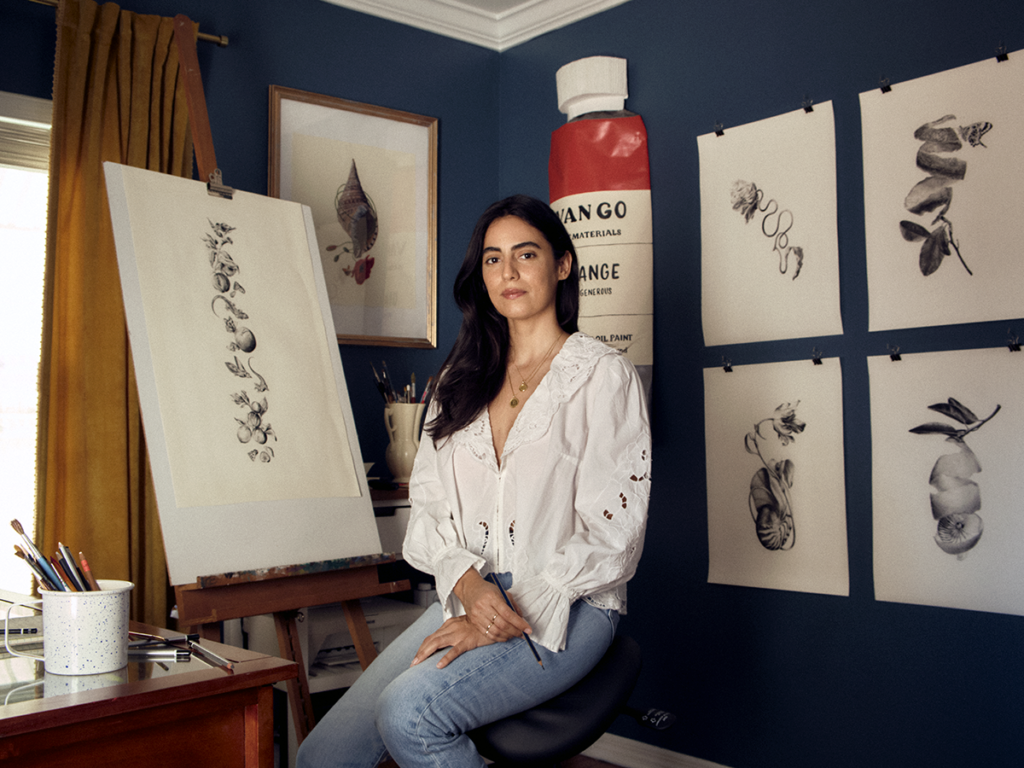
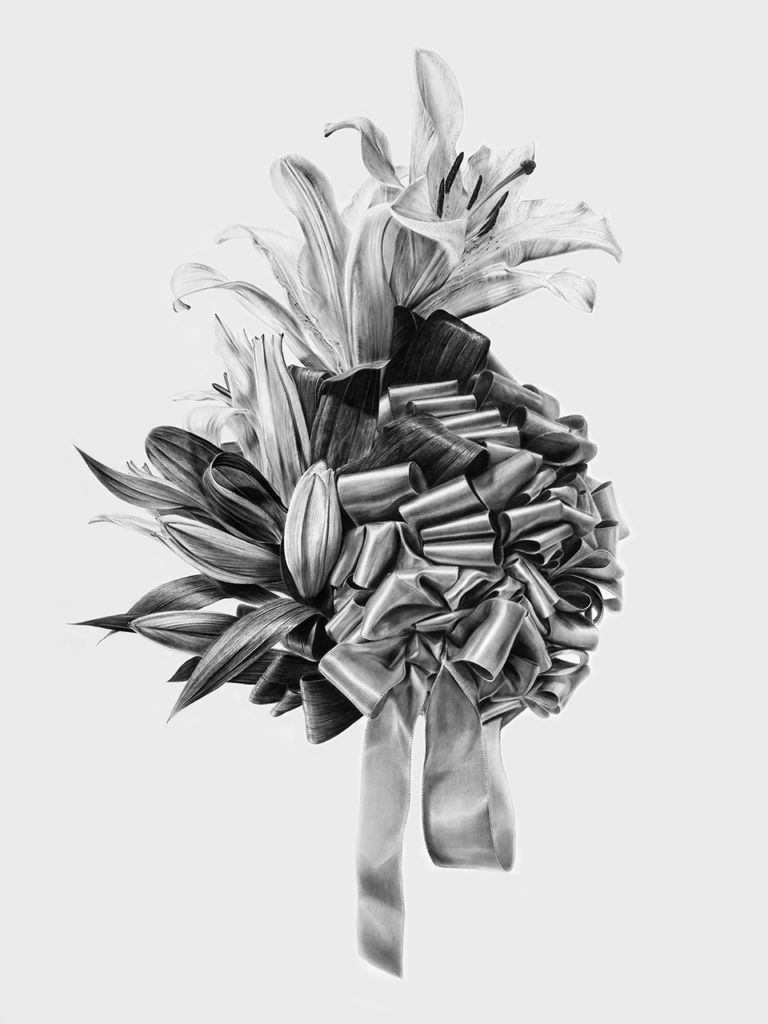
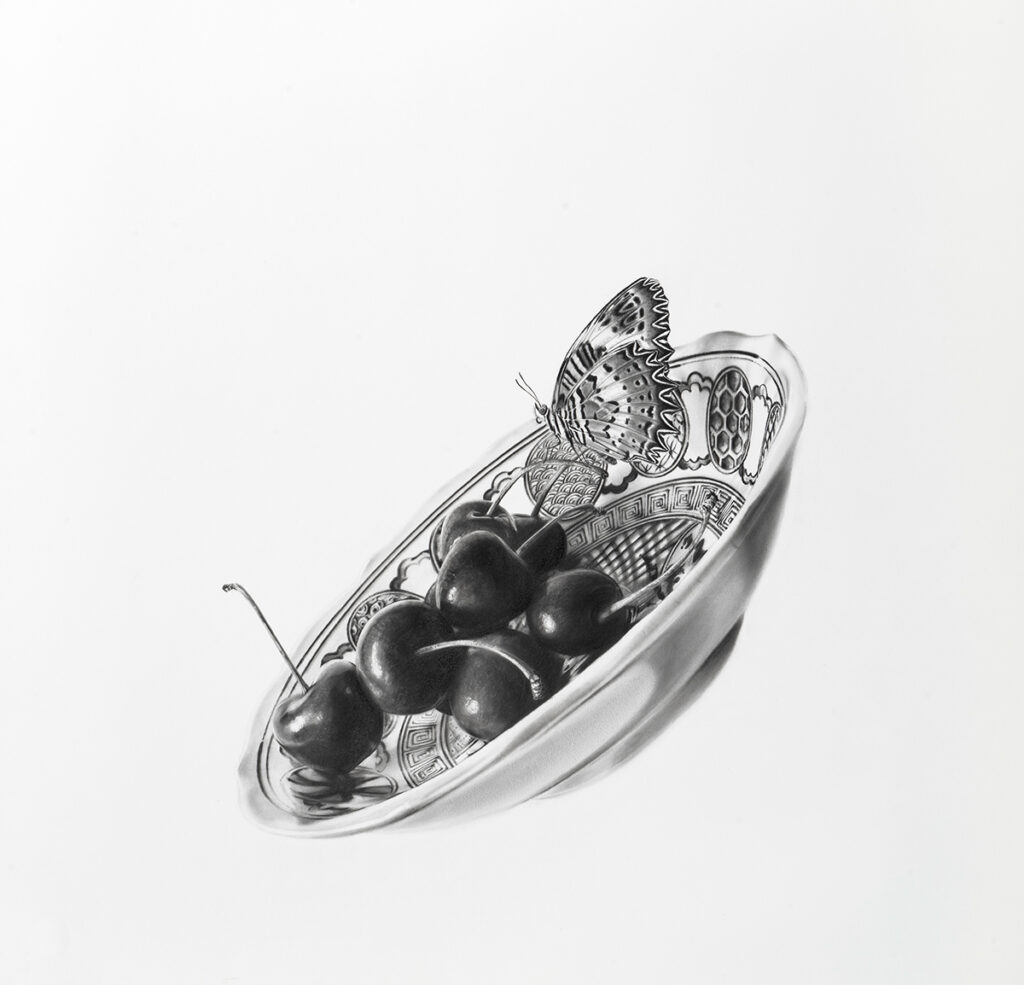
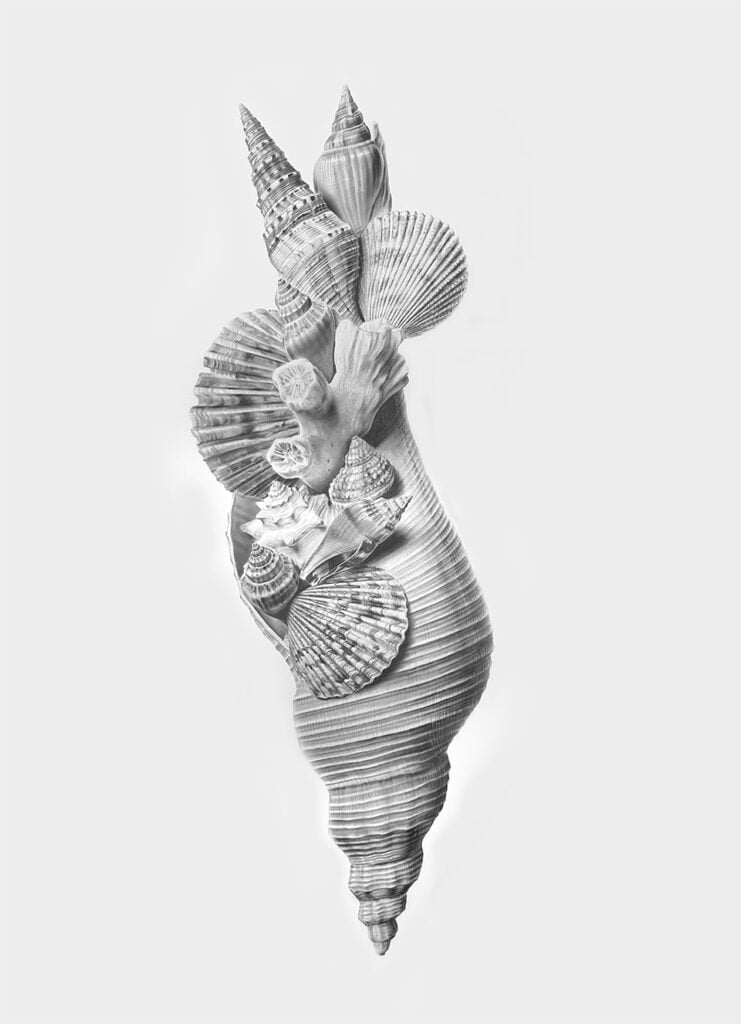
When we first encountered the work of Vanessa Cunto, the immediate reaction was disbelief—was this truly a drawing and not a photograph? Her art blurs reality -vs- art, inviting inspection, and rewarding curiosity with astounding precision. Every element, from the subtlest highlight to the most delicate shift in tone, reflects an almost microscopic attention to detail. Her compositions are not created through shortcuts or digital manipulation, but through disciplined technique, patience, and a mind trained to observe what others overlook.
Override
What makes her work remarkable is the harmony between technical execution and emotional presence. Her refined craftsmanship is evident, each piece feels alive, breathing with meaning and intention. Vanessa’s artistic talent is not merely physical skill; it is a deep intellectual practice, an ability to translate reality with striking clarity. Her art challenges us to slow down, look longer, and recognize that mastery still exists.
“For the past 15 years, I’ve worked as an Art Director, Illustrator, and Stylist, turning concepts into captivating visual experiences across mood, space, and object. My hybrid background in fine art and commercial design shaped the way I think about creativity: not as one fixed discipline, but as a process of turning concepts into compelling visual language. This training lets me easily blend the depth of classical thinking with the precision of commercial execution, so the work is always conceptually clear and beautifully realized for the client. I’m here to ensure that every visual element I create builds meaning and tells a story that is as sophisticated as it is memorable. “
Background and Personal History?
I’m a first-generation American, with my father immigrating from Italy and my mother from Venezuela. I grew up in South Florida, and my parents were always incredibly supportive of all my artistic endeavors. They bought me art supplies, let me paint murals in the house and proudly hung my work on the walls throughout the years. I received my Bachelor of Fine Arts from the University of Florida- I loved the program and it’s emphasis on working across all different kinds of mediums. I moved here to St. Pete in 2019 after spending a couple of years working in New York. I’ve truly settled into this city as my home and am committed to participating in and adding to the local culture.
Describe your art “niche” for us.
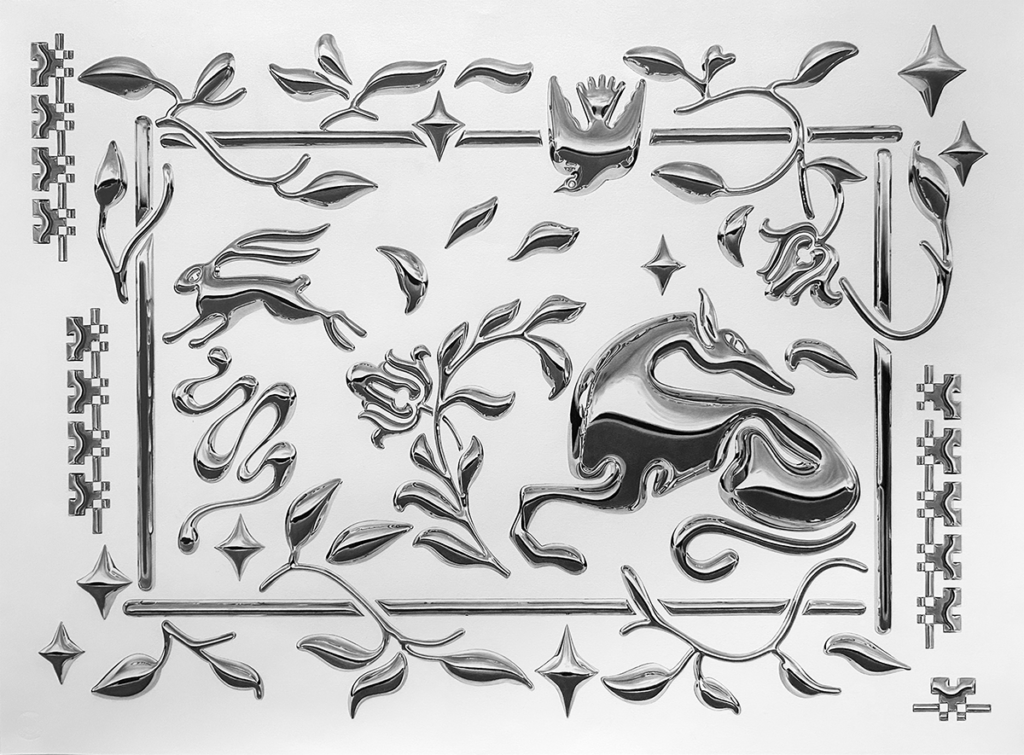
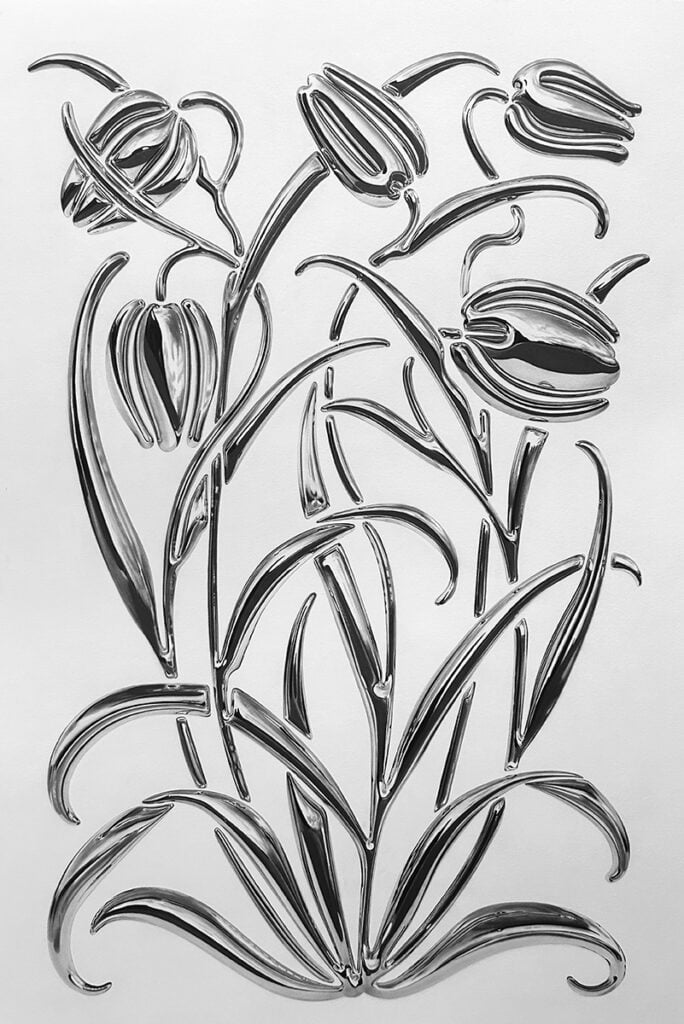
My work investigates the necessary reconciliation between human-built systems and the unyielding laws of the natural world through two distinct series: one critiquing capitalist consumption using Dutch still life symbolism, the other envisioning an ethical digital future through the lens of Y2K futurism. Through the focused rendering of graphite and the strategic use of negative space, I examine our current cultural disconnect, proposing a path toward a cooperative, biosphere-informed future.
What formal training do you have, or are you self-taught?
My formal training at UF was pretty traditional, combining courses on strict technical execution with others focused on refining conceptual depth. Going through critiques in that formal setting was invaluable; it built a muscle I still use daily. When starting a new piece, I filter through choices on how I would defend them in a critique. If I don’t have a clear answer for certain elements, I push the piece until every detail is intentional.
However, the techniques for my recent work in graphite are primarily self-taught, requiring a lot of trial and error. A major learning curve was how different papers absorb the graphite, and finding the right surface for my vision. The tools—specifically graphite powder and brushes—allowed me to have a painterly approach to the work, which is why I’ve been successful in this medium. My strength isn’t necessarily linework, but I excel at isolating and then recreating the complex shapes from my reference photos. I also utilize specific lighting in my original photography to guarantee that the objects will translate with a sense of fullness and depth through shadows once they are rendered on the paper.
How does art fit into your professional life? Do you make a living as an artist?
Art has consistently been at the center of my professional life. I learned quickly that an arts degree is profoundly versatile because it simultaneously hones essential skills like critical thinking, collaboration, and communication. This adaptability allows for advancement in nearly any professional avenue.
Most of my career was spent in video production, where I specialized as a food stylist. But my success there had nothing to do with cooking; rather, it was my artistic ability to view food as a purely sculptural medium- for advertising, the visual presentation was the only end goal. Additionally, I’ve applied my conceptual thinking to carry out client briefs. At its core, all this work is identical: taking research and using it to inform a visual idea that perfectly communicates a concept.
Today, I’m shifting my focus to my fine art practice, using my work experience gained from my production career to help manage and grow the business side of being an artist.
How do you market your art/services?
I market my art and services through a combination of gallery exhibitions and an online presence, primarily on Instagram. The return from sharing on social media has been surprisingly positive, even without a massive following. It proves that you never know who your work will reach- I had one instance where a single person discovered my profile and bought five drawings, which was a great validation.
To keep my momentum and prevent discouragement from the often-frustrating algorithm, I maintain the mindset of just putting the work out there; the goal is to share my art, not let it sit isolated in my studio. To diversify my reach this year, I also partnered with the online gallery, Midnight. I completed two separate series releases with them, which was a great process for creating targeted work for their specific collector base and releasing it all at once.
What are your personal and professional goals?
My long-term goal is to build a studio that creates objects as companions for the home—crafted with care, rooted in nature, and guided by a strong philosophical backbone. Inspired by William Morris, I believe the home should be filled with things that shape our days, guide our attention, and ground us in beauty. •
Transition to the new series: “Though the visual language moves from the 17th-century studio to the early 2000s aesthetic, the core investigation remains constant: Where have human systems failed to reconcile with the immutable wisdom of nature? This inquiry leads directly to the series exploring the gap between the promise of Y2K utopia and the current reality of our online existence. My new drawing series starts as digital renderings of chrome objects, borrowed from historical ornamental design for its reference to nature and timeless, yet often underappreciated, craft.” – Vanessa
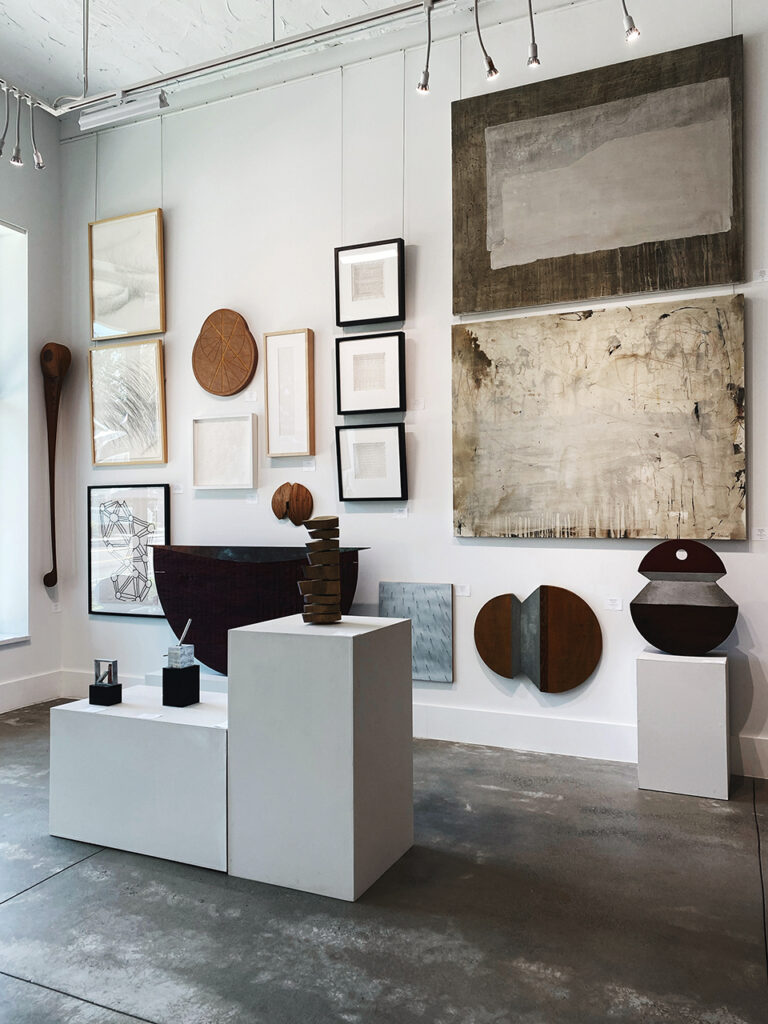
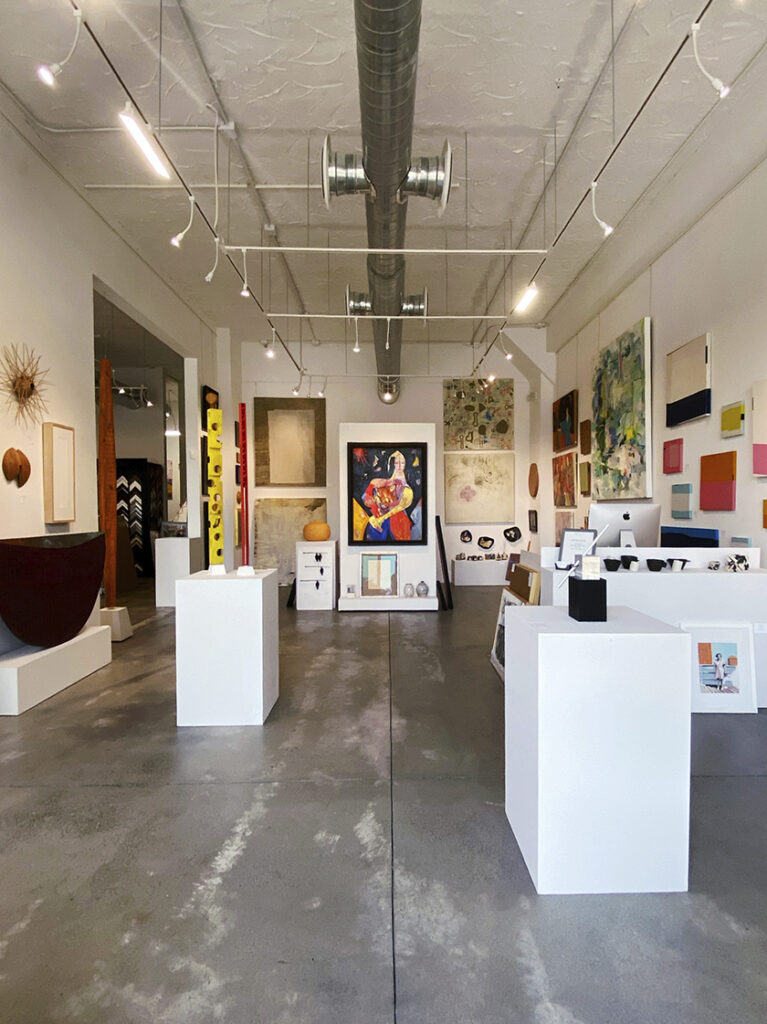
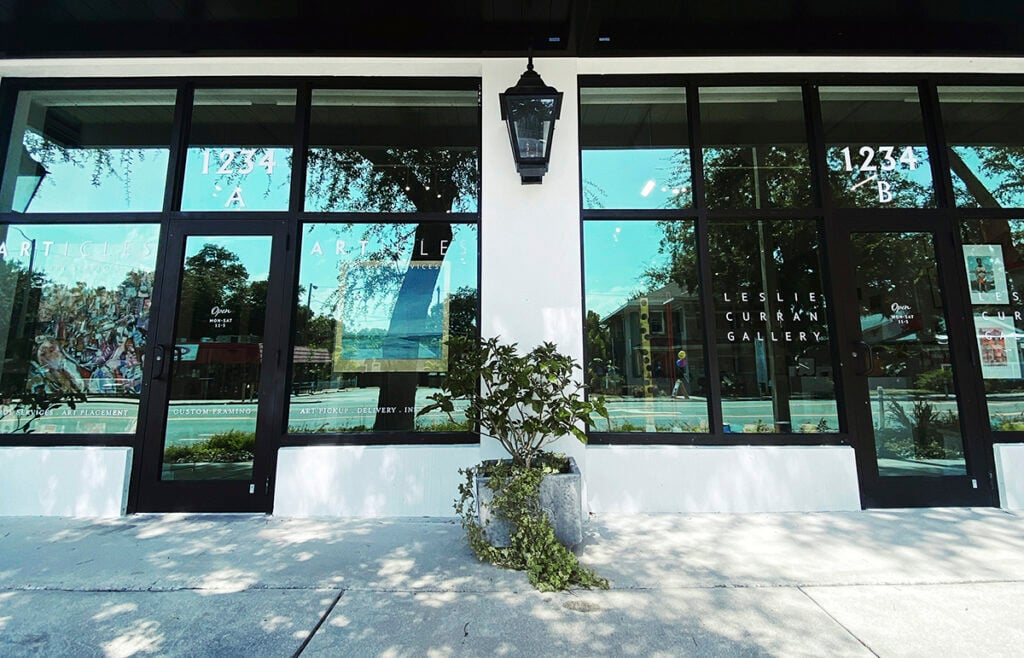
In St. Petersburg’s vibrant Uptown Arts District, ARTicles Gallery & Fine Art Services has earned a reputation as a trusted and welcoming destination for art collectors, interior designers, artists, and cultural enthusiasts. Blending a refined gallery experience with practical fine art services, ARTicles occupies a unique position in the city’s creative ecosystem—one that values both aesthetic excellence and personal connection.
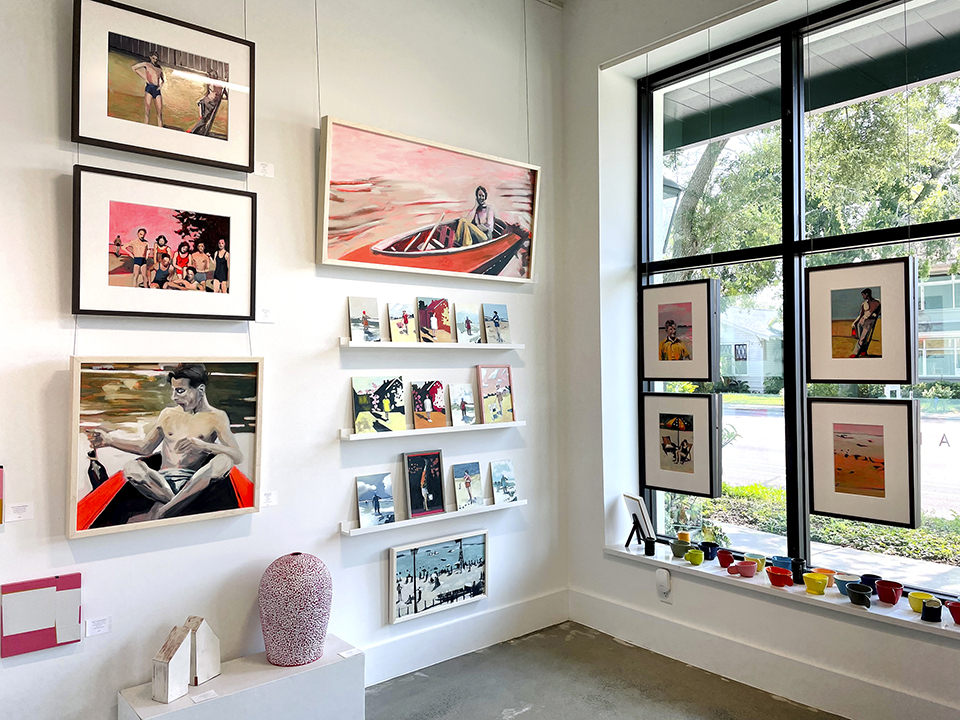
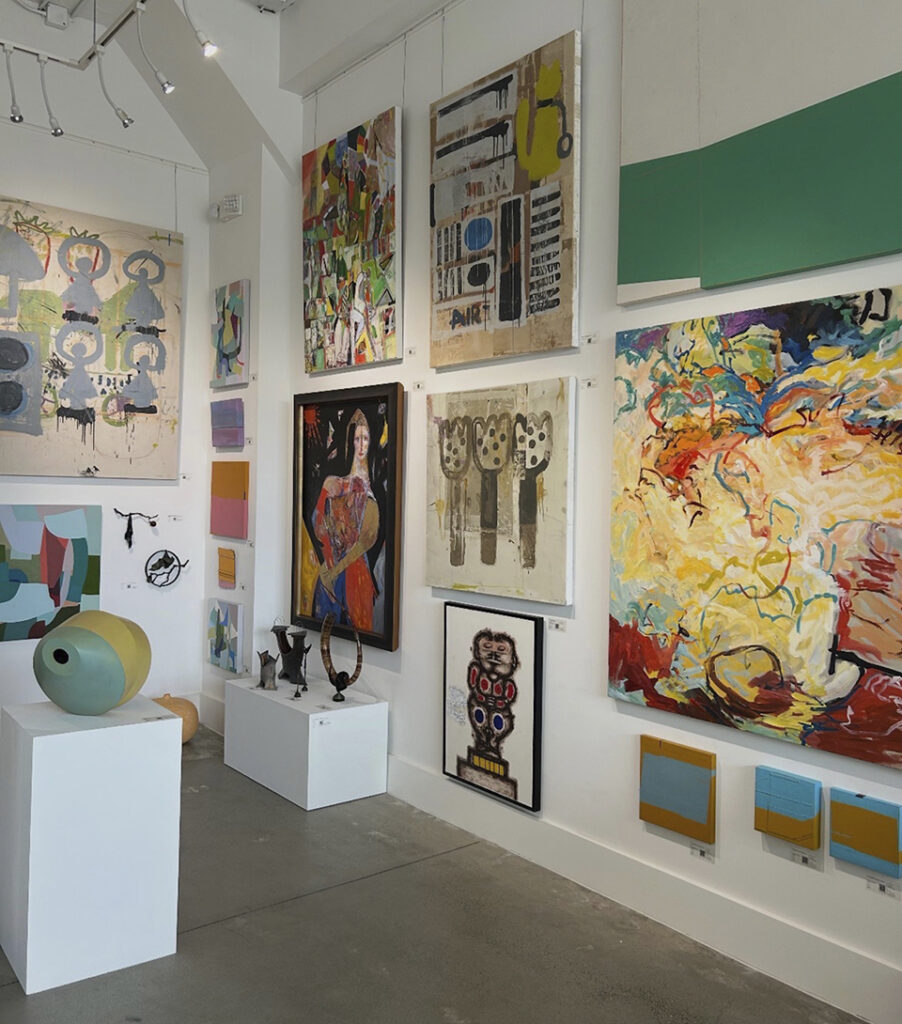
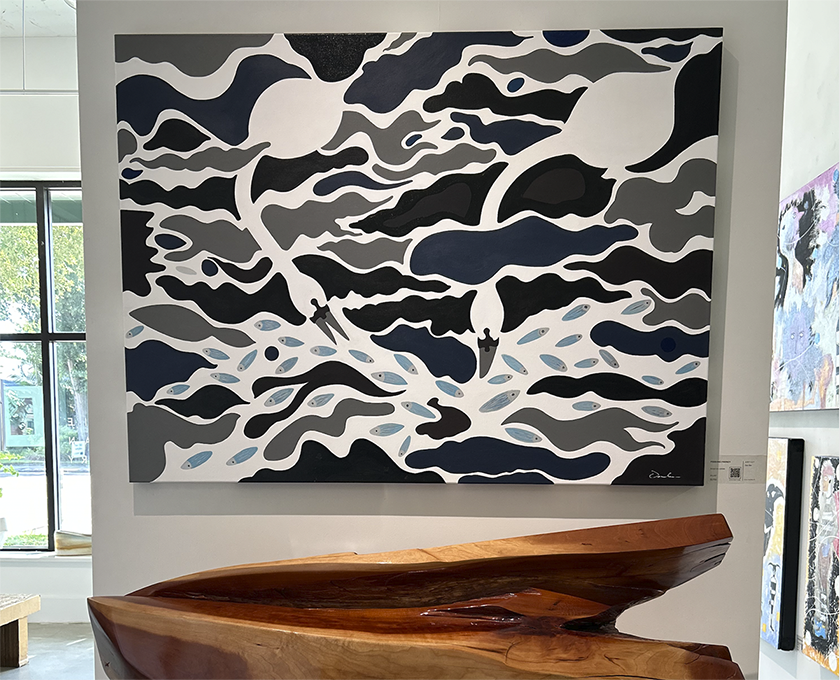
At its core, ARTicles Gallery is a thoughtfully curated exhibition space showcasing original artwork across a wide range of media and styles. Paintings, photography, mixed media, and sculpture are selected with an eye toward quality, craftsmanship, and emotional resonance. The gallery represents both established and emerging artists, with a strong emphasis on regional talent while also featuring nationally and internationally recognized creators. This balance allows ARTicles to remain locally grounded while offering a broader artistic perspective.
What distinguishes ARTicles from many traditional galleries is its commitment to accessibility. The space is designed to feel inviting rather than intimidating, encouraging visitors to engage with the art regardless of their level of collecting experience. Whether someone is a first-time buyer or a seasoned collector, ARTicles provides an environment where questions are welcomed and conversations about art are central to the experience.
ARTicles also offers art consulting and placement services for private homes, corporate offices, hospitality spaces, and public environments. These services are guided by a collaborative process, taking into account a client’s aesthetic preferences, spatial considerations, and budget. The goal is not simply to fill walls, but to create meaningful visual experiences that enrich everyday spaces. Professional installation services further ensure that artwork is displayed safely and effectively.
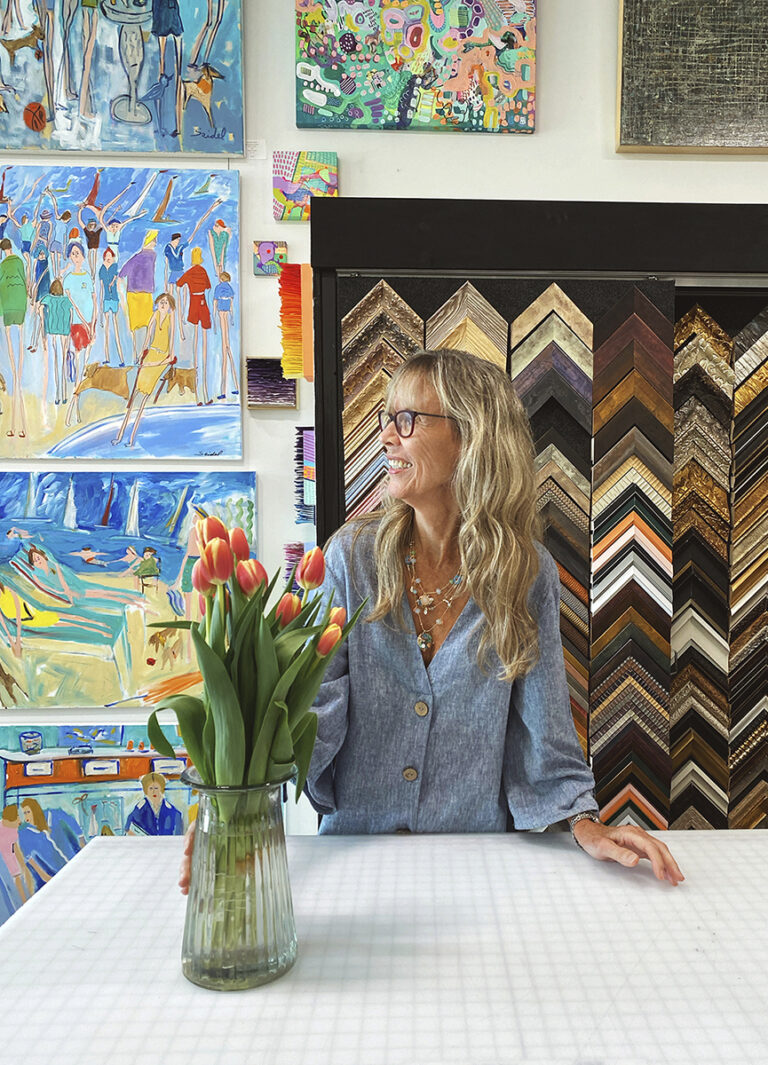
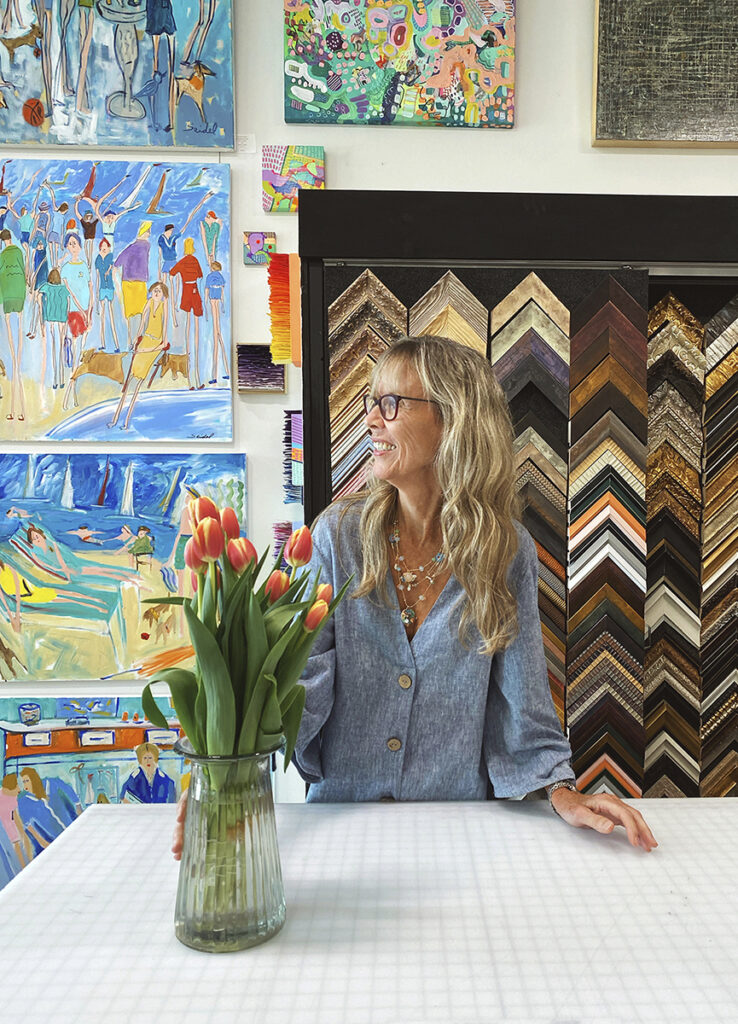
The gallery is owned and directed by Leslie Curran, a lifelong St. Petersburg resident whose deep roots in the community have shaped ARTicles’ identity. Curran’s background in art, design, and business informs the gallery’s practical yet artist-centered approach. Her long-standing involvement in local arts organizations and events has helped position ARTicles as both a commercial gallery and a community partner. This dual role is evident in the gallery’s programming, which often includes artist talks, special exhibitions, and collaborations with local cultural initiatives.
Community engagement is a defining aspect of ARTicles Gallery. Situated in a district known for its creative energy, the gallery actively participates in St. Petersburg’s arts scene, contributing to events such as gallery walks and art-focused neighborhood initiatives. These activities reinforce the gallery’s mission to support artists while fostering public appreciation for the arts.
In addition to its physical presence, ARTicles maintains an active online platform, extending its reach beyond St. Petersburg. Through its website and digital communications, the gallery highlights featured artists, available works, and services, making art accessible to a wider audience. This hybrid approach—combining in-person engagement with online visibility—reflects a modern understanding of how people discover and interact with art today.
The gallery’s location in the Uptown Arts District further enhances its role as a cultural anchor. ARTicles contributes to the dynamic environment by offering a consistently high standard of quality and professionalism, reinforcing St. Petersburg’s reputation as one of Florida’s leading arts destinations.
Ultimately, ARTicles Gallery & Fine Art Services represents a model of what a contemporary gallery can be: artist-supportive, client-focused, and community-minded. By combining curated exhibitions with expert services, ARTicles bridges the gap between art appreciation and everyday living. Its emphasis on education, accessibility, and personal connection ensures that art is not only admired, but meaningfully integrated into the lives of those who encounter it. As St. Petersburg’s arts scene continues to grow and evolve, ARTicles Gallery remains a steady and influential presence—one that honors the value of art while adapting to the needs of a diverse and engaged audience. •
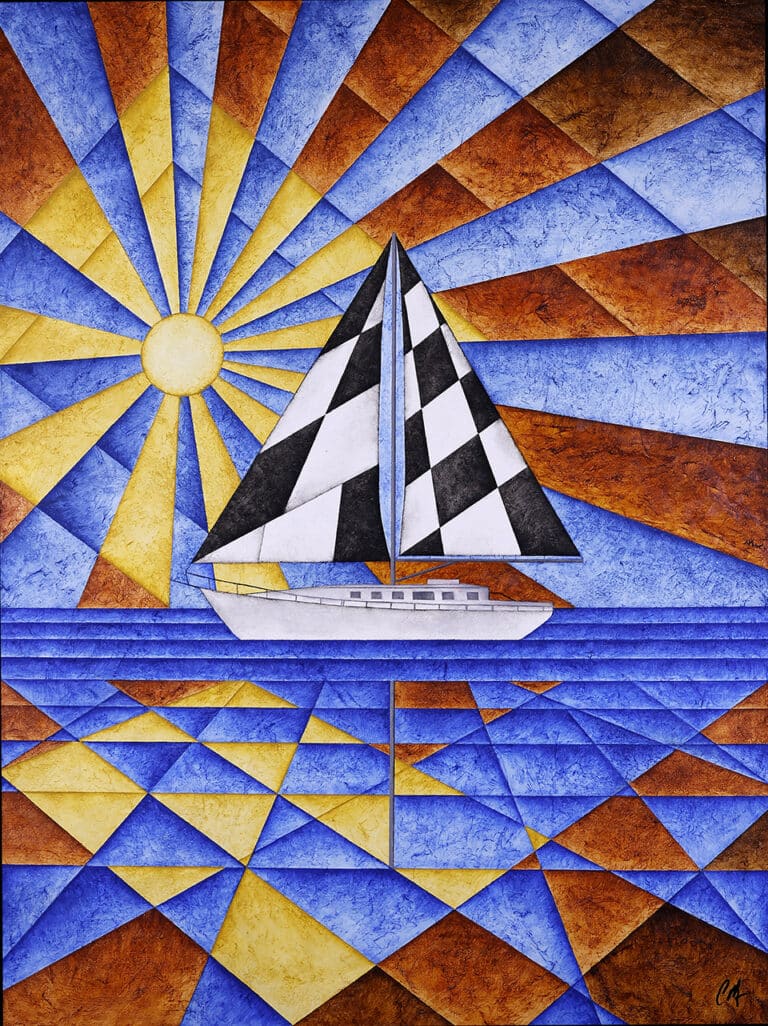
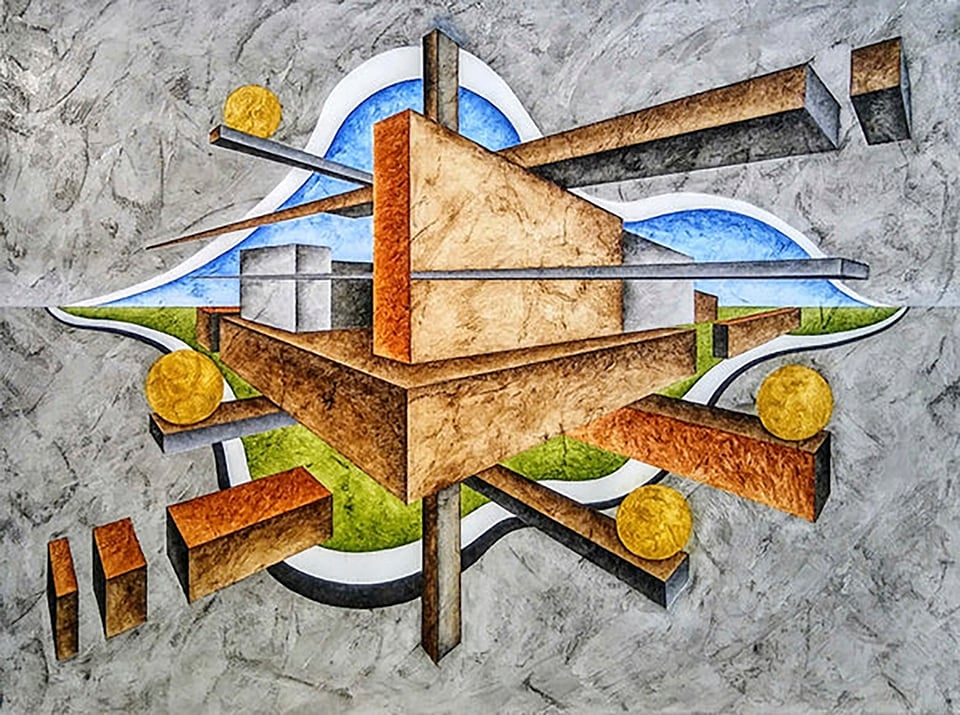
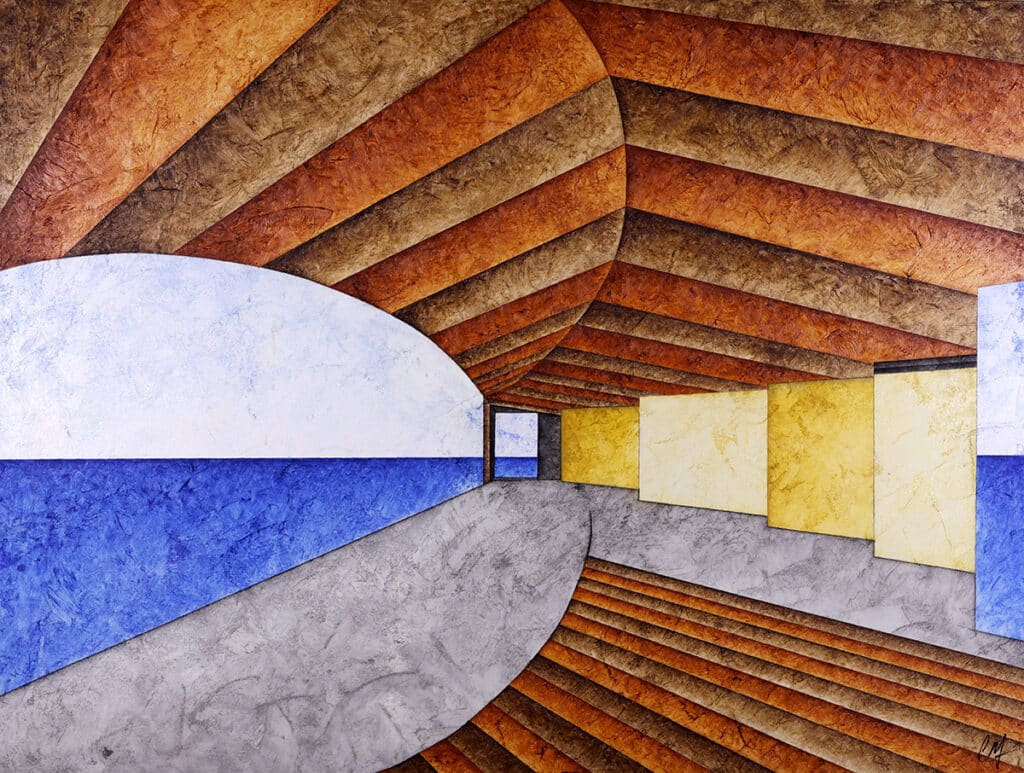
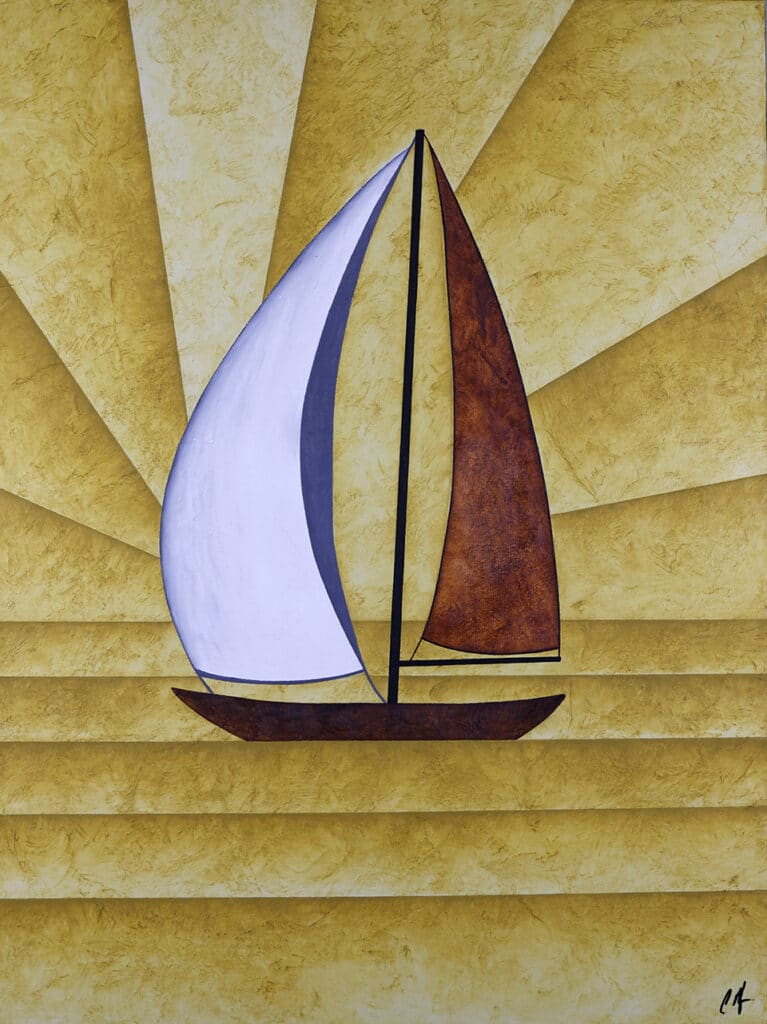
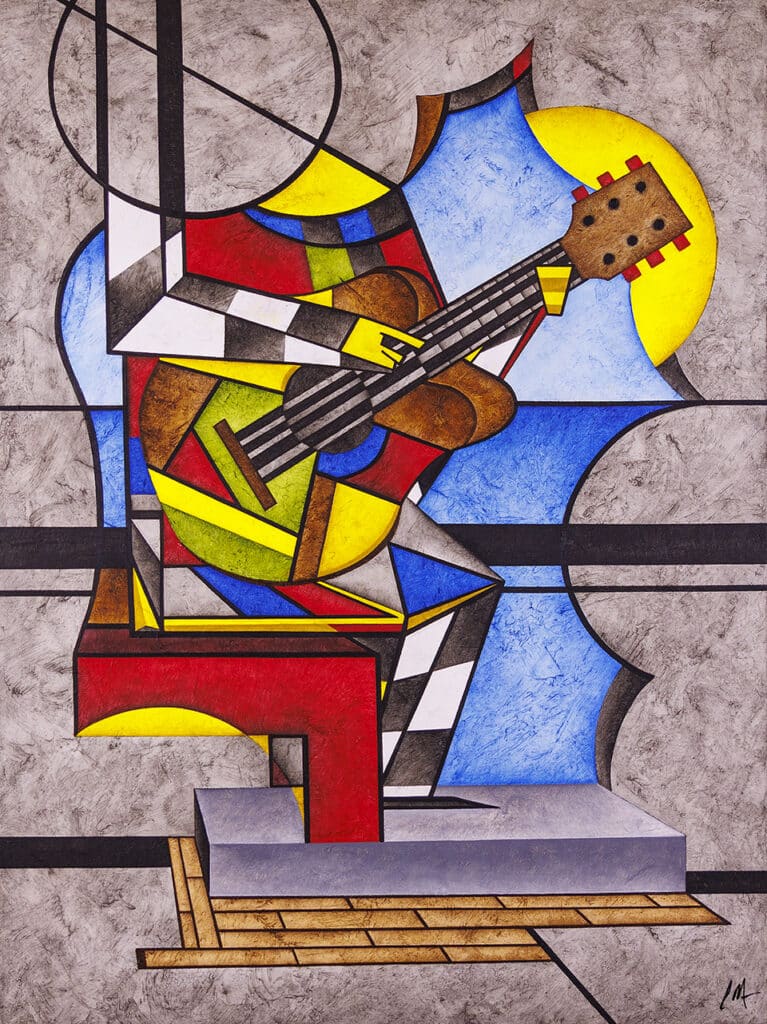
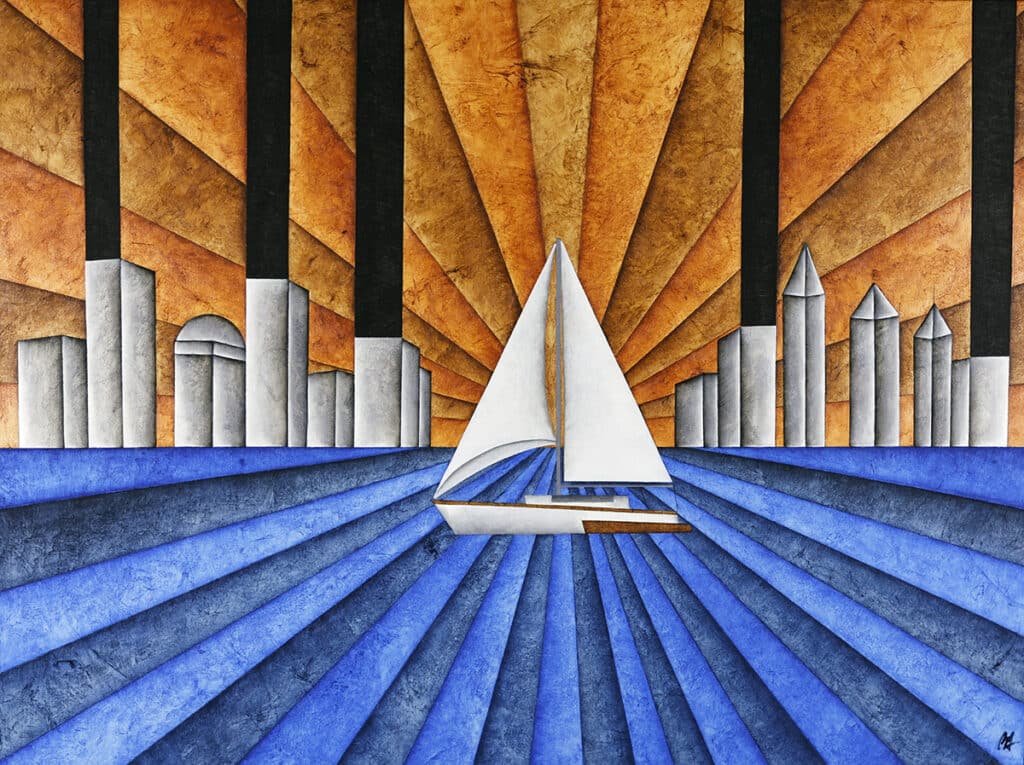
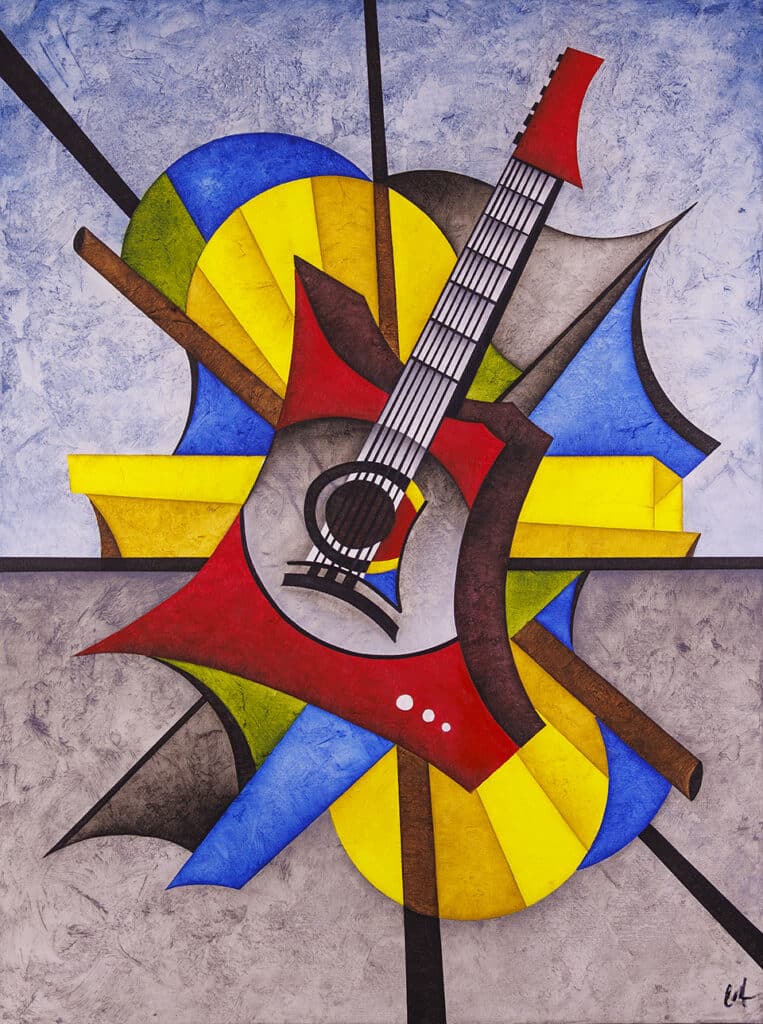
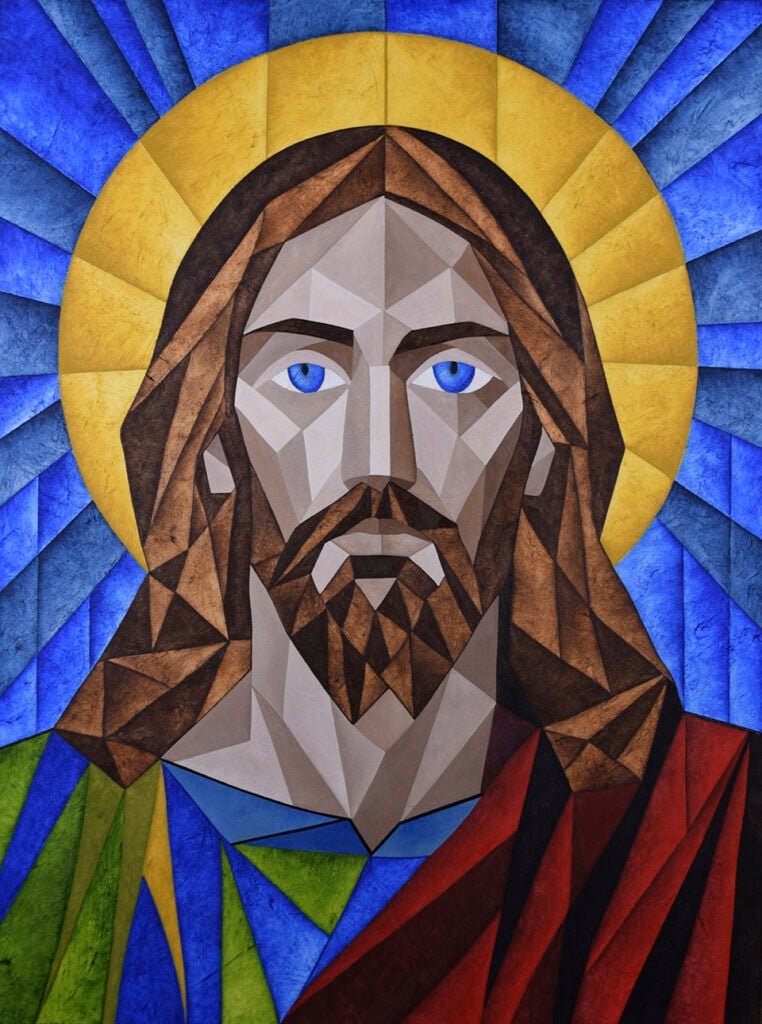
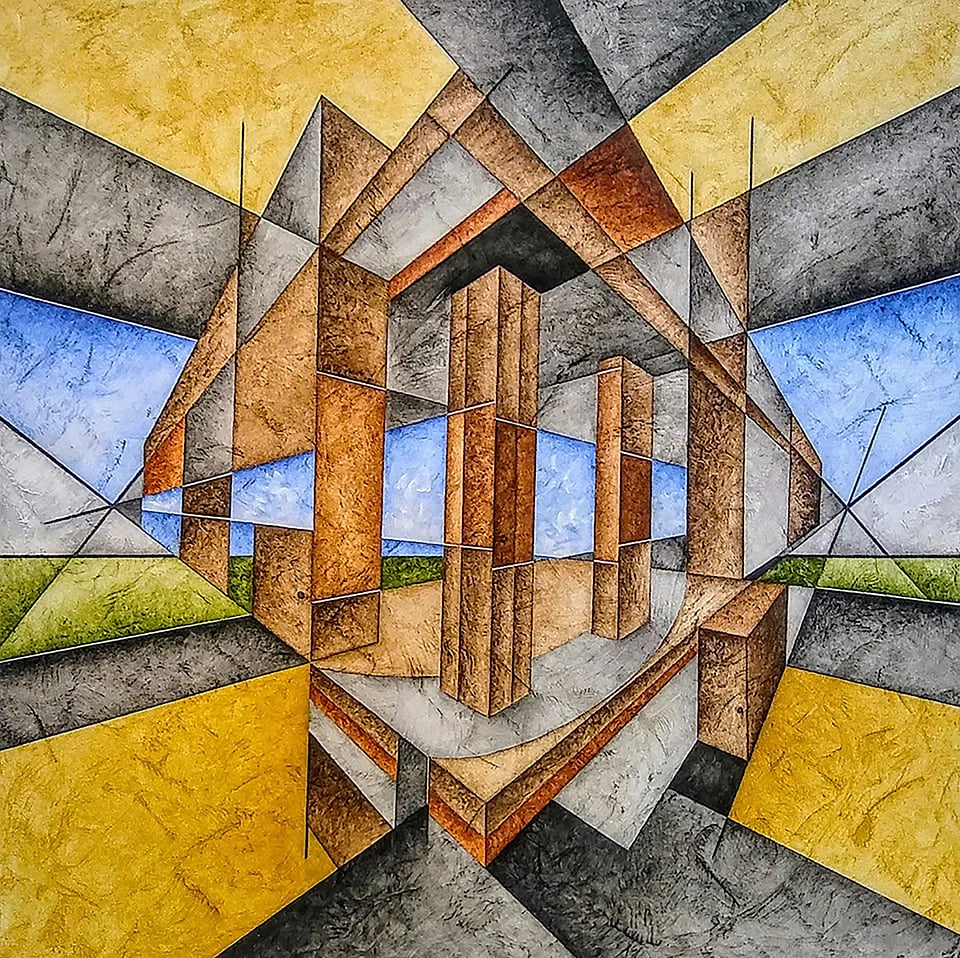
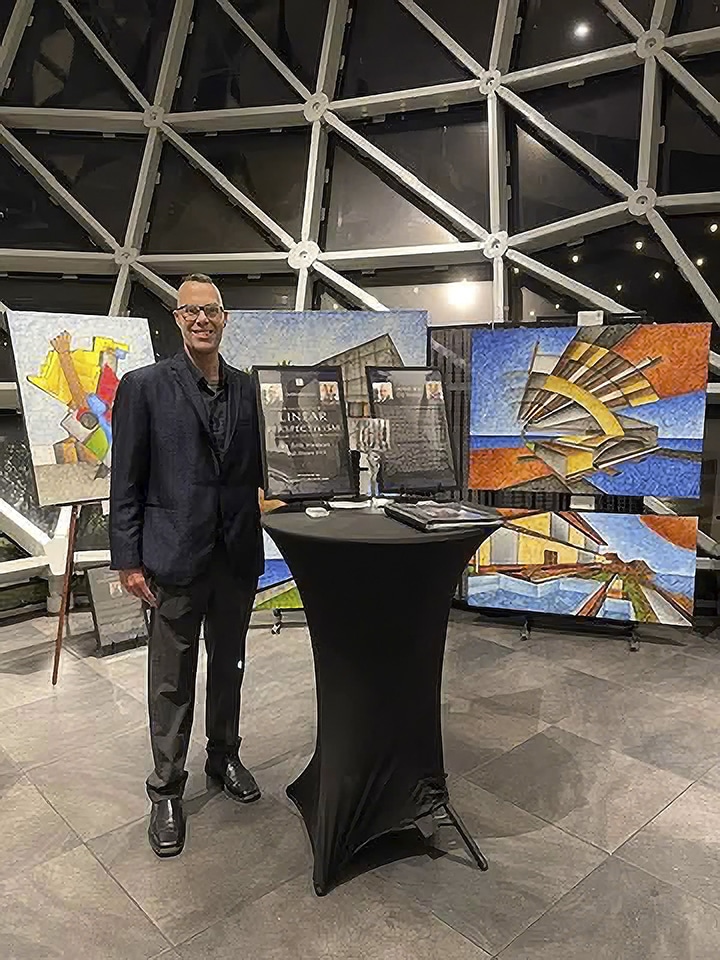
Full-time Saint Petersburg, Fl artist Erik Hesson has, over many years, developed and refined a personal artistic style he calls “Linear Perspectivism.” His abstract, geometric approach merges shape and color into a cohesive visual balance—an ordered structure.
When did you first realize that art was more than a passion—that it was going to be your life’s work?
I’d like to think that it was from the very beginning of my artistic journey, which was at the age of 22 in the year 2002. I live by a lifestyle philosophy called Kaizen, which in its essence is a commitment to a process of perpetual improvement over the course of one’s lifetime. And I try to apply that to all areas of my life, especially artistically. And although I started my artistic journey with literally no experience and no artistic skill of any kind, I was fully committed to improving my skills and honing my artistic vision over the course of my lifetime. Prior to that, my only artistic experience was in a cognitive dream that I had literally the night before I went and bought art supplies for the first time and started painting. In that dream, I remember coming home to a warehouse-type dwelling and looking up at the walls to see numerous paintings that I had an innate feeling were my own originals that I had created. And in that same dream, I also had an easel setup in the corner of the room with a work-in-progress, and I went over to it and actually started painting in my dream for what seemed like a few hours. Inspired by my vivid memories of that dream, the feeling I had of finding my life’s purpose, and the artistic vision of the paintings that were hanging on the walls in my apartment from that dream, I decided to start my artistic journey the next day and was fully committed to improving over time and making it my life’s work.
Because you’re self-taught, what challenges or freedoms came with developing your own creative path outside of formal training?
As you can imagine, for someone with no formal training, there were many challenges along the way and also infinite freedoms that were both a blessing as well as extremely tough to overcome and figure out at times. The first challenge was figuring out a medium that worked for me, and figuring out how to apply that medium to the canvas in an interesting way. At first, I experimented with acrylic paint and was applying it in a very remedial way to the canvas. And then I found that oil paint actually suited me better and I eventually discovered a unique way to use it. Overcoming this challenge led me to the discovery of my unique paint application method which produces my signature texture and my easily identifiable brushstroke character. Another great challenge was figuring out what art style best expressed my artistic vision. I originally experimented with numerous art styles, such as abstract expressionism and impressionism, while all the while desiring to find my own unique expressive style and to contribute something unique to the art world. Eventually leading me to the development of my signature art style Linear Perspectivism in 2017. How did your journey as a self-taught artist lead you to develop what you now call “Linear Perspectivism”? After about 15 years of searching for my own unique artistic voice and style, I kinda just had a lightbulb moment and came up with the idea to create a style that took a basic underlying design element, linear perspective, and make it a featured and central component to the aesthetic/composition of the piece.
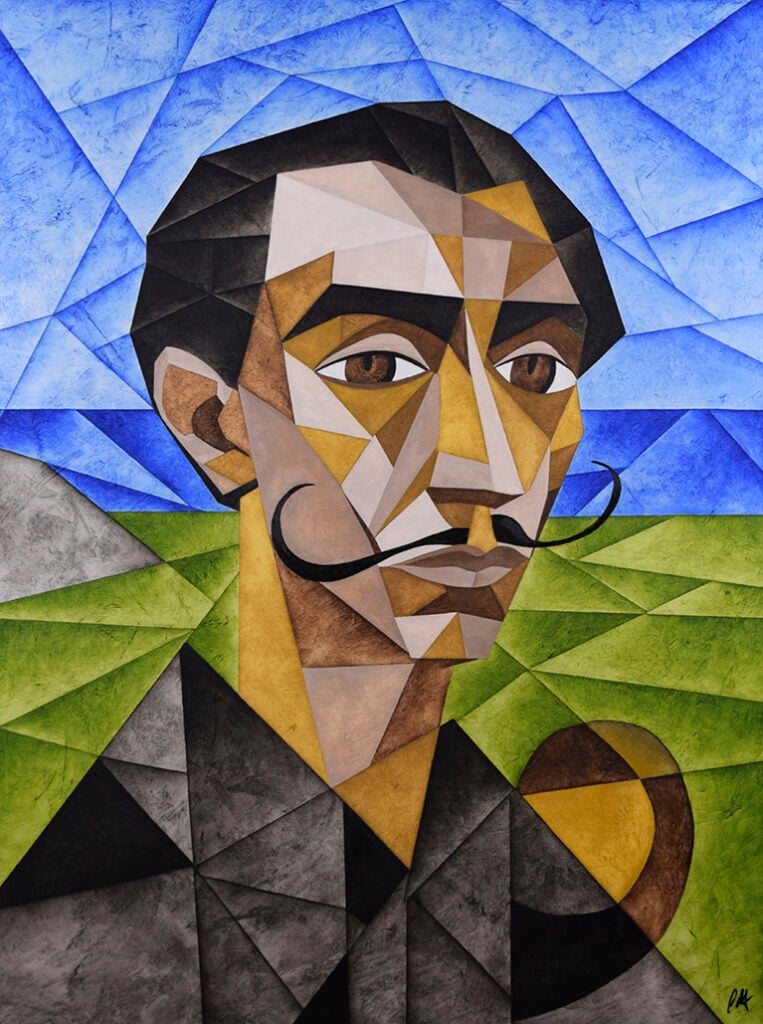
Salvador Dali by Erik Hesson
In your words, “What Cubism did to the cube, Linear Perspectivism does to linear perspective.” Can you unpack what that means for viewers encountering your work for the first time?
Sure. With Cubism, Picasso took a basic fundamental component, in this case the cube or the 3d space that a cube creates, and decided to make it a central component of the construction of the composition and a featured element of the overall aesthetic of the artwork. Linear Perspectivism does something similar with the basic fundamental design element of linear perspective. Where the two styles differ fundamentally is in the fact that Cubism is a rejection of traditional linear perspective from a single vantage point, and Linear Perspectivism utilizes and features traditional linear perspective from a single vantage point as a main component of the overall aesthetic and in the construction of the composition of each piece.
What inspired you to elevate linear perspective—usually a background structure—into the dominant visual language of your compositions?
To be honest, it was just one of those lightbulb moments/ideas that came to me deep in the midst of a journey trying to figure out a unique way to express my artistic vision for many years prior. I’ve always had a deep desire to contribute something truly unique to the art world and to art history, and this is what I’ve come up with.
Growing up in Valrico and now working in St. Pete, how has your environment shaped your artistic identity?
Well, I’ve lived in St. Pete since 2014 and I created Linear Perspectivism in 2017. So, I’m not exactly sure how St Petersburg specifically contributed to the creation of Linear Perspectivism, but I truly believe that I would not have reached that point of artistic discovery in any other environment. It is very inspiring to live here in St Pete and be in such a rich cultural environment amongst so many talented creators and passionate patrons of the arts. I absolutely love the collective energy here and I plan on living and working here for the rest of my life.
Your work blends geometric abstraction, vibrant color, and classical proportion. How do you balance intuition with structure when creating a piece?
Every piece and subject matter is a slightly different decision-making process, but I always try to imagine my chosen subject matter within the parameters, characteristics, and aesthetics of my art style Linear Perspectivism. Which are: basic 3d geometric representations of persons, places, and things; from a single vantage point, with bold colors, and using my unique paint application method and texture. Sometimes, I create a composition entirely in my head and then sketch it on canvas and then paint it. Sometimes, I just think of a starting point for a composition and then figure it out in-the-moment as I’m sketching it on the canvas. Sometimes, I go to a desired location around town and take a picture of it myself from a vantage point I like and then create a Linear Perspectivism version of it. And a few times, I’ve found an image via internet search that I wanted to recreate in my Linear Perspectivism style, so then I do that. I always just use my artistic eye and intuition to see what looks right and feels right throughout the process. I just try to balance both as best I can for each moment and hopefully the result turns out well.
You work in both oil painting and digital media/AI—what does each medium allow you to express differently?
I experimented with creating digital artworks in the past using a drawing tablet and Adobe Illustrator a few years ago, and now at this point, I’ve decided to focus solely on creating oil paintings on canvas and I only use digital art programs for creating random graphic designs and random sketches/ideas for oil painting compositions once in awhile.
For real artists, AI can be a great tool for creating ideas and accomplishing various tasks very easily. I personally use it quite a bit as a timesaver and for various business-related tasks that would normally require a team of people to accomplish. Once in awhile, I also use it for creating composition ideas or inspirations for paintings if I’m ever stuck or struggling to come up with a specific idea/composition for my next painting.
Jesus. Erik Hesson. 2025OpposingPerspectives_.36×36.oiloncanvas.2018_960x.png
You’re a recurring presence at the Dalí Museum patio exhibits. How has this affected you and your work? And how has engaging directly with the public influenced your evolution as an artist?
My collective experiences at the Dali Museum and interacting with a wide range of art lovers has had a profound effect on me personally and professionally. It’s very rewarding to share my art with people from all around the world and for it to be well-received by a vast majority of them. And I do also sometimes receive constructive criticism, which I appreciate as well, and take into account for future reference. And for an introvert like myself, it’s great to meet so many new people in general and hear their thoughts and comments. And it’s also very humbling to meet some of the great masters of art and industry that I’ve met while exhibiting my work there. I’ve learned that art is a universal language and I want the language I communicate to be a positive one and one that is filled with love and respect.
Tell us about the vision behind your community initiative “I AM ST PETE” and how it ties into your artistic practice.
The idea behind my community initiative I AM ST PETE is to highlight and celebrate the uniqueness and diversity of all the wonderful people who make St Pete such a great place to live and work.
When someone stands in front of work, what do you hope they feel or understand about your approach to perspective and abstraction?
First off, I hope they like what they’re looking at. Then, I hope they can feel the positive energy that when into creating it and that I’m hoping to convey to the viewer. And then, I hope they see it as something new that they’ve never seen before and that they innately enjoy looking at. And I would love for my work to inspire others in any way. •
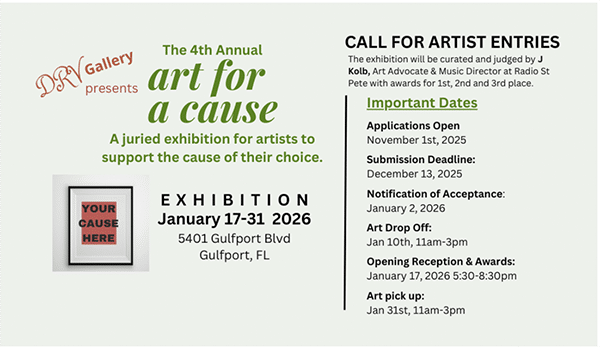
Gulfport’s DRV Gallery’s dynamic creative calendar for the first two months of 2026 includes solo exhibitions by award-winning artists, weekly artist-led classes, live music, and the gallery’s 4th Annual Art for a Cause Exhibition.
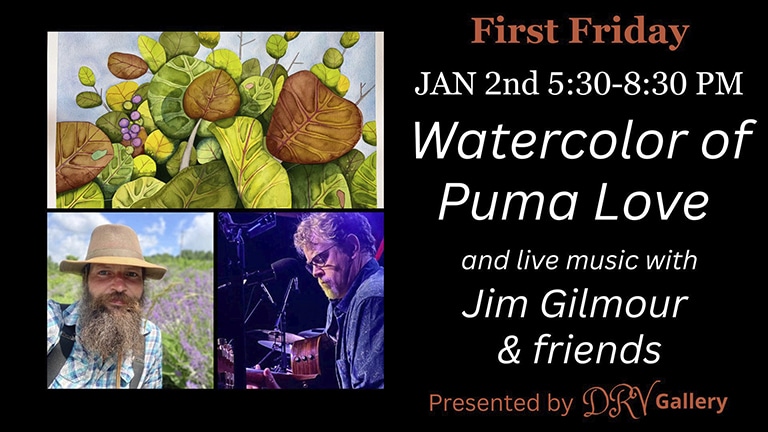
On Friday, January 2, 2026, from 5:30–8:30 p.m., the gallery will kick off 2026 with its first artist opening of the new year, welcoming watercolorist Puma Love for a solo exhibition of his paintings. Love’s work celebrates diversity, honors the Earth, and protests capitalism. The opening will feature live music performed by Jim Gilmour and Friends. Gilmour is the founder of Southview Arts in St. Petersburg.
The opening of the gallery’s 4th Annual Art for a Cause will open on Saturday, January 17th, from 5:30 to 8:30 p.m. The exhibition is a juried show featuring 20 artists from across the state, and will be judged by J. Kolb, Music Director at RadioStPete.com. Awards for 1st, 2nd, and 3rd place will be announced during the opening reception, and the exhibition will be on display throughout the month. This annual event showcases artists who create works inspired by causes of their choice, with a portion of the proceeds from the sale of their artwork going to charities they choose.
In addition to these free community events in January, DRV Gallery offers artist-led classes weekly across an array of artistic mediums that can be found on their website at drvgallery.com.
On Saturday, February 21st, from 5:30 to 8:30 p.m., award-winning artist and instructor Janie Haskins will return to DRV Gallery for a solo exhibition featuring her highly sought-after oil paintings. Haskins is renowned throughout the region for her exquisite artwork and her teaching skills. As with all gallery openings, the event will be accompanied by live music.
DRV Gallery is located at 5401 Gulfport Boulevard South in Gulfport, FL. For tickets and registration to these events and more, and to shop DRV Gallery’s online gallery, visit drvgallery.com, or visit the gallery’s social media at @drvgallery on Facebook and @drvgallery22 on Instagram.
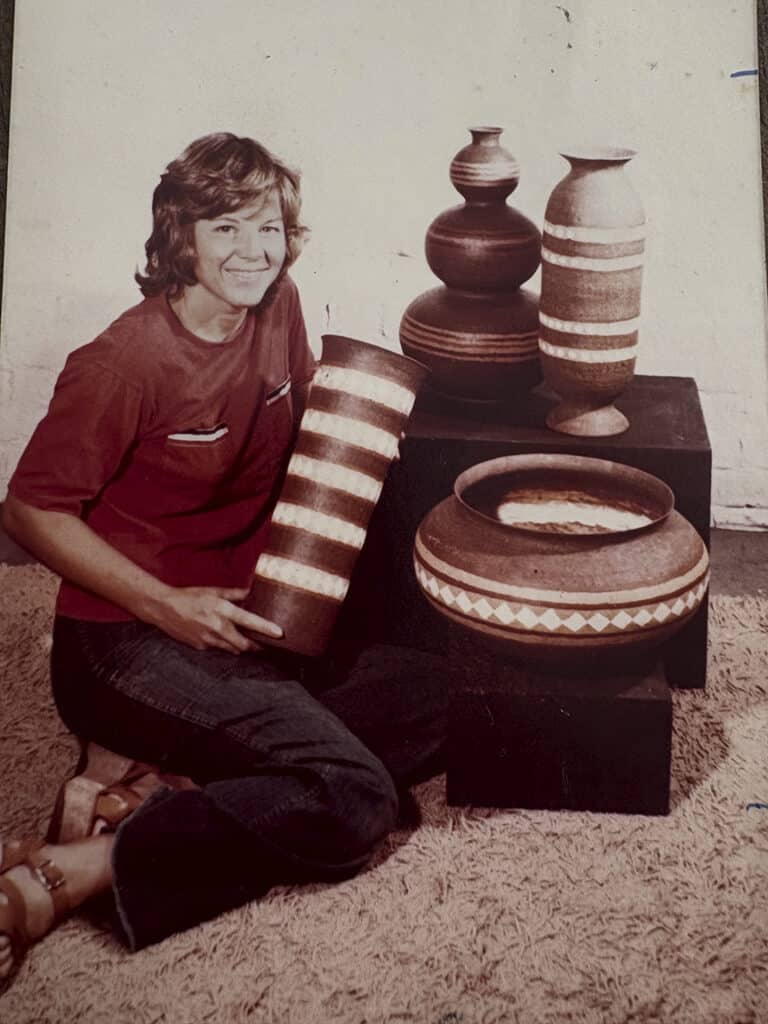
A Creative Journey in Review – The Sculpture of Susan Livingston
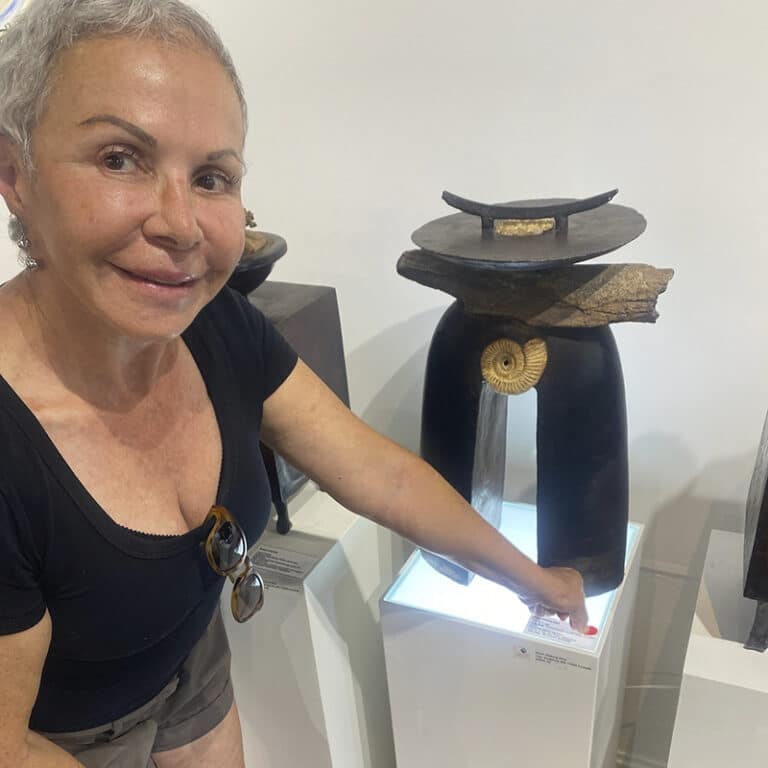
Susan Livingston has been deeply connected to the natural history of the Tampa Bay region since she moved here from New York over 50 years ago. She began her formal art studies at the Ringling Art School in Sarasota and continued her education at Florida State University, where she earned a Master of Fine Arts degree in painting. Her post-graduate studies emphasized East Asian Studies and Marine Science, both of which have had a lasting impact on her illustrious artistic career.
Susan Livingston
On Friday, January 2nd, 2026, Brenda McMahon Gallery will host the first in a series of creative reviews of Livingston’s celebrated works. Livingston will be on-hand to greet visitors and collectors and to discuss her decorated career.
After college, Livingston found both a job in Alaska and dissatisfaction with her direction as a painter. She returned to the Gulf Coast and ultimately discovered clay as a new medium for her artistic expression. Her early works focused on geometric designs, based on the idea that all art forms stem from fundamental shapes. These pieces blend classical forms with contemporary images and often incorporate letters from a unique alphabet she developed, reminiscent of hieroglyphics. Many of her works contain hidden messages using the letters she created.
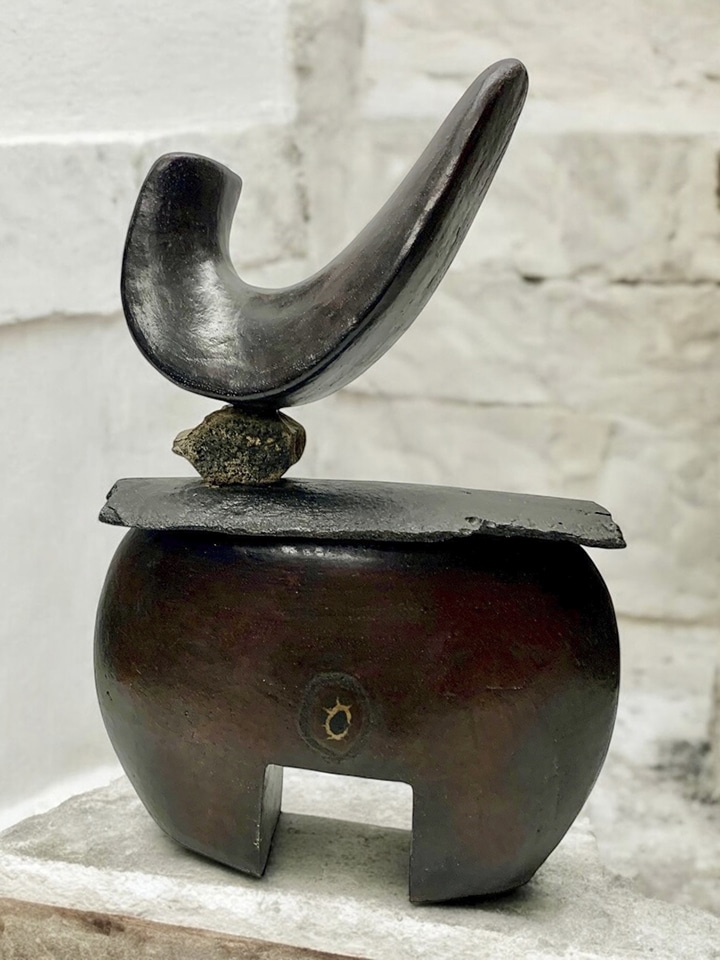
And then came the dugong rib.
A dugong is a relative of the manatee, but Susan perceived something very different in the fossil handed to her by a member of the Tampa Bay Fossil Club.
“The color was fantastic,” Livingston said. “It was so intriguing. I started a new type of work!”
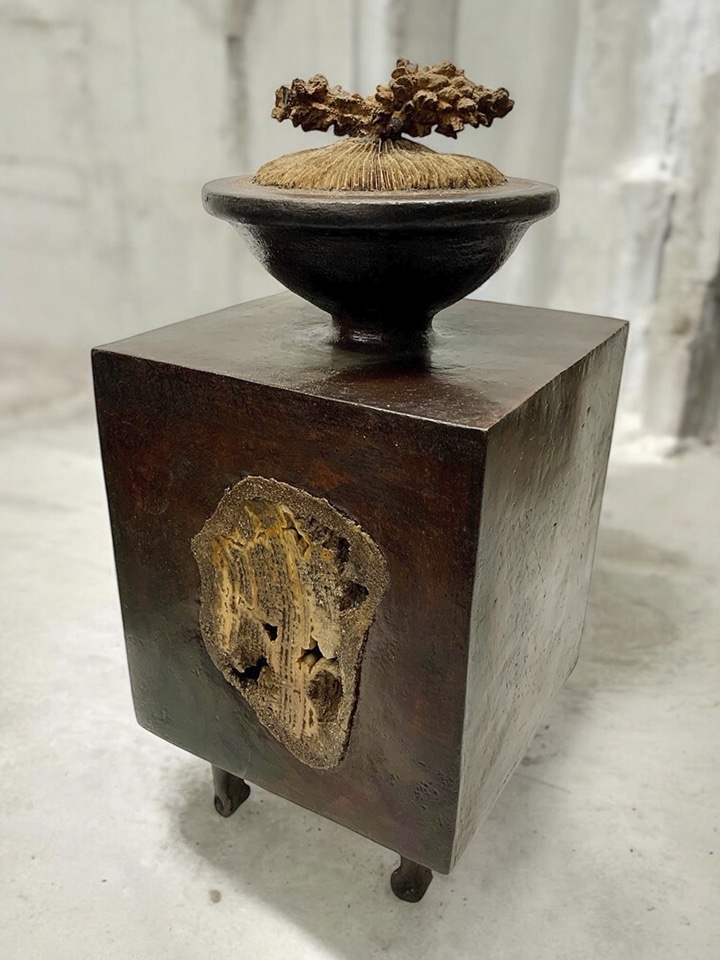
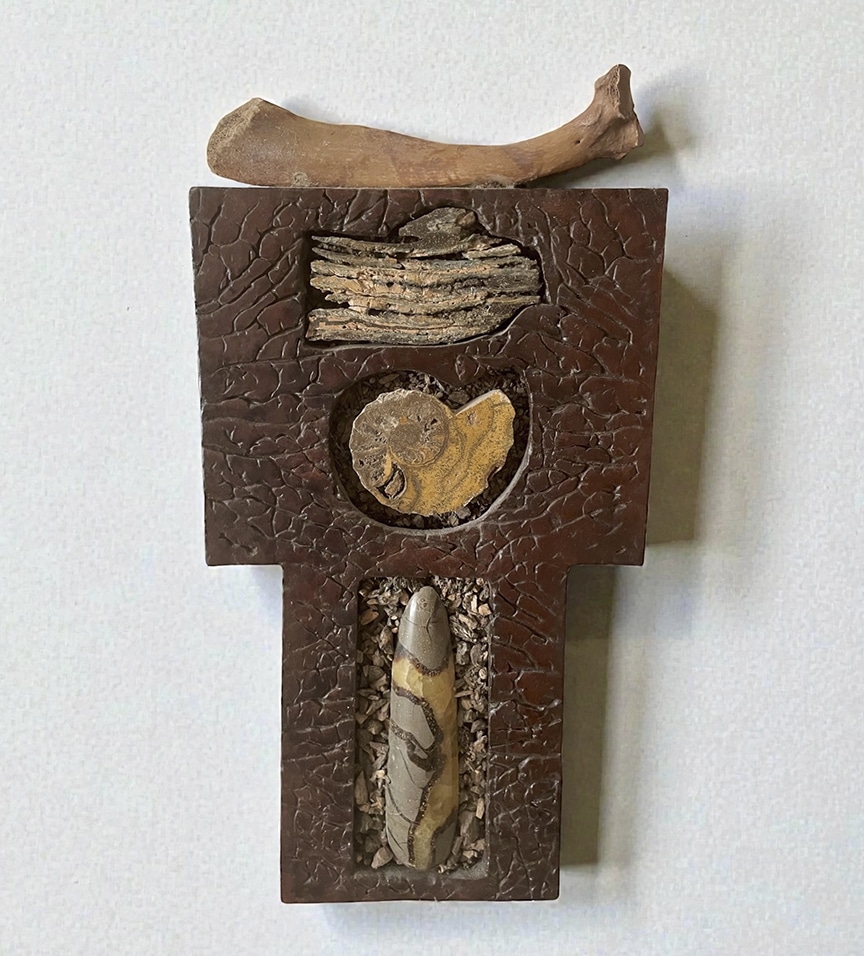
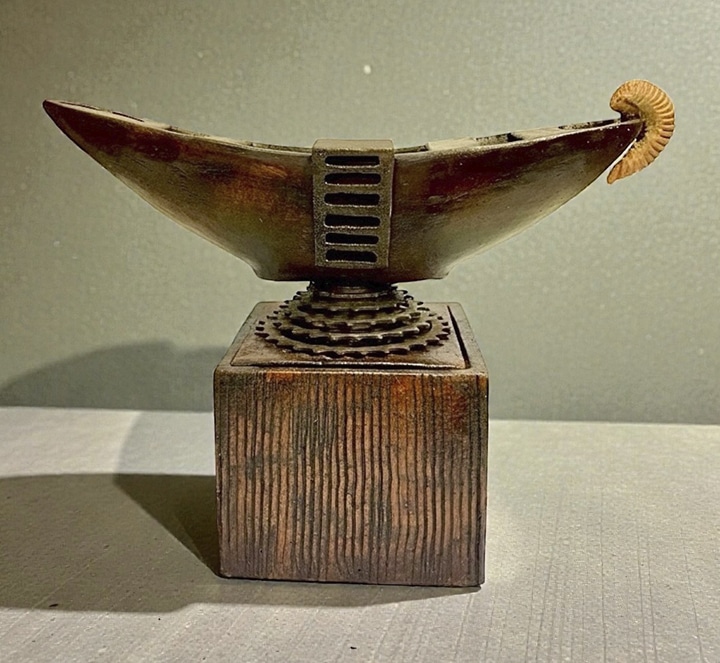
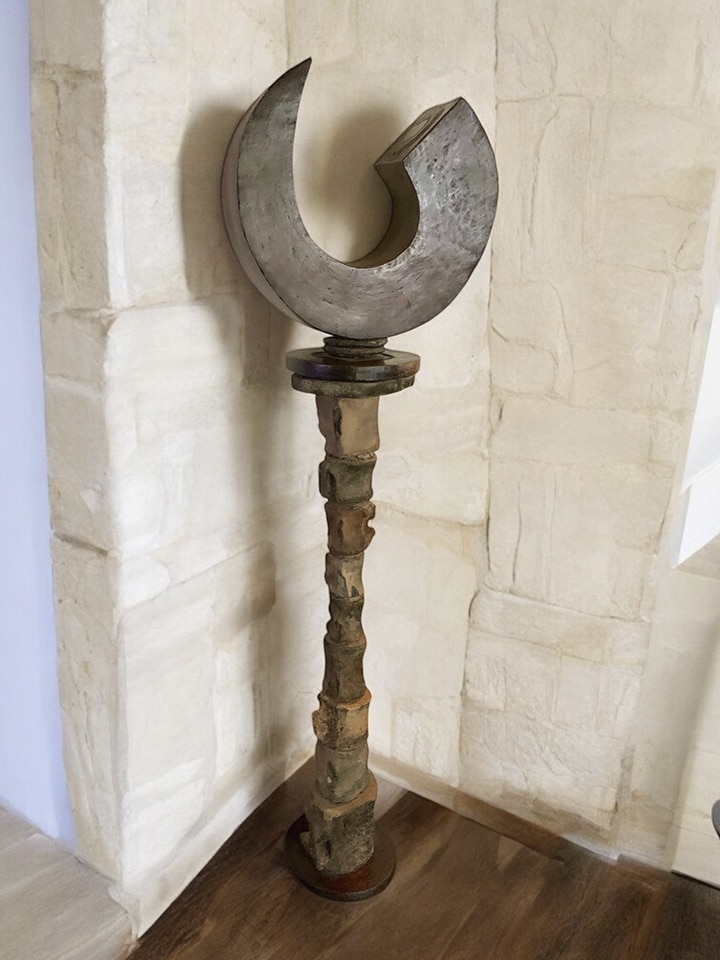
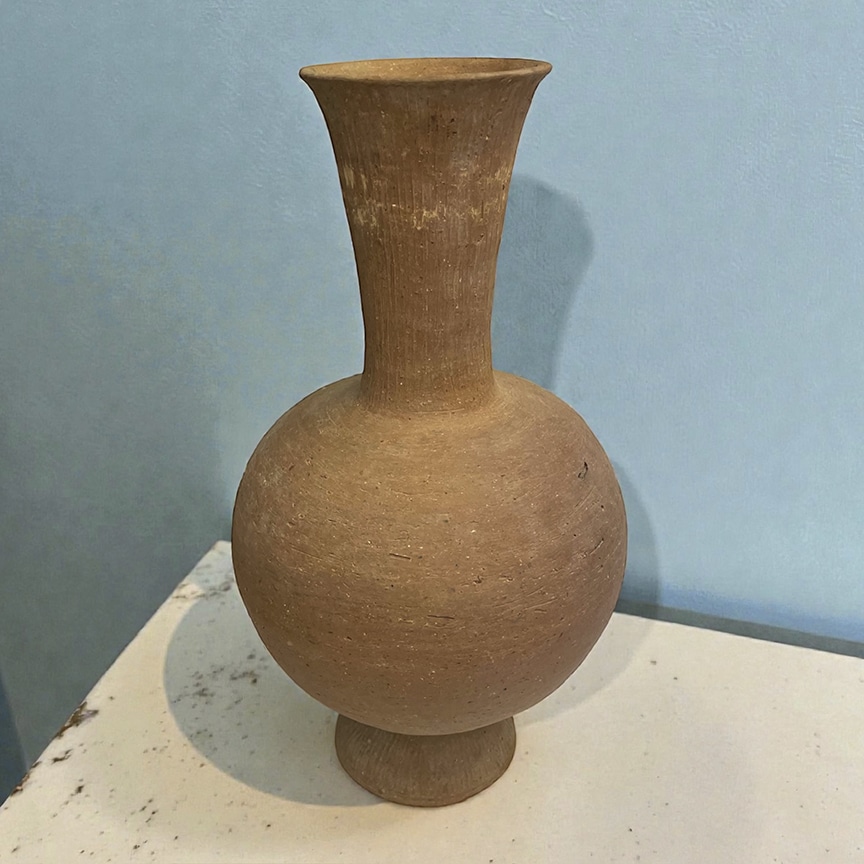
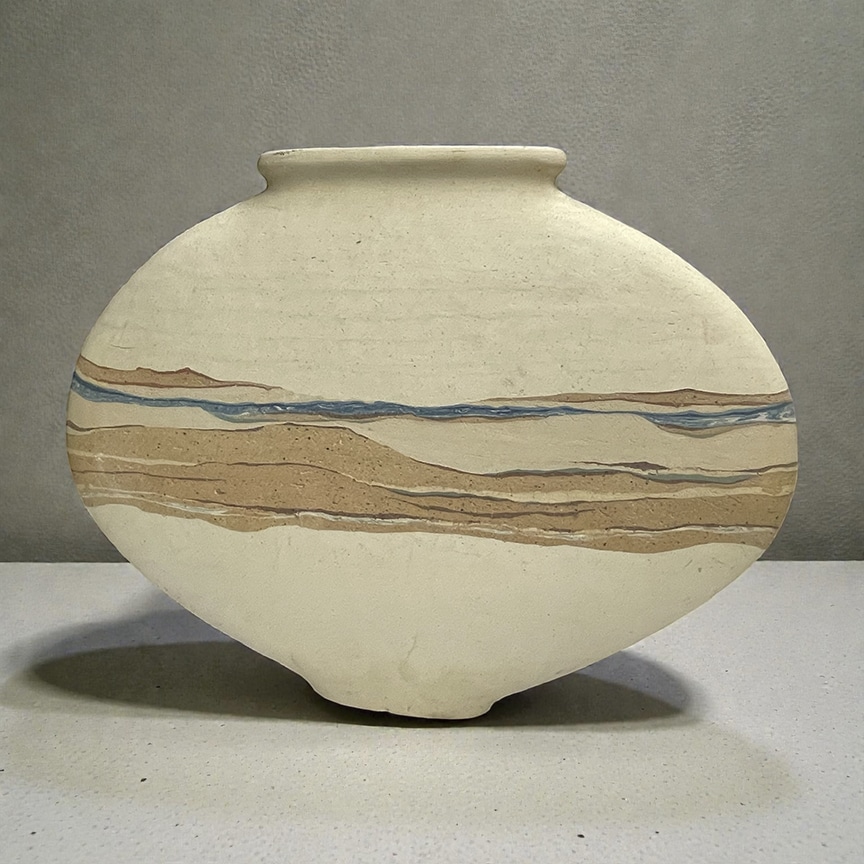
Livingston began to envision how her newfound interest in fossils could be integrated into her art. She started combining original clay shapes with fossils, drawing both her medium and inspiration from the earth. She uses Florida fossils, which she either purchases or personally digs up, dating back to the Pliocene and Pleistocene eras. This new type of work opened opportunities for her to explore line, form, and color, which she found creatively gratifying.
Livingston enrolled in a paleo-oceanography class at the University of South Florida to learn more.
“We went on a shell tour and discovered million-year-old fossils—mammoth teeth, camel teeth—just along the beaches,” she says. “I got really excited.”
Livingston creates structures and shapes that express a wide-ranging artistic vision and finds a deep connection with fossils in her work with clay. The fossils establish a relationship between time and matter, allowing her to visualize the past while bringing new forms and shapes to life in the present.
One aspect of the fascination with fossils is the realization that Florida has been a subject of study for nearly 200 years due to its fossil-rich sediments. Livingston has examined fossilized remains of camels, saber-toothed tigers, sharks, mastodons, mammoths, giant sloths, giant tapirs, and other extraordinary creatures.
“As I collected more fossils, I began to appreciate their beautiful shapes, stunning colors, and unique textures,” Livingston explains. “Incorporating them into my clay work is both intellectually stimulating and artistically challenging, and it has revitalized my approach to creating.”
The fossils introduce shapes, forms, colors, and textures that provide her pieces with a natural dimension not commonly found in other art forms. They also bring a historical and organic quality to her sculptures. Drawing upon her knowledge of Florida’s geographic and oceanographic history, she utilizes fossils and the raw earth in her work as a creative expression of the intimate relationship between land, sea, and animals.
Livingston’s work is highly sought after by art collectors and connoisseurs worldwide. Her pieces are included in several notable permanent collections, such as those of film producer Steven Spielberg, the American Embassy in Barbados, Saks Fifth Avenue, and the University of Oklahoma. Additionally, her artwork can be found in local collections, including The Ringling Museum in Sarasota, and now at Brenda McMahon Gallery in Gulfport.
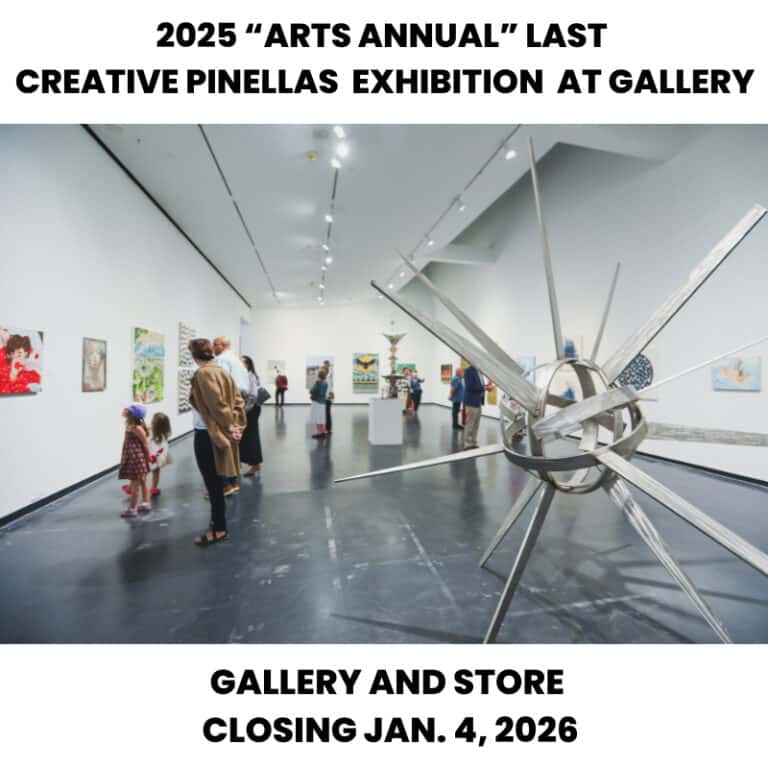
The eighth installment of Arts Annual closes Jan. 4, 2026, as Creative Pinellas prepares to vacate its offices at Pinewood Cultural Park in Largo by February 2026.
Creative Pinellas’ signature end-of-year exhibition, Arts Annual 8, is now on view through Jan. 4, 2026, offering the public the last opportunity to experience the depth, diversity, and vitality of Pinellas County’s creative community at the gallery its called home since 2018.
Arts Annual 8 is the eighth and final Arts Annual exhibition to take place at The Gallery at Creative Pinellas in Largo. After being defunded by the county in September, the organization will vacate the county-owned office and gallery spaces by Feb. 1, 2026, making this exhibition both a celebration and a farewell. The exhibition features 119 works of visual art by 73 artists (including three spoken word performances that were presented at Creative Pinellas’ Nov. 21 fundraiser), for a total of 122 works spanning painting, sculpture, ceramics, mixed media, assemblage, film, and a special site-specific installation from the artist BASK.
Creative Pinellas Curatorial Director Allison McCarthy says this year’s Arts Annual was envisioned as a visually striking, museum-caliber exhibition that allows the artwork to take center stage while highlighting relationships between pieces across disciplines and styles. The exhibition is organized into five thematic sections that explore ideas such as scale, pattern, texture, portraiture, and nature, with playful groupings that place unrelated artists side by side to reveal unexpected connections.
“My goal was a show with a major wow-factor — high-caliber artwork that is all from Pinellas, shown in a museum-like setting that really allows the works to sing,” says McCarthy. “Throughout the show guests will see little groupings of works by unrelated artists whose pieces, sometimes in vastly different mediums, rhyme with each other in some way.”
Among the artists featured is painter Miss Crit (Laura Spencer), who has a charcoal drawing, Polypores, and an acrylic painting, Good Luck, in the show. She credits Creative Pinellas as being a “massive part of my story” evolving into a professional artist, from receiving its Emerging Artist Grant in 2019, to producing several local murals through its support, as well as showing her work in previous Creative Pinellas exhibitions.
“Creative Pinellas has always been there for me and our artistic community. It’s an absolute honor and privilege to participate in the final exhibit at the gallery,” says Spencer, whose Good Luck piece in the show was purchased. “I’m forever changed by the power of Creative Pinellas, and hope to continue to grow alongside this prolific organization.”
After 89 years, the story of the Gulf Coast Museum of Art and The Gallery at Creative Pinellas is coming to an end. The Gulf Coast Museum of Art began as the Clearwater Museum in 1936, moved to Belleair about 1949 and along the way became the Florida Gulf Coast Art Center. Then, in 1998, after earning accreditation from the American Association of Museums, it became a museum again, and opened in Pinewood Cultural Park in 1999. It was part of a county initiative to incorporate a cultural presence alongside Heritage Village and the Florida Botanical Gardens. In 2018, Creative Pinellas, reopened the gallery and has since continued to build on the building’s original mission — to showcase the best in regional artistry.
Artist, painter, and muralist Cristi López is showing her work for the first time at The Gallery at Creative Pinellas. “I am ecstatic to be included in their closing exhibition and to now be part of their tremendous legacy of uplifting the arts in Pinellas County…and the opportunity to exhibit alongside some of Tampa Bay’s preeminent artists is a true honor,” says López, who moved from Gainesville to St. Petersburg two years ago. “It affirms that I made a great decision in moving here.”
Well-known sculptor Donald Gialanella describes his five pieces in the show as “pushing nature, biology, and human impact into symbolic, even surreal, forms.” He says he is proud to be a part of this year’s “milestone” exhibition, calling it a snapshot of Pinellas County’s creative identity at this moment in time.
“It’s a historic moment. As the last Arts Annual in this gallery space, the show is a kind of ‘grand finale,’” says Gialanella, who has worked in St. Petersburg as an artist for 10 years. “Visiting now means being part of a collective memory — a chance to honor the past and show support for the future of art in our community.
“[The exhibition] is simply inspiring. Walking through the rooms, seeing so many voices and styles in conversation with one another, you might discover something new, feel challenged, moved, or hopeful.”
In addition to the Arts Annual exhibition, the gallery store has a holiday shop called “GIFTED!” Creative Pinellas Managing Editor Maggie Duffy curated this collection of artworks and handcrafted pieces by local artists, such as prints, bookmarks, housewares, clothing and one-of-a-kind pottery and jewelry. Well-known artists TesOne and Chad Mize both have limited-edition items in the store exclusively created for Creative Pinellas. This Sunday, Dec. 20, from 5-8 pm there will be a special store event with music, food, drinks and a meet and greet with artists whose works are being sold in the store.
Together, the works in the gallery as well as the store, capture the energy and creative spirit that define the region — and underscore the importance of continued support for artists and arts organizations.
“This gallery closing feels like an opportunity for renewal,” says Gialanella. “It’s a chance to reflect on all the creativity, community, and growth that happened in the gallery — and to carry that spirit forward in new ways for the arts in Pinellas County.”
View and purchase all artworks in the Arts Annual exhibition HERE, and for a full list of the artists in the exhibition, CLICK HERE.
Plan Your Visit: The Gallery at Creative Pinellas –
12211 Walsingham Road, Largo, FL “Arts Annual: From Now to Next” Exhibition and Gifted! Holiday Shop at Gallery Store Nov. 22, 2025-Jan. 4, 2026 | 10 AM-8 PM Artists Holiday Meet & Greet Dec. 20, 2025 |5 PM-8 PM Free admission and parking creativepinellas.org
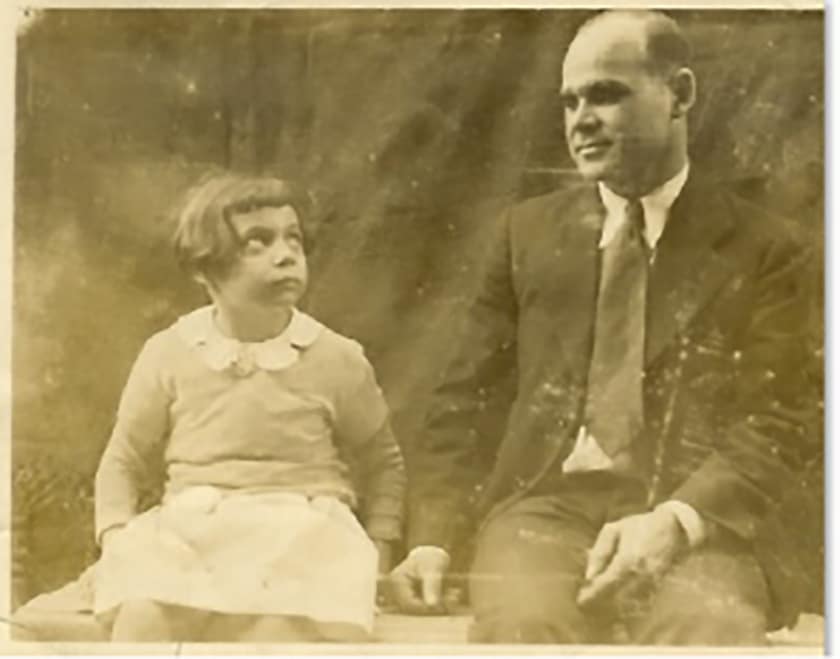
Photograph of Zelda and Her Purported Father, ca. 1930
Warily she gazes
upward.
Who is this kind man who visits
every month or so,
whose face is draped in shadows
and whose eyes hide half-truths?
Have you come to take me home
from the coldness of this place?
Warily he gazes
downward.
Who, really, is this young girl
who dwells in silence,
institutionalized by guardians of the “deaf and mute,”
but whose eyes show intelligence
as sharp as snow on half-numb fingers?
Was your birth legitimate
or the product of my indiscretion?
I suspect the latter.
If only I could know, I’d take your hand in mine
and I could call you “daughter.”
Summer in Florida
– a villanelle
Oh, give me a hint of summer’s defeat!
It’s hotter outside than 400 Hells.
I can’t stand this incessant heat.
What made me move to this forsaken state?
Was I out of my mind and senses as well?
Please give me a hint of summer’s defeat.
Just walking outside makes the glistening sweat
ooze down my back like the tracks of snails.
I can’t stand this incessant heat.
How much longer ’til the angle of light
skews just enough to announce the fall
and gives me a hint of summer’s defeat?
If only we’d have a slightly cool breeze—
Anyone who’s been around me can tell
I can’t stand this. The incessant heat’s
the same every year, and never retreats.
Perhaps I should move to Niagara Falls.
Just give me a hint of summer’s defeat.
I can’t stand this incessant heat!
Teen
– a syllabic poem
Born,
one day
heralded
into this world,
my parents brought me
home with dreams unfolding
ahead of them, not knowing
the piercing truths of night after
night of infant cries, whining over
lost toys, scary fireworks, or skinned knees.
No real friends, acne, bullied in school…what next?
“Will he ever grow up to become a real man?”
Words muttered in the darkness, but I heard them.
And in my mind I tell them my own truths:
I know what’s really behind your glares…
your lives lost—sacrificed for me.
Well, maybe you won’t have to
deal with it much longer.
Maybe we’d all be
better off if
suddenly
I just
died.
Escape
Steve’s TVs and Variety Store—
the yellow sign by the road proclaimed.
A yard sale with no yard.
Out of curiosity I stopped.
Now I wonder why.
I’m the only customer
in the store—
and it’s no surprise.
Who would want these odds and ends?
Gold spray-painted horseshoes,
plates of every design and color,
including one with a calendar of 1973
and another of the state of Utah,
single gloves with no mates
a ceramic ashtray shaped like an amoeba….
I feel the clerk watching me
like a corner bum hoping
for some passerby to drop
a half-smoked cigarette.
And with each aisle I turn,
the silence of the cash register
screams at me.
Surely there must be
a buyer now and then?
Someone in need of a jar
of buttons, perhaps?
Or a black and white television
with UHF?
Trash and trinkets
with no end in sight.
But there is an end—
the door again…
and I slip silently
outside.
Esmeralda’s Prophecies
– a found poem
Your life has been full of trouble
for which others are largely responsible,
but you are now reaching a point when
you will be able by your own efforts
to control your own affairs.
Beware of the proposals
made by a gray-haired man,
but take the advice and assistance
that will be offered you
by a middle-sized and smooth-faced one.
You will receive an offer
to go to a small town
and engage in business
far from the one now engaged in.
Accept it.
You will meet with the one
who will love you.
That love will be returned by you.
The name of this person begins with M
and you will be introduced at a place of amusement.
Your life will be long
and your last days will be your happiest.
One of your lucky numbers is 5.
Drop another coin in the slot and I will tell you more.
AUTHOR
John C. Carter was born in Delaware, grew up in California and New Mexico, and has lived in Florida for 35 years. He has a B.A. in Creative Writing from Eckerd College where he graduated with an honors distinction and was the winner of the annual Excellence in Creative Writing Award. His work has appeared in The Writers Bloc, Independent Review, Wordsmith and Eckerd Review. His interests include genealogy, geocaching, reading and photography, with his photos having won First Place at the Florida State Fair as well as appearing in Tampa Bay Magazine, FTF Geocacher Magazine, a children’s book and the CD cover for musician Livio Ferrari. He lives in St. Petersburg.