

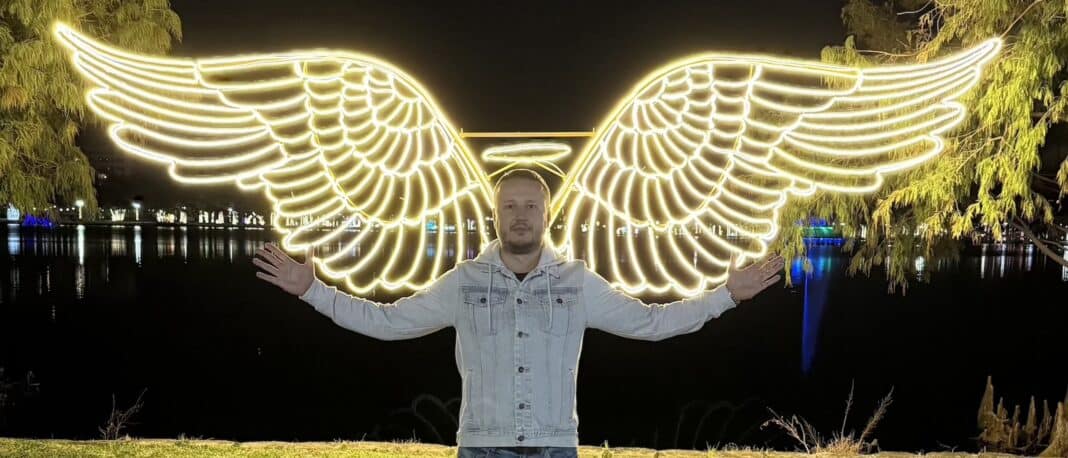
Ihor Lavrenenko is an independent hip-hop artist based in Orlando, Florida. His music is built around storytelling, street themes, lyrical rap, family, discipline, and the emotional weight of starting over. After studying violin and piano as a child in Donetsk, he returned to music many years later and began releasing hip-hop independently in 2025. His early songs include “Alone in New York” and “The Magic of Orlando.” In 2026, he released “Heart of a Lion” and continued recording new material, including songs submitted to the American Songwriter Song Contest 2026.
You studied violin and piano as a child. How did that shape your approach to hip-hop?
I studied at Art School No. 5 in Donetsk from 1994 to 1996. I was a kid, so I did not understand the full value of it at that time. I learned violin and piano, and the process was strict. You had to listen, repeat, practice, and pay attention to small details.
That stayed with me. Hip-hop may look different from classical music, but rhythm, timing, structure, and emotion are still there. When I write rap, I think about the beat, but I also think about movement inside the words. A verse should not feel random. It should have pressure, release, and a clear direction.
I do not try to sound like a classical musician in hip-hop. That is not the point. But my early music education gave me respect for discipline. It taught me that music is not only inspiration. It is repetition, editing, and control.
Why did you choose hip-hop as your main form of expression?
Hip-hop feels direct. It allows me to speak in a way that is honest and sharp. I like storytelling. I like songs that feel like a scene from real life. A street, a room, a train station, a late night, a person thinking too much. Hip-hop gives space for all of that.
I also connect with lyrical rap because words matter. I am not interested in making music that is empty. I want every track to carry a feeling or a message. Sometimes it is about struggle. Sometimes it is about family. Sometimes it is about being alone in a new city and trying to understand what comes next.
For me, hip-hop is close to real speech. It can sound raw, but it can also be thoughtful. That balance is important to me.
Your song “Alone in New York” came out in 2025. What was behind that track?
“Alone in New York” came from a real emotional place. New York can be exciting, but it can also make a person feel very small. When you are surrounded by millions of people and still feel alone, that contrast hits hard.
The song is not only about the city. It is about transition. It is about arriving somewhere with hope, but also with pressure. You carry your past with you. You think about your family, your choices, your fears, and the version of yourself you are trying to build.
I wanted the track to feel personal without explaining every detail. Some emotions are stronger when you leave space for the listener. I think many people understand that feeling, even if their city is different.
“The Magic of Orlando” has a very different title. What does Orlando mean to you creatively?
Orlando is where I started to feel more grounded in the United States. It is not only a city for tourists. When you live here, you see daily life, neighborhoods, work, family routines, local businesses, and people trying to build something.
“The Magic of Orlando” is not about fantasy. It is about the feeling of rebuilding. For me, Orlando became a city connected with movement and second chances. I work here, I create here, and I see my family growing here.
The song reflects that energy. It has a lighter title, but it still comes from a serious place. Sometimes magic is not something dramatic. Sometimes it is waking up, working hard, paying bills, recording music at night, and still believing that your story is not finished.
In 2026, you released “Heart of a Lion.” What does that song represent?
“Heart of a Lion” is about inner strength. I wanted to write something that speaks to discipline and survival. Not loud confidence, but real endurance. The kind of strength that comes when you have no easy option.
I think many people see ambition from the outside, but they do not see the private cost. They do not see the moments when you feel tired, when you miss home, when you doubt yourself, or when you have to keep working because your family depends on you.
That song is close to how I see life. You cannot control everything. You can control your response. You can keep your values. You can protect your family. You can move forward even when the situation is uncomfortable.
Family appears as one of your key themes. Why is that important in your music?
Family is central for me. It gives meaning to work, music, and all the decisions I make. I do not separate my art from real life. If I write only about myself, the story is incomplete.
When you have a family, your ambition changes. It is not only about personal success. It is about stability, responsibility, and example. You want your children to see that pressure does not have to break a person. You want them to see that work and creativity can exist together.
I think hip-hop often talks about loyalty, struggle, and identity. Family fits into that naturally. It is one of the strongest forms of loyalty.
You balance music with work as a marketing manager. Does that help or hurt your creative process?
It does both. Work takes time and energy. There are days when I finish business tasks and do not feel ready to record or write. But work also gives structure. I am used to deadlines, planning, and pressure. That helps me treat music with respect.
Marketing also taught me to understand audiences, but I try not to let that control the art. I do not want to write songs only because I think they will perform well. That would make the music weaker. Still, knowing how digital platforms work helps an independent artist. You need to understand distribution, content, branding, and consistency.
My business work includes projects like Rathly Marketing and Smarfle CRM, but music is a different part of my life. I do not want it to feel like a campaign. I want it to feel human.
What changed when you began releasing music independently in 2025?
The biggest change was that the music became public. Writing privately is one thing. Releasing a song is different. Once it is out, people can judge it, ignore it, connect with it, or misunderstand it.
Independence gives freedom, but it also means you carry the full load. There is no label pushing the song. You have to record, organize, publish, promote, and keep improving. That process fits my personality because I am used to building things from scratch.
At the same time, I am still learning as an artist. I do not pretend that I have everything figured out. Each release teaches me something. I listen back, notice what can be better, and move to the next track.
You participated in the American Songwriter Song Contest 2026 with three songs. Why did you decide to submit?
I wanted to test the material outside my own circle. Submitting songs to a contest is a way to take the work seriously. It does not mean you expect anything easy. It means you are willing to put your music in front of people who hear many songs.
I submitted three songs because I wanted to show different sides of my writing. Every track has its own mood and story. For me, the value is also in the step itself. It pushes you to finish, prepare, and release instead of waiting forever.
Artists can get stuck trying to make everything perfect. I try to avoid that. Finish the song, learn from it, and keep going.
What kind of stories are you most drawn to as a writer?
I am drawn to stories about pressure, movement, and identity. People who leave one place and try to build life in another place. People who carry memories but still need to function every day. People who look calm from the outside but have a full war inside their head.
City life also interests me. Streets, buildings, traffic, late nights, small apartments, silent walks, busy stations. These details create a mood. Hip-hop can turn those details into something emotional.
I also care about discipline. Many songs talk about winning, but fewer songs talk about the boring part of winning. The habits. The early mornings. The bills. The work nobody sees. That is where real character is built.
How do you want listeners to feel after hearing your music?
I want them to feel that the song came from a real person. Even if the production is modern and the track has energy, the core should feel honest. I do not want to create a fake image.
Some listeners may connect with the immigrant story. Some may connect with family themes. Some may connect with the street mood or the discipline behind the lyrics. I am fine with different people hearing different things.
The main thing is that I want the music to leave something after it ends. A thought, a line, a feeling, or a memory. That is what I respect in songs from other artists.
What is next for you as an independent artist?
I want to keep recording and improve with each release. I am focused on building a body of work, not only chasing one track. I want the songs to show growth in writing, delivery, production, and emotional depth.
I am also interested in making the visual side stronger. Hip-hop is not only sound. It has atmosphere. Videos, covers, photos, and live energy all matter. But I want to build it step by step.
For now, the goal is simple. Keep writing. Keep releasing. Stay honest. Make music that reflects real life and does not feel empty.
Listen to Ihor Lavrenenko
Spotify: https://open.spotify.com/artist/06yc3Yp1cgzuxKH218CiGd
SoundCloud: https://soundcloud.com/ihorlav
YouTube: https://www.youtube.com/@ihorlav