Warehouse Arts District Association
UPDATE
What is the mission statement for the warehouse arts District?
The mission of WADA is sustainability for artists, that’s the primary goal. How we go about that is multifaceted, but it started out with advocating for the arts and for artists, and individual rights for artists, and creating studios that were affordable or subsidized. So, those are ways in which we’ve strived to achieve the primary goal.
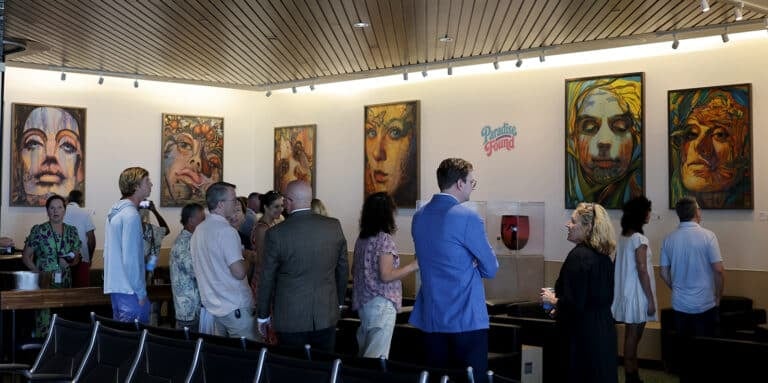
We initially started out doing projects like having trolleys run throughout the district on art walks to get people to come here and discover that there is a whole bunch of different artists and art entities in the neighborhood. We were mainly interested in increasing the awareness of the district. And then, after doing that for a period and seeing that our energies attracted the development community and trying to break the mold of arts communities being transient in nature because this pattern that unfolds of artists moving into rundown parts of town because they’re inexpensive and then they’re creative energy, attracting development and driving up prices. Artists, generally being in a rental position get pushed out. Seeing that unfold before our eyes, we embarked upon the purchase of the then Soft Water Laundry facility that was functioning as a recycling plant and started the Arts Exchange and started subsidizing from there, so that’s how the manifestation of that mission has evolved since the district began and where it’s going right now.

You have a couple things that are impacting the day to day operations of the association, one being that Executive Director Markus Gottschlich is no longer with WADA.
I believe that today is his last day on the books (July 31, 2026).
Can you expound on contributions that Markus made in his time with WADA?
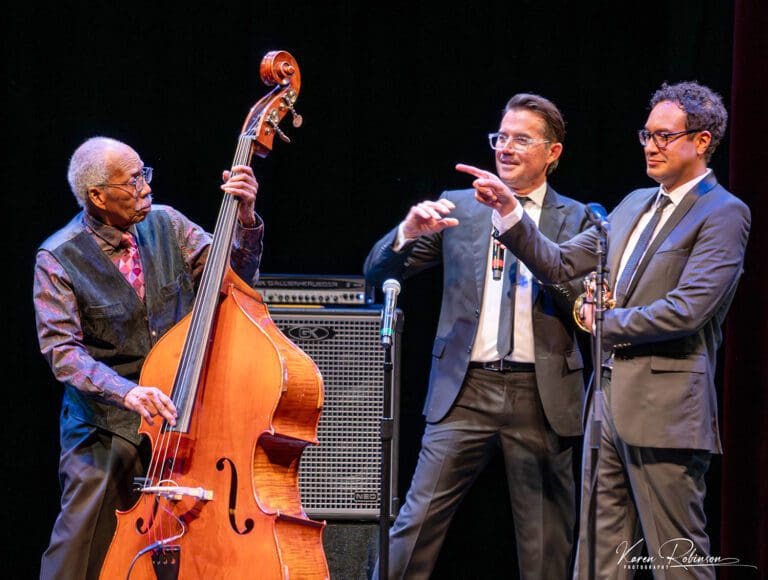
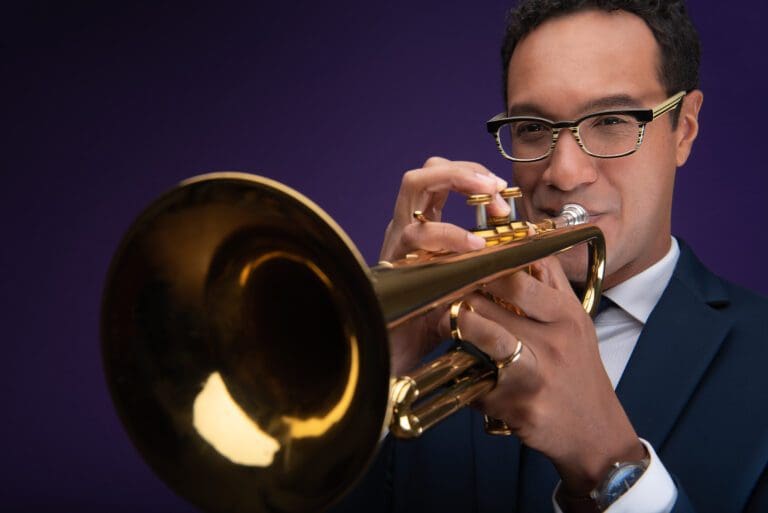
Sure, Markus has been with us just about four years and he has helped grow the Association and helped us solidify the efficiency of the operation. We have three different rental structures; we’ve got several different programs that we advocate for and execute. There’s a lot happening on this campus, and it is an all-consuming thing. He has managed our resources and our capabilities and helped us to cement a lot of those different components and made things work more efficiently than they had previously. He also was brought in having a background in the performing arts and has helped us activate the campus and generated a jazz festival, helped to develop the stage area, events, arts education, and our outreach into the Midtown community has grown.
It’s been a productive four years, but he was ready to move on to other aspirations and we were ready for a new approach to some of the things that we have going on, so it was mutually agreed-upon for us to transition.
I never owned a gallery in South America , but I lived in Central America and was involved in the arts community in Guatemala.
I actually have about 50 years in town (I finished high school in st pete.)
WADA has a new Interim Executive Director now?
Yes, his name is Chris Eaton. Chris has been committed to the creative community since he moved here several decades ago, and he’s been involved in a variety of different arts organizations. He’s been on the board of freeFall Theater. He’s actively involved in Studio@620, and he is an avid art collector and advocate for the arts and has been for decades. He has a long and illustrious career in support of the arts. We’re not in a rush to replace him.
There is a process to find a permanent Executive Director, but we have not begun the process of looking. Right now, we’re handling the transition of all these functions into the control of an Interim Director, Chris, and support staff and getting the ship stable and on course and then we will assess who will carry the organization forward. One thing at a time. Obviously, Chris is becoming knowledgeable about all the functions and processes. We don’t know if the current situation is going to be permanent, or if it’s going to be transitional right now, we’re focused on making the transition from Marcus to Chris and making that work well for the puzzle pieces that we have at play now, making some adjustments, and seeing how we want to move things forward. It’s giving us an opportunity to tune the machine so to speak.
The new Approach?
Some of the new approaches include education, and we want to expand on the events that happen on campus, and we want to increase the focus on the individual artists. This is a balancing act, it’s an ebb and flow of how things grow and evolve. There are constant adjustments being made. When you’re doing a whole bunch of stuff it’s like the old-time plate spinners, like a circus performer thing, and you’re spinning a plate over here and that one over there is losing its momentum, then you’ve got to give energy over there and give that one a spin. And back and forth.
WADA has purchased the assets of Foodie Labs on campus. What are the plans for that?
Foodies was a separate business entity just like MGA sculpture studio or Mrs. P’s Ballet Academy or Seven C Music. They all invested resources in exchange for long term leases. Foodies put in kitchens and had a long-term lease from us, and they did that right on the cusp of Covid in 2020. They had a business strategy and the nature of what they were doing had to pivot in order to be able to function with a changing business climate, and they struggled with footing from day one, they declared bankruptcy and the business became available. WADA made the decision that it would be best for us to control that entity so that it worked in concert with our interests directly and right now we are working on assessing future plans.
We just took ownership and we’re working on a management structure and determining the best way to utilize that facility, and have it benefit the overall campus and the greater community because it’s an incredible asset and I personally don’t feel like it has been operating at its full potential so that’s what we’re going to try and do. We are going to honor all the existing leases, but as opportunity evolves, we’re going to make some adjustments.
How is the goal of live/work spaces for artists going?
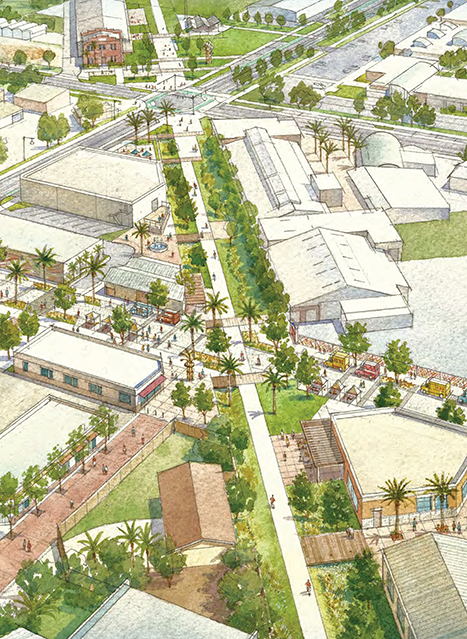
There’s a lot of difference between running a business out of a space (warehouse space) and living in a space, when it’s been industrial the kinds of changes that must be made are numerous, and of course we have zoning considerations. This area was historically Industrial General and the county had a very firm rule on how that could be utilized and housing was not an option so we’ve gone through a lot, and in fact this past year or a year and a half the area got an TEC overlay industrial mix, which now allows residential and retail in conjunction with the existing industrial. It is also for housing on this piece of property and adjacent properties so there are a number of development groups that have plans for developing back in here, and since that transition has occurred, we have gotten much more serious about the idea of doing living spaces for artists. In preparation for this, seeing the writing on the wall, we purchased a block of property that is trail adjacent that sits directly to the south of Duncan McClellan’s property that’s currently vacant and we are looking at different possibilities for developing that for a variety of uses, which include living space for artists. I think the biggest threat to the creative community right now is the cost of living in the city of St. Petersburg.
In the next 1 to 2 years the longer game is to develop some of the property that we have for housing as well being a destination for the campus along the trail. Part of the new zoning has created the opportunity for the warehouse arts district to become the entertainment district for the city of St. Petersburg, I predict that we are going to see more of the entertainment type functions that are downtown shifting away from the downtown area into this part of the city.
These things can be changed by vote so an organization like the Warehouse Arts District Association has a job to stay present to stay active and stay vocal, stay connected to the city and to city Council so that we keep the voice of the artists and the arts community present in the conversation. There’s always a role for advocacy and the presence of the voice that communicates to defend the role of the artist in the community if we don’t work at it then it may not be here five years from now.
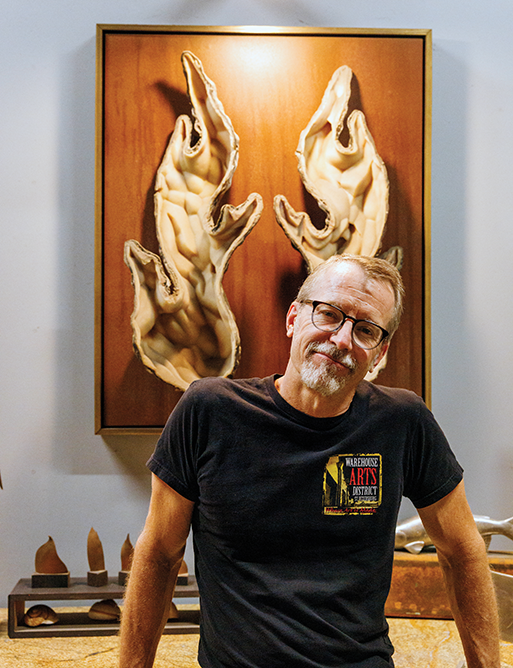
Thank you Mark….