

“Art is a luxury”
I’ve heard this over the years, and it may be the biggest myth I enjoy debunking. While high-profile artists and works may be out of reach for the average budget, art is the physical manifestation of a society’s human spirit. Like a time capsule (don’t groan if I’ve met you in person—I never shut up about this), art preserves memories, heals collective traumas, and reminds people who they are when political and economic issues seem determined to tear us apart. Without art, our culture would have no identity. With it, we have substance, legacy, the ability to understand our struggles, and the power to champion our successes—and, of course, rebuild when necessary.
But you don’t have to take my word for it. Look to the centuries of proof in the form of societies that have banned, burned, starved, or brutally murdered artists (yes—this has happened) for their voice. Mao’s China, Nazi Germany, and a Zhdanov-led Soviet Union all used this tactic to control the narrative and stifle opposition.
Creativity was treated as treason because it offered a raw and honest view of how the world felt to the artists living in those periods. Conversely, places that invested in art—especially during hardship—tended to outlast their crises with a strong identity and a proud remembrance of all they had been through.
Now let’s look inward to our beloved St. Petersburg, Florida. Once a sleepy retirement town mocked as “God’s waiting room,” St. Petersburg began an intentional cultural pivot in the 1960s as it embraced its growing artistic movement. The major turning point came in 1982, when the original Dalí Museum was constructed. Housing the master surrealist’s largest collection outside of Spain, it was a cultural declaration that the city understood great art and was ready to be taken seriously on the world stage.
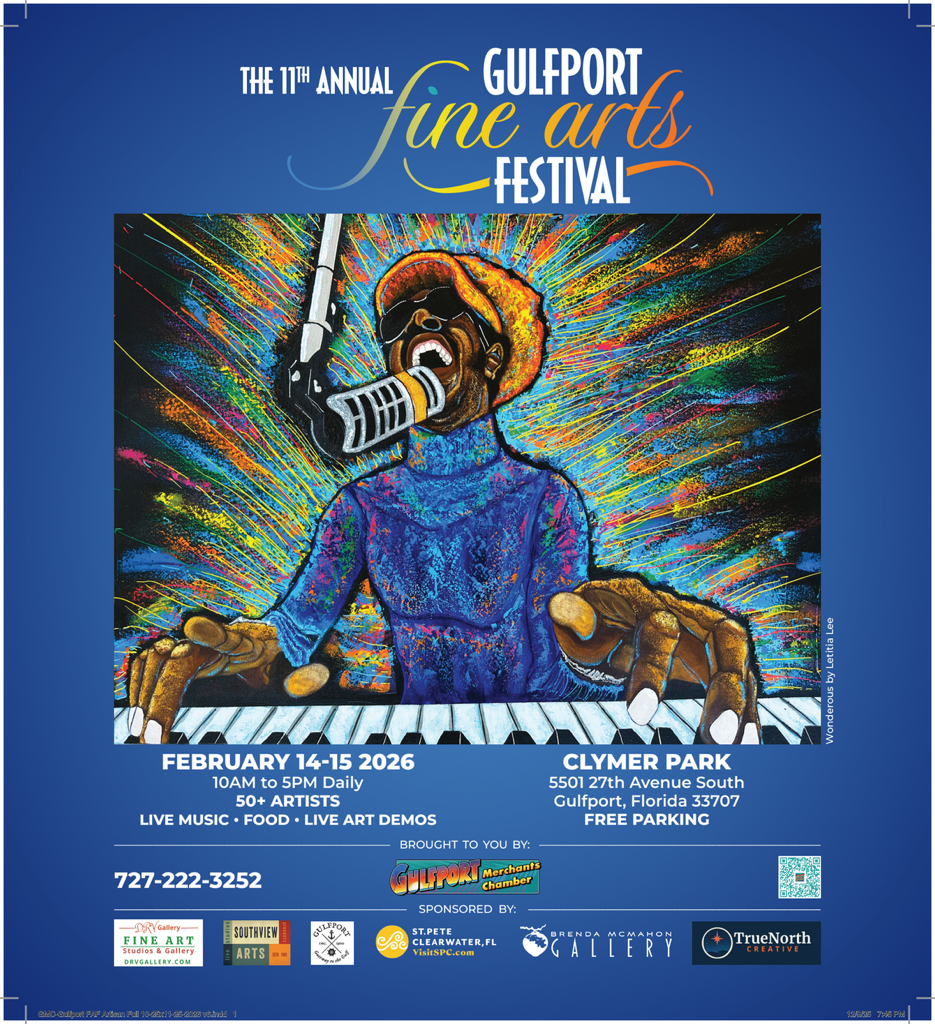
Walking down the streets today, you encounter world-class institutions such as the Museum of Fine Arts, the James Museum of Western & Wildlife Art, the Morean Arts Center with its blazing Chihuly Collection of glass, and vibrant murals that proudly tell the stories of the artists who live, love, and help shape this cultural landscape.
The result? A city once ignored by the hip young crowd now boasts one of the fastest-growing downtowns in the state. Restaurants, breweries, tech startups, and remote workers followed the color—not the other way around. Art didn’t just decorate St. Petersburg; it re-coded its future.
Culture is the life-breath of civilization. St. Petersburg reminds us that when a community feeds its artists—through museums, festivals, public walls, and small grants—it is really investing in its own resilience, identity, and joy. Art is never a “luxury.” It is the difference between surviving and truly living. •
Paint & Prosper
Owner/Lead Curator of Echelon Fine Art Gallery