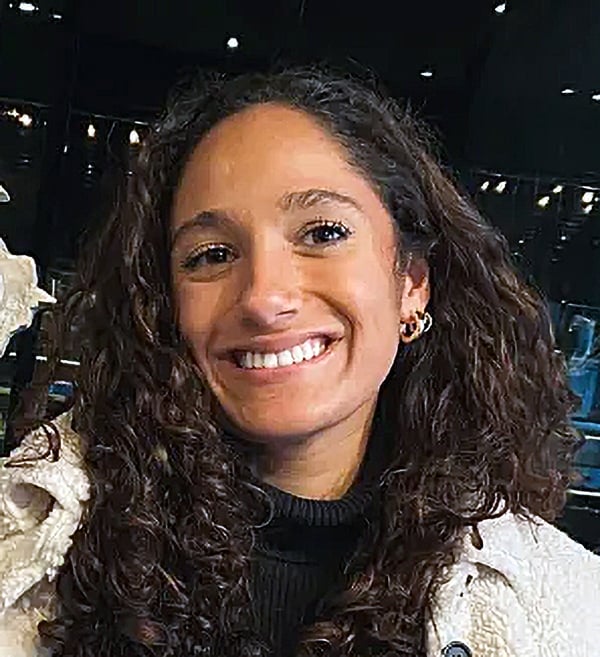


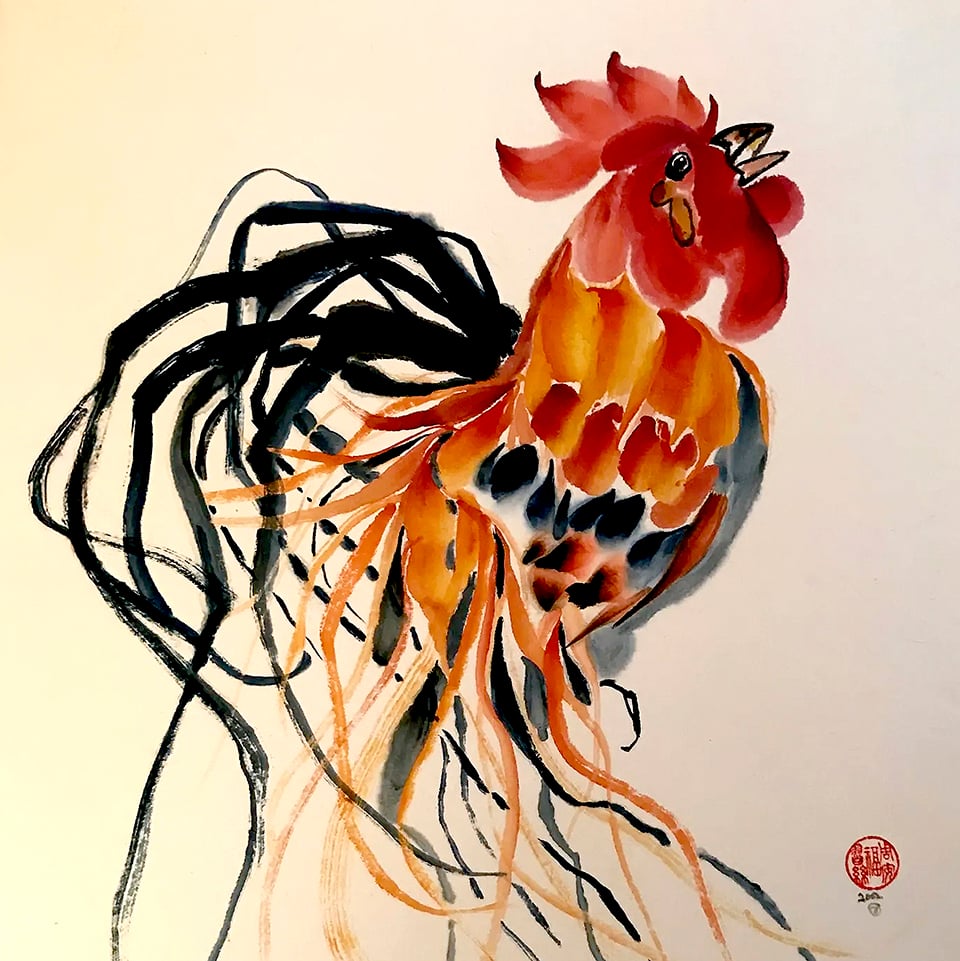
In her St. Petersburg studio, artist Jo-An Thomas approaches the blank surface with quiet resolve. Before her is rice paper — unforgiving, absorbent, final. In her hand, a Chinese brush loaded with ink. There is no sketch beneath, no erasure ahead. Each mark must arrive fully formed.
This is the discipline of Chinese brush painting, a centuries-old tradition rooted in calligraphy, philosophy, and meditation. For Thomas, it is both a technical practice and a way of seeing.
“The brush records everything — your breath, your focus, your state of mind,” she says. “You can’t separate the image from the moment it was made.”
Thomas came to the medium on a chance visit to a small gallery in a Japanese high-rise shopping center that sparked her interest. The master spent 2 hours talking to her about the art form. She was smitten by a simple painting of a turtle, and that painting has stayed in her mind.
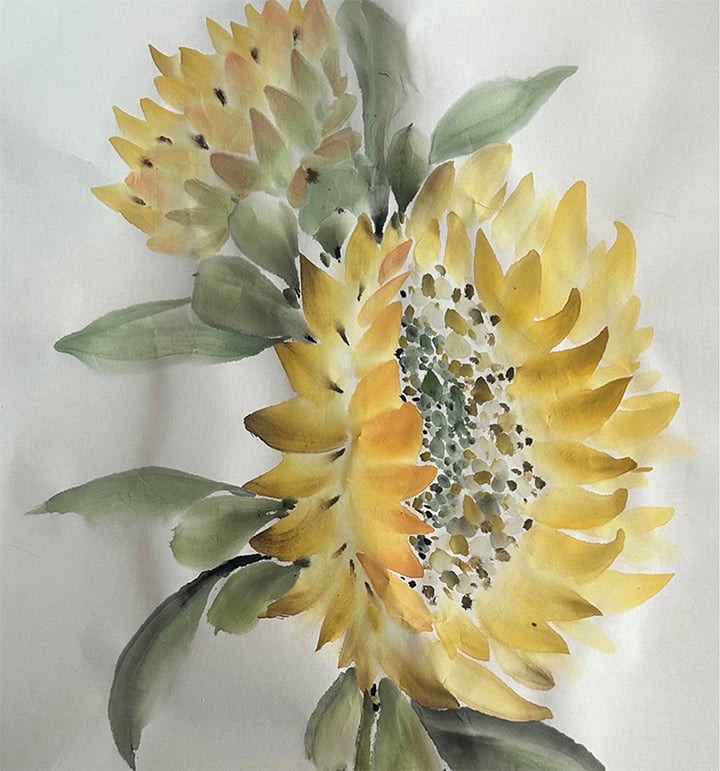
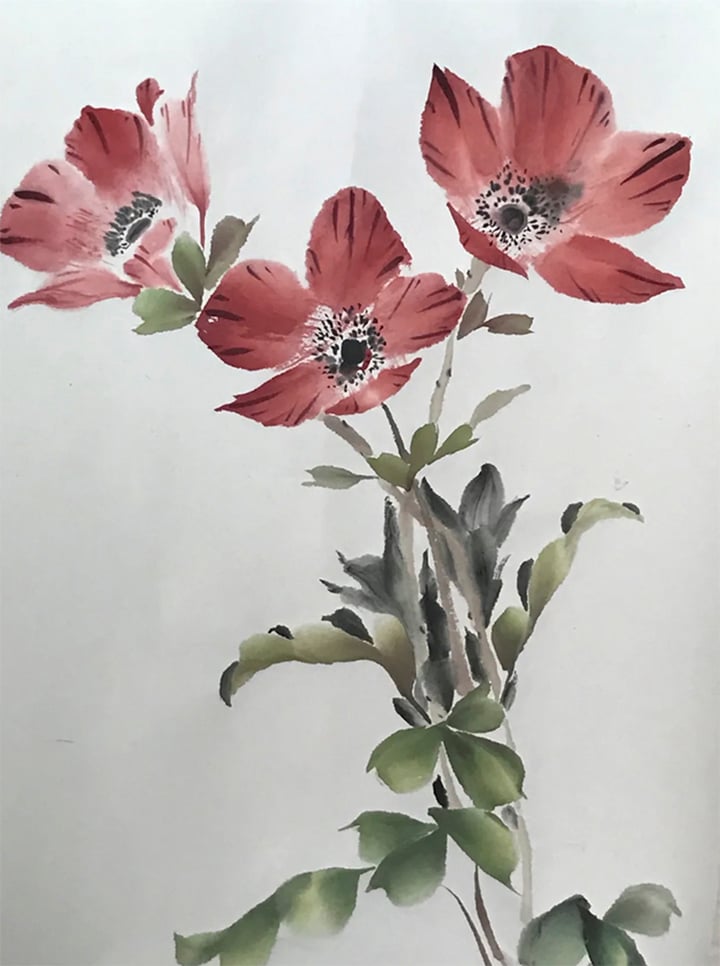
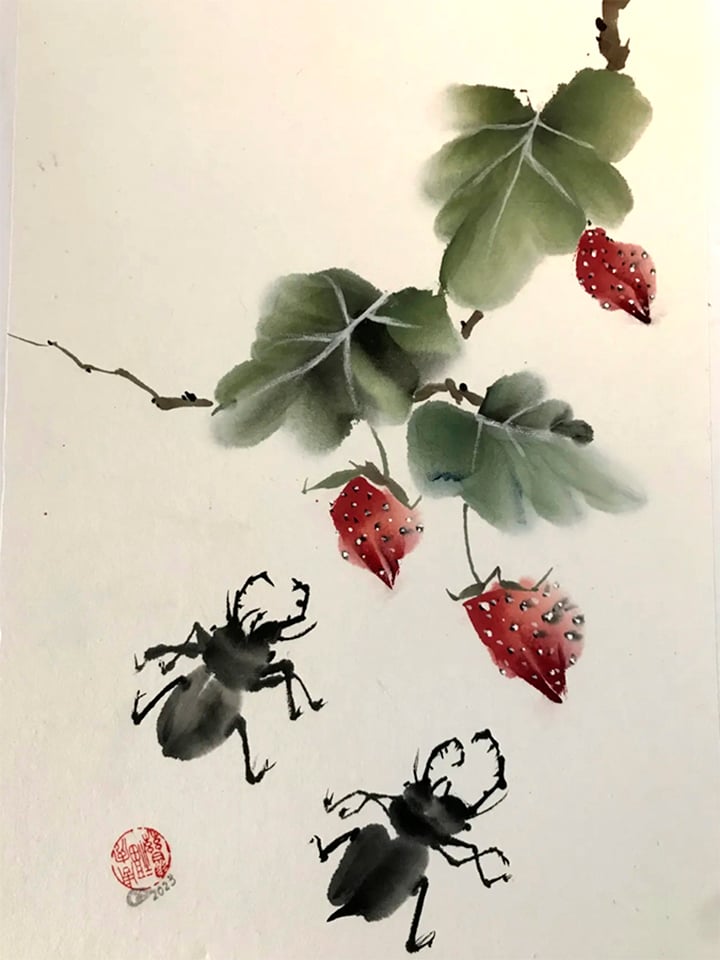
From that point forward, she pursued the discipline seriously, studying traditional techniques, classical texts, and the philosophy underlying the practice. Central to Chinese brush painting is qi — the life force believed to flow through all things. The goal is not realism, but essence: to suggest bamboo rather than describe it, to evoke water rather than define it.
Thomas’s work reflects this philosophy. Her paintings — bamboo groves, flowering branches, mist-shrouded landscapes — are composed with elegant economy. A single line may suggest wind. An open field of paper becomes space, breath, silence.
What distinguishes her work is a balance between spontaneity and control. Each piece requires preparation and stillness, yet the execution must be immediate. Once the brush touches paper, there is no correction.
“You commit,” she says. “That commitment gives the work its vitality.”
While deeply rooted in tradition, Thomas’s paintings feel contemporary in their exploration. In recent series, she explores themes of impermanence, quiet resilience, and the tension between presence and absence.
Her approach also extends to teaching. In workshops, students are encouraged to slow down, to attend to posture, breath, and intention before making a mark. Technique matters, but awareness matters more.
Today, Thomas’s work appears in regional exhibitions and private collections. “If someone slows down — even briefly — and really looks,” she says, “the work has succeeded.”
In an era defined by noise and speed, Jo-An Thomas’s art offers something increasingly rare: a moment of stillness, held in ink.