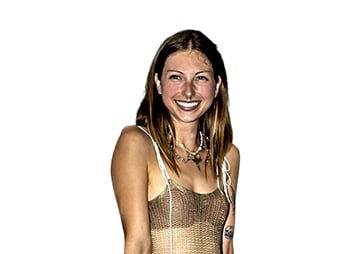
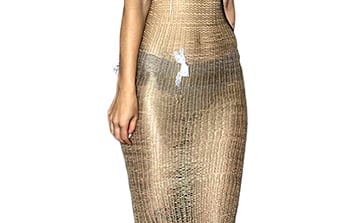
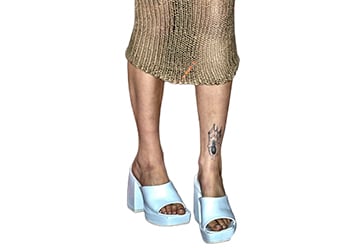
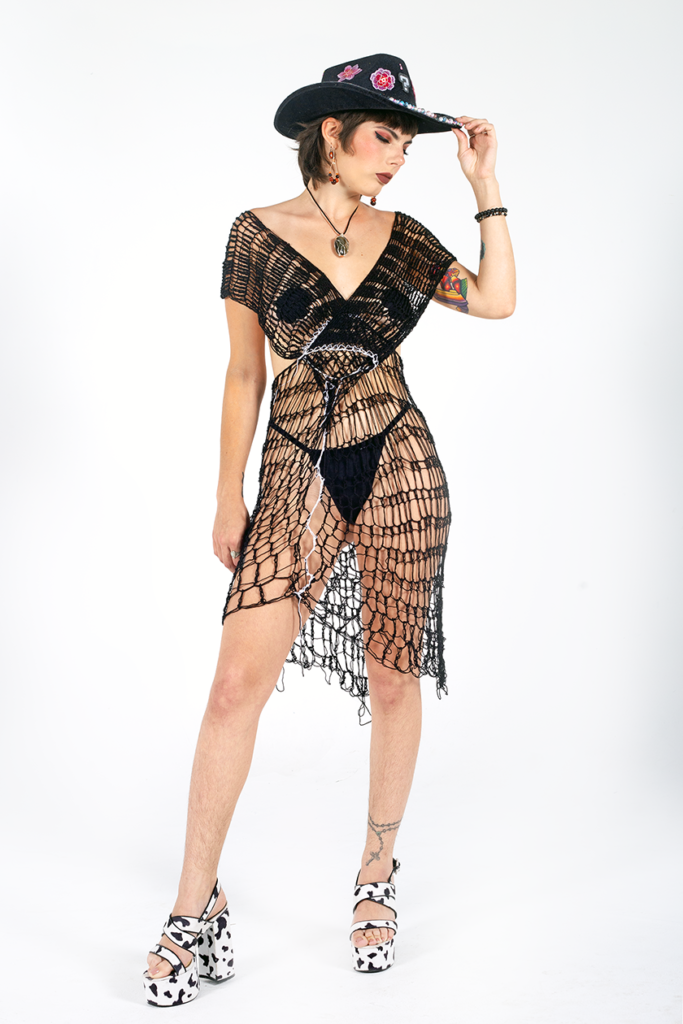
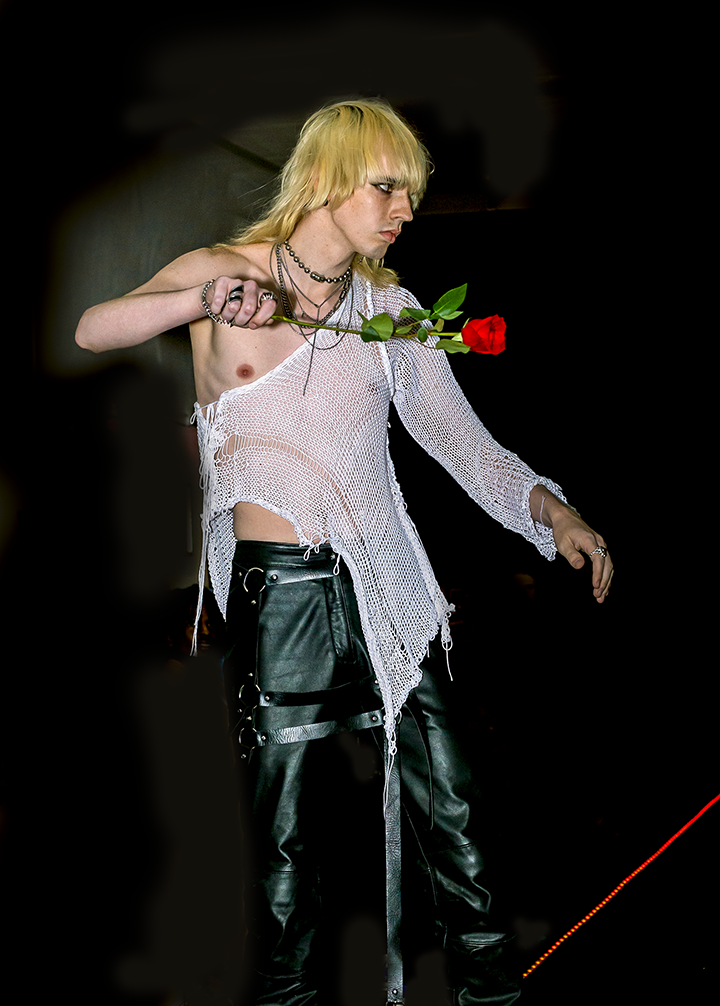
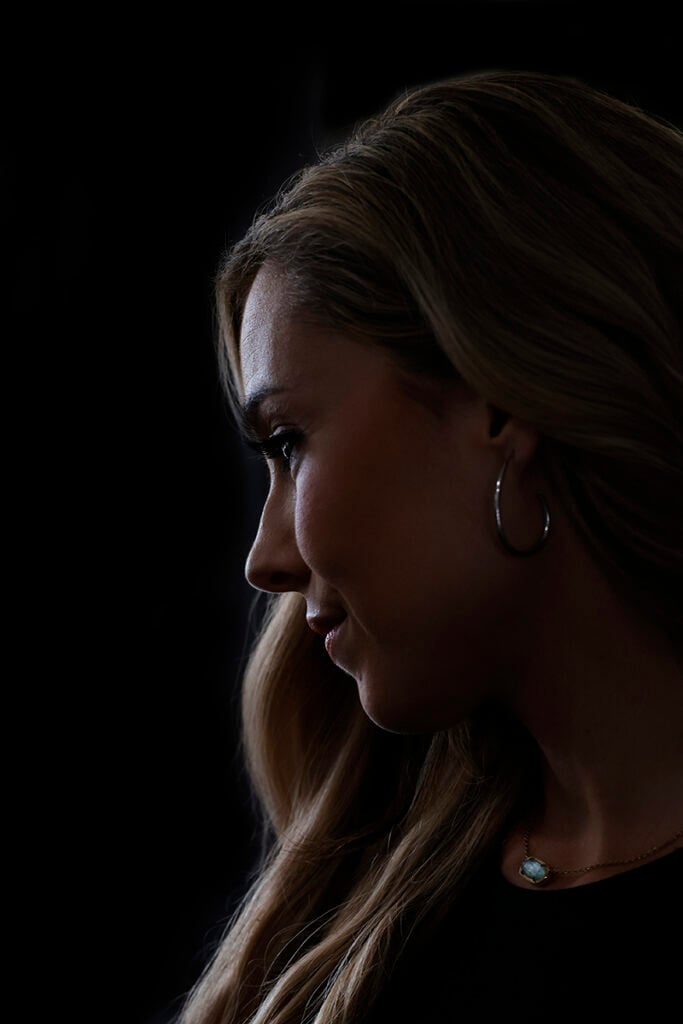
Most people picked up a hobby or two during the COVID-19 lockdown of 2020. Suddenly, we all had both the need for an escape and the extra time to pursue it. For many, it was a light during a dark time; if you couldn’t visit friends and family, at least you could learn how to bake banana bread. Some abandoned their budding interests when the world reopened, and some, like St. Petersburg fashion designer Bari Weinreich, doubled down. Bari, who is known online by her brand Helena Beetle, joined our local art community in 2022. Originally from Rhode Island, she moved to Tampa in 2017 to attend the University of South Florida.
Bari traces her interest in fashion design to her early childhood. She recalls how much she loved the coloring sheets her preschool teacher used to give to the class: outlines of blank white dresses presenting endless possibilities for her young imagination. A few years later, Bari joined an after-school knitting club run by her elementary school’s librarian. Students in the club shared tea and pastries while the librarian instructed them on the basics of knitting. Bari carried these skills with her into adulthood, but still wanted to expand her knowledge of fiber arts. When the COVID-19 pandemic began, she decided to use the time spent at home to experiment with new design ideas.
After dusting off her old knitting needles, Bari decided to try and make a bikini.
“I started off creating pieces by thinking about the geometry [of the pieces]. Thinking about shapes, not thinking about the end goal.”
Using her knowledge of how to knit simple shapes, she was able to craft garments such as the aforementioned bikini, which was a success. There was one downside, however – knitting the clothes by hand was extremely time-consuming. Bari spent some time watching videos online, namely of artists who crochet their pieces. After realizing crochet would allow her to create more efficiently, she began studying the technique and using it for her new projects.
“Knitting is row-by-row, and crochet is stitch-by-stitch. [Crocheting] gives you a little more freedom to change direction.”
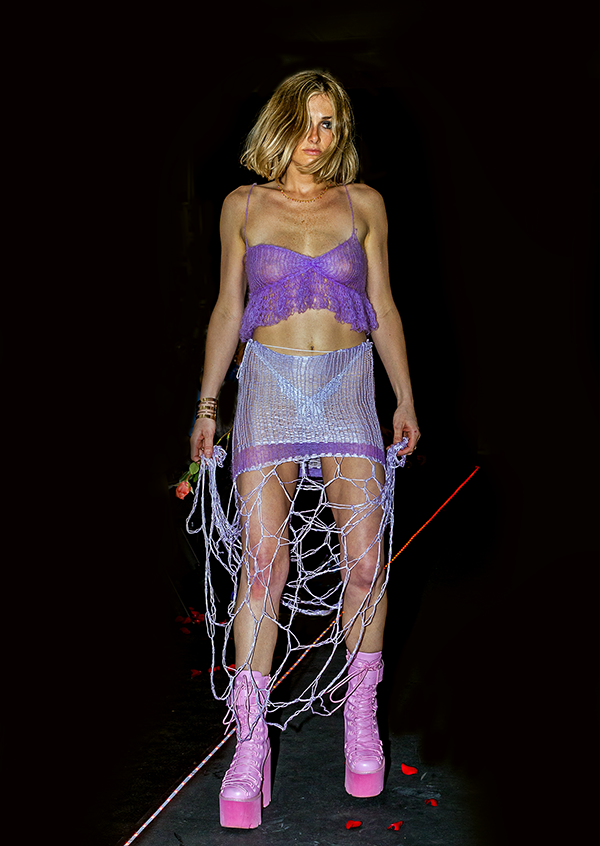
She explained, when asked about differences between the techniques. Originality is an important aspect of Helena Beetle designs, and Bari prefers to experiment rather than trying to emulate what other artists are doing. As a result, the clothing often takes an abstract form and functions as a sort of wearable sculpture. The Mohair + Bamboo set, which I photographed during the 411 WearHaus fashion show in March of this year, is a great example. The crop top combines angular shapes with the rounded folds of a ruffle, while loosely crocheted threads cascade from the mini skirt.
A variety of imaginative designs can be found on the Helena Beetle website, including clothing made for everyday wear. The latest collection IN BLOOM, which was released in May, features tops, bottoms and dresses with botanical designs and earthy colors. Bari also accepts commissions for custom pieces; inquiries can be submitted via direct message on Instagram (@Helena.Beetle).
One might say Bari Weinreich and her brand represent the future of art and fashion in St. Petersburg. The young people of today are creating in spite of the chaos, and sometimes because of it.
“I do believe the world is shifting to a space where we can all find something we love doing.”
She said, while discussing her career and past employment. As an artist, the path to success may not be clear, but those who truly love art will always find a way to create.
ARTIST – MOM – HAIRDRESSER – MODEL – SURVIVOR – MENTOR – ADVOCATE
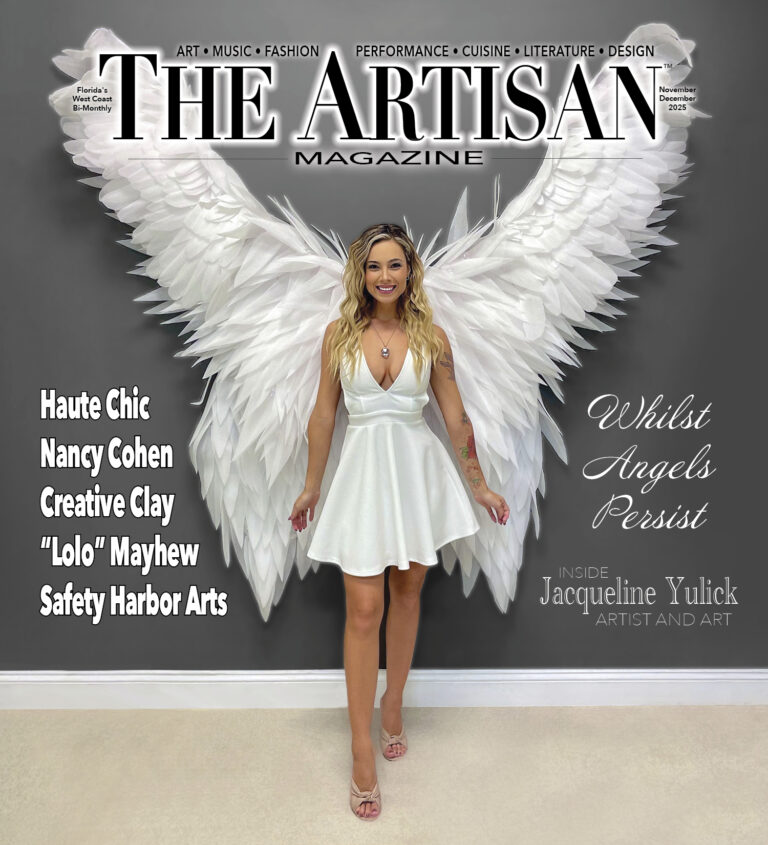
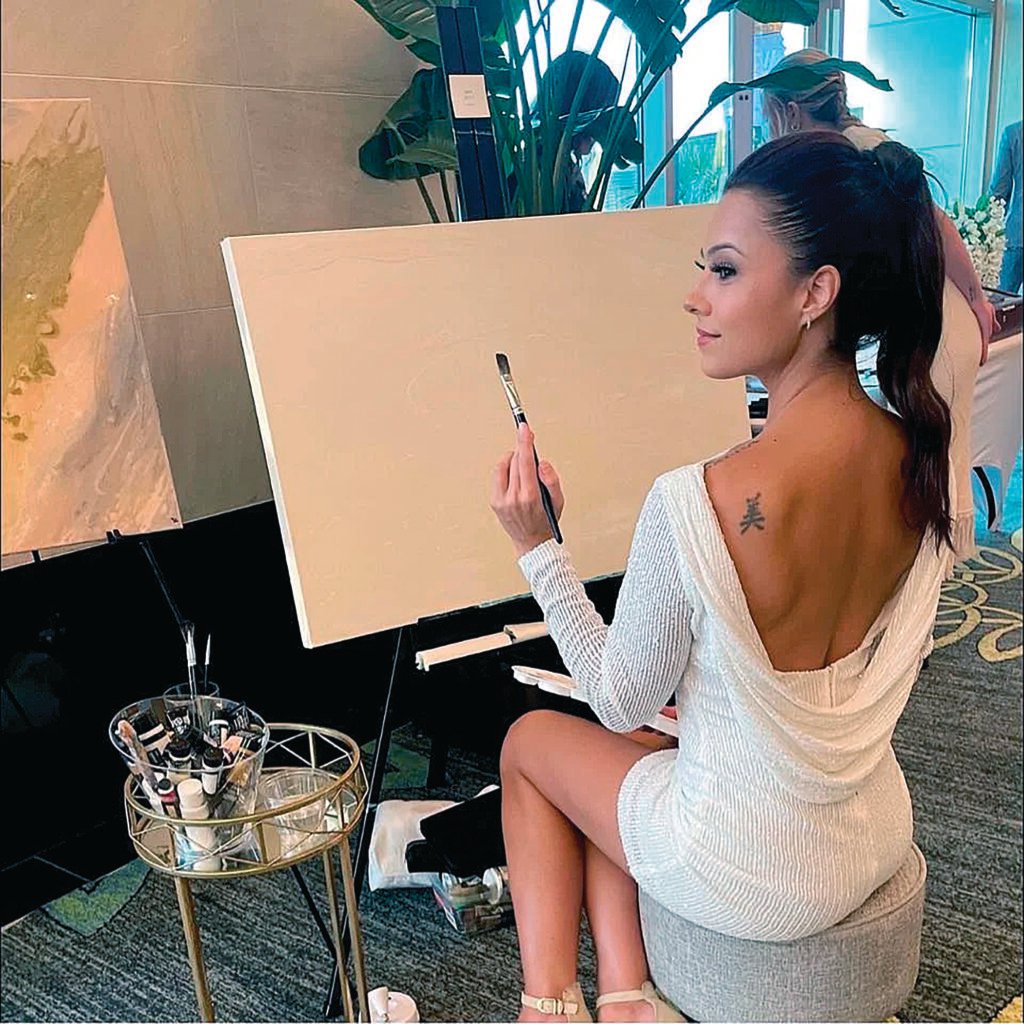
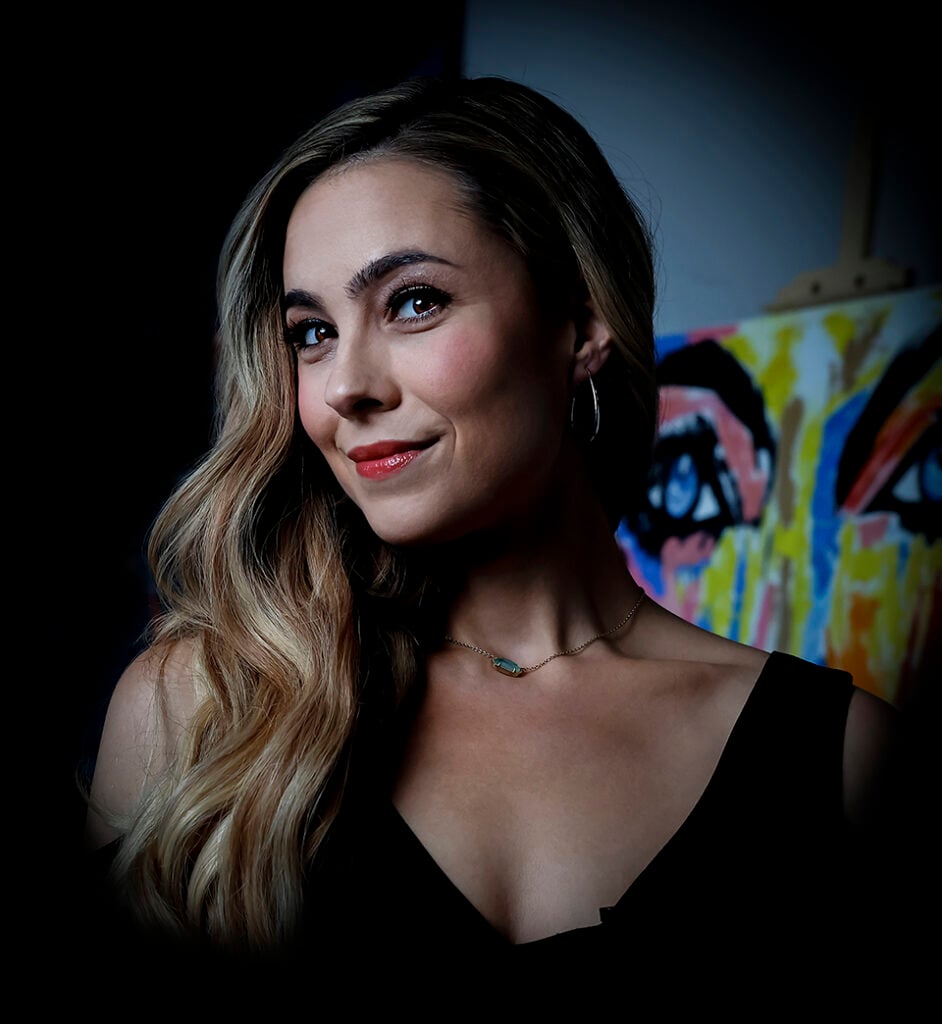
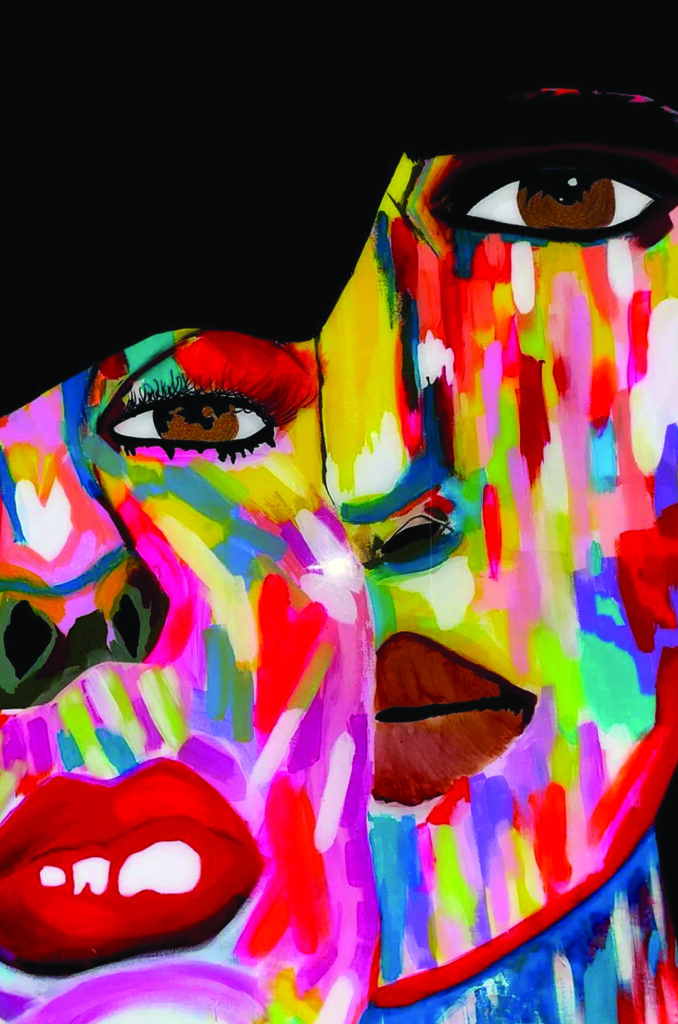
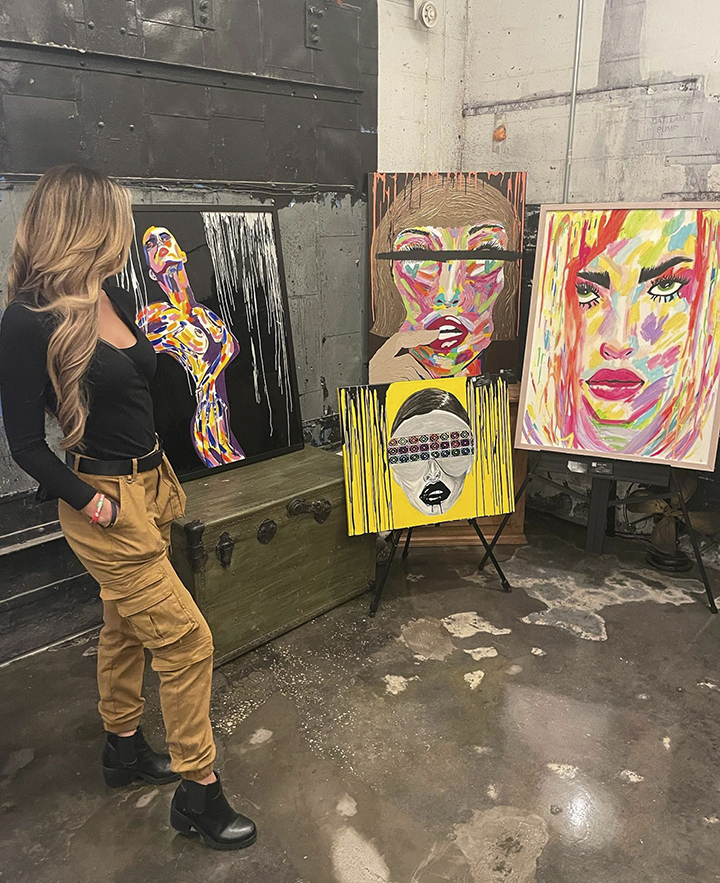
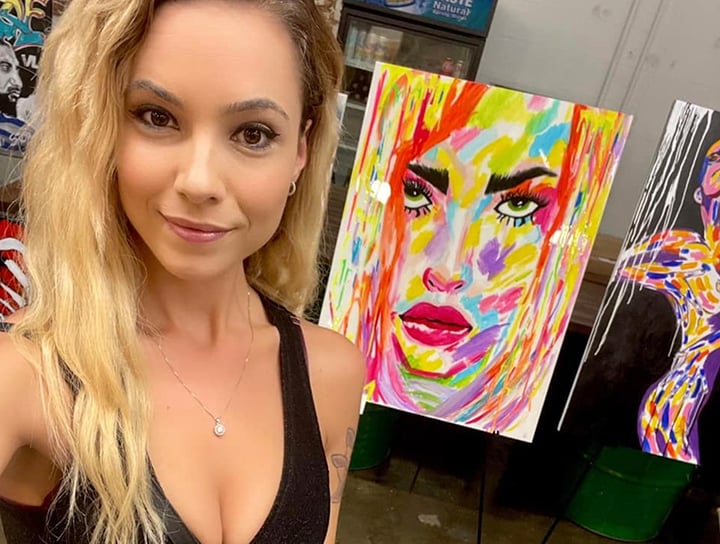
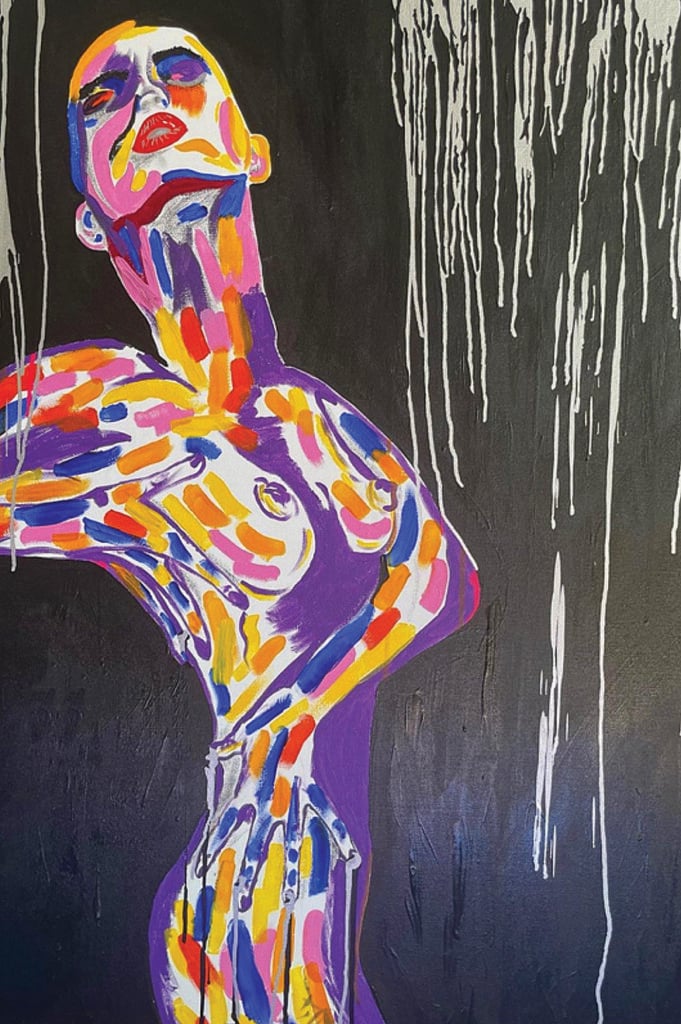
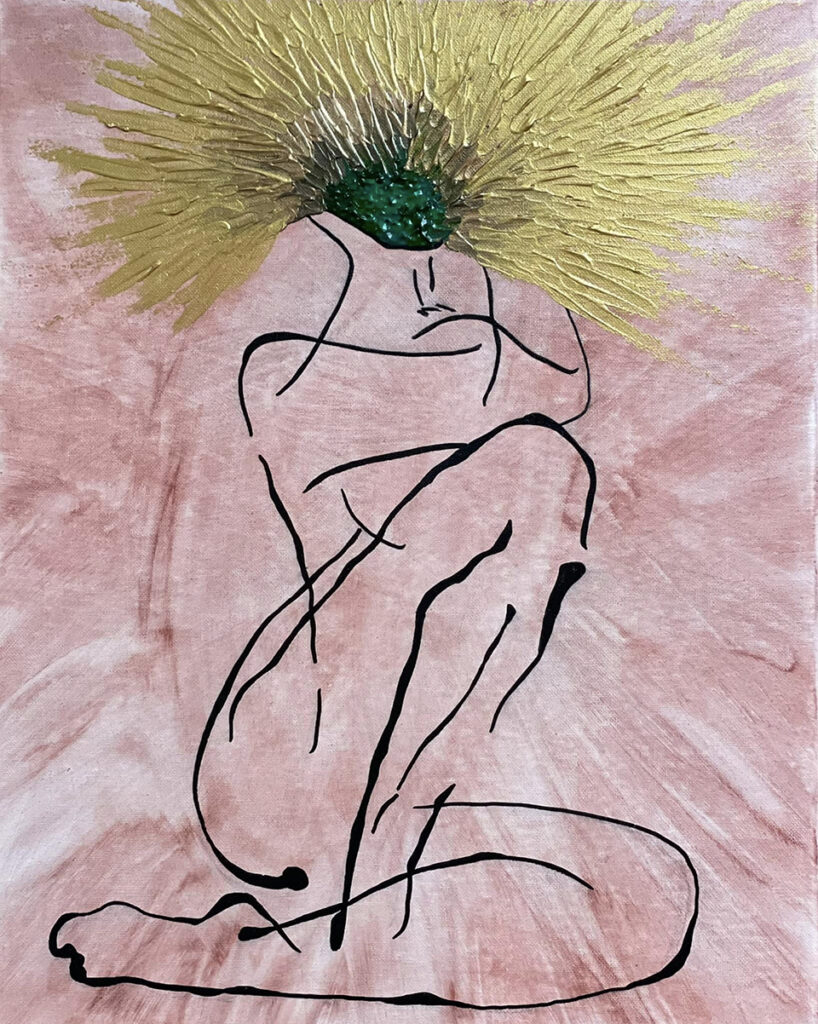
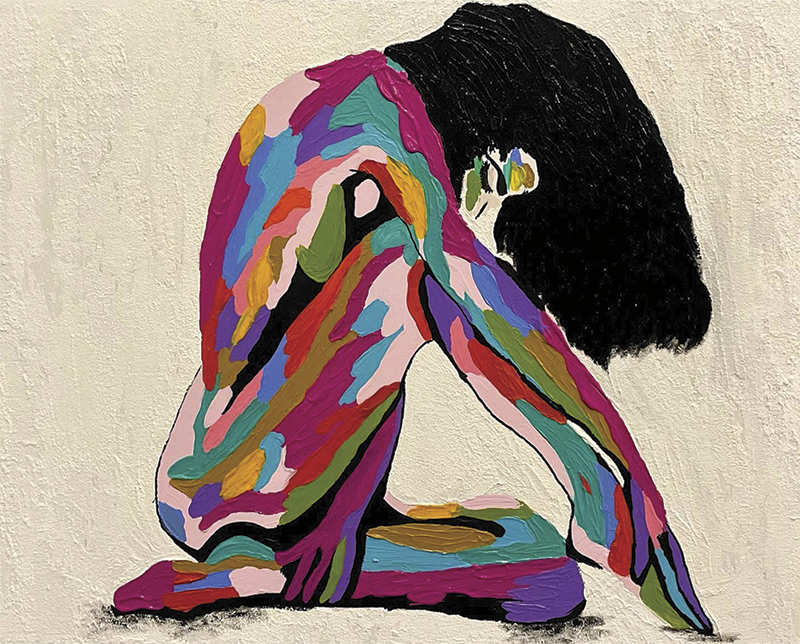
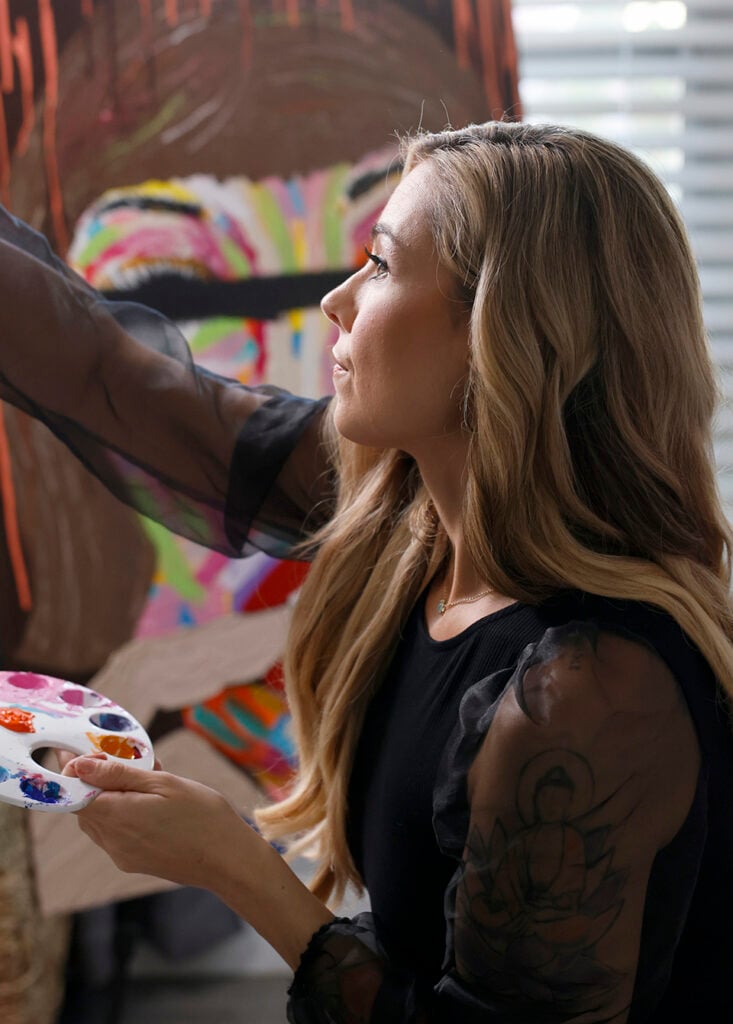
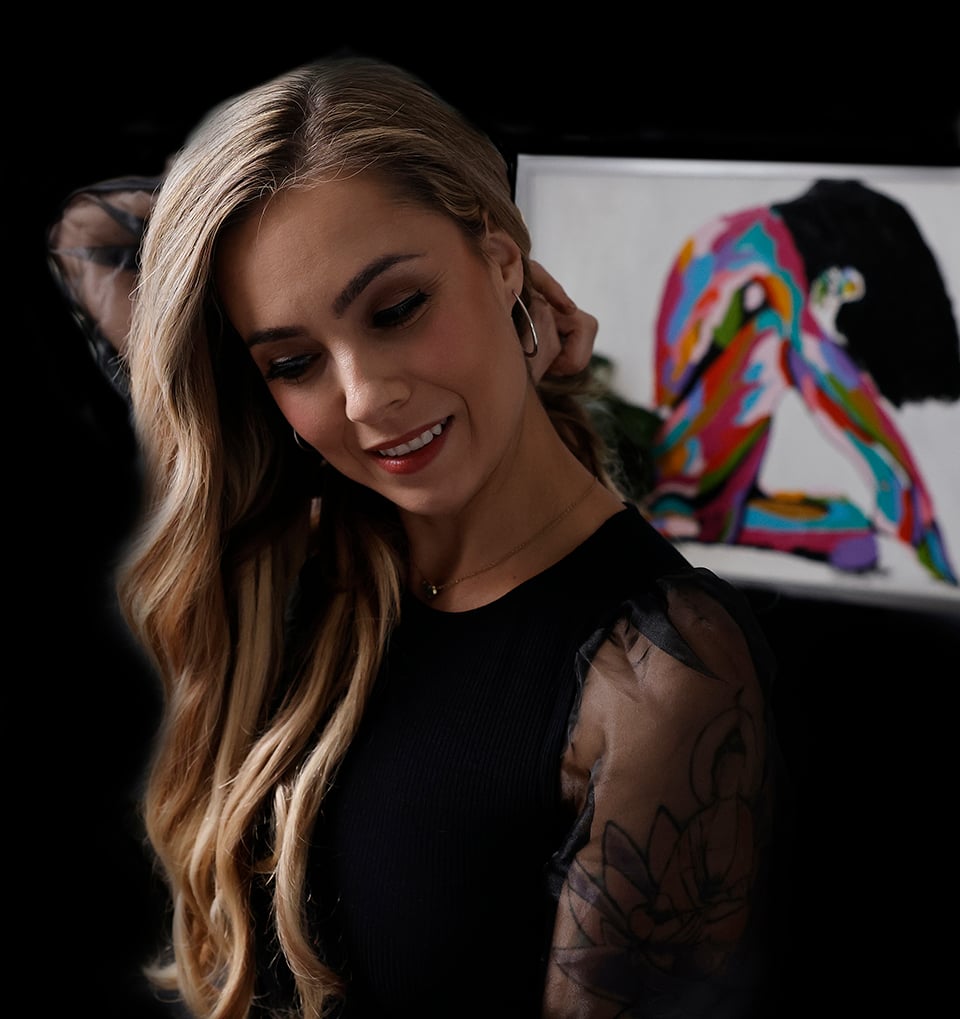
Jacqueline Yulick (Jackie) doesn’t invite you in; she leaves the door wide open. In her electric, color-drenched paintings, women stare back at you—not as dreamlike muses or passive symbols, but as powerful presences with stories to tell. “My art is the communication of emotions,” she says, and with every stroke, that emotion speaks volumes.
Jackie Yulick
There’s a transparently bold and beautiful femininity in your art. Why?
“Because femininity is magnetic—it’s strength that seduces, softness that disarms. The women I paint are not passive figures; they are power in motion. Their gaze isn’t meant to be admired—it’s meant to challenge.”
“I’ve lived the many faces of womanhood: mother, leader, advocate, dreamer. Each role holds a different flavor of allure, not in the traditional sense of beauty, but in presence—in owning space unapologetically.”
“The sensuality in my work is less about the body and more about energy: the quiet confidence of a woman fully in herself, unguarded and unapologetic.”
Yulick’s journey into painting wasn’t rooted in academia—it was born in the everyday. As a hairstylist, she chopped and shaped strands with an instinct for drama. DIY projects filled her downtime with texture, contrast, experimentation. Those early forays weren’t accidents; they were rehearsals, pushing against boundaries long before paint ever touched canvas. And when painting finally took hold, the language was already there—bold, tactile, impatient.
She doesn’t paint for decoration. “As a single mother of two beautiful girls, a dedicated mentor for teen girls in foster care…” Yulick reveals what fuels her—I couldn’t help but shorten the excerpt, but the sentiment is clear—art isn’t escapism. It’s essential. Each woman on her canvas is real and raw—not a figure to observe, but someone to confront. Her subjects look at you and weigh you instantly, and they keep weighing.
Is there a self-portrait of you in any of your art?
“There’s a piece of me in every painting. I’ve never painted my face, but I paint my truths. The women on my canvas carry fragments of my story—the mother who nurtures, the dreamer who risks, the advocate who fights, and the survivor who endures. Sometimes, the sensual charge in my work is my own reclamation—a reminder that vulnerability and power can coexist. That being seen can be both terrifying and liberating. Each painting is a mirror, not of what I look like, but of what I feel.”
In the galleries of St. Petersburg, where tourist-friendly pastels and curated pleasantness sometimes dominate, Yulick’s work feels like a voltage spike. It doesn’t cozy up; it disrupts. Collectors aren’t seeking harmony—they’re seeking collision. Her paintings are beautiful, yes—but in a way that catches you off guard. They ask you to stay with your discomfort, to lean in on their intensity. And they reverberate.
Her studio mirrors the restlessness of her work—a place cluttered with half-finished canvases, brushes abandoned, paint scents that ricochet off walls like challenge. She doesn’t sketch. She doesn’t plan. She enters, and the painting emerges. It is a gamble, but that’s the point. The chaos is her medium.
Art is / isn’t…
“Art isn’t escapism—it’s essential. It’s not about running away from reality; it’s about confronting it with color, movement, and truth. It doesn’t pull me away from reality—it pulls me deeper into it. Art is my oxygen—it allows me to breathe emotion, to translate silence into something that stirs the senses. It gives breath to what words can’t hold. For me, art is seduction in its purest form: a pull toward something deeper, something that asks you to stay a little longer, to feel a little more.”
Jackie Yulick PaintingJackie Yulick
Florida’s art community has taken note—not for its pretty aesthetics, but for its unfiltered force. Her paintings don’t soften the room—they bend it. They’re intimate and explosive, personal and civic, polished and perilous all at once.
What gives her work its staying power is that charge between individual expression and shared experience. Viewers don’t just see their own reflections in her work—they feel like they’re in dialogue with it. It touches something communal, resisting easy categorization or commodification. That’s rare.
How does your professional and personal life influence your art—or vice versa?
“My work and art feed one another. I’m surrounded by people whose lives revolve around compassion, survival, and transformation.”
“Both roles require deep empathy and an ability to see beneath the surface. The children, families, and professionals I encounter remind me of the strength in quiet perseverance. That energy shows up on my canvas. My paintings are emotional translations of what I witness daily—strength, resilience, healing, and hope.”
She’s carving a space—not just in the evolving landscape of contemporary art, but in the cultural guts of St. Petersburg and Tampa. She doesn’t ride the wave—she tests the edges. Her paintings fight for attention, and in doing so they force the city—and maybe beyond—to reckon with what female expression can look like when it refuses to be soft.
If her art hits, that’s because she knows how to hit back. Yulick doesn’t paint to blend in, and that refusal alone feels radical. St. Petersburg might be her base, but her vision is bigger. And the world should be ready. •
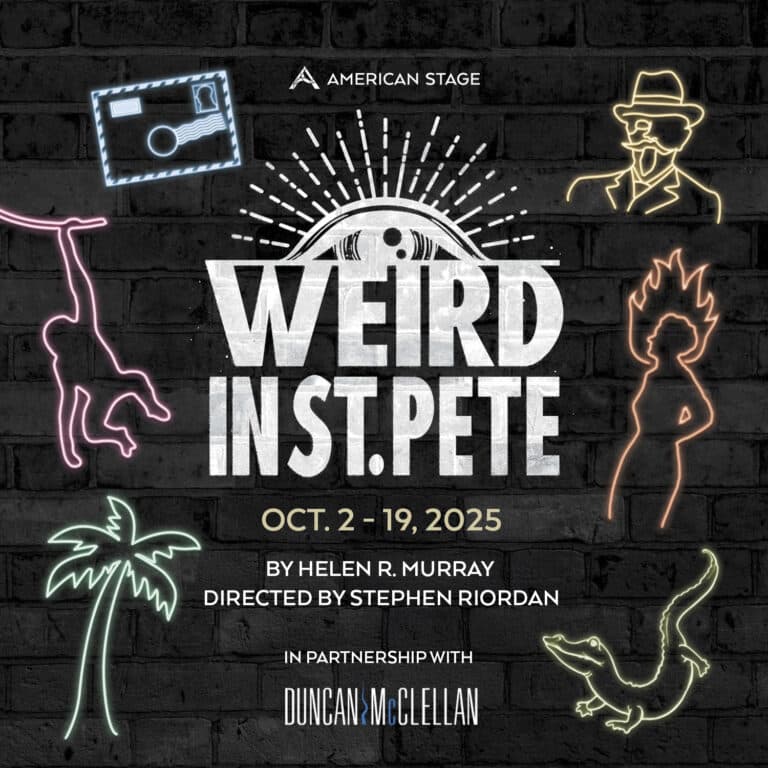
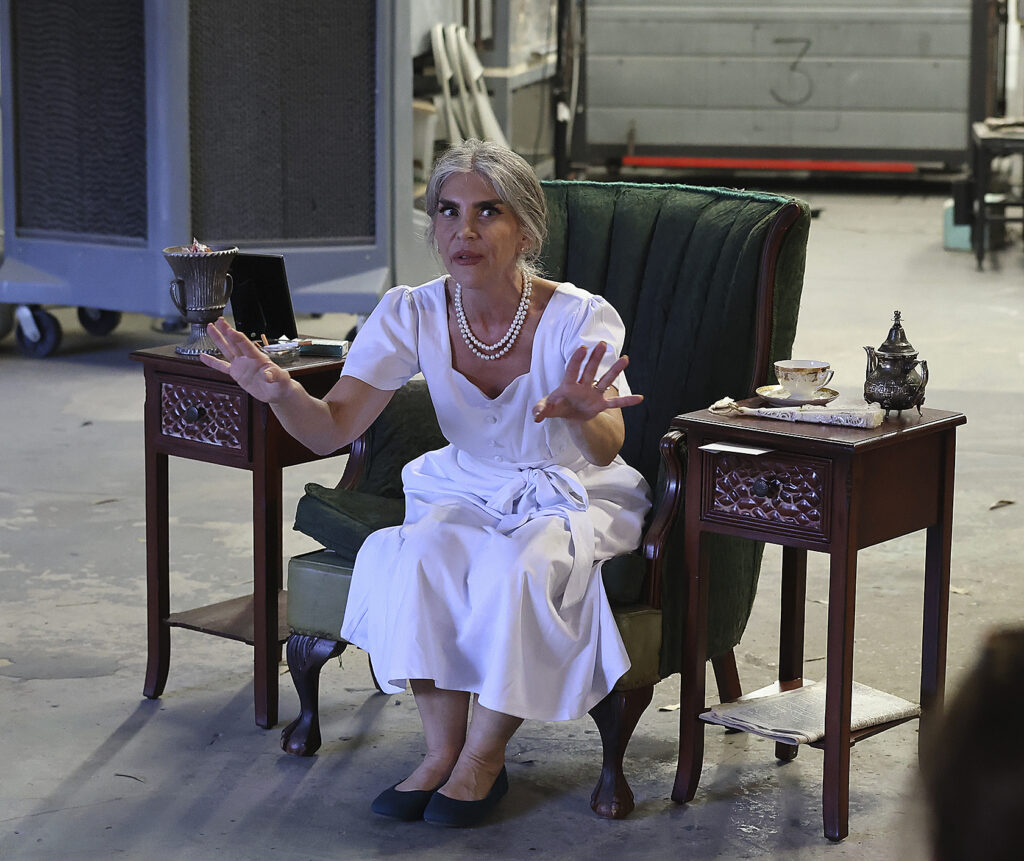
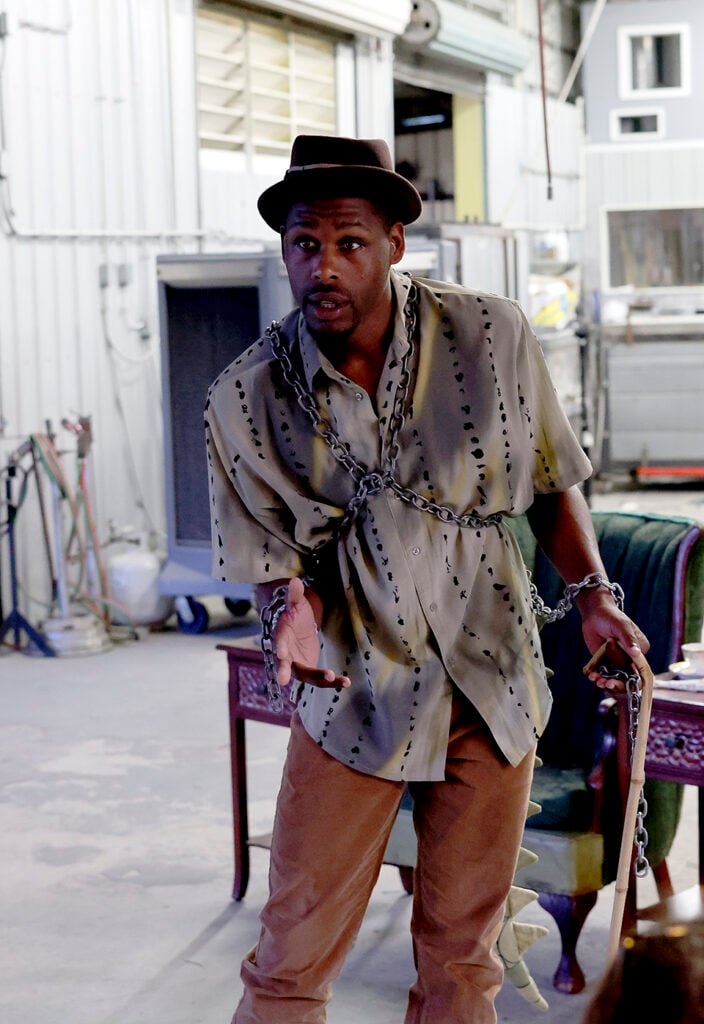
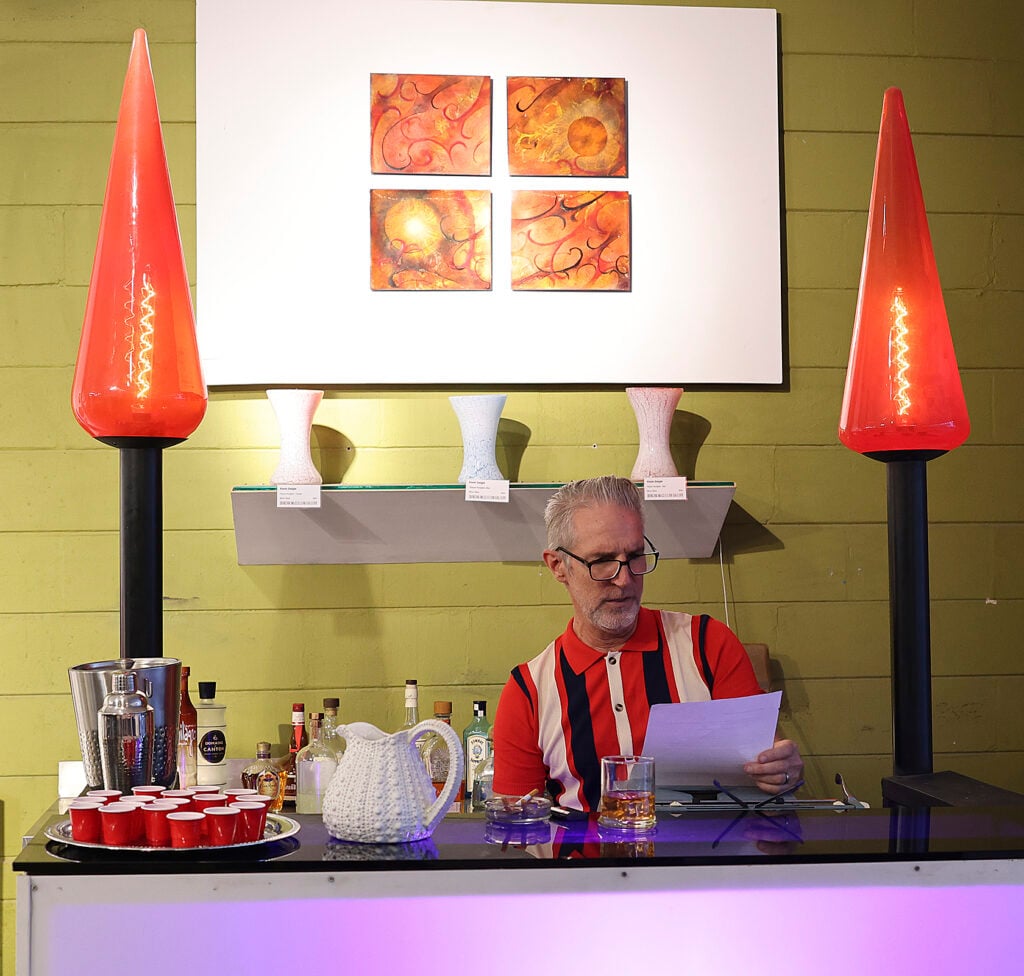
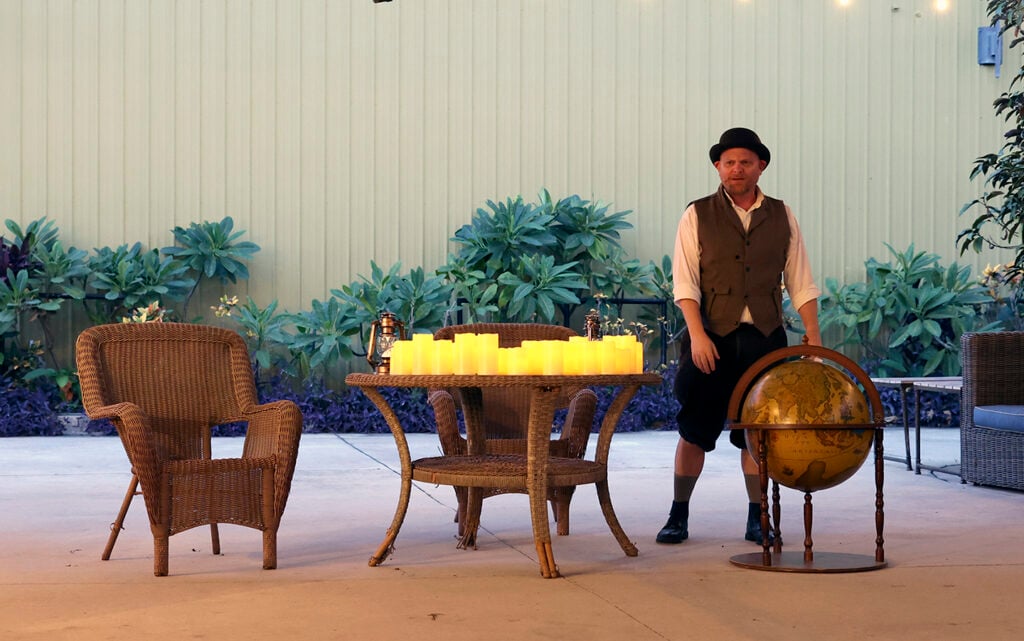
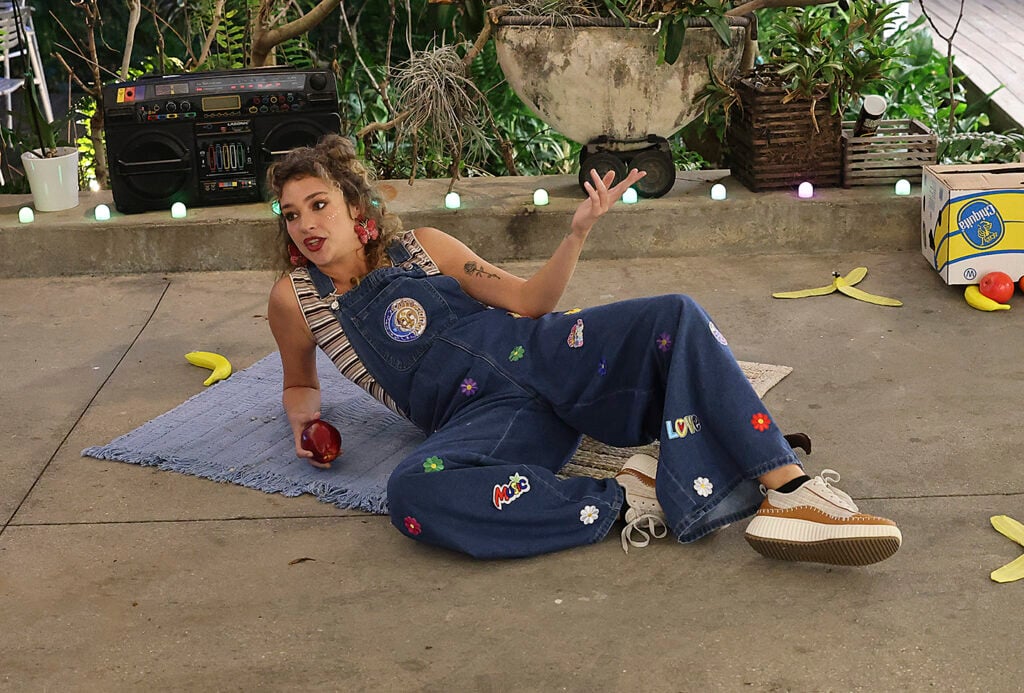
Happening now, St. Petersburg’s art and theater scenes converge in a delightfully uncanny way with Weird in St. Pete, an immersive theatrical journey staged inside the Duncan McClellan Gallery under the auspices of American Stage.
What Is Weird in St. Pete?
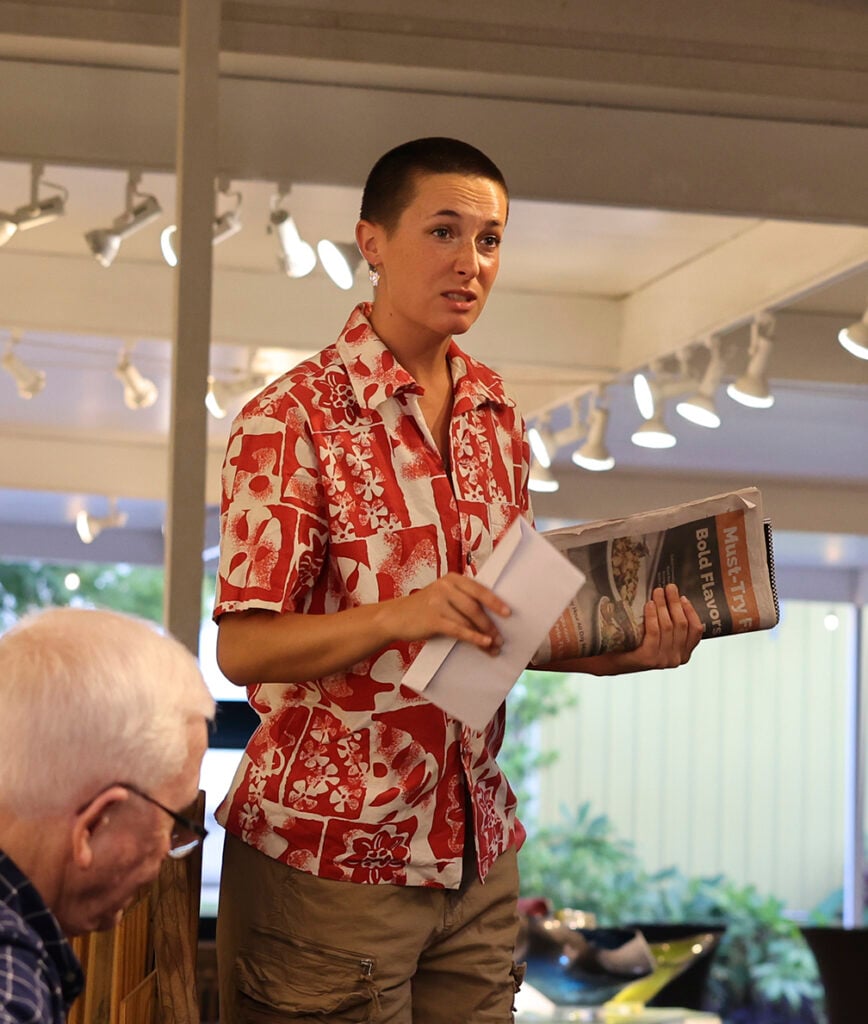
Weird in St. Pete is not a traditional play performed on a stage. Instead, it is a walk-through, guided experience where attendees (in small groups) travel through the gallery space, encountering figures from St. Petersburg’s local folklore—some familiar, some obscure—brought to life in surprising ways.
Each “show” lasts roughly 40 minutes and is timed such that groups overlap (a new group begins before the prior one fully ends). Audience members are encouraged to explore, interact (to some extent), and absorb the ambiance as much as the performance itself.
Photography is allowed within the gallery environment (the art space), but not of the performers during the show.
Because Weird in St. Pete leans into the uncanny and the regionally peculiar, it’s as much about experiencing the mood and spirit of local lore as it is about story and spectacle.
The Venue: Duncan McClellan Gallery
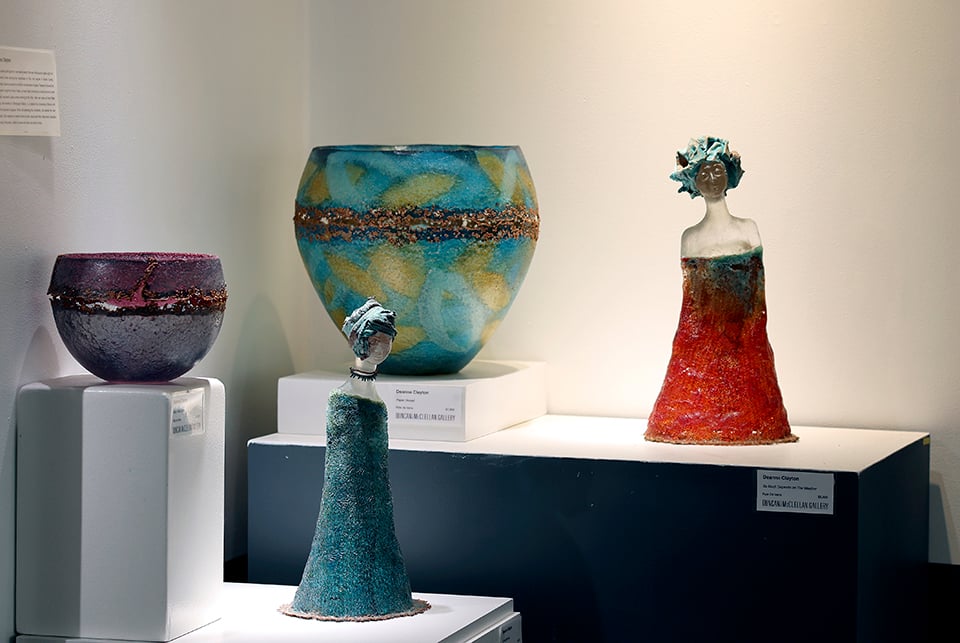
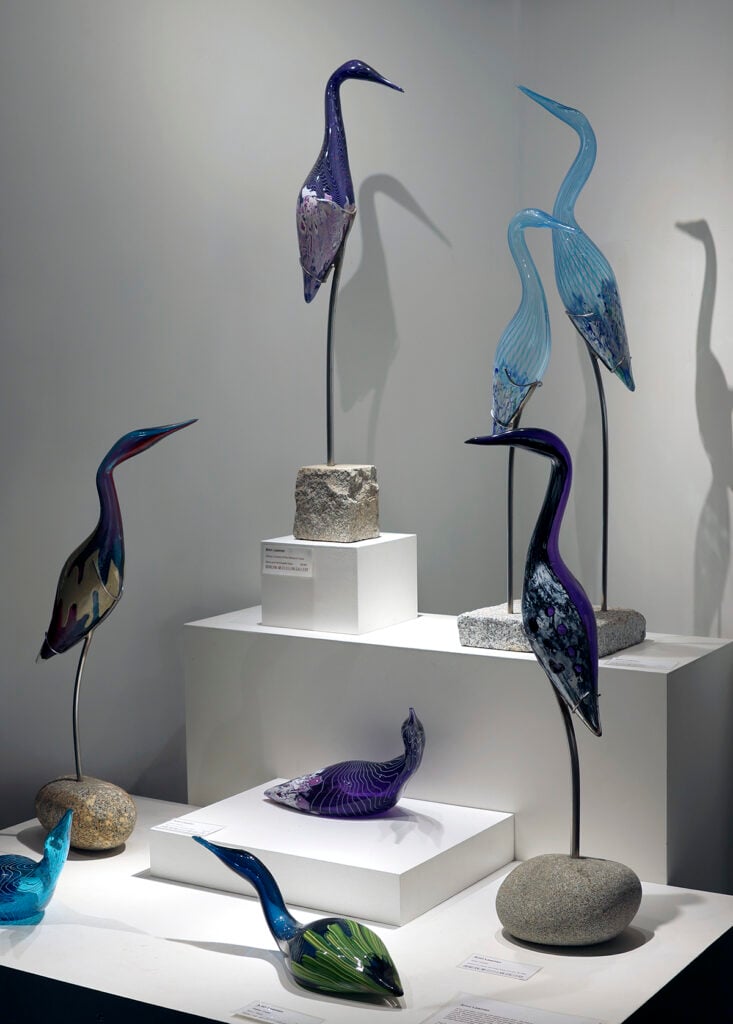
The Duncan McClellan Gallery, based at 2342 Emerson Avenue S in St. Petersburg’s Warehouse Arts District, is primarily known for its glass art exhibitions and its working hot-glass studio.
Over the years, the gallery has transformed an industrial shell into a lush, multi-use space featuring interior galleries, outdoor sculpture gardens, and green plantings that soften the surroundings.
In October 2025, the gallery is also hosting a “Galactic Glass” exhibit—an exhibition of otherworldly glass sculpture—making the gallery doubly thematic for Weird in St. Pete.
The juxtaposition of finely crafted glass art, ambient lighting, and theatrical characters wandering through the space promises to heighten the sense of being inside a dream, or a living tableau.
Logistics & Experience
Dates & Times: October 2–19, 2025 — Thursday through Saturday: shows begin at 6:00, 6:30, 7:00, 7:30, 8:00, 8:30, 9:00 PM — Sundays: 4:00, 4:30, 5:00, 5:30, 6:00 PM
Group size & reservation: Each performance is limited to 30 participants (25 tickets on sale, 5 held)
Age recommendation: Suitable for ages 10 and up
Duration: Approximately 55 minutes per group
Admission & ticketing: Tickets are available in advance through American Stage. Because of the immersive format and small capacity, advance booking is strongly recommended.
Special rules: Outside food, large bags, selfie sticks, and professional cameras are prohibited during the performance.
Rain policy: Mild rain won’t cancel the event; severe weather may force postponement, in which case ticket holders may exchange tickets.
Why It Matters (and What to Watch For)
Bridging Art & Storytelling Weird in St. Pete exemplifies the growing trend of hybrid art experiences—where galleries aren’t just places to view static works, but stages for immersive narratives. It also deepens audience connection to place by highlighting local legends and quirks.
Atmospheric Setting The gallery’s existing ambiance—glass artworks, shifting light, plants, and shadows—serves as a ready-made theatrical canvas. The “Galactic Glass” show concurrent with the performance reinforces a cosmic, uncanny overlay.
Local Lore Brought to Life Attendees might meet characters that reflect St. Pete’s lesser-known myths or personalities: a ghost of old Tampa Bay, eccentric local inventors, or urban legends that have shaped the city’s identity. The immersive format lets the audience feel they’re walking through St. Petersburg’s hidden stories.
An Intimate Experience Because groups are small, the interaction is more immediate and personal than a large theater production. The overlapping scheduling means the gallery never feels empty.
Click logos below for more info and to get tickets.
A dual exhibition of works by Rocky Bridges and ceramicist Norbert Gonsalves. Remains on view through October 31, 2025. 1234 Dr. Martin Luther King Jr. St. N. St. Petersburg, FL
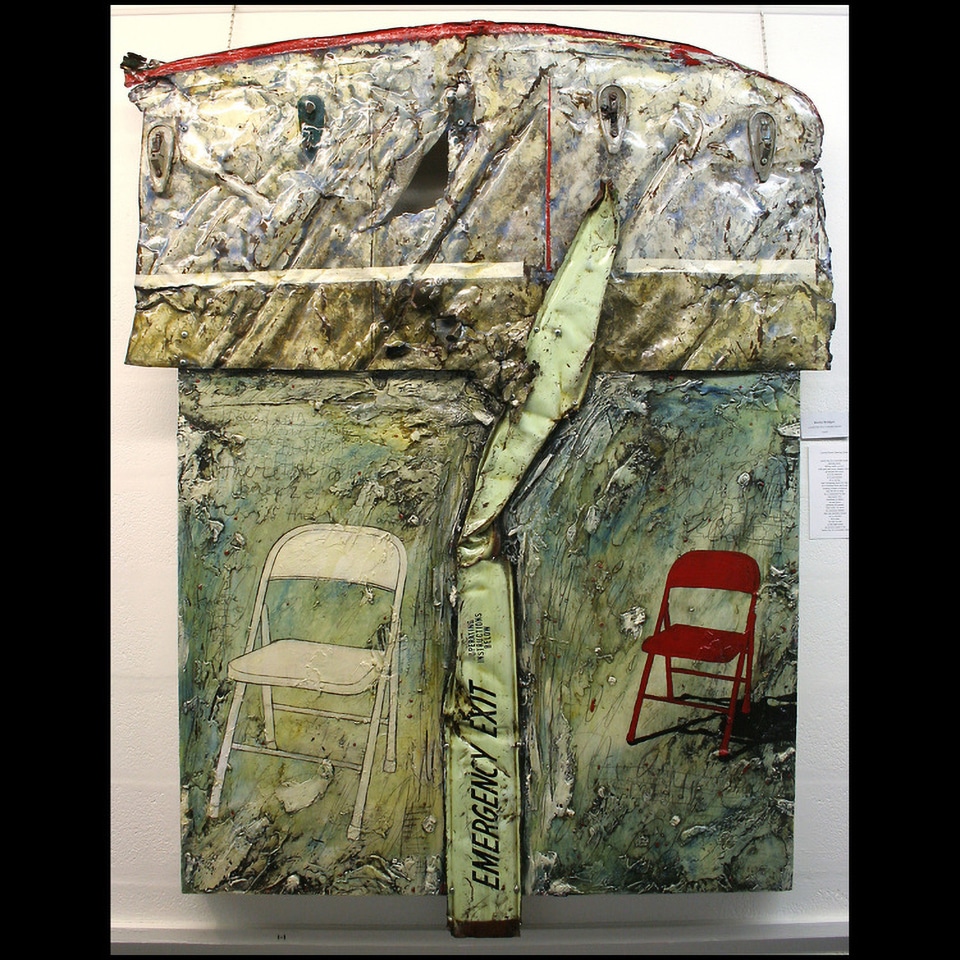
A native of Tarpon Springs and a fixture in Florida’s contemporary art scene, Rocky Bridges breathes new life into forgotten debris, turning industrial cast-offs into layered narratives of resilience and renewal.
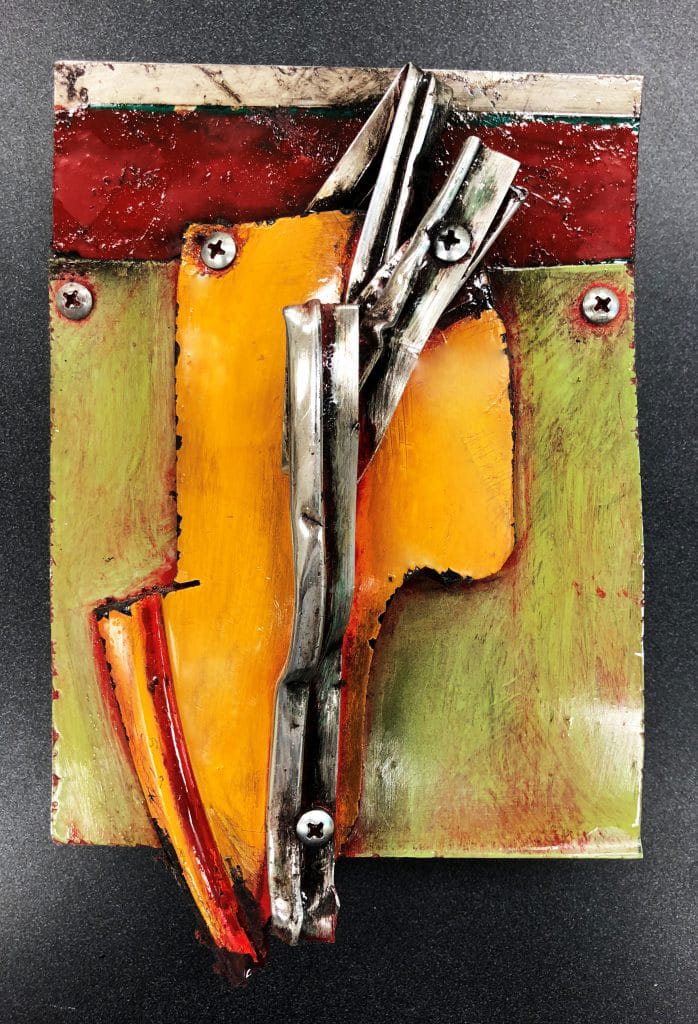
Represented by ARTicles Gallery in St. Petersburg, Bridges is renowned for his mixed-media assemblages—striking compositions constructed from repurposed materials like bulldozed museum rubble, worn-out signage, and industrial scrap. For Bridges, these fragments are not refuse but relics, artifacts of stories worth retelling.
“I’ve always been drawn to the overlooked,” says Bridges. “There’s a certain poetry in things left behind—objects that once had purpose, now waiting for new meaning.”
From Tarpon Springs to the Global Art Stage
Bridges’ creative journey began in earnest at Cooper Union in New York City, where he honed his foundational skills. Further studies at the Savannah College of Art & Design and the Art Institute of Chicago deepened his perspective, ultimately shaping his approach to the conceptual and the tactile. His work has been supported by numerous accolades, including a three-year grant from the National Foundation for Advancement in the Arts (2000–2002), a Florida Individual Artist Fellowship, and a Fulbright Memorial Scholarship in Japan in 2007.
In addition to his studio work, Bridges has been a dedicated educator for more than three decades, mentoring generations of young artists at the Lois Cowles Harrison Center for the Arts in Lakeland, Florida.
In 2023, he was commissioned to create two pieces, Blazing Swarm No. 1 and Blazing Swarm No. 2, for Blake High School with support from the Gasparilla Festival of the Arts.
“Teaching keeps me grounded,” he reflects. “It forces me to articulate what I do in the studio, and that feedback loop has made me a better artist—and human.”
From the Ashes
Bridges’ process is deeply intuitive yet meticulously structured. He collects and categorizes materials—by color, size, and texture—before assembling them into sculptural works that blur the line between abstraction and storytelling.
“There’s a clarity that comes from disorder,” he says. “My goal is to find balance, even poetry, in apparently random combinations of things and ideas.”
His solo exhibitions, such as The Order of Disarrangement at the Polk Museum of Art and Heavy Metal at the Maitland Art Center, have earned critical acclaim. These shows reveal an artist engaged not just with materials, but with metaphor. A standout piece included metal rescued from the demolition of the old Tampa Museum—what was once rubble, now a sculptural tribute to transformation.
Art critic Luis Gottardi wrote:
“By reinventing these broken or outmoded forms, [Bridges] is making a metaphorical positive statement about celebrating the beauty, experience, history, meaning and strength in each of us.”
Recognition and Legacy
Bridges’ work has been recognized across Florida, with Best of Show honors at major juried festivals including Mainsail, SoBe Miami, Temple Beth El, Mayfaire, and Gasparilla. His pieces have appeared in group exhibitions such as Building Legacies: Architecture & Design at the Leepa Rattner Museum of Art (2022), further cementing his status as a vital voice in contemporary assemblage art.
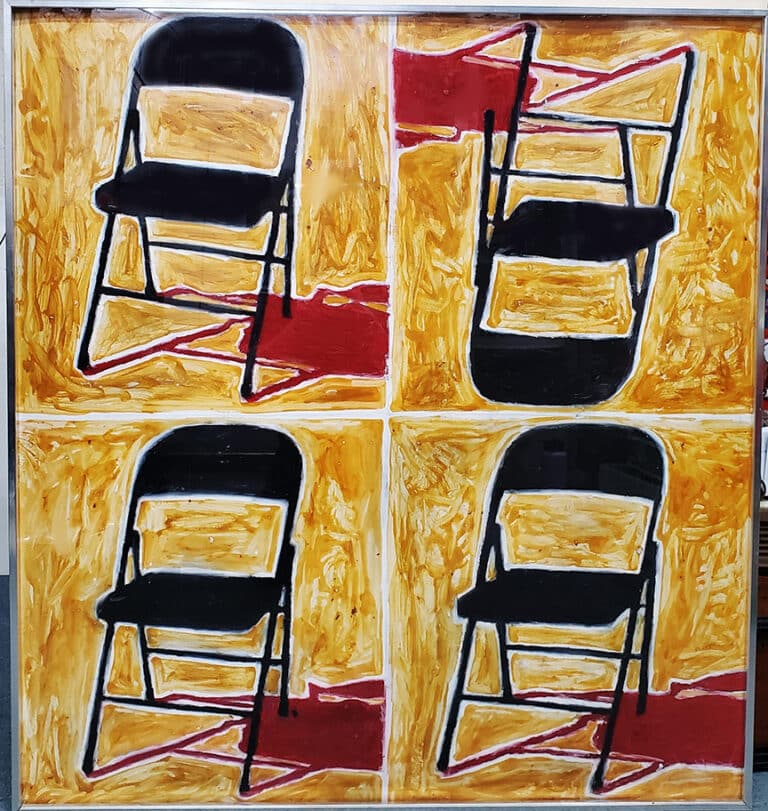
Even at auction, Bridges’ earlier works like Four Prayer Chairs (1997) have garnered collector interest, a testament to the timeless resonance of his themes.
Yet Bridges is not one to rest on accolades. He remains passionately committed to exploring the relationship between material, memory, and meaning.
“It’s not just about making something beautiful—it’s about telling a story through what’s been forgotten,” he says. “That’s where the magic lives.”
A Living Archive of Renewal
Now in the mentorship phase of his career, Bridges continues to shape both Florida’s art landscape and the minds of emerging artists. His legacy lies not only in the sculptures that adorn gallery walls but in the countless students he’s encouraged to see possibility in the overlooked.
“Everything has a second life,” Bridges says with a smile. “You just have to look hard enough to see it.”
From reclaimed debris to refined metaphor, Rocky Bridges reminds us that art is not just about what we see, but how we choose to see it. •
Fall Lineup To Feature Jeff Whipple’s 50-Year Journey and Interactive Art
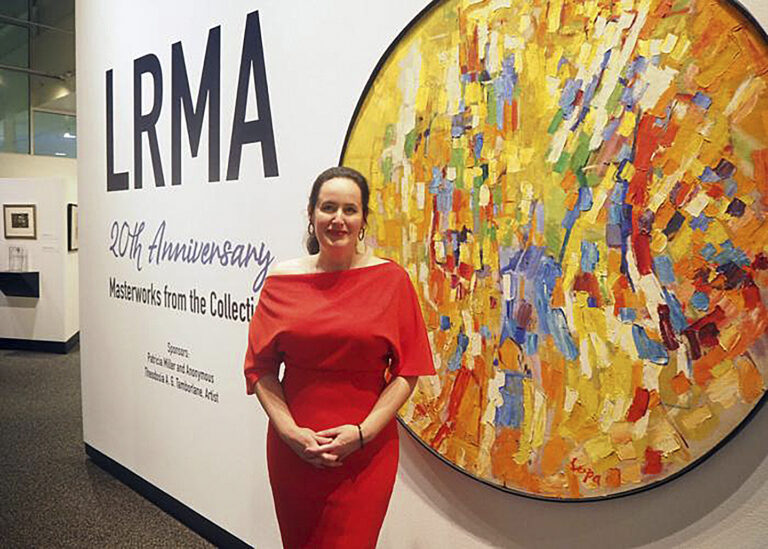
Fall is here — and the Leepa-Rattner Museum of Art (LRMA) is kicking things off in style with three exhibitions and programs for all ages. LRMA’s Fall season includes a 50-year retrospective of Florida-based artist Jeff Whipple, live theater programs, artist talks, and creative inspiration around every corner. The Abraham Rattner permanent collection gallery also got a major glow-up with its debut as the newly named Helen and Donald Gilbart Gallery, featuring a new exhibition of Rattner’s early works, including early portrait drawings and French watercolors, and the launch of two digital interactive projects in augmented reality and a large touch screen. LRMA has a lot to celebrate including being recently named “Best Museum (Regional)” by the Guide to Florida’s Best of Florida 2025.
Jeff Whipple: Past, Present, Future August 9 – December 7, 2025 James W. Mitchell, Jr., Center, and Interactive Galleries
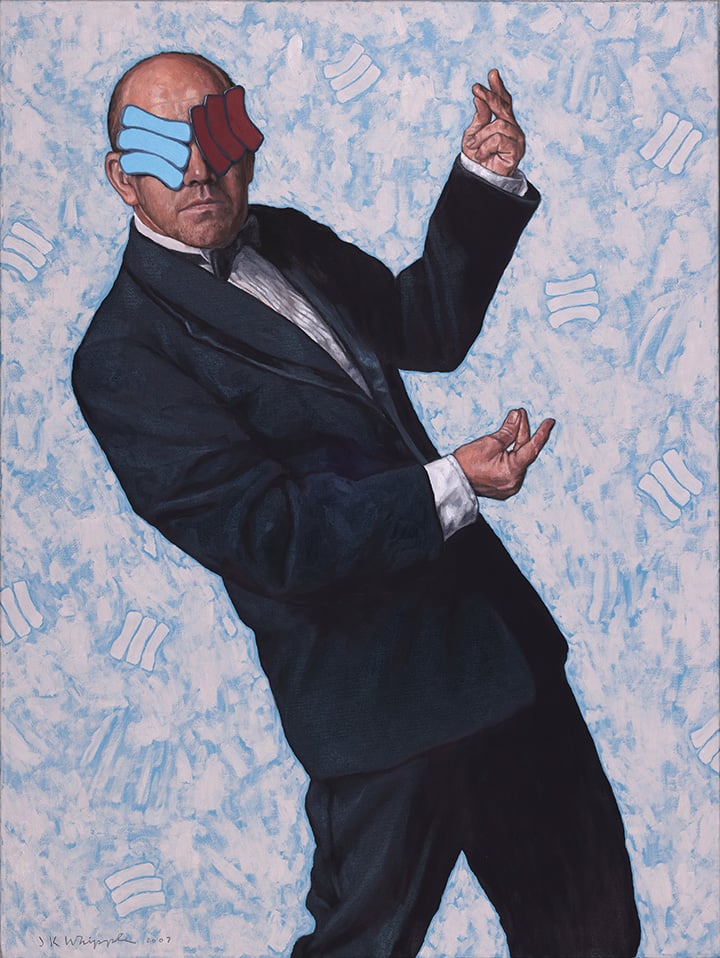
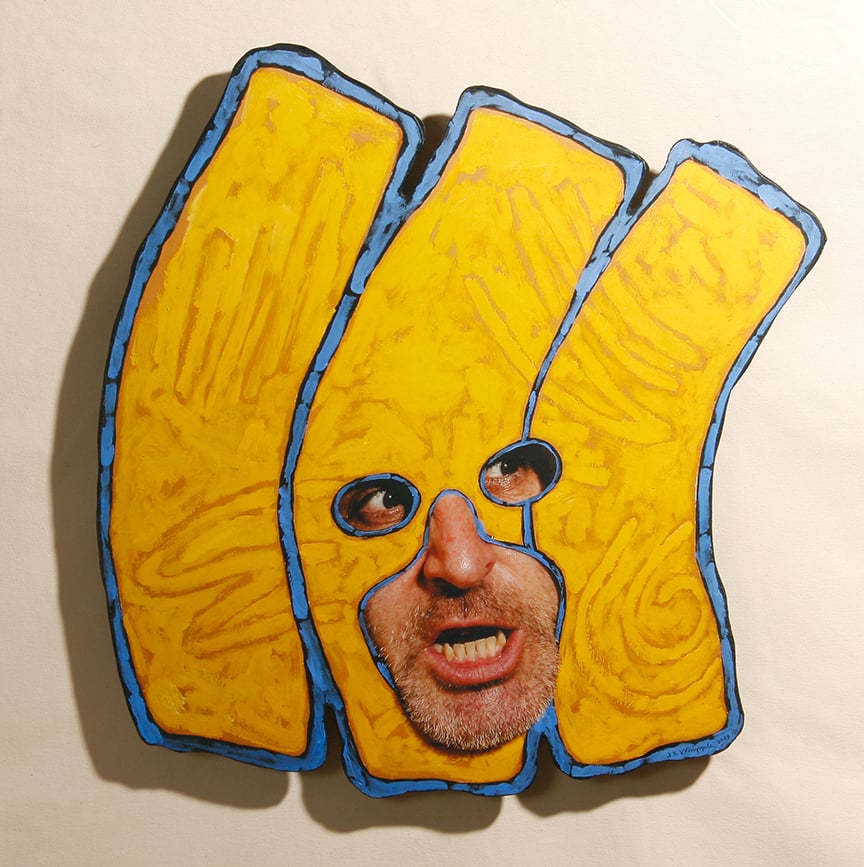
The Leepa-Rattner Museum of Art proudly presents Jeff Whipple: Past, Present, Future, a retrospective celebrating five decades of provocative, concept-driven work by Florida-based artist Jeff Whipple. Known for his signature three-line motif known as the “spanasm” and a razor-sharp wit, Whipple’s multidisciplinary practice spans painting, video, performance, and installation, exploring themes of mortality, identity, and the absurdity of modern life.
Over the past fifty years, he has built a unique style that includes drawing, painting, sculpture, theater, digital media, and public art, often blurring the lines between them. His work reflects a lifelong investigation of what it means to perceive, interpret, and inhabit the world, filtered through a lens that is at once skeptical, incisive, and marked by a wry, understated humor.
This exhibition traces the evolution of his singular visual language—from early existential compositions to recent works that invite viewers to consider how imagination shapes our understanding of ourselves and the world around us. At turns engaging, irreverent, and delightfully bizarre, Whipple’s work offers a poignant, and at times humorous reflection on what it means to be human in an ever-shifting world.
Past, Present, Future, on view August 9 through December 7, 2025, is Whipple’s first major retrospective since 2001 when the former Gulf Coast Museum of Art organized his 25-year retrospective which traveled throughout the state of Florida. Past, Present, Future showcases eighty works by Whipple created over the course of 50 years and includes paintings, drawings, prints, sculptures, and four interactive stations showcasing a selection of his multi-media films and digital installations. Visitors can also try their hand at Whipple’s interactive miniature golf course in the museum’s Interactive Gallery.
Image: Jeff Whipple, The Patron is Moved by Culture, 2007, oil on canvas, 40 x 30 in. Courtesy of the artist.
A Legacy of Her Own: Women of the Gulf Coast August 9 – December 7, 2025 Lothar and Mildred Uhl Works on Paper Gallery
As part of an ongoing exploration of the Gulf Coast Museum of Art Collection, A Legacy of Her Own: Women of the Gulf Coast brings renewed attention to the creative vision and enduring contributions of six women artists whose work shaped—and was shaped by—the cultural landscape of the region.
Spanning five decades of collecting, this exhibition features rarely seen works that trace the evolution of the Gulf Coast Museum of Art from its origins as the Florida Gulf Coast Art Center in the 1950s to its later role as a leading contemporary art institution in Largo. From Isabel Bishop’s refined mid-century drawing to Ethelyn Hurd Woodlock’s bold mixed media experimentation of the 1970s, and on to the evocative photographic practices of Barbara Beeler, Victoria Hirt, Virginia Beth Shields, and Anna Tomczak, A Legacy of Her Own illuminates the breadth of media and expression that women artists brought to the Gulf Coast’s cultural scene.
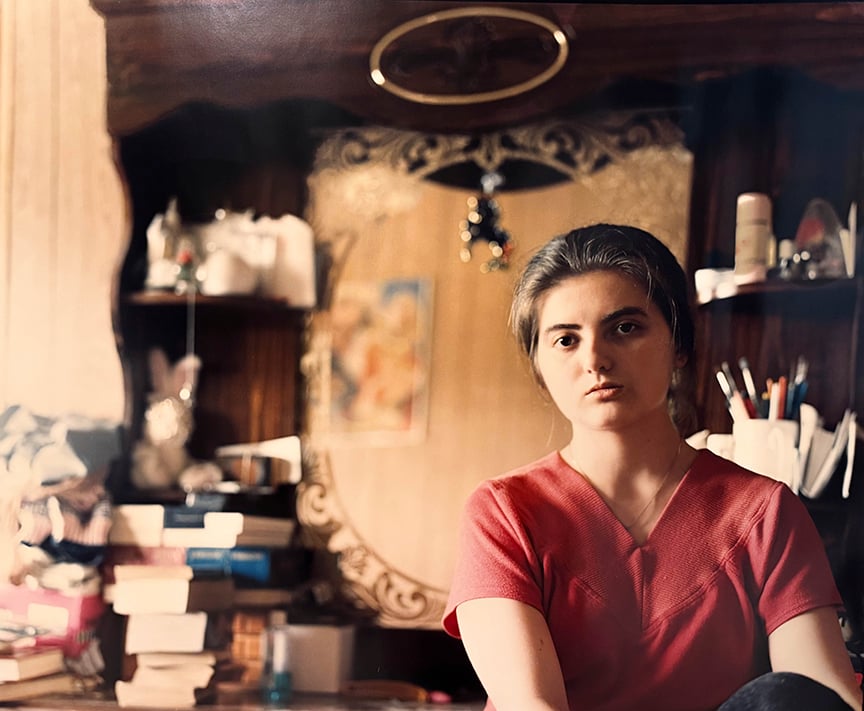
Image: Virginia Beth Shields, Kathy, From the Flesh and Blood Series, 1995, Ektacolor print, 27 x 33 in., Leepa-Rattner Museum of Art, St. Petersburg College, from the Gulf Coast Museum of Art Collection.
Abraham Rattner: French Watercolors September 10, 2025 – September 13, 2026 Helen and Donald Gilbart Gallery
The Leepa-Rattner Museum of Art recently unveiled the newly named Helen and Donald Gilbart Gallery with a major reinstallation of the Abraham Rattner “early years” permanent collection. A newly designed gallery entrance introduces visitors to a bright and airy space highlighting charcoal portrait drawings from Rattner’s formative years at the Pennsylvania Academy of the Fine Arts, vibrant watercolors created during his travels across France, and early oil paintings as he honed his style as a surrealist in Paris in the 1920s and 1930s. This new installation includes the debut of two new innovative technology displays including a web-based augmented reality wall label app and a large interactive touchscreen that draws from the museum’s collection and archives to put Abraham Rattner’s life and prolific career into context within a historical timeline of events, cultural influences and inventions.
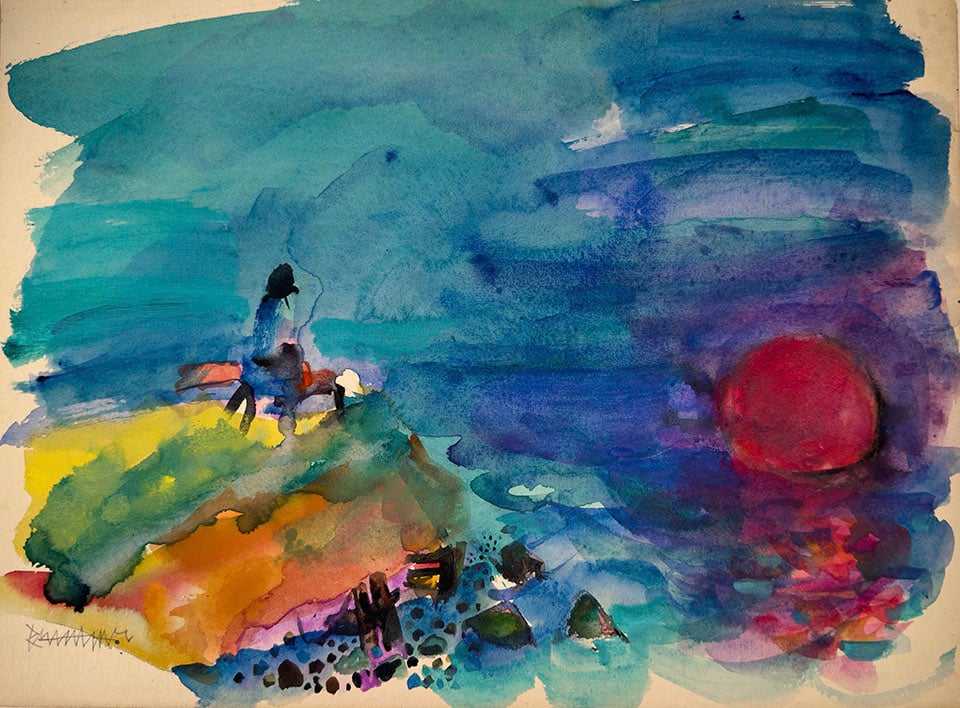
Throughout his career, Abraham Rattner (1893-1978) was driven by an inner need to create. He was rarely without art-making materials and often worked in the medium of watercolor because of its ease and immediacy. As a colorist, Rattner also enjoyed the luminosity of watercolor for capturing the spirit of light. Highlighted in Abraham Rattner: French Watercolors are eleven watercolors from Rattner’s early career, which document his travels throughout France in the 1920s and 1930s.
Rattner was first exposed to the medium of watercolor while studying at the Pennsylvania Academy of the Fine Arts (PAFA) in Philadelphia between 1916 and 1919, which was interrupted in 1917 by his service in the U.S. Army during World War I. PAFA embraced Impressionism and plein air (painting outdoors) painting as a serious artistic expression. During Rattner’s time there, his teacher, Arthur B. Carles, and PAFA created the Chester Springs Summer Campus to help students learn to paint landscapes in an outdoor setting. This learning experience had a profound effect on Rattner.
In 1919, Rattner received a Cresson Traveling Scholarship from PAFA that allowed him to continue his art studies in Europe. He remained in Paris, France, for the next 19 years until the events leading up to World War II forced him to return to the United States. Although Rattner exhibited his oil paintings in the French salons, he continued to paint watercolors to record his many travels. Rattner’s documentations, from steerage passengers on trans-Atlantic crossings, to his time spent living in Giverny, to vacations on the Brittany coast and trips to the Mediterranean island of Corsica, are an important reflection of his time in Europe.
Image: Abraham Rattner, Untitled, c. 1920, watercolor, 11 ¼ x 15 ¼ in., Leepa-Rattner Museum of Art, on loan from the St. Petersburg College Foundation.
RELATED EVENTS
This fall, LRMA’s exciting schedule of programs includes gallery talks, tours, and theater programs! For details, please visit www.leeparattner.org/calendar.
Artist Talk: Jeff Whipple Friday, October 17, 2025 6:00-8:00 pm
LRMA Interactive Gallery Admission is by a suggested donation of $10
Join artist Jeff Whipple and LRMA Curator Sara Felice as they explore Whipple’s 50-year retrospective Jeff Whipple: Past, Present, Future, on view August 9 – December 7, 2025.
In a chillingly plausible near-future, clones have been discovered living secretly among us. When Mick’s clone, Robbie, is apprehended and turned over to him as property, what follows is a gripping, claustrophobic power struggle between two genetically identical men—one determined to assert control, the other determined to reclaim his humanity.
Author: DC Cathro; Director: Graham Jones; Cast: Robbie: Nick Wilbur, Mick: Rudy Gonzalez, Officer: Susan Dearden
An Evening with Jeff Whipple: Four Scenes, One Wildly Original Mind Thursday, November 6, 2025 7:00 – 8:00 pm
You may know Jeff Whipple as a celebrated visual artist—but what happens when his surreal wit and sharp eye for humanity hits the stage? Join us for a lively evening of staged readings featuring four scenes from four of Jeff’s acclaimed plays.
These compact moments pack a punch of humor, insight, and the kind of unexpected twists only Jeff Whipple can deliver.
You’ve seen his art—now experience the stories that live inside his head.
Presented in partnership with Dunedin Public Theater with staged readings by:
Stageworks Theatre St. Petersburg College Theater Department Tampa Rep freeFall Theatre Company
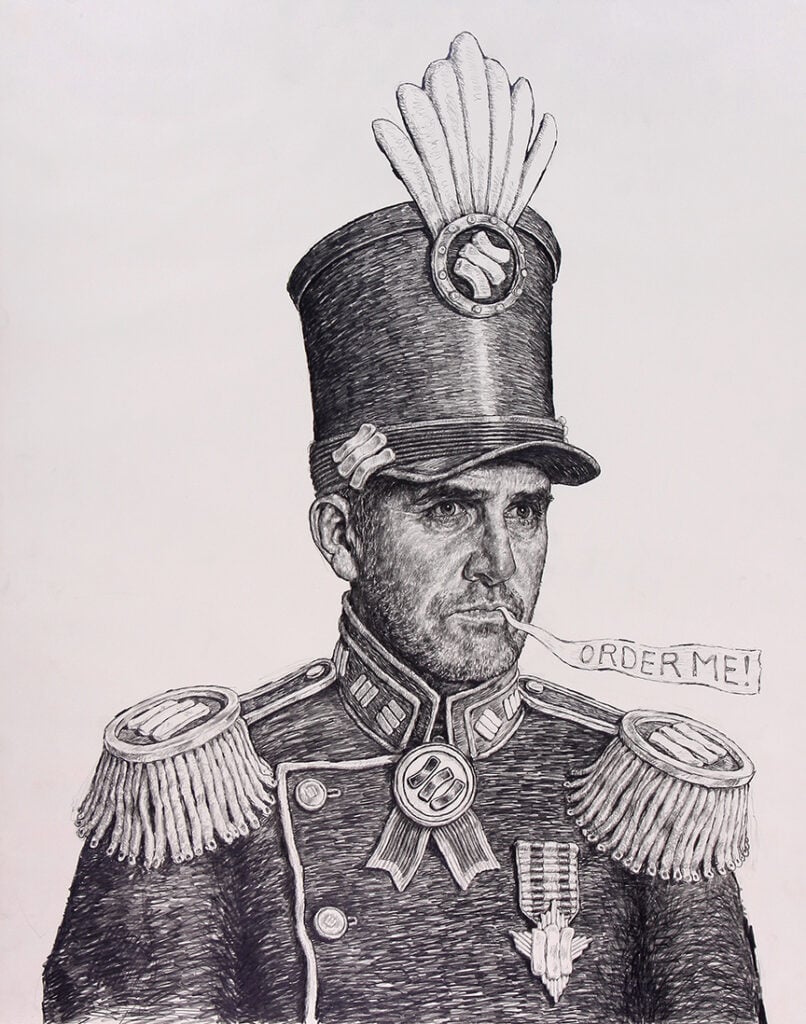
Image credit line: Jeff Whipple, Self-portrait, 2009, photograph. Courtesy of the artist.
Sunday Tours
Docent-led tours of LRMA’s special exhibitions and permanent collection. Every Sunday at 2:00 pm Please call LRMA’s Visitor Services at (727) 712-5762 to confirm availability or to make a reservation. Admission is by a suggested donation of $10.
On view in the Permanent Collection Galleries:
Abraham Rattner: French Watercolors; Artistic Journeys with Abraham Rattner, Esther Gentle and Allen Leepa; Elemental: Fine Crafts from the Collection; and Made in Florida: The Art of Giving.
About the Leepa-Rattner Museum of Art
Opened to the public in 2002, LRMA is a modern and contemporary art museum with a collection of more than 7,000 works of 20th and 21st century art. The museum’s permanent collection includes works by Abraham Rattner, a renowned figurative expressionist; Esther Gentle, Rattner’s second wife and a printmaker, sculptor, and painter; Allen Leepa, Rattner’s stepson and an abstract expressionist artist; and an extensive collection of works by notable 20th century artists such as Pablo Picasso, Marc Chagall, Fernand Léger and Henry Moore. The museum is accredited by the American Alliance of Museums, a distinction held by only 3 percent of all U.S. museums.
LRMA is located just west of U.S. Highway 19 at 600 E. Klosterman Road, on the Tarpon Springs Campus of St. Petersburg College. Museum hours are 10 a.m. – 5 p.m. on Tuesday, Wednesday, Thursday, Friday, and Saturday, and 1 p.m. – 5 p.m. Sunday. Admission by suggested donation of $10. The museum is closed on Mondays and major holidays. Additional information is available at leeparattner.org.
Last week Pinellas County Board of County Commissioners voted to eliminate funding for Creative Pinellas. This major loss has brought new challenges: staff layoffs, canceled events, and an uncertain future. But, this defunding will not defeat us. Our hearts are still fully in this work, and we are planning ahead to what’s next.
Here’s what we know today:
1. The County has offered to extend our lease, and we are in discussions about the future of The Gallery at Creative Pinellas. 2. We will continue to administer our County public art projects. 3. Sightline Gallery at PIE will continue – offering an opportunity to connect Pinellas County artists with more than 2.5 million travelers per year. 4. Creative Pinellas will continue operations for the foreseeable future. We are moving forward with both urgency and thoughtful deliberation to determine how we can best continue to serve our cultural community.
But there’s something more powerful than a single vote: the collective strength of our community.So, join us as we celebrate that power for Arts Annual 8, set for Nov. 21. For eight years, this exhibition has been the place where artists, collectors, and community members gather to celebrate the extraordinary creativity of Pinellas County visuals artists, performers and filmmakers.
Tickets are now available to attend Arts Annual 8, and we are accepting artist submissions to be featured in our signature exhibition. Thank you for your continued support, and we can’t wait to see you in November.
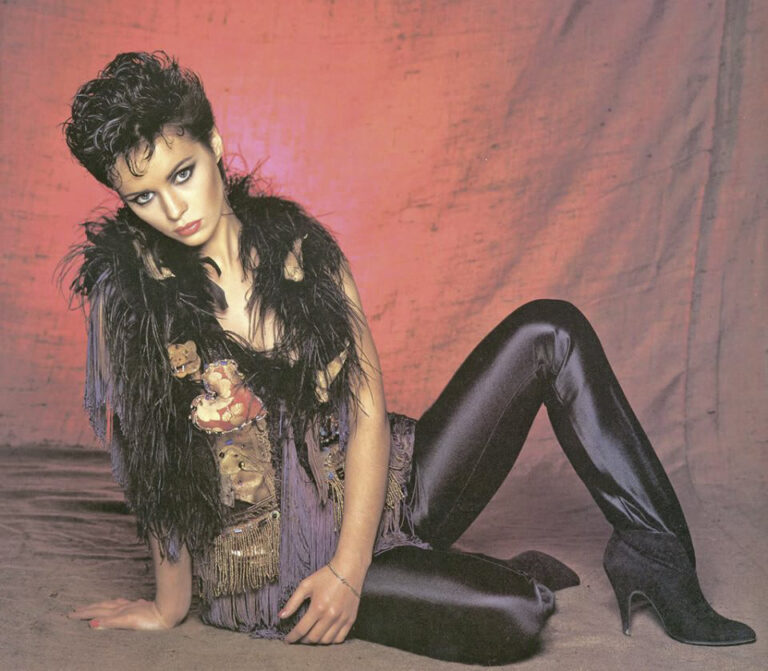
The Central Park Performing Arts Center is proud to welcome home Chloe Lowery, acclaimed Broadway singer and Largo native, as she takes the stage alongside Grammy Award-winning pop icon Sheena Easton on Sunday, October 12 at 7pm.
Lowery is known for her work with Yanni and the Trans-Siberian Orchestra. She recently made her Broadway debut in Rocktopia and has earned national acclaim for her soulful voice and dynamic stage presence.
Largo Native Chloe Lowery Joins Grammy-Winner Sheena Easton for One-Night-Only Concert
Sheena Easton, with chart-topping hits like “Morning Train (Nine to Five),” “For Your Eyes Only,” and “We’ve Got Tonight,” has captivated audiences for more than 40 years, earning her place as one of the defining voices of her generation.
Tickets range from $45 to $75, plus applicable fees, with Reserved Stadium seating with Orchestra. A limited number of VIP Meet and Greet tickets are available for $100, plus applicable fees. Secure your tickets at LargoArts.com, by calling (727) 587-6793, or by visiting the CPPAC Box Office at 105 Central Park Drive.
About the Central Park Performing Arts Center The Central Park Performing Arts Center is a multi-purpose facility featuring the 518-seat Tonne Playhouse, a 200-person Parkview Room, and the Historic Largo Feed Store, which holds 100. The Center promotes and encourages performing arts in the Tampa Bay community, hosting a variety of national, regional, and local artists and groups. Each space is also available to rent for corporate functions, meetings, receptions, and special events. Learn more at LargoArts.com.
The arrival of fall means the onset of a whole slew of new musical seasons — though if you’re as obsessive as me you’ve been scrolling through the new concert schedules for a couple months by now.
But no need to worry if you haven’t yet jumped on a season subscription. The windows for individual concert purchases only recently opened, so you’re still right on schedule.
As for what’s on offer in coming months, it’s varied, enticing and extensive.
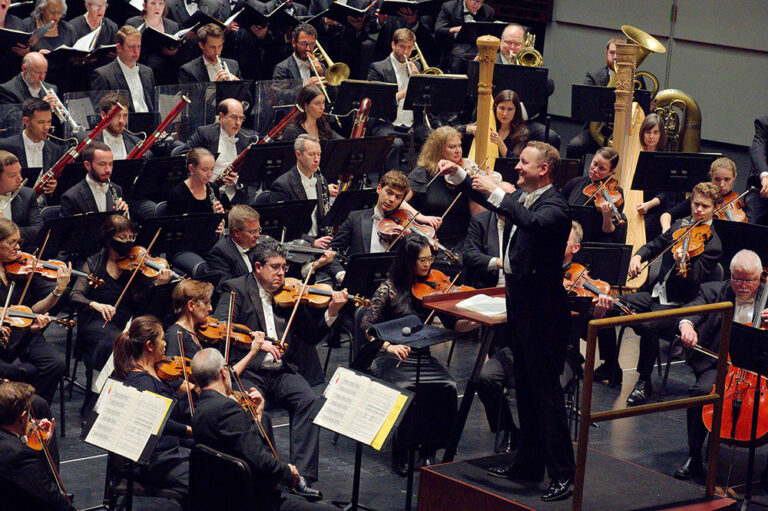
The Florida Orchestra, Tampa Bay area’s best-known ensemble, returns to the Mahaffey Theater in St. Pete, Ruth Eckerd Hall in Clearwater and the Straz Center in Tampa with its usual array of attractive and inventive musical offerings. Down at the other end of the bay, the Sarasota Orchestra’s latest music director, Giancarlo Guerrero, commences his first full season of concerts —in the Van Wezel Performing Arts Hall and elsewhere around town — after a long and successful tenure with the Nashville Symphony.
And the region’s various other orchestras and opera groups also will be in full swing any time now.
So, here’s a sampling of what our many music ensembles have in store between now and spring, leaning toward the most prominent pieces on concert schedules and some of my personal favorites.
The Florida Orchestra will present Richard Strauss’ tone poem, “An Alpine Symphony” on Oct. 3-5 to kick off its 11th season under maestro Michael Francis. The “Alpine” is arguably a work that tends to make more musical sense in concert than in record form.
For me, it’s sometimes a challenge to hang on through its compositional slalom if I’m at all distracted when listening at home. But in person, one simply buckles up and enjoys the ride.
On Nov. 7 and 8, TFO will present Bernstein’s moving “Kaddish Symphony,” in partnership with the Florida Holocaust Museum and narrated by the family of Holocaust survivor Samuel Pisar. The Kaddish isn’t performed all that frequently, but when presented it’s a work well worth taking in for its special musical pathos. On the same program, the glorious Master Chorale of Tampa Bay gets its season going by joining TFO in Beethoven’s “Choral Fantasy.”
In what’s being billed as a “centerpiece concert” on TFO’s season schedule, Gustav Mahler’s unique arrangement of Beethoven’s chorale masterpiece, his Symphony No. 9, is set for March 27-29.
Some of the works I’m personally most eager to have come around include Shostakovich’s Symphony No. 15 on Jan. 9-11; a performance of Anton Bruckner’s 4th Symphony, set for Feb. 6-7; and the oh-so-lovely “Mississippi Suite” by Ferde Grofé, tucked into a program to be led by TFO’s talented resident conductor, Chelsea Gallo, on April 10-12.
I’m also greatly looking forward to a program set for May 1-3, featuring Jeneba Kanneh-Mason, one of a group of siblings much followed on the musical scene these days. She will perform Beethoven’s challenging Piano Concerto No. 3, with TFO also set to perform Jean Sibelius’ gorgeous Symphony No. 2.
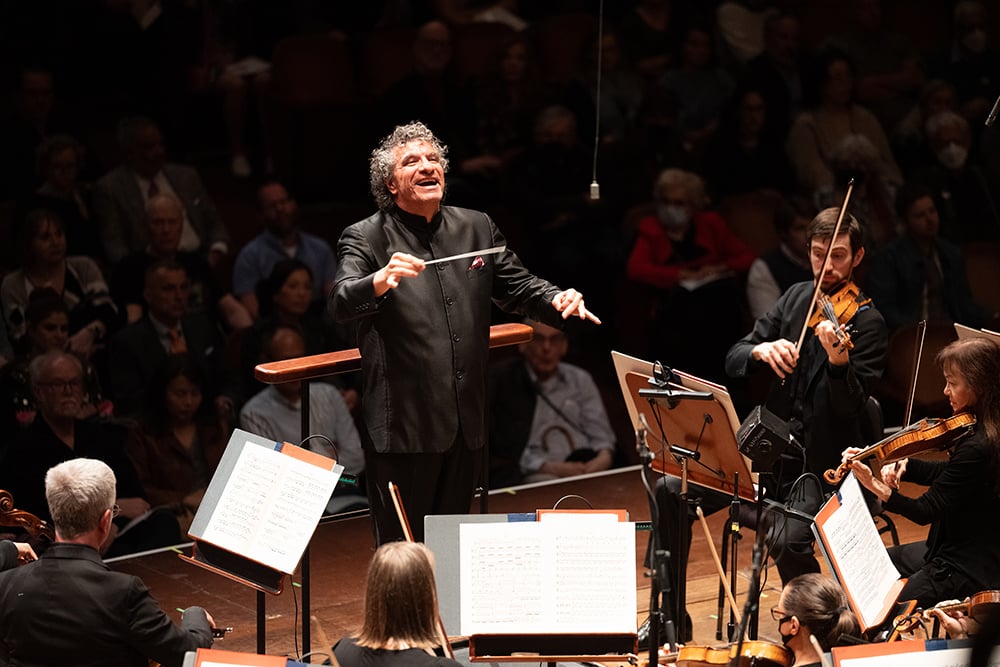
Giancarlo Guerrero soon will strike the downbeat on his first full season as chief conductor and music director of the Sarasota Orchestra.
Sarasota sounds
Guerrero, who led just two Sarasota Orchestra concerts last season, will conduct several tasty programs in its Masterworks series, which begins and ends with particularly impressive offerings. On Nov. 7-9, the orchestra will perform Jennifer Higdon’s “blue cathedral,” Pyotr Tchaikovsky’s Piano Concerto No. 1 and Sergei Rachmaninoff’s “Symphonic Dances” — pieces that I would call touching, virtuosic and powerful, respectively.
And to wrap up the season, the orchestra on April 17-19 will present Bernstein’s “Serenade (after Plato’s ‘Symposium’)” — a five-movement work for solo violin, strings harp and percussion — and Mahler’s triumphant Symphony No. 5.
Back up in St. Pete and Tampa, we also will have the value-priced concerts of the Tampa Bay Symphony, a thoughtful group of mostly semi-pro musicians with programs in the fall, winter and spring. Its autumnal offerings — set for Nov. 4, 7 and 9 — will feature, most notably, Anton Dvorak’s marvelously entertaining 8th Symphony. Performances are set for the Straz, the Palladium and the New Tampa Performing Arts Center.
Speaking of affordable concerts, the thoroughly professional Palladium Chamber Series this season will run from Dec. 10 through April 15, with ticket prices starting at an incredible $15. Accomplished area musicians will populate most of the groupings, with some prominent out-of-towners occasionally joining in. Among the latter are Milena Pajaro-van de Stadt, founding violist for the Dover Quartet, as part of the Jan. 14 program, and touring violinist Stefan Jackiw on March 25.
“I’m really happy with the mixture of personalities this season,” enthuses Jeffrey Multer, TFO concertmaster and a co-founder of the chamber series. “We have a lot of people from outside of the area coming in for the first time, but then we also have maybe the most-ever members of The Florida Orchestra participating in our series programs.”
Elsewhere around the bay area, community ensembles such as the Suncoast Symphony Orchestra of Clearwater and the Pinellas Park Civic Orchestra also soon will be posting their latest concert calendars.
Opera options
Opera seasons tend to start a little later than orchestral offerings, but on Oct. 31-Nov. 15, Sarasota Opera kicks off in style with the Mozartian masterpiece, “Cosi fan tutte.” Its season-capper comes mid-March, with Carlisle Floyd’s contemporary opera, “Susannah,” running through month’s end.
Opera Tampa launches its season with Benjamin Britten’s operatic adaption of Henry James’ “The Turn of the Screw” on Nov. 21 and 23 at the Straz Center. The season will conclude with Giuseppe Verdi’s “Macbeth,” on April 24 and 26, also at the Straz.
And St. Pete Opera will present its usual mix of popular and classic operatic performances, with a “Broadway Cabaret” show at Opera Central starting things off on Oct. 4 and Giacomo Puccini’s timeless operatic gem, “La Boheme,” wrapping up the season with performances on June 5, 7 and 9 at the Palladium.
More information about the bay area’s concert bounties can be found on the various organizations’ websites. Happy listening, and drop me a line about your musical adventures.
Carl DiOrio is a longtime journalist and a lifelong music lover. He can be reached at carldiorio@gmail.com. •
This exhibition brought to you by the Bill Edwards Foundation for the Arts
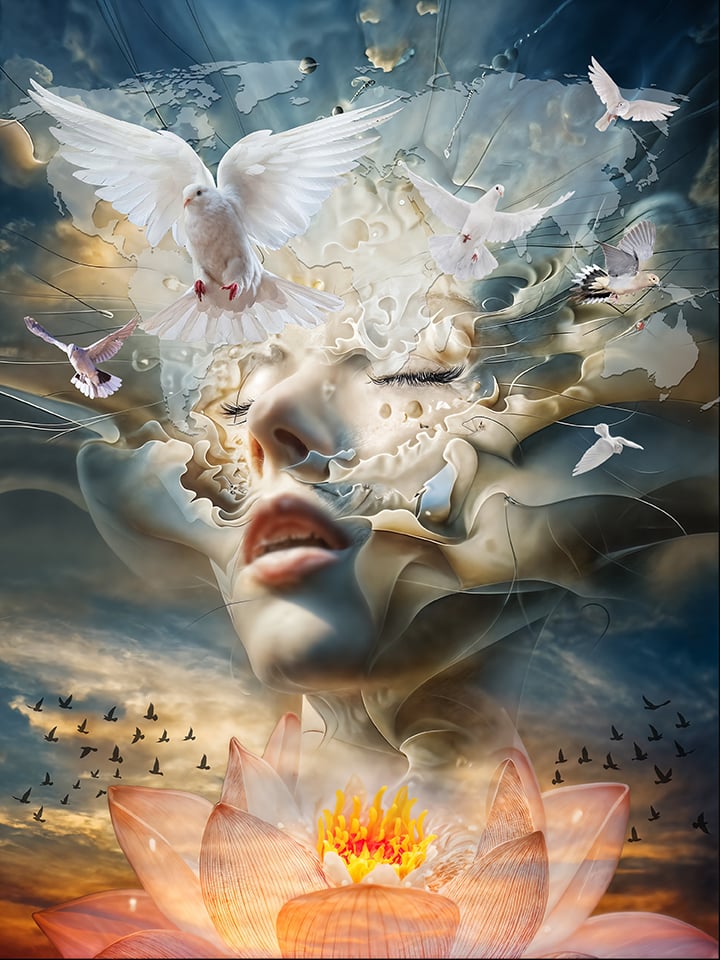
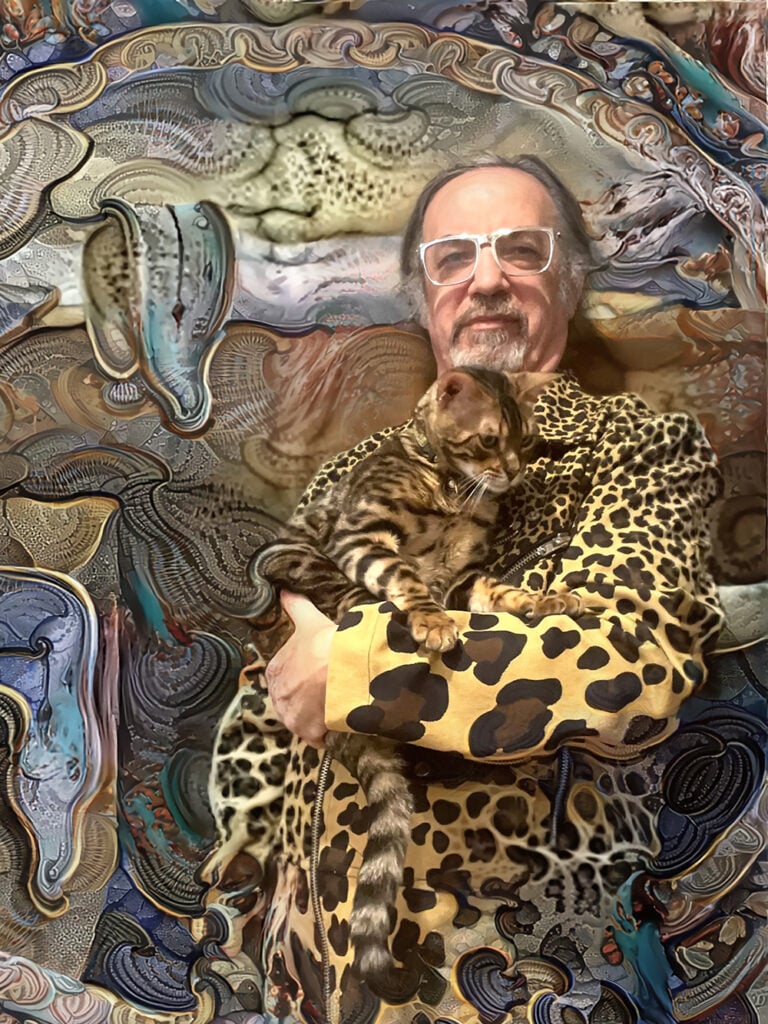
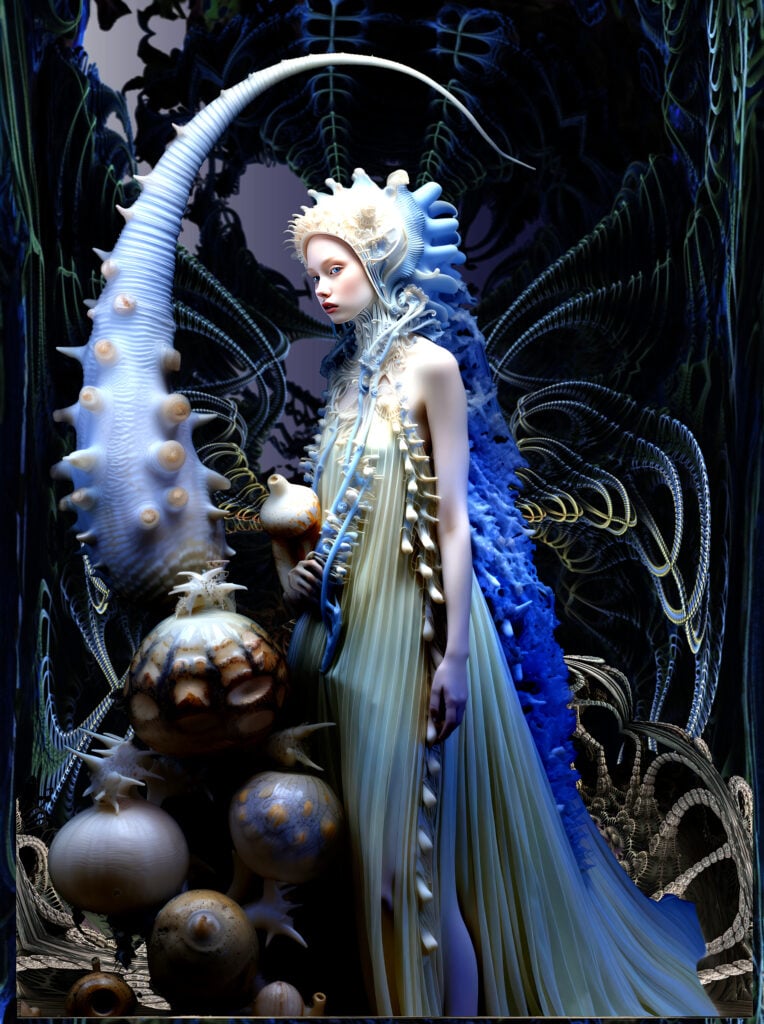
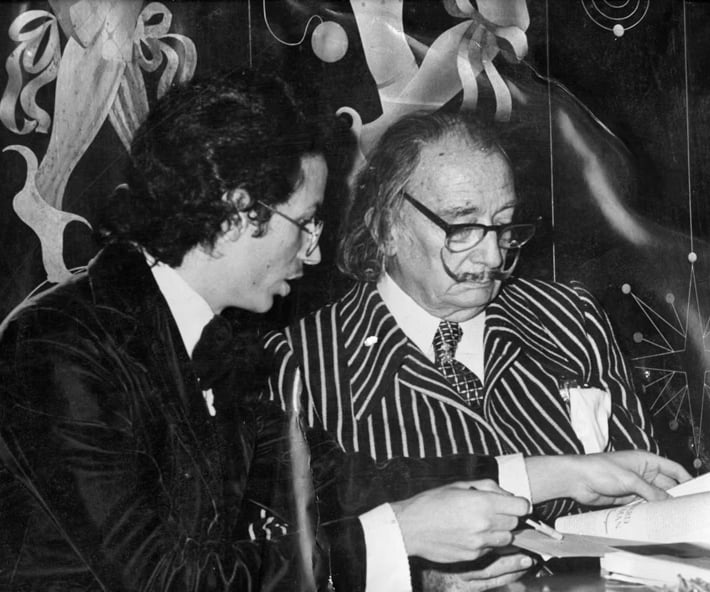
This month, the Mahaffey Theater’s gallery will transform into a portal of perception with “Fluid Dreams: Surreal Visions of Louis Markoya,” a sneak preview of the exhibition opening on Thursday, September 18, from 5:00 to 7:00 PM that will be on display for a limited time. Featuring the work of surrealist and former Salvador Dali protégé Louis Markoya, the show invites viewers into a realm where mathematics, classical painting, and optical illusion converge.
For six years, Markoya worked directly with the legendary Salvador Dali. Today, his work builds upon that surrealist legacy by fusing traditional techniques with cutting-edge technologies, such as fractals and lenticular lenses. The result? Art that shifts, refracts, and even moves as the viewer does, blurring the boundaries between dimension and reality.
“Markoya doesn’t just paint what he sees—he paints what we can’t see. His work bends light, logic, and legacy,” said Bill Edwards, CEO of the Bill Edwards Foundation for the Arts. “It’s not just something you view—it’s something you truly experience.”
Markoya’s exhibition offers a rare and radical exploration of topics typically untouched by fine art—from scientific theory to metaphysics. His work has stunned even the most seasoned art collectors with its originality, depth, and cerebral beauty.
“Fluid Dreams” opens September 18th with a complimentary public reception at 5:00 pm, including light refreshments and an artist talk by Markoya himself. The show remains on view for the following two weeks, Wednesday – Sunday from 11:00 AM – 3:00 PM, and is accessible during performance nights. RSVP is required – call 727-300-2000 or email: membership@themahaffey.com
About the Artist Louis Markoya is a surrealist painter, technologist, and former protégé of Salvador Dali. Based in St. Petersburg, his work has been exhibited in galleries and institutions across the United States and internationally. His signature approach combines classical artistry with fractal geometry, optical physics, and lenticular movement to create a wholly original visual language. The lenticular technology used in 3D works is the realization of Salvador Dali’s biggest artistic dream: creating full-color 3D on a 2D surface without external devices, a concept Dali believed had been the dream of artists since the Renaissance.
About Bill Edwards Foundation for the Arts: Bill Edwards Foundation for the Arts supports performing arts programming at the Duke Energy Center for the Arts – Mahaffey Theater. Our mission is to educate, engage, and entertain everyone in our community through culturally diverse performances. We present inspiring arts education programs, community outreach initiatives, live mainstage performances, concerts, and special events for the enjoyment of the entire community.