Home Blog Page 5

Himself and Nora comes to freeFall Theatre

Jonathan Brielle’s romantic musical about the life and loves of James Joyce comes to St Petersburg for a 6 week run. 

St. Petersburg, FL freeFall Theatre Artistic Director Eric Davis and Resident Musical Director Michael Raabe continue their mission of bringing under-appreciated musicals to Tampa Bay audiences. freeFall guests fondly remember past productions of John & JenThe Burnt Part BoysRoad Show, and God Bless You, Mr. Rosewater. Much like freeFall’s sleeper hit with Kurt Vonnegut’s Rosewater, Davis and Raabe turn to the literary life of James Joyce and his muse, Nora Barnacle in the romantic and tuneful musical, Himself and NoraHimself and Nora opens January 30 and runs through March 8, 2026. 

About the Team

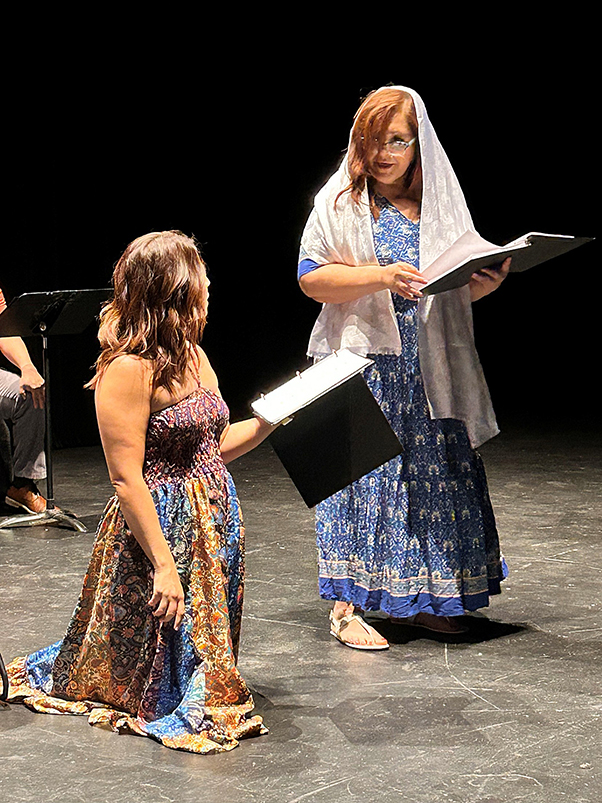
Himself and Nora stars Robert Teasdale (freeFall’s God Bless You, Mr. Rosewater) as celebrated author and poet James Joyce, while Katie Davis, in her freeFall debut, gives voice to Nora, whose influence on Joyce’s personal and artistic evolution cannot be overstated.
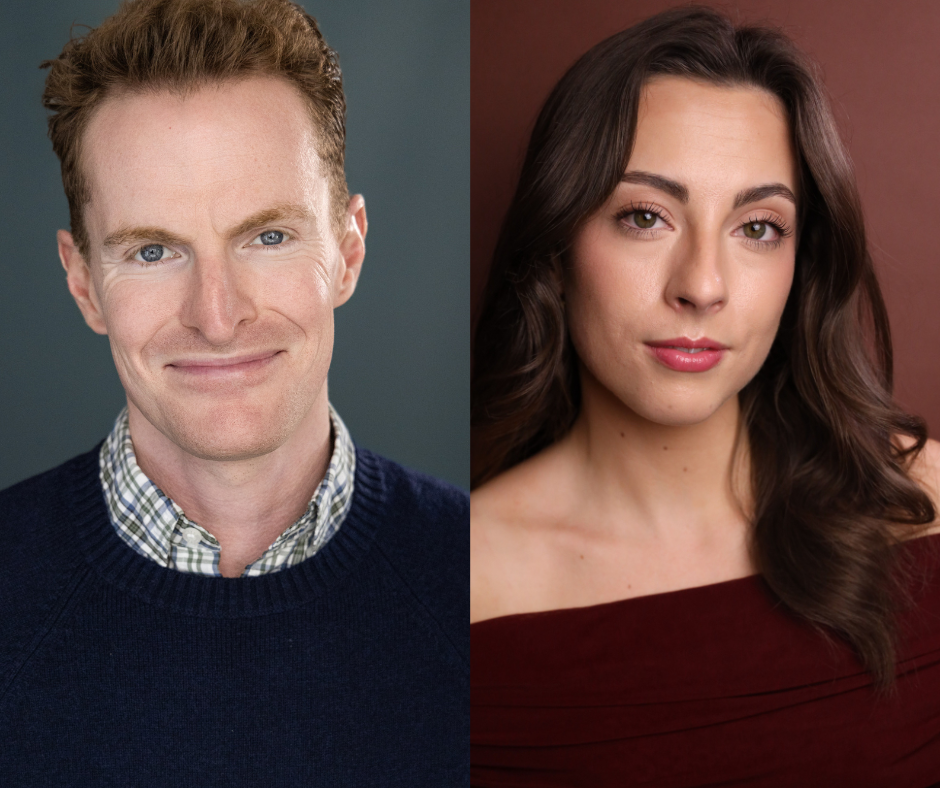
The production is supported by a powerhouse ensemble: Julia Rifino, Drew H. Wells, and Michael Gregory in his freeFall debut portraying key literary and familial figures including Ezra Pound, Sylvia Beach, Harriet Weaver, Giorgio & Lucia Joyce and many more.

Himself and Nora is directed and choreographed by Eric Davis with music direction by Michael Raabe. The set is designed by Hansen Scenic with lighting design by Trenten Szabo. Davis also designs the costumes and video elements. Michael Raabe plays piano for the show with a 5 piece band featuring the talents of Richard Jimenez (bass), David Tagliarini (reeds), Paul Stoddart (guitar) and Burt Rushing (percussion/drums). Melanie Downs (percussion/drums) and Josh Hollenbeck (reeds) sub in for select performances. The sound is engineered by Nathan Doyle.

About the Play

Himself and Nora is a romantic musical with book, music, and lyrics by Jonathan Brielle. It chronicles the turbulent, 37-year relationship between the legendary Irish writer James Joyce and his muse and eventual wife, Nora Barnacle. The score is described as a blend of traditional Irish melodies, lively jigs, and modern pop or musical theater ballads. Originally developed in 2005, the show premiered Off-Broadway in 2016 starring Matt Bogart and Whitney Bashor. 

“a lively, sometimes lusty, spin through the love life, troubles and literary times of the great Irish writer.” – The New York Times

“Brielle has composed a score that blends traditional Irish melodies with modern pop. The result is spirited and evocative.” – theaterlife.com 

“smart, lively and tuneful. an intimate production that will inspire audiences.” Huffington Post

freeFall Theatre brings Himself and Nora to the stage starting January 30 and closing March 8, 2026. The space is located at 6099 Central Avenue in St. Petersburg. Subscriptions and single tickets are now on sale and can be purchased at freefalltheatre.com or by calling 727-498-5205. All matinees at freeFall are at 2pm and all evening performances are at 7pm. Tickets are $55 ($25 for youth under 18 and for all seats to previews) or included with your $29/month subscription. 

Located in West St Petersburg, freeFall Theatre Company is one of Tampa Bay’s most exciting professional theater companies. freeFall was founded in 2008 and moved into its current space at 6099 Central Avenue in 2011. freeFall presents a varied range of classical and new works that are bold, daring, and presented in ways that invite, entertain, and challenge audiences. All freeFall productions are produced and presented locally using acclaimed theater professionals from across the country including many that make Tampa Bay their artistic home. In addition to a full season of shows, freeFall also presents an award-winning series of cabarets, concerts, and special programming as part of their Tandem Series.


Gulfport Fine Arts Festival 2026

0

Gulfport Fine Arts Festival Expands With Butterfly Release, Live Art and Family Experiences  


February 14th &15th 2026
Clymer Park  – 2499 Beach Blvd.
Gulfport, Fl. 33707

GULFPORT, Fla. — The Gulfport Fine Arts Festival returns to Clymer Park for its 11th year with an expanded lineup of immersive experiences designed to celebrate art, nature and community—making it one of the most distinctive cultural events on Florida’s Gulf Coast.

Taking place February 14–15, 2026, the boutique, juried fine arts festival will feature more than 50 professional artistsfrom across the United States and around the world. Artists, selected by three distinguished jurors, will showcase original works spanning painting, ceramics, sculpture, glass, wood and mixed media, all set beneath the iconic oak canopy of Clymer Park.

Again this year, the festival will host a Butterfly Sponsorship and Release Event in partnership with the Tampa Bay Butterfly Foundation. Attendees may sponsor a butterfly for $10 in honor or memory of a loved one, cause or moment. Butterflies are responsibly raised for the event and released into the park’s gardens as part of a meaningful tribute experience.

The Tampa Bay Butterfly Foundation will be onsite both days with an observation tent open from 10 a.m. to 5 p.m. Saturday and 10 a.m. to 3 p.m. Sunday, culminating in a public butterfly release Sunday afternoon. Memorial plaques created in conjunction with the sponsorships will be permanently placed in the garden during a dedicated ceremony later this spring.

Families can also enjoy a robust children’s activity tent sponsored by the Kiwanis Club of Gulfport Inc. offering hands-on creative activities throughout the weekend. Additional highlights include live artist demonstrations, performances by local musicians, and food offerings from three local restaurants, reinforcing the festival’s focus on supporting Gulfport’s creative and small-business community.

“The Gulfport Fine Arts Festival continues to grow while staying true to its intimate, community-centered roots,” said Scott Linde, president of the Gulfport Merchants Chamber of Commerce. “This year’s additions create meaningful connections between art, nature and remembrance, while showcasing why the arts are such an essential part of Gulfport’s identity.”

The festival is free and open to the public, running 10 a.m. to 5 p.m. daily, and is located within walking distance of Gulfport’s downtown restaurants, galleries and waterfront businesses.

More information, including butterfly sponsorship details, is available at https://www.drvgallery.com/sponsor-butterfly.

LINK:
Gulfport Merchants Chamber
Gulfport Fine Arts Festival

The Curator’s Corner – Art: A Cultural Necessity

“Art is a luxury”

I’ve heard this over the years, and it may be the biggest myth I enjoy debunking. While high-profile artists and works may be out of reach for the average budget, art is the physical manifestation of a society’s human spirit. Like a time capsule (don’t groan if I’ve met you in person—I never shut up about this), art preserves memories, heals collective traumas, and reminds people who they are when political and economic issues seem determined to tear us apart. Without art, our culture would have no identity. With it, we have substance, legacy, the ability to understand our struggles, and the power to champion our successes—and, of course, rebuild when necessary.

But you don’t have to take my word for it. Look to the centuries of proof in the form of societies that have banned, burned, starved, or brutally murdered artists (yes—this has happened) for their voice. Mao’s China, Nazi Germany, and a Zhdanov-led Soviet Union all used this tactic to control the narrative and stifle opposition.

Creativity was treated as treason because it offered a raw and honest view of how the world felt to the artists living in those periods. Conversely, places that invested in art—especially during hardship—tended to outlast their crises with a strong identity and a proud remembrance of all they had been through.

Now let’s look inward to our beloved St. Petersburg, Florida. Once a sleepy retirement town mocked as “God’s waiting room,” St. Petersburg began an intentional cultural pivot in the 1960s as it embraced its growing artistic movement. The major turning point came in 1982, when the original Dalí Museum was constructed. Housing the master surrealist’s largest collection outside of Spain, it was a cultural declaration that the city understood great art and was ready to be taken seriously on the world stage.

Walking down the streets today, you encounter world-class institutions such as the Museum of Fine Arts, the James Museum of Western & Wildlife Art, the Morean Arts Center with its blazing Chihuly Collection of glass, and vibrant murals that proudly tell the stories of the artists who live, love, and help shape this cultural landscape.
The result? A city once ignored by the hip young crowd now boasts one of the fastest-growing downtowns in the state. Restaurants, breweries, tech startups, and remote workers followed the color—not the other way around. Art didn’t just decorate St. Petersburg; it re-coded its future.

Culture is the life-breath of civilization. St. Petersburg reminds us that when a community feeds its artists—through museums, festivals, public walls, and small grants—it is really investing in its own resilience, identity, and joy. Art is never a “luxury.” It is the difference between surviving and truly living. •

Paint & Prosper

Owner/Lead Curator of Echelon Fine Art Gallery

www.pattisuzette.com

Lucky us: Palladium Series Hits 13th Season

The Tampa Bay area is spoiled for choice when it comes to affordably priced, quality classical music concerts.

My pick to top such a list: the Palladium Chamber Series. Its tickets start at just $15, and $45 will secure one of the best seats in the house — with the house being the historic Palladium Theater’s 750-seat Hough Hall.
The concert series, now in its 13th year, launched its latest season in December and rolls into the new year with four fetching offerings scheduled through April.

The first of those 2026 concerts boasts a top-drawer chamber sextet performing works by Brahms and Tchaikovsky on Jan. 14. On Feb. 11, it will be piano quartets by Mozart, Richard Strauss and Schumann. Then on March 25, the program is packed with works by Beethoven, Mozart, Brahms, Stravinsky and Rabl.

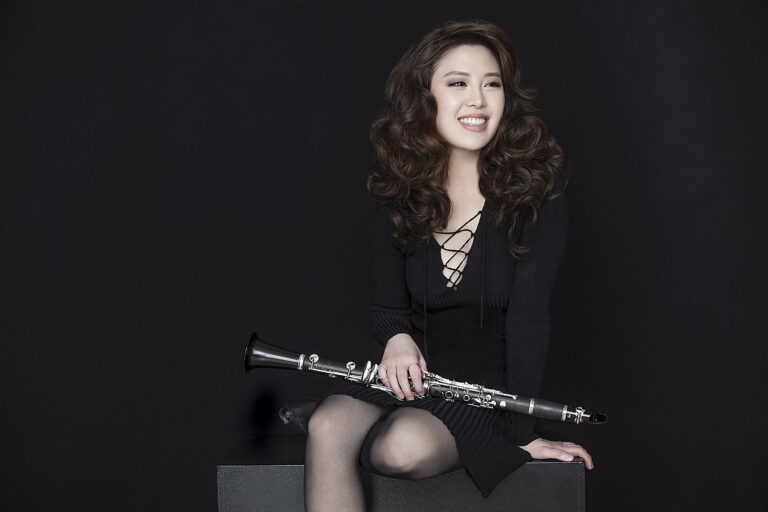
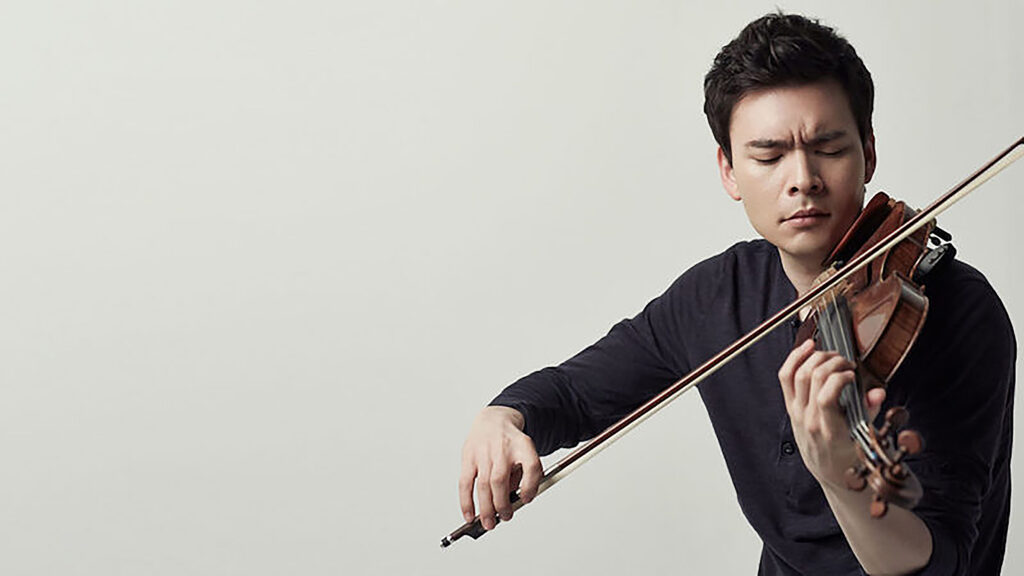
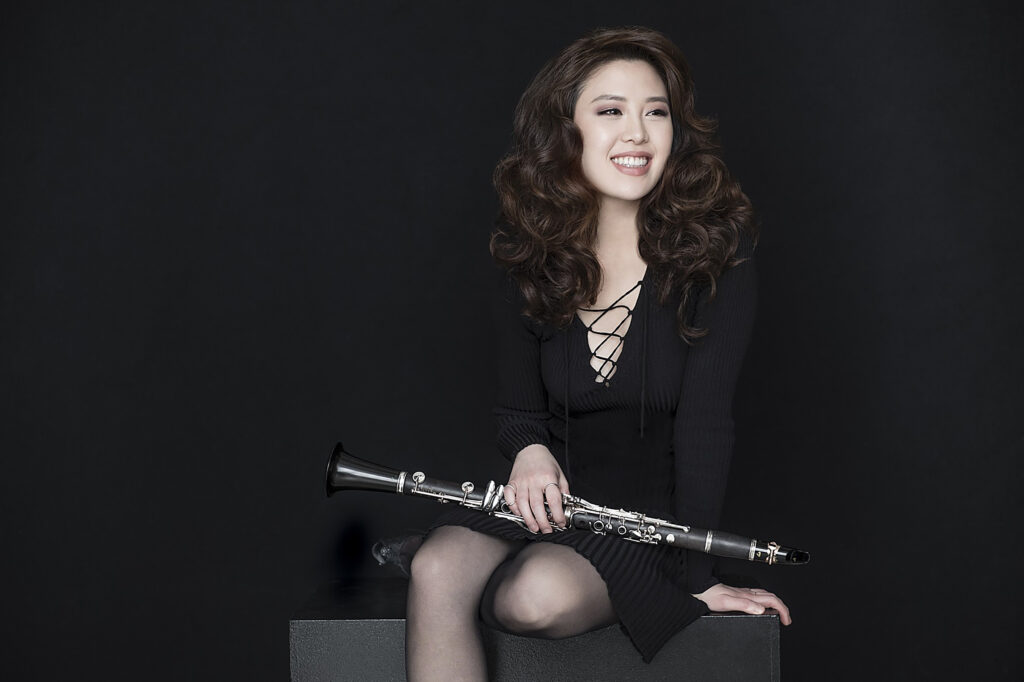
That March concert features two married couples — guest violinist Stefan Jackiw and clarinetist Yoonah Kim, along with series stalwarts Edward Aaron on cello and Jeewon Park on piano. The latter duo is also part of the prior month’s program, along with Jeffrey Multer — The Florida Orchestra’s virtuosic and hugely popular concertmaster — and longtime series violist Danielle Farina.

With the season’s final concert on April 15, we get piano trios from Schubert, Shostakovich (a personal favorite) and Mendelssohn, with Julliard-trained Marika Bournaki as pianist and TFO’s cello principal, Yoni Draiblate.

All series concerts are set for 7:30 p.m.

Multer, who’s set to fiddle fabulously in four of this season’s five concerts, is a co-founder of the series, along with Palladium impresario Paul Wilborn. He remains a key part of the series’ recruiting efforts, partnering on administrative duties with Palladium project manager Laurel Borden.

Violinist Stefan Jackiw

Clarinetist Yoonah Kim

Best of both worlds

Multer was appointed TFO concertmaster back in 2006, when he confessed to being a bit worn out by the year-round travel of a fulltime quartet itinerant. But he still loves the small-group repertoire, so I recently asked him if being a part of the chamber series allows him to enjoy the best of both worlds.

“I always loved the orchestra repertoire, and I always loved the chamber repertoire, so this is a great balance,” Multer said just ahead of the latest Palladium season. “There is a lot of the time-consuming administrative stuff you have to do to run your chamber career and that’s not my job anymore. The small amount I have to do feels like a vacation for me.”

As for recruiting musicians for the series to supplement the core Palladium Chamber Players, he added: “We all kind of know each other from playing around the country, so there’s sort of a network. Ed Aaron is helpful in (brainstorming) that. The people we are playing with are so busy and they play so much that we have to be flexible about when they can come and perform.”

Multer said he’s gratified at the series’ longevity and popularity, with concerts regularly drawing two-thirds capacity prior to the pandemic and now showing a clear return to good times. Yet he hopes for further growth in support.

“I’d love to enlarge our subscriber base,” he said. “A chamber series never sells out — chamber music is not flashy like that — but I do think there is room for growth.”

St. Petersburg College, which owns the Palladium, plans a major renovation later this year, something that can only serve to bolster the chamber series. Improvements will include some work on the hall’s acoustics, which already are highly rated.
“For a chamber music hall, this is really one of the best ones,” Multer said. “It has a good mix of intimacy and sonics, and all unamplified music is entirely dependent on the room that it’s played in and how it sounds.”

Busy, busy


Meanwhile, I should mention that the Palladium series isn’t Multer’s only extracurricular. He’s a fellow who seems happiest when his musical plate is full, and it has seldom been otherwise.

Multer’s career hit an early high when he debuted in a Kennedy Center concert in 1993, and over the years he has performed in recital and as a soloist with orchestras and chamber ensembles in North and South America, Europe and Asia. He keeps busy each summer with lots of festival work and is approaching a full decade as artistic director of chamber music at the Eastern Music Festival in North Carolina, where he also teaches. He also takes an annual seat in the Mainly Mozart Festival orchestra in San Diego under the baton of TFO music director Michael Francis.

His prior positions as a chamber player include several years with a pair of New York-based ensembles. Multer was appointed first violin of the Oxford Quartet at age 28 and went on to join Elements Quartet in 2001.

Gallo gets extension


In an unrelated bit of TFO news, let me also share for her many area fans this happy development: Resident Conductor Chelsea Gallo has been awarded a two-year contract extension.

That will carry the charismatic young maestra through the 2026-27 season with the orchestra, where she serves as the lead conductor for its Morning Matinees series, among other podium responsibilities.

Carl DiOrio is a Tampa Bay area journalist and a lifelong music lover. He can be reached at
carldiorio@gmail.com

We’re Sweet Girls

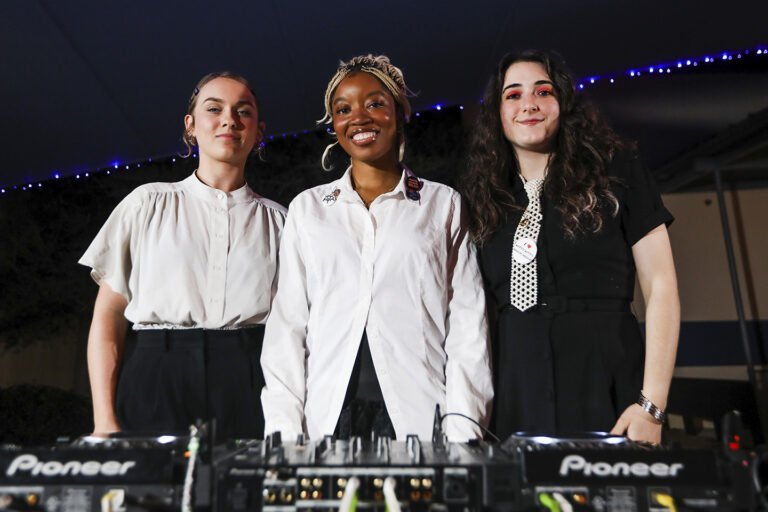
Dressed in black and white, artist and DJ collective We’re Sweet Girls played dance music spanning five decades under the lights in the courtyard at The Gallery at Creative Pinellas during the Arts Annual Fundraiser in November.

We’re Sweet Girls are Zoë Robinson, Rebeka Burden and Delaney Staack, three friends who formed the collective in 2022. As musicians active in the music scene, the women noticed a lack of female representation when they went to shows.

So they changed that, putting on their own shows locally, at venues including Ybor City’s Crowbar, the VFW 39 in St. Pete and the American Legion 111 in Tampa. They have a monthly night at The Bends in downtown St. Pete. Independent radio station Sector FM gave them their own shows, and that’s when the DJing took off.

“That was really cool, because it’s like, oh, okay, I have a radio show,” Robinson said. ”I know how to do this thing that is, like, a different relationship to music, and is really fun. Then I get to DJ with my friends, or I’ll DJ by myself and do a solo set.”

They’ve also taken their shows on the road, in the state to Orlando, Jacksonville and Gainesville and nationally, to Georgia, North Carolina, Tennessee, Maryland and New York.

Collaboration is at the heart of We’re Sweet Girls. They often perform with local bands and other DJ collectives. Robinson is an artist known as Fessi K and Staack is also a singer-songwriter. They’ve dropped three mixtapes featuring their own music and those of friends.
From left, Delaney Staack, Zoë Robinson and Rebeka Burden, members of the artist and DJ collective We're Sweet Girls.
From left, Delaney Staack, Zoë Robinson and Rebeka Burden, members of the artist and DJ collective We’re Sweet Girls.

Encouraging others to participate is a big part of We’re Sweet Girls’ mission. They hold DJ workshops to let people try their hand at spinning tunes. Robinson said they are very low stakes – meaning not held in the middle of a party – so that people feel more comfortable.

Another benefit of the workshops is giving people access to gear, Robinson said, which can be a huge barrier for people who love music but don’t have the equipment.

“We just felt inclined to offer that to the community,” she said. “No one’s withholding anything. It’s like a genuine ecosystem.”

They also held a songwriting workshop that was well attended. They were careful not to offer it as a lesson, but instead as a session in which they all were given the same prompt and wrote it together.

“I think a lot of people are searching for community and for support and something they may be unsure about,” Staack said.

Staack shared that though she had wanted to put her music out for a long time, it was difficult to do alone because of that uncertainty.

But when she connected with Robinson and her partner, Vonne Parks of the hip hop duo They Hate Change, she saw the benefit of having a supportive community that shares knowledge.

“That’s also why it’s important that we’re not asserting ourselves as experts on any subject. Because, I think when people realize that we’re all the same, that you don’t have to be perfect and already be at the high level, you can still just be doing it,” Staack said.
“Participation is key in any endeavor you want to do in life,” Burden added.

There’s no tolerance for any type of “cooler than you” attitude at We’re Sweet Girls shows.
Ditto on ageism; Robinson thinks it’s important to listen to the opinions of all age groups when it comes to music. She grew up surrounded by people who taught her, or “brought her into the thing.”

Staack agreed, adding, “I do think it’s because we all have our own experiences of that, of having either a mentorship dynamic or a successful kind of collaboration. “We all havebeen lucky enough to have that given to us.” •

For more information about We’re Sweet Girls, visit instagram.com/weresweetgirls/.

Her Stories, Center Stage: 

The 6th Annual Voices of Women Theatre Festival

March 5-9, 2026 will see the return of one of Tampa Bay’s most influential women’s storytelling events—Powerstories’ 6th Annual Voices of Women Theatre Festival, now hosted at the HCC Black Box Theatre in Ybor City. What started as a pandemic-era lifeline has evolved into an enduring celebration of women’s playwriting.

Fran Powers

founder and executive director:

“When the pandemic closed our doors, it opened a new chapter. We had no idea that being shuttered would give birth to a program that has now empowered hundreds of women playwrights to step forward and speak their truths. Six years strong, the Voices of Women Theatre Festival is more than a program—it is a movement, and we’re excited for the new plays we will bring to stage at HCC this March. It is proof that even in the hardest times, stories rise, voices matter, and women’s truths deserve to be celebrated. That is, and always will be, what Powerstories is all about.”  

Jenny Kokai

playwright-in-residence, workshop instructor:

“It has been astonishing to read the submitted plays– from highly accomplished women playwrights nationally (and even a couple international) — which are so exciting and diverse in their topics and artistic styles. Many of the authors told us how much having a category for women writers over 40, which Powerstories might be the only playwriting competition in the US to have, mattered to them. To know that their experience and perspectives were not just included but sought after. Last year we had the privilege of meeting two fantastic (full-length) playwrights and helped them take their plays to the next level, and we cannot wait to do the same this year.” 

Clareann Despain PhD

artistic director:

“We’re delighted to give playwrights what is sometimes their very first opportunity to get their piece in front of an audience. We know the response of early audiences is absolutely vital to new play development.  There’s a particular joy in the collaboration of community members and artists focused on supporting a playwright in the development of her play.  We know the Tampa community will enjoy and be inspired by our offerings this year.”

When the Covid-19 pandemic shuttered theaters in 2020, founder Fran Powers and her team sought new ways to keep theatre alive. Meeting on Zoom, they launched three playwriting initiatives: Voices of Truth, Voices of Youth, and Voices of Women. Conceived as a virtual gathering to maintain the connection between playwrights, actors, and audiences, these programs offered creative outlets during isolation. Of the three, Voices of Women resonated most deeply, providing a dedicated space for women to share their stories and continue to thrive well beyond the pandemic’s disruption.

This commitment to nurturing women’s voices remains at the heart of Powerstories Theatre’s annual offerings. Each year, the theatre offers playwriting programs like the Seek and Speak Your Powerstory Workshop, with the next six-week Zoom session starting January 13. They invite women to draw from personal experiences, giving them the opportunity to present their true story at the Voices of Women Theatre Festival.

The festival’s collaborative spirit is further enriched by playwright-in-residence Jenny Kokai, who leads festival workshops for both new and experienced writers, helping them refine their craft.

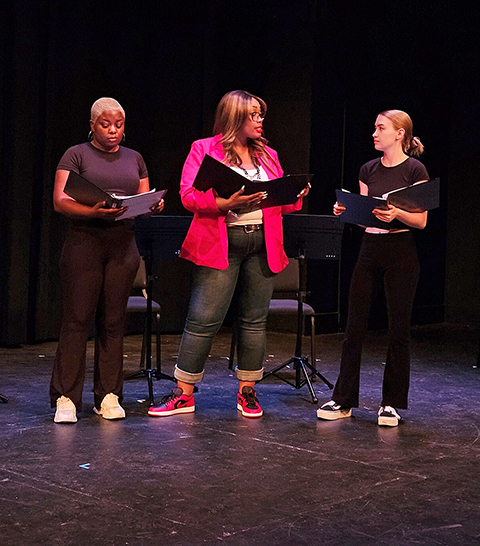
For the 2026 festival, audiences can look forward to two evenings featuring staged readings of a full-length play, with submissions open to women playwrights from across the United States. One night will specifically highlight a woman playwright over 40. The festival will dedicate two evenings to 10-minute short plays that are exclusively open to local women playwrights, providing a special platform for Tampa Bay’s creative women’s voices to shine. This variety provides playwrights with the invaluable experience of hearing their words performed before a live audience, an essential step in the creative process.

For over 25 years, Powers has emphasized the importance of magnifying women’s voices, and her vision continues to guide the festival’s mission. Artistic Director Clareann Despain curates a program that celebrates the diversity, strength, and complexity of women’s lives. Together with their team, they have built a festival where women’s plays are not only performed but also uplifted and honored.

The need for this work is clear. Representation in American theater remains starkly unequal; studies show that fewer than 30% of plays produced in the U.S. are written by women, with particularly few roles for women over 40. These statistics highlight the ongoing struggle for visibility and inclusion on stage—especially for older women, who are often completely erased. In a time when women’s voices are being marginalized in history and politics, the stage becomes more than a space for entertainment, it becomes a platform for resistance and change.

Women possess unique perspectives and experiences that bring nuance, humor, and emotional depth to storytelling. Their narratives are not interchangeable; they demand authenticity and lived experience. When women write, direct, and perform their own stories, they bring to lifetime viewpoints that have too often been dismissed. The festival ensures these perspectives are given the space they deserve.

Theatre has always served as an uncensored looking glass to society, showing its triumphs, struggles, and contradictions. When women are left out, the reflection is incomplete. The Voices of Women Theatre Festival seeks to correct this imbalance, offering audiences a fuller and more honest view of the world. Audiences gain the opportunity to see themselves, their mothers, daughters, and grandmothers represented with dignity and power.
As the festival celebrates its sixth anniversary, the vital role of sponsors has never been more pronounced. With massive reductions in national and federal arts funding, sponsorship is not simply a means of sustaining the festival, it is a powerful investment in a future where women’s voices are never silenced or overlooked.

By supporting the Voices of Women Theatre Festival, sponsors champion diversity, equity, and the transformative power of live theater. Their involvement goes beyond funding—it affirms women’s rightful place on stage and helps ensure future generations see their stories reflected in art. Sponsors play a vital role in advancing representation and inspiring transformation through women’s original works.

Looking ahead to March 2026, the Voices of Women Theatre Festival promises to once again honor Women’s History Month by amplifying voices too often ignored, reminding us that when women speak, the world changes.
Learn more about Powerstories 2026 Voices of Women Theatre Festival at powerstories.com/VOW-2026. •

Powerstories theater

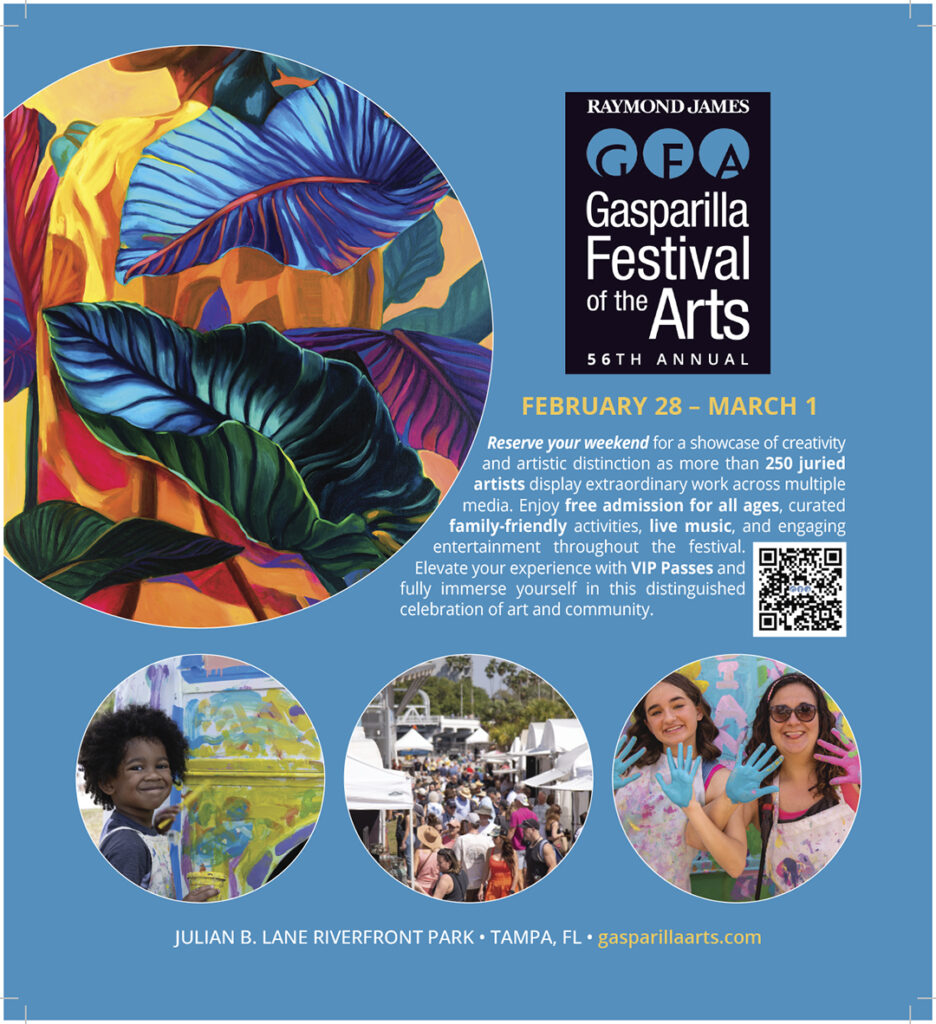
The 56th Annual Raymond James Gasparilla Festival of the Arts 

Save the Dates
February 28–March 1, 2026
Julian B. Lane Riverfront Park, 
Tampa, Florida

Admission: FREE 
(VIP Tickets Available for Purchase)


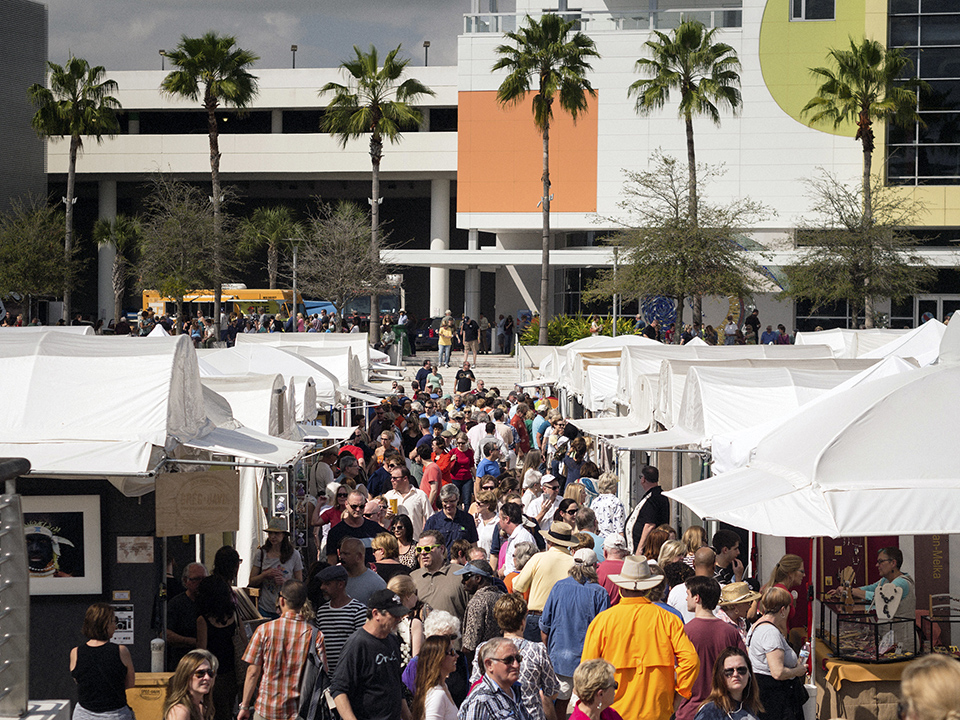
When the Raymond James Gasparilla Festival of the Arts (GFA) returns to Julian B. Lane Riverfront Park on February 28–March 1, 2026, it will once again transform downtown Tampa into an open-air museum filled with color, creativity, and connection. Now celebrating its 56th year, the festival has grown beyond its roots as a regional event to become one of the nation’s most respected outdoor juried art shows. This annual tradition draws artists, collectors, families, and cultural explorers from across the country.

For many, attending GFA isn’t just a weekend outing; it’s a ritual. A chance to meet emerging talent, reconnect with favorite artists, support the region’s creative community, and experience fine art in a way that feels personal and accessible. If you’ve never been, or if it’s been a while, 2026 offers more reasons than ever to spend a day (or two) immersed in Tampa Bay’s creative heartbeat.

Here are 10 compelling reasons this year’s festival deserves a prominent spot on your cultural calendar.

1. A National Gathering: Meet More Than 250 Juried Artists

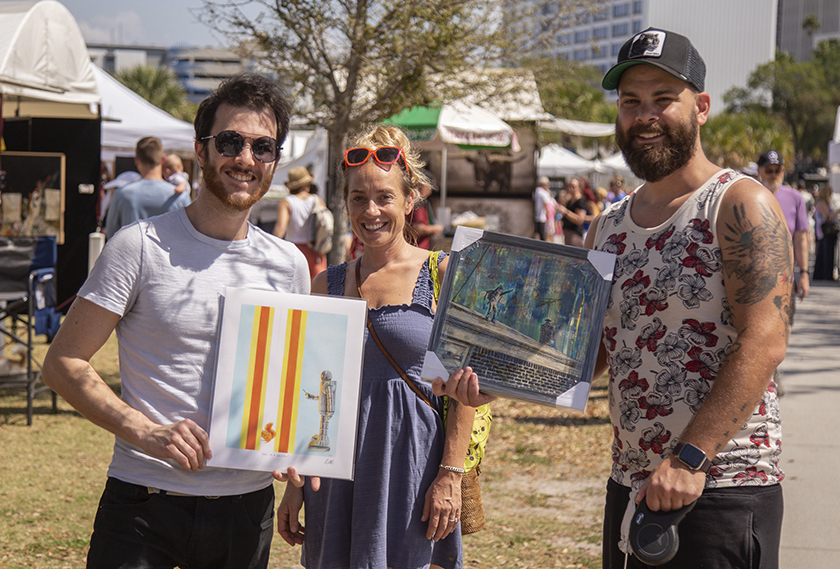
GFA is known for its remarkable breadth of talent. More than 250 nationally juried artists will showcase work across sculpture, painting, digital art, ceramics, jewelry, fiber, photography, and more—all at a wide range of price points.

What truly sets the festival apart is its intimacy: visitors can meet the artists, learn the stories behind their work, and often discover pieces before the wider art world takes notice. For both collectors and first-time buyers, these conversations are frequently the highlight of the weekend.

2. Meet the Artist Behind the 2026 Festival Image

A longtime tradition of the Raymond James Gasparilla Festival of the Arts is selecting an official Festival Image—chosen from more than 250 submissions through a rigorous, multi-round judging process. This year’s pick, Flourish Anyway by Atlanta artist Lauren Lane, captures movement, resilience, and emotional lift.

Making her GFA debut, Lane will be on-site exhibiting her work, signing festival merchandise, and discussing the inspiration behind her featured piece. For returning attendees, meeting the Festival Image artist is a special chance to connect with the creative voice that visually defines #GFA56.

3. A Rare Chance to Discover Emerging Talent

If discovering the next wave of artists is part of your passion, the Emerging Artists Program is essential viewing. Designed to spotlight early-career creators, the program offers space to artists who may be exhibiting at a major national festival for the first time.

Visitors are drawn to this area not only for the freshness of the work but also for the opportunity it presents: the chance to purchase original art at accessible price points, support artists on the rise, and start or expand a personal art collection with works that carry a meaningful origin story.

4. A Deeper Look at Tampa Bay’s Creative Core

Supporting local creativity is core to the Gasparilla Arts mission. The Local Artists Spotlight Program and Remote Studios launched in 2020 with support of a grant from the Gobioff Foundation. This highlights standout Tampa Bay artists whose work reflects the region’s rich creative identity. Festivalgoers can explore the Spotlight to discover (and take home) work from artists in their own community.

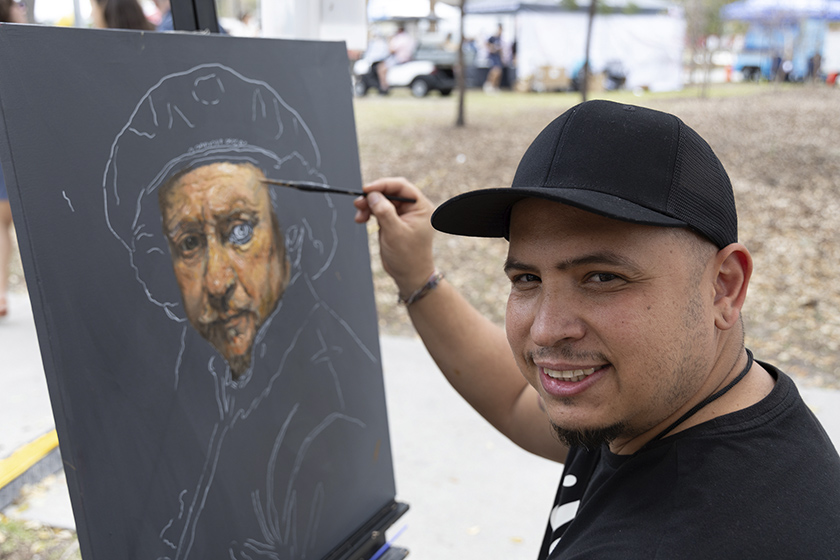
Remote Studios adds another layer of connection, with five local artists creating live in the park. Visitors can watch their process, ask questions, and gain a deeper appreciation for the craft.

5. The Thrill of Spotting a Future Award Winner

With $92,000 in prize money and the coveted $15,000 Raymond James Best of Show Award at stake, the festival’s competition is among the strongest in the nation. Many attendees relish the annual challenge of predicting which artists will take home top honors and often find themselves drawn to the same pieces the jurors eventually select.

Walking through the festival before judging is complete offers the unique excitement of discovering award-winning work before it receives its accolades.

6. A Spotlight on Youth Creativity

The festival’s commitment to fostering future generations of artists is evident in its Young Artists Expo, which showcases outstanding work created by public high school students from across the region. These pieces, often bold, imaginative, and thought-provoking, provide an inspiring glimpse into the creative minds shaping tomorrow’s arts community.

7. A Festival Tradition That Turns
Kids Into Collectors

For families, one of the most beloved festival features is Art Collectors in Training. This program, sponsored by Jessica C. Fernandez P.A., invites children to purchase original art donated by festival artists at youth-friendly prices. Watching a young person select their first piece of art—often with great seriousness and pride—creates a memory families treasure for years. The program fosters early appreciation for the arts and builds a sense of ownership in Tampa Bay’s creative culture.

8. Live Entertainment That Adds Rhythm to the Day

Throughout the weekend, stages across Julian B. Lane Riverfront Park will feature live music and performances that enrich the festival experience. Visitors can browse at their own pace, stop for a break with friends, or enjoy an afternoon on the lawn while listening to local and nationally touring musicians. The entertainment adds texture and vitality to an already dynamic atmosphere.

9. Additional Experiences Throughout the Park

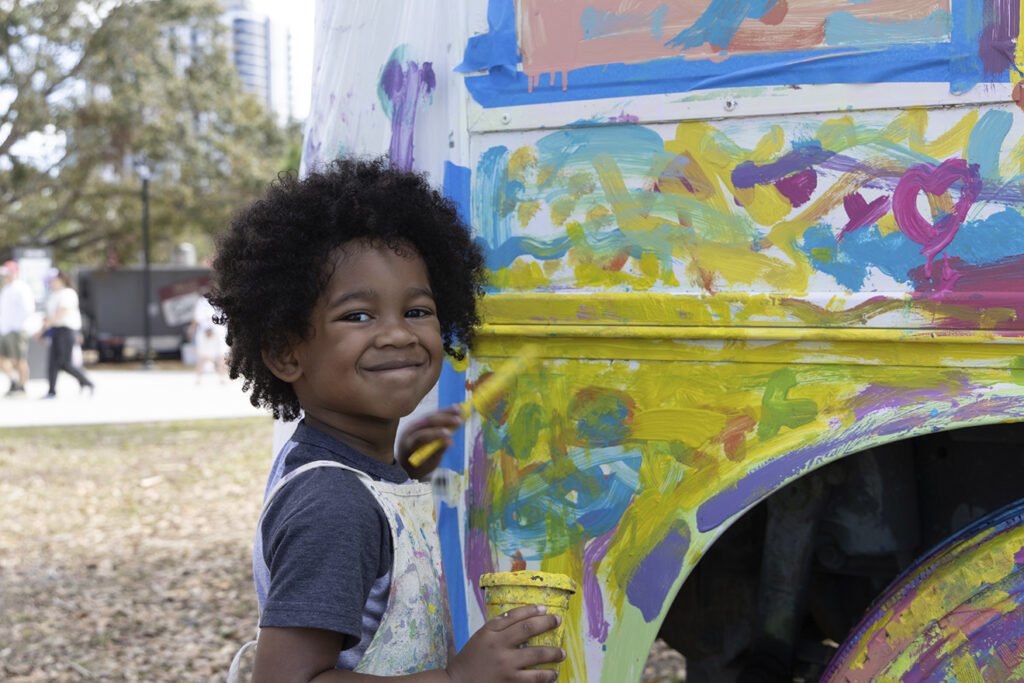
For guests eager to get hands-on with creativity, the festival offers interactive art experiences for all ages. The Nomad Art Bus invites everyone to help paint its ever-changing mobile canvas, while CARMADA—sponsored by Tampa Hybrids—brings live car-painting demonstrations to the park. At the Tampa Museum of Art’s Children’s Area, young creators can make and take home their own masterpieces.

The Community Outreach Village—sponsored by TECO Energy, Famous Tate Appliance & Bedding Center, and Marian Winters—highlights cultural groups and nonprofits that integrate the arts into their missions. Organizations like MacDonald Training Center, Pyramid, Inc., and Arts4All Florida will showcase the work of adult artists with disabilities, reinforcing the festival’s commitment to creativity, inclusion, and community.

10. A Weekend That Stays With You

Whether you leave with a new piece of art, a connection with a local artist, or simply the energy of spending a day immersed in creativity, the festival has a lasting impact on attendees. People return year after year for the sense of discovery, connection to the community, and the joy of supporting artists at every stage of their careers. •

Safety Harbor Art & Music Center

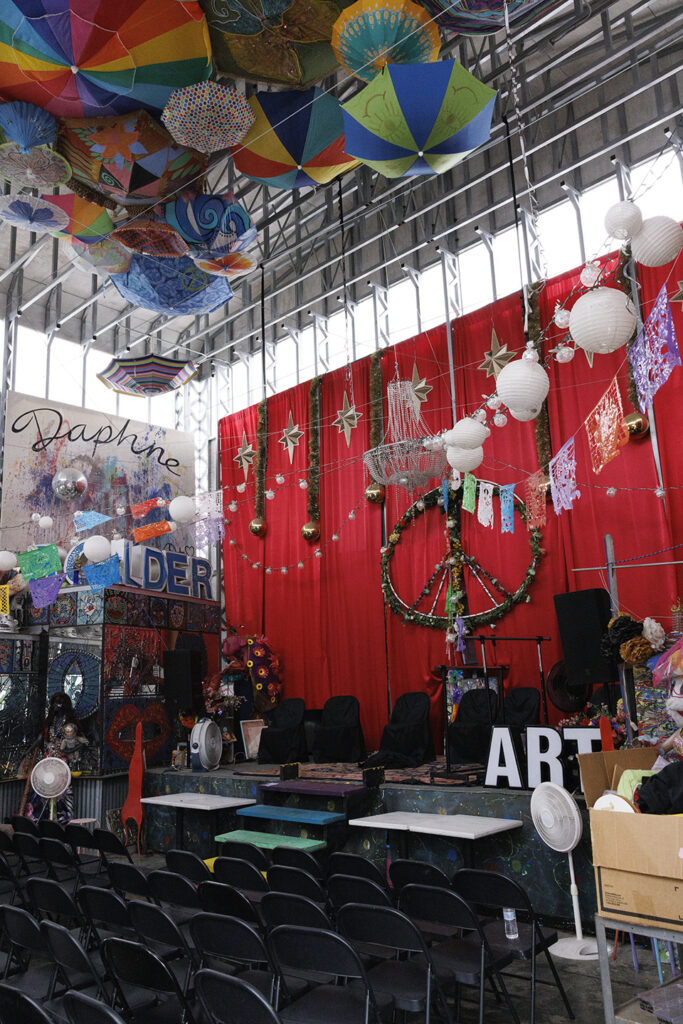
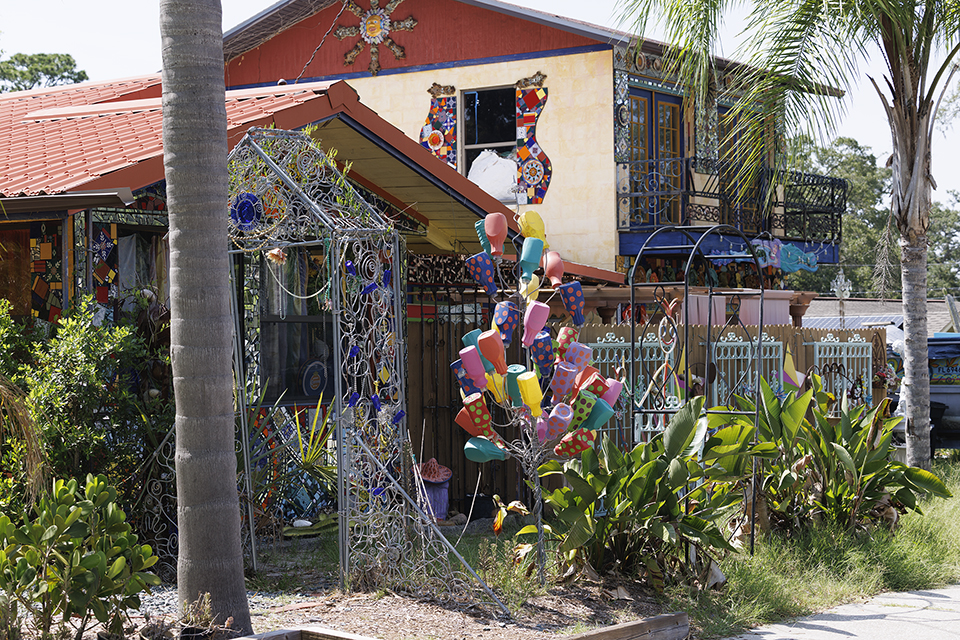
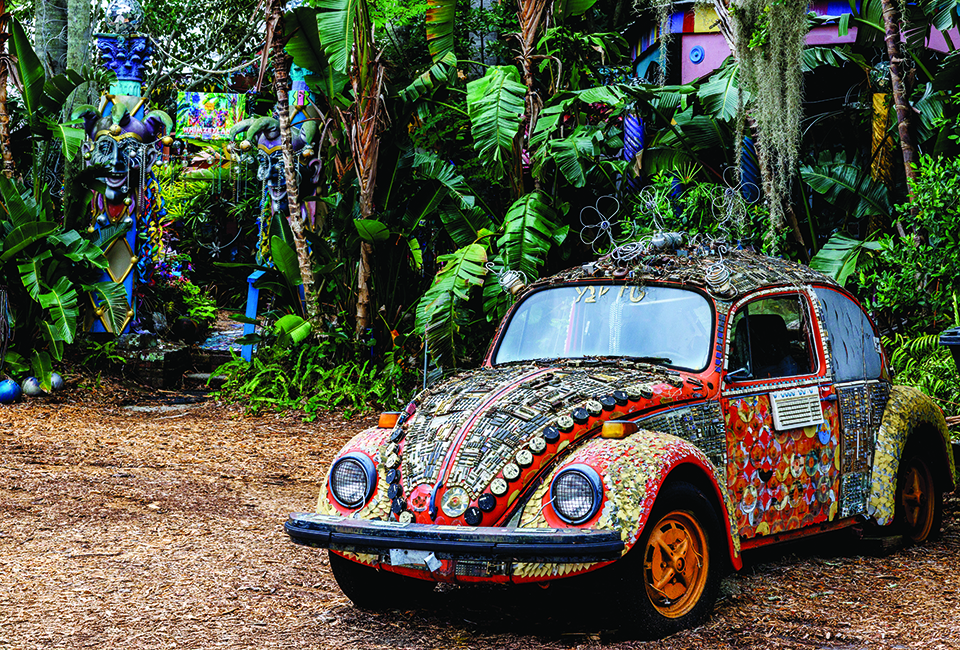
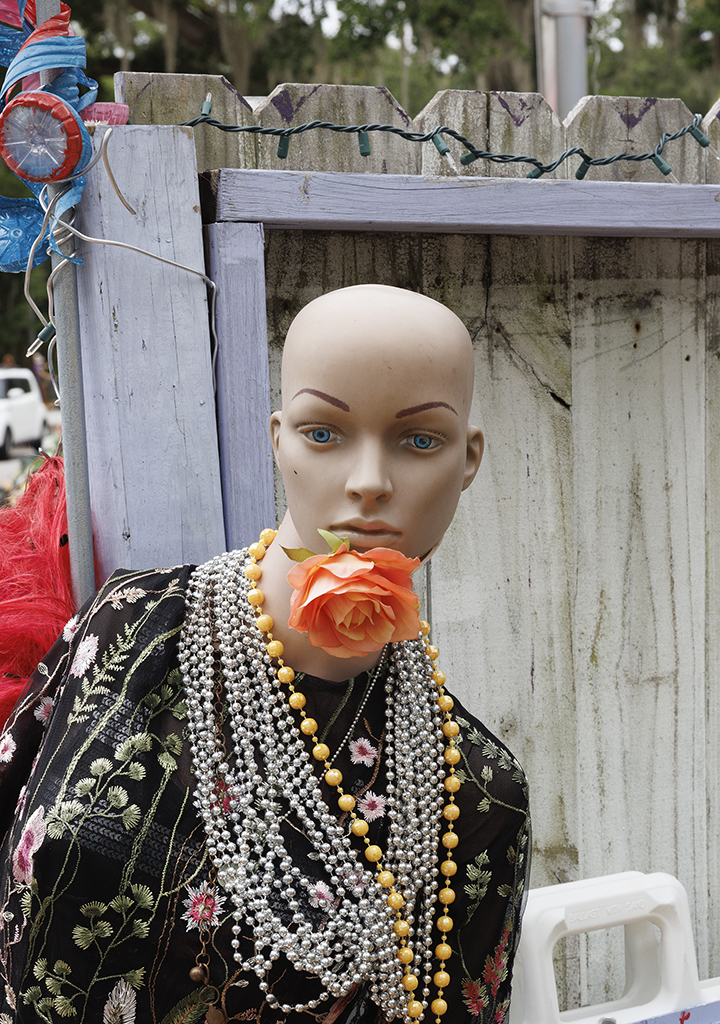
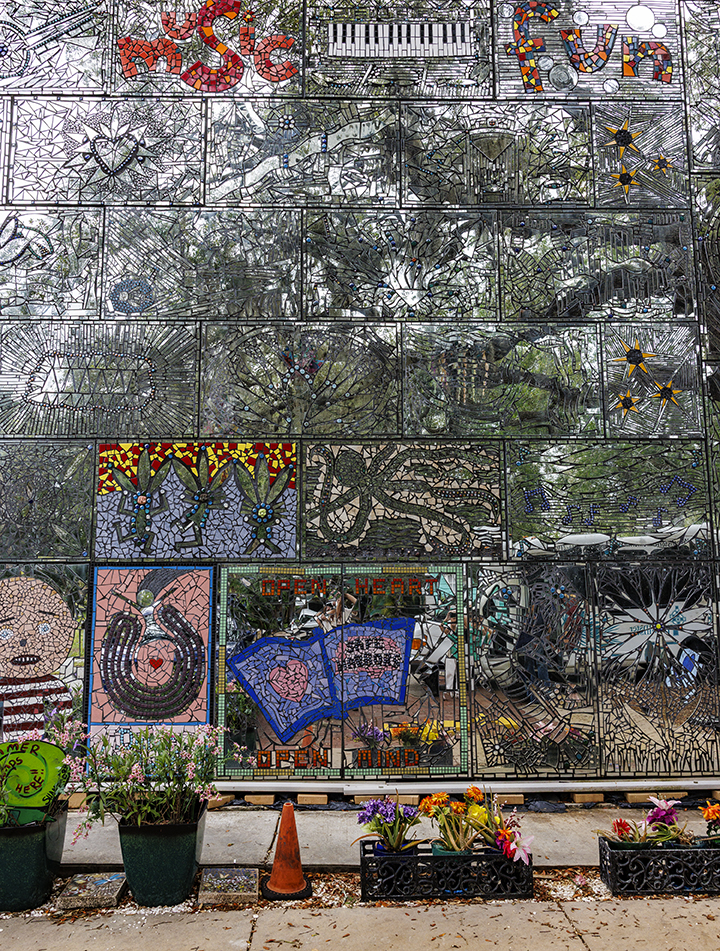
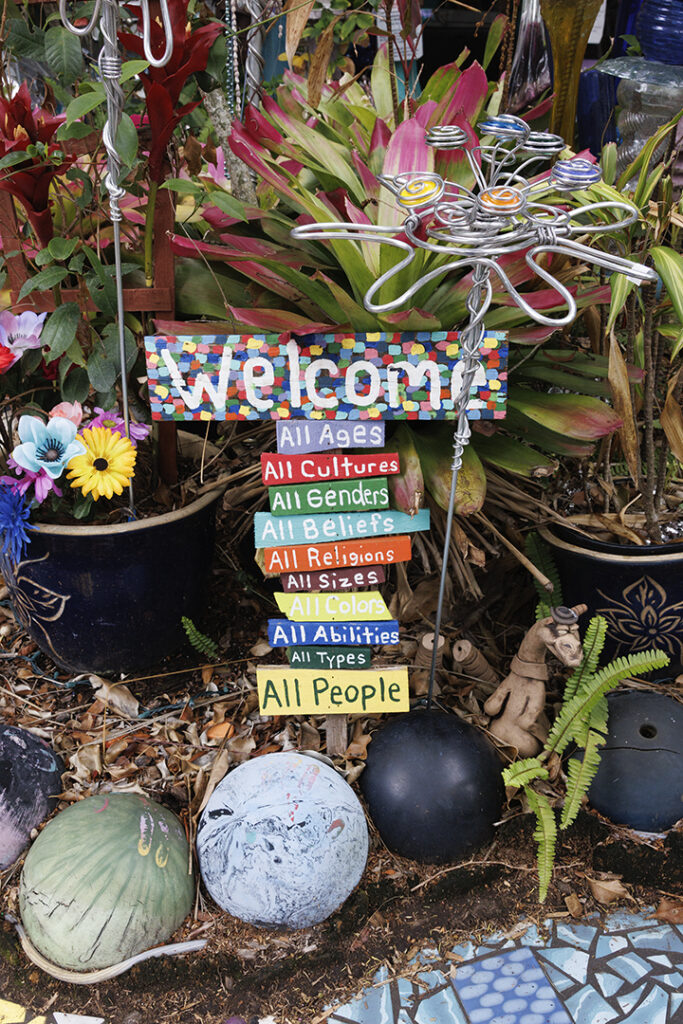
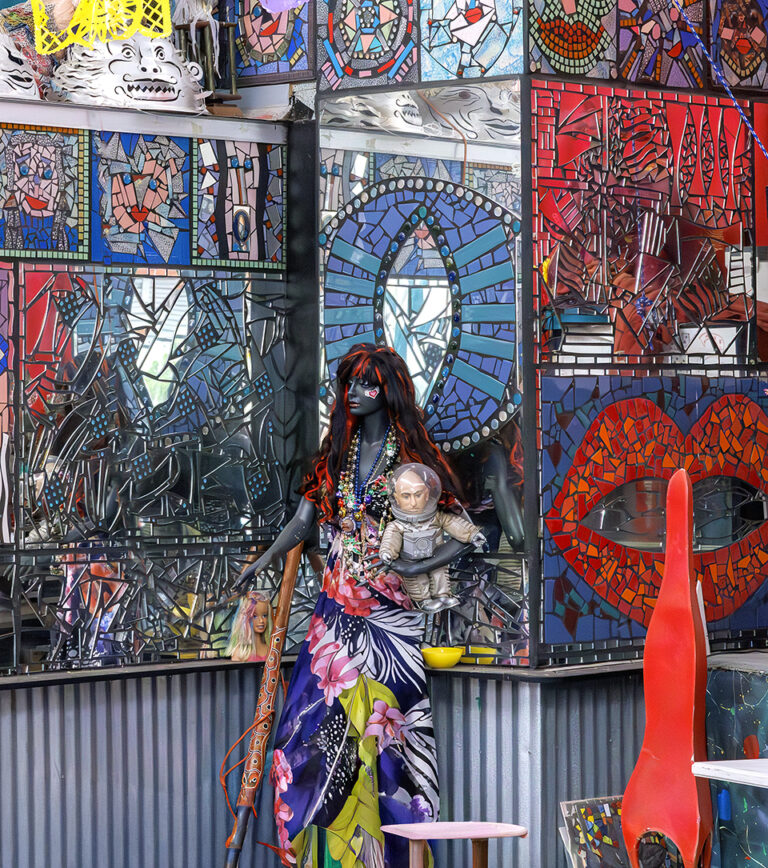
Tucked just off Safety Harbor’s quiet Main Street sits the Safety Harbor Art & Music Center, known locally as SHAMc, a place that looks less like a building and more like a living piece of art. Its walls shimmer with mosaics, glass, and sculptural details, the result of years of vision and community labor. Founded by artists Todd Ramquist and Kiaralinda—partners in life and in art—the center grew out of the legacy of their Whimzeyland home, the famed “bowling ball house” that turned into a landmark of Florida folk art. SHAMc was born from the same impulse: to create a space where art, music, and community could merge into something greater than the sum of its parts.

“From the beginning, this was about building a place where creativity wasn’t just displayed—it was lived,”

“From the beginning, this was about building a place where creativity wasn’t just displayed—it was lived,” Ramquist once said, reflecting on the years of planning and fundraising that went into opening the center in 2017. The project was fueled by grants, donations, and sweat equity from local artists who literally tiled its walls piece by piece. The result is an environment that feels enchanted, yet welcoming, as if stepping into a carnival of art where nothing is too small or too strange to be celebrated.

SHAMc quickly became more than a gallery—it became a hub. Musicians from across the country have played intimate concerts there, from Grammy-winning performers to emerging folk acts. “Playing SHAMc feels like playing in a friend’s living room, if your friend also happened to live inside a mosaic,” one touring artist joked after a show. Poets, puppeteers, storytellers, and experimental performers have all found a home here, blurring the lines between genres and audiences. The founders call it “a space for all the arts,” and it has lived up to that promise.

Today, SHAMc hosts a constant rotation of events that keep Safety Harbor buzzing with energy. Workshops range from mosaic-making and painting to songwriting and spoken word. The center’s monthly Safety Harbor SongFest, once held on a larger scale in the city’s parks, has found a more intimate rebirth within its own walls, drawing nationally known songwriters for weekends of music and collaboration. Even the pandemic, which shuttered so many venues, couldn’t silence SHAMc—artists and volunteers adapted, shifting events outdoors and online until the community could safely return.


Locals describe it not just as a venue, but as a heartbeat for Safety Harbor’s cultural life. The building itself is a beacon, with its rainbow-colored façade catching the Florida sun. Inside, no two nights are alike—you might stumble into a jazz trio one evening, a mosaic workshop the next, or a raucous poetry slam that has people spilling out onto the street. “It’s the kind of place that makes you believe in the power of art to bring people together,” said one regular visitor.

In its relatively short history, SHAMc has become synonymous with the city’s identity. Safety Harbor, once known mostly for its historic spa and sleepy small-town charm, is now on the map for its creative energy, much of it radiating from this kaleidoscopic center. Its future looks just as lively. With continued community support, grants, and the vision of its founders, SHAMc is poised to remain not only a gathering place for artists but also a model for how art can transform a town. •

What it Means to Be an Impressionist as a Modern Artist

Being an impressionist means embracing a distinct approach to art that prioritizes the fleeting and subjective experience of a moment. At its core, Impressionism is defined by adherence to specific theories, methods, and practices, particularly those that emphasize capturing the effects of light, color, and atmosphere rather than striving for precise, detailed realism. This approach applies not only to painting but can also be found in music and literature where similar principles of immediacy and impression are valued.

Impressionist artists are renowned for their use of quick, broken brushstrokes combined with vibrant colors. These techniques serve to convey the constantly changing nature of light and environment. Unlike earlier art forms that focused on exact forms and polished details, Impressionism adopts a looser style, often portraying scenes “without form or detail,” allowing the viewer to experience the image as a momentary impression rather than a fully resolved depiction.

Common subjects in Impressionist artworks include landscapes, cityscapes, portraits, and flower arrangements. These were chosen because they offer rich opportunities to explore the shifting qualities of natural and artificial light as it interacts with color and form throughout different times of day or atmospheric conditions. This choice of subject matter reflects the Impressionists’ commitment to depicting the impermanence and subtle nuances of everyday life.

“Impressionism …..

 a foundation for further exploration

in Post-Impressionism, 

Fauvism, and even Abstract art.” 

Impressionism challenged traditional academic art standards by rejecting the emphasis on meticulous detail, historical themes, or idealized representations. Instead, it presented images that were often blurred or sketch-like, focusing on capturing the feeling of a scene rather than its exact appearance. This departure from convention paved the way for the development of modern art by encouraging experimentation with perception, form, and the role of the artist’s individual experience.

Color and brushwork function in uniquely important ways within Impressionist painting. Artists employ short, thick, and visible strokes, often mixing colors optically in the viewer’s eye rather than blending pigments completely on the palette. This technique enhances the vibrancy and dynamism of the paintings, contributing to the vivid sensations of light and movement that characterize the style.

Emotionally, Impressionists aim to convey transient moods such as melancholy or the simple beauty of a moment in time. Their work often evokes personal reflection or a sense of immediacy that invites viewers to experience the scene as the artist did at a particular instant.

The artist’s own perception and momentary impression are central in creating Impressionist art. This means that the personal vision, sensory experience, and emotional response to a scene are prioritized over objective accuracy. Impressionism celebrates the subjective viewpoint, thus allowing each artist’s interpretation and spontaneity to shape their work.

While initially met with skepticism and criticism, the public and critical reception of Impressionism has evolved considerably. From being dismissed as unfinished or amateurish, it has grown to be recognized as a revolutionary movement that transformed how art is created and perceived.

Philosophically, Impressionism is grounded in the aesthetic idea that art should capture the experience of seeing and feeling rather than replicate exact appearances. This reflects a shift toward valuing perception, atmosphere, and the essence of a moment as valid artistic subjects.

Understanding Impressionism can greatly influence an artist’s own creative approach today by encouraging openness to experimentation with color, light and technique. It also affirms the importance of personal experience and expression, offering tools for capturing the world in new and evocative ways.

In its connections with other contemporary art movements, Impressionism served as a foundation for further exploration in Post-Impressionism, Fauvism, and even Abstract art. These later movements expanded on Impressionist ideas about color form and expression, contributing to the rich evolution of modern art.

“Emotionally, Impressionists aim to convey transient moods such as melancholy or the simple beauty of a moment in time.” •

Joe Legrand

St. Pete’s Writing Nooks

Whether you write short stories, poetry, memoir, young adult, fantasy, or work on your journal, finding a community to settle into as a writer can be difficult. When I first moved to the Tampa Bay area, it took me some time to get accustomed to the local scene. I spent hours attending author events, art shows, happy hours—all in the name of meeting other creatives. And though it took time, it paid off. Should you be reading this column, desiring an opportunity to connect, or to share the woes of your writing adventures, here are some places you can steer to in St. Pete.

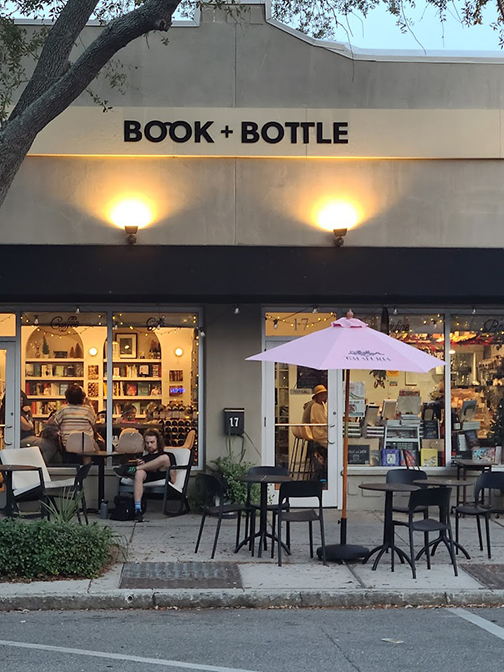
Nestled on 6th Street North, between Central and First Ave is none other than Book + Bottle. Open since 2019, this beautiful bookstore welcomes all who love the written word and a happy hour with intentional wine selections or carefully curated coffee. When I stumbled into Book + Bottle, it was to attend the Tuesday evening Writer’s Happy Hour, hosted by Dominic Howarth, the store’s Book Director. I craved dedicated time to write—as those of us who work full-time, or have other obligations often do—and an opportunity to make friends, chat about art, or bond over books. The Happy Hours, hosted from 4:00-5:30, though arguably we oftentimes stay after, are a place to relate, to share the highs and lows of the writing journey, and most importantly, to get words on the page. Dominic provides fabulous and insightful writing tips and supplies books on craft for attendees to peruse as needed. Maybe, I will see you there on a Tuesday to comfortably coze over a mocktail thoughtfully poured by Gina or Andrea, or to simply be, as we all do.

If you’re instead looking for something to do on weekends, there are some great opportunities. A friend I’d met at the Book + Bottle Tuesday Happy Hour gave a shout out to The Bad Writer’s Group, founded by local writers Alyssa Harmon and Belén Alemán Vassallo. They set up in a different café or coffee shop in St. Pete each Saturday, usually meeting at 10:30 and ending around 12:30. The choice of venue is posted on their Instagram page (@badwritersstpete) the week prior to meeting. This convergence of writers—a lively, enthusiastic amalgamation of folks who travel near and far from both Pinellas and Hillsborough Counties—drink coffee and relax to the sounds and scents of a bustling Saturday morning. Sometimes it is quiet in subtlety of scribbling pens on paper, fingers tapping keyboards. And other times, it is rambunctious with laughter and warmth. Not only do you get the opportunity to write and meet wonderful people, but you also get to try the best coffee in the area.

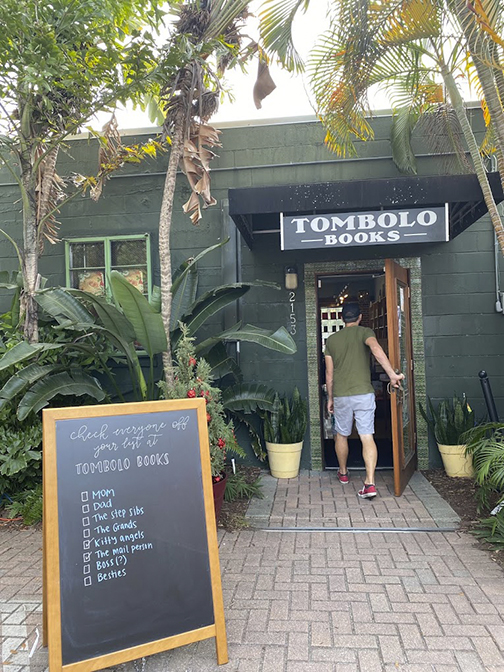
To wrap up the weekend, on Sundays, local poet Denzel Johnson-Green hosts a weekly poetry meet up at Black Crow Coffee Co. on First Ave, from 3-5. Poets gather to write from the heart or from a prompt that Denzel prepares ahead of the meeting. My first time attending, we walked the streets of downtown to scrounge up inspiration from locals and wayfarers, murals on facades or colored gum on the sidewalk, and shelves in antique shops. I left feeling recharged by conversation and the peace of a mellow autumn evening in St. Pete. Bi-annually, Denzel also publishes Neptune (@neptunepoetryy), St. Petersburg’s bi-annual poetry journal. Afterwards, should you desire more things books, Tombolo Books, a stupendous store, is open until 5:30 for all of your needs. Simply cross the courtyard and enter a calming place home to kindness and wonderfully recommended books of all sorts.

Writing, like many forms of expression, is recurrently a solitary act of love. In times when you need to stretch and sense check if that line in your poem needs reworking, or if your character should live in Minnesota instead of Texas, head over to one of these groups. And I’ll be sure to see you there. •