Home Blog Page 3

Ultra Mundane Gallery

Ora Fraze and the Rise of…..
A New Portal for Contemporary Art in St. Petersburg, Fl

St. Petersburg has never lacked creativity, but every so often, a new space emerges that changes the dialogue of the local art landscape. Ultra Mundane Gallery—co-founded by digital artist Ora Fraze and curator-photographer Stephanie Agudelo—is one of those spaces. More than a gallery, it is a cultural portal: a place where nostalgia, aesthetics, and community energy collide.
A St. Pete Artist with a Vision
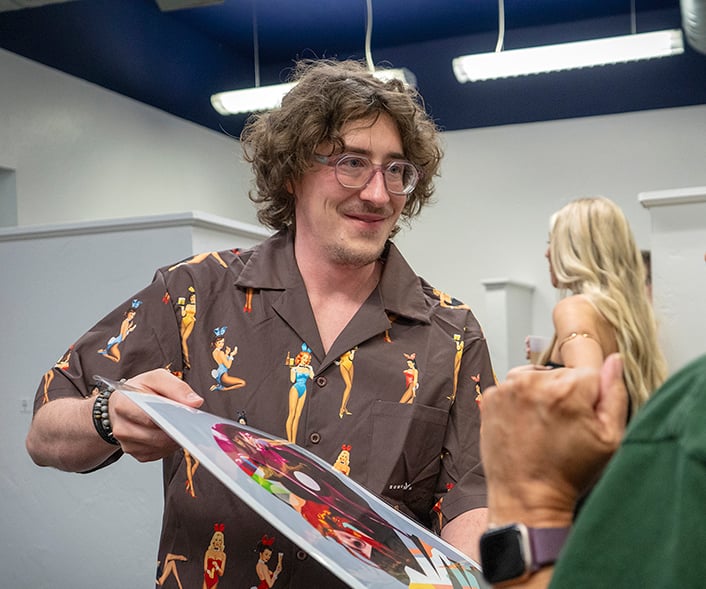
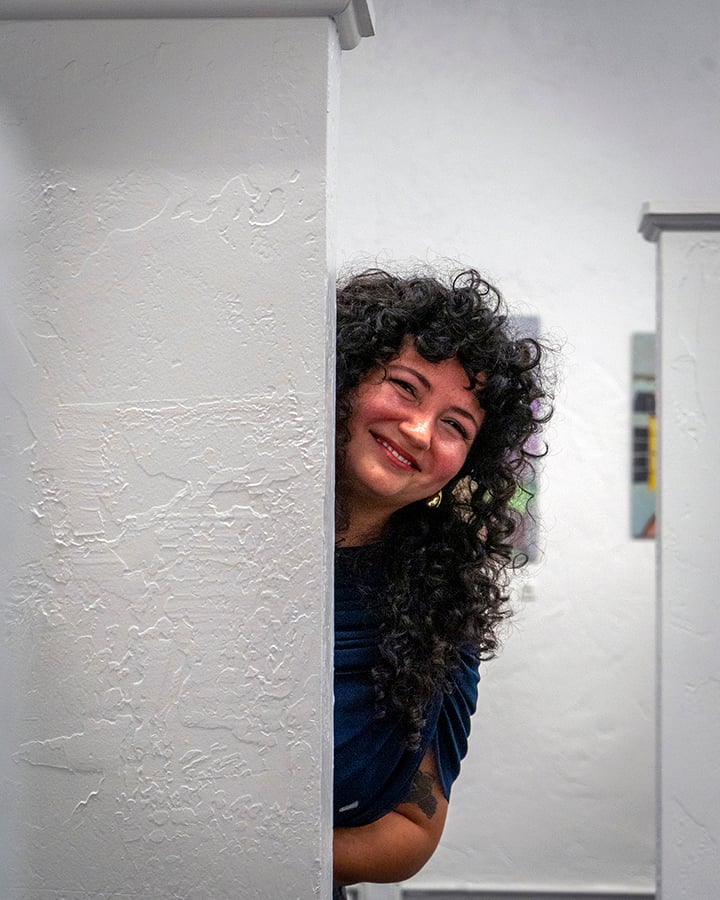
Ora Fraze has long been known in creative circles as a versatile digital artist—part illustrator, part designer, part visual storyteller. Born and raised in St. Petersburg, he built his artistic identity from the ground up, weaving together influences from graphic design and pop culture. His work often feels like a blend of Y2K futurism and contemporary surrealism, a style that stands out sharply in a city better known for murals and marine-inspired painting.

The Birth of Ultra Mundane

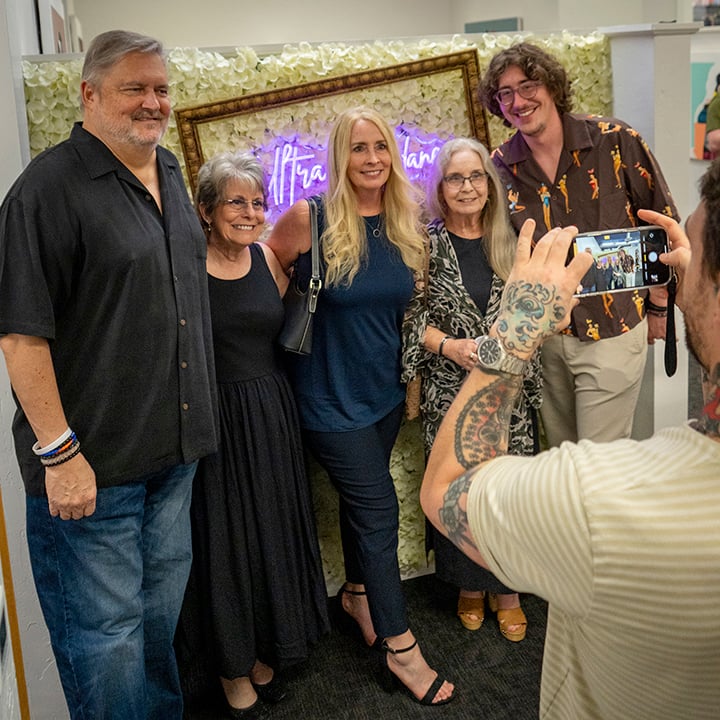
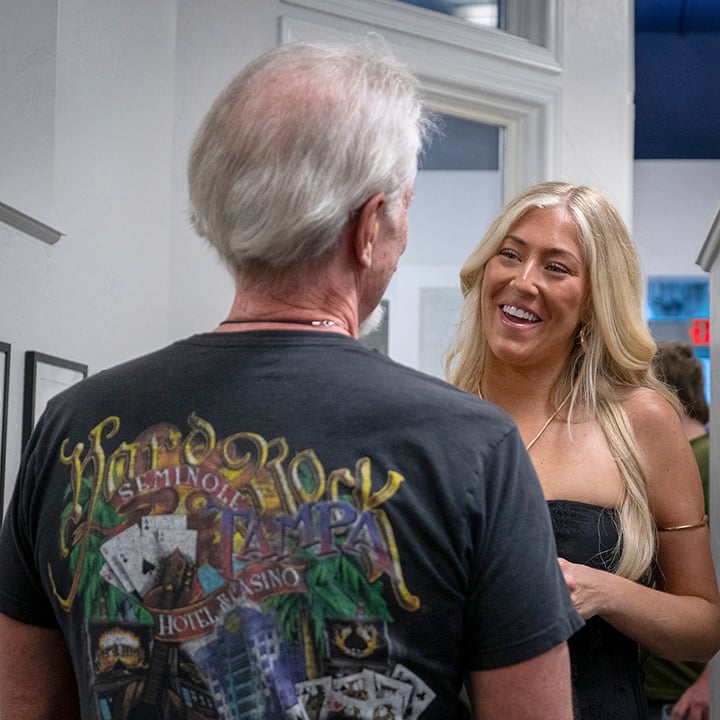
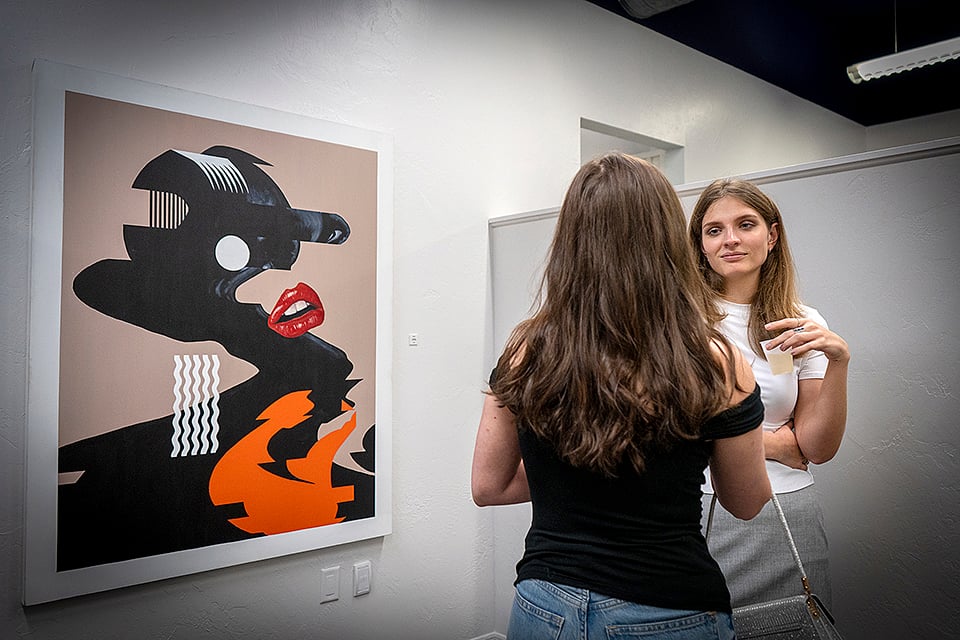
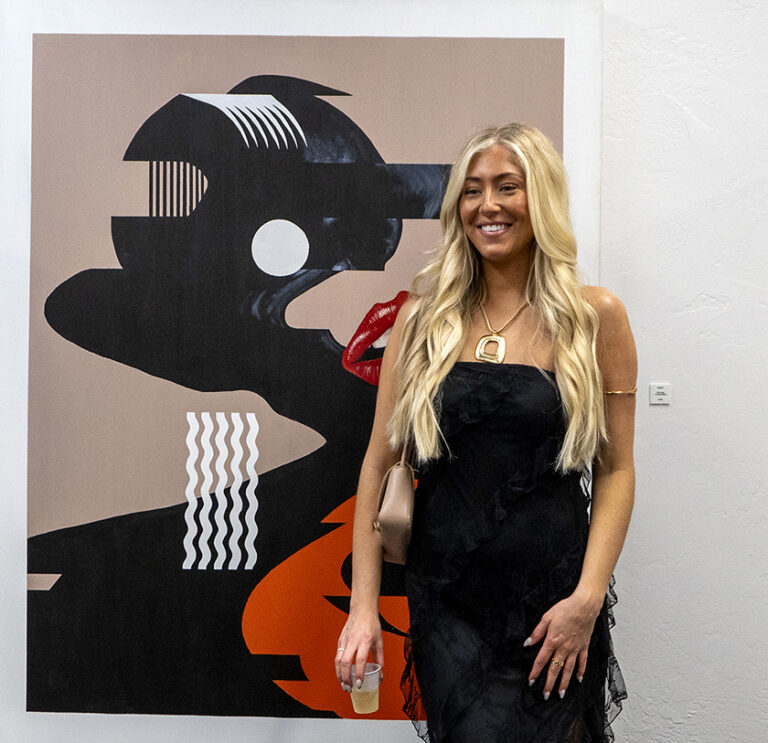
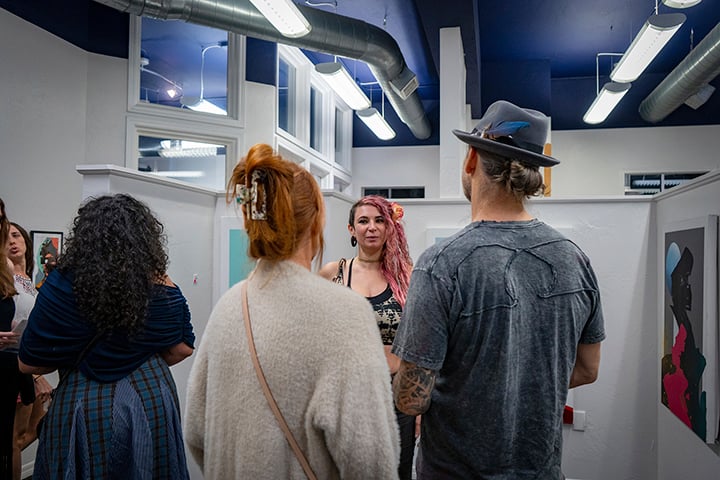
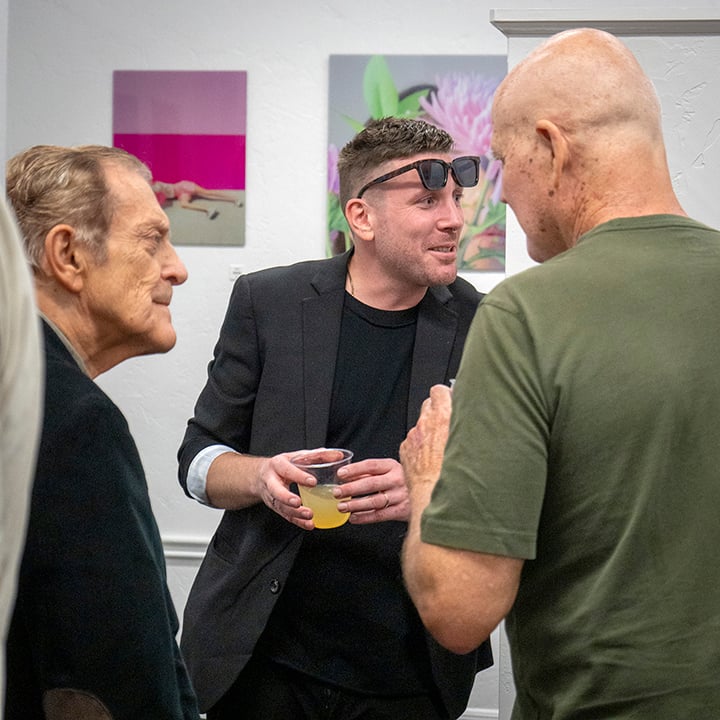
Ultra Mundane Gallery opened its doors at 1750 Central Avenue with an inaugural reception titled “A Portal Opens.” The name wasn’t metaphorical; with neon tones, clean minimalism, and nostalgic nods to early-2000s aesthetics the gallery set the stage for a new vision.

Together with Agudelo—whose curatorial instincts and photographic sensibilities helped shape the gallery’s identity—Fraze imagined Ultra Mundane as more than a white cube. “We wanted a space where everyone—artists, audiences, collectors, etc., could meet on common ground,” he emphasized. The result is a gallery that is warm yet visually striking, playful yet intentional.
A Gallery That Embraces the Experimental

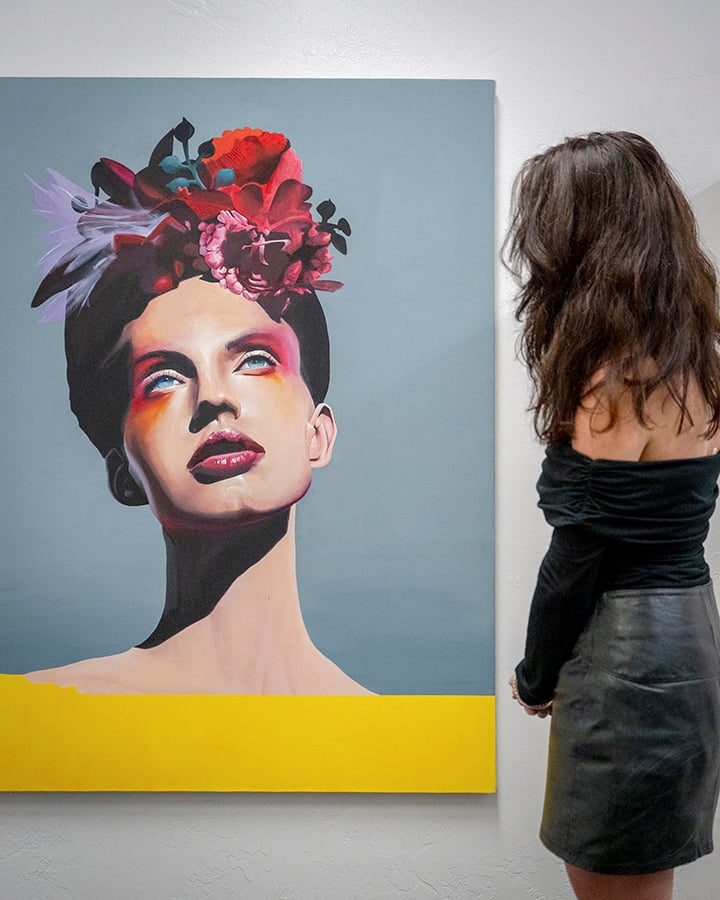
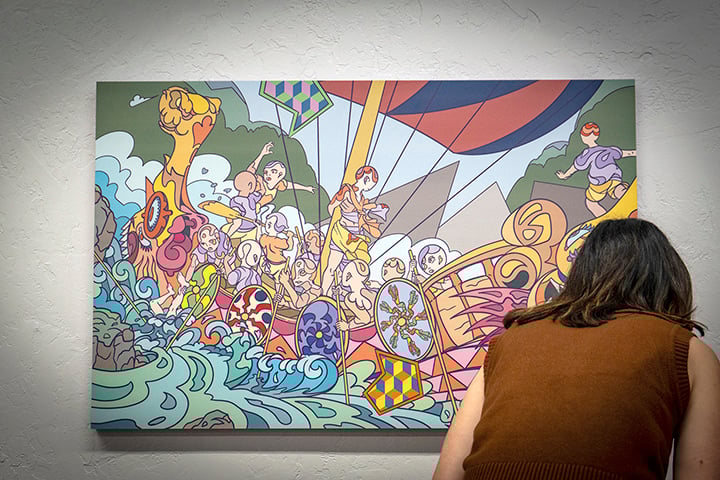
Ultra Mundane’s debut exhibition, “Continuum,” introduced Swiss artist Marius Wiget to the St. Pete arts community. Wiget’s work, which blends realism and abstraction into fluid, dreamlike compositions, set the tone for what the gallery aims to champion: artists whose practices intersect the conceptual and the aesthetic; works that feel as alive as they are inventive.
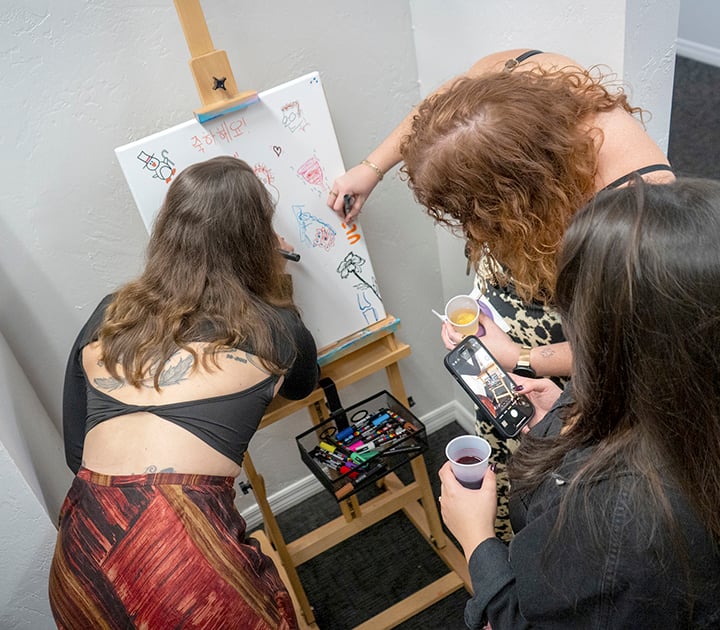
But the gallery’s programming extends beyond traditional exhibitions. Fraze and Agudelo plan to host multimedia installations, digital showcases, collaborative pop-ups, art talks, and community-driven gatherings.

In a creative economy increasingly shaped by digital tools and hybrid art forms, Ultra Mundane stands at the edge of what’s next. It embraces that in-between zone where technology, fine art, and culture merge—a space Fraze understands intuitively through his own work.

A New Energy in the Grand Central District

Located in St. Petersburg’s vibrant Grand Central District, the gallery is poised to become a cultural hub for the city’s growing contemporary art scene.
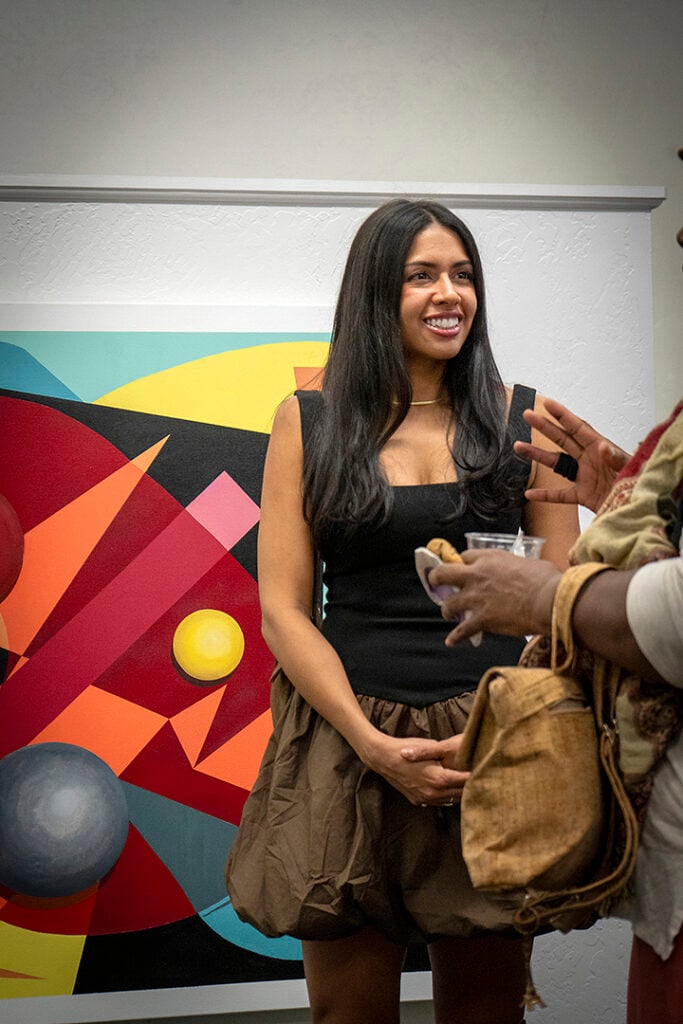
The gallery’s aesthetic leans heavily into the duality of its name: “mundane,” rooted in the everyday; “ultra,” pointing toward the extraordinary. Together, the words describe the experience of walking into the space—recognizable yet elevated, commonplace yet top-tier.
What Ultra Mundane Represents

The opening of Ultra Mundane Gallery is more than a business venture or a new exhibition space. It’s an expression of Fraze’s belief that St. Petersburg can—and should—embrace the unconventional. It’s an invitation for the community to explore contemporary art through a fresh lens.

For Ora Fraze, the gallery is the beginning of a much larger continuum. As he and Agudelo curate new exhibitions, uplift emerging voices, and reimagine what an accessible art space can be, Ultra Mundane is poised to become one of the city’s most important cultural destinations.

In a city bursting with creativity, Ultra Mundane Gallery opens not just its doors, but a portal—to new ideas, new talent, and an exciting new chapter in St. Petersburg’s contemporary art story. •

Ultra Mundane Gallery
1750 Central Ave, St. Petersburg, FL 33712
Side Notes…Spring Is an Open Door

We thought we wanted more winter. More cold days. More reasons to stay inside. January and February gave us permission to slow down—to hunker in, warm fire nearby, coffee in hand, creating in slippers without an audience. Quiet months. Necessary months.

The kind that let ideas breathe.

But those days are behind us now.

Spring shifts the energy. It asks for intention. For plans. For movement. I’m always surprised when someone says they have no goals—that they’ll just wing it and see what happens. Maybe that works for some, but for many of us, direction creates momentum. Even small steps count. I often ask myself how much I can accomplish before lunch on any given day.

Have you signed up for that class yet? Sent that introduction to the gallery that’s been sitting in your drafts? Submitted your work to that show you’ve been dreaming about? Bought the dancing shoes that make you feel unstoppable? Each small step is a thread in the tapestry of your year, and right now is the perfect moment to weave it. Creativity isn’t just what happens in the studio—it’s how you show up for it, in every decision, every risk, every little yes to yourself.

It’s not too late to make a difference. We are the patrons of our own lives, and creativity will take whatever we are willing to give it—time, courage, attention.

Winter nurtured the seed of your creativity. Spring gives it sunlight, space, and the chance to grow. Step forward with your art, your performance, your vision—it’s ready to be seen.


Betsy Ore Glass

Narrative Eyes on Real Lives

Blake Cortes|ArtDocs.TV

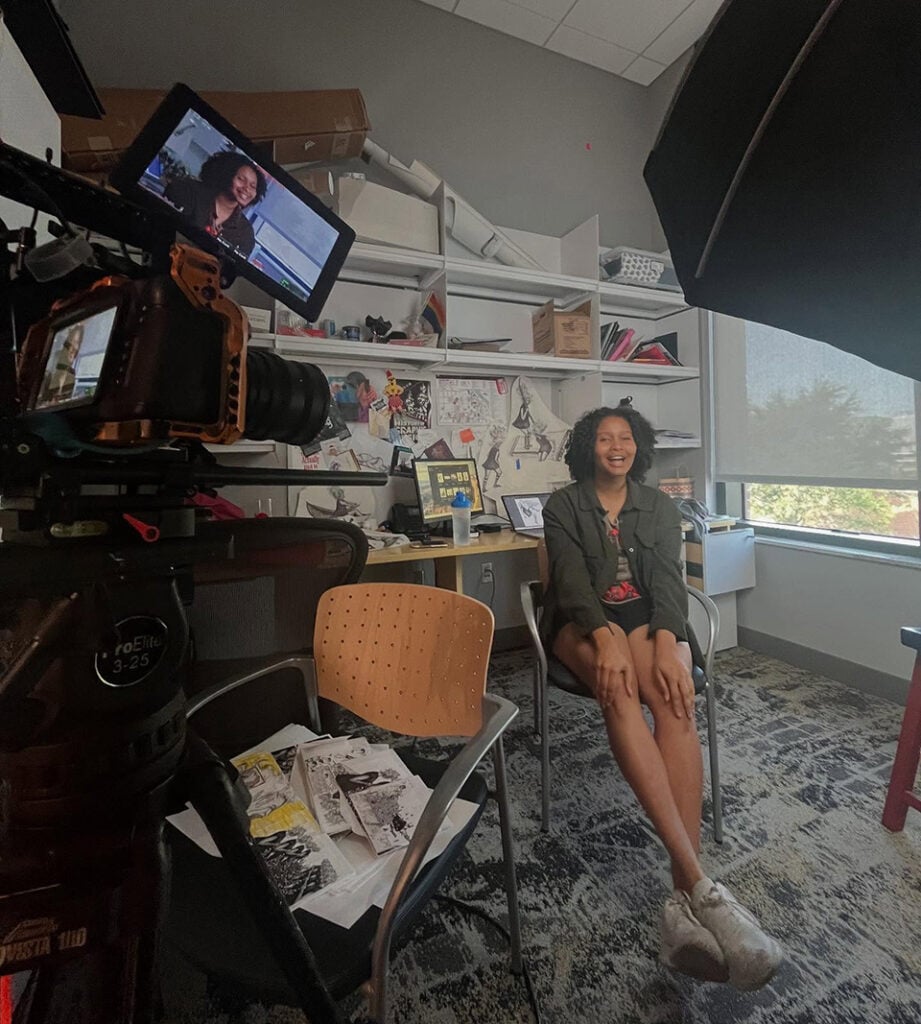
Blake Cortes is a local filmmaker working across documentary, narrative, and commercial projects with an eye toward stories rooted in human experience and cultural identity through ArtDocs.tv. As a cinematographer and director, his work often centers on real lives and creative communities, emphasizing the visual poetry of everyday people and places. His portfolio includes short documentaries, narrative shorts, and collaborations with public broadcasters like PBS.

ARTDOCS TV is a documentary series concept developed by Blake that focuses on artists and creative voices, particularly those in St. Pete, Tampa and the broader Central Florida art scene. The series showcases the personal journeys and creative practices of diverse visual artists — from painters and sculptors to multimedia makers — through short episodic profiles.

Documenting artists’ stories makes the creative process more personal and helps audiences understand why art matters beyond aesthetics — grounding it in identity, struggle, and community.


In an era where fine art and documentary storytelling often occupy separate worlds, ARTDOCS TV blends the two in accessible form.


This approach:
• Brings visibility to regional and emerging artists outside of traditional gallery circuits.
• Democratizes the local art scene by sharing creative insights with broader audiences through digital and broadcast platforms.
• Preserves cultural insights that might otherwise be overlooked in contemporary arts coverage.


By focusing on personal stories and creative processes, Blake contributes to a more inclusive understanding of art and artists in Tampa Bay and beyond — particularly outside major museums and galleries.

Art Docs.TV

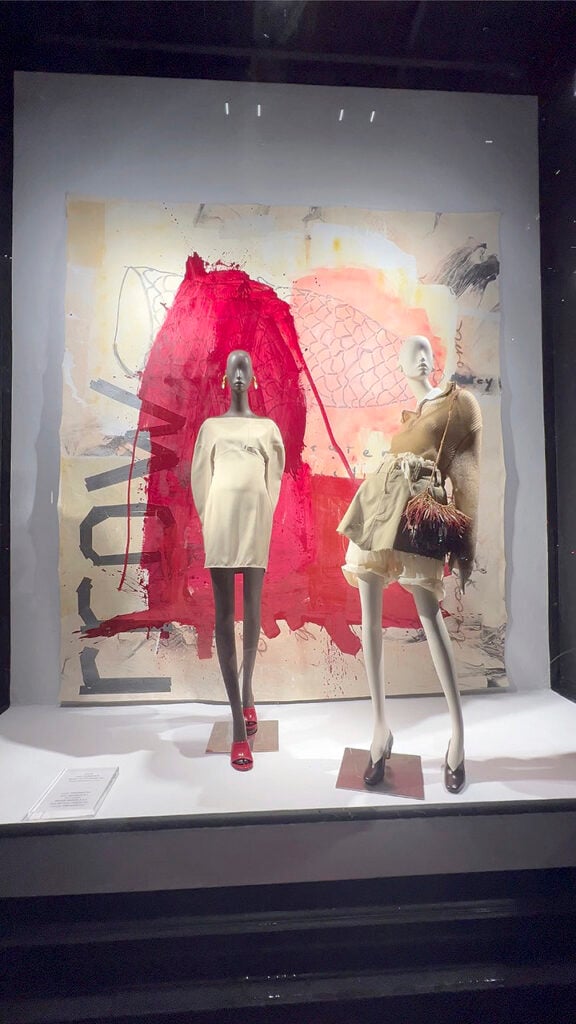
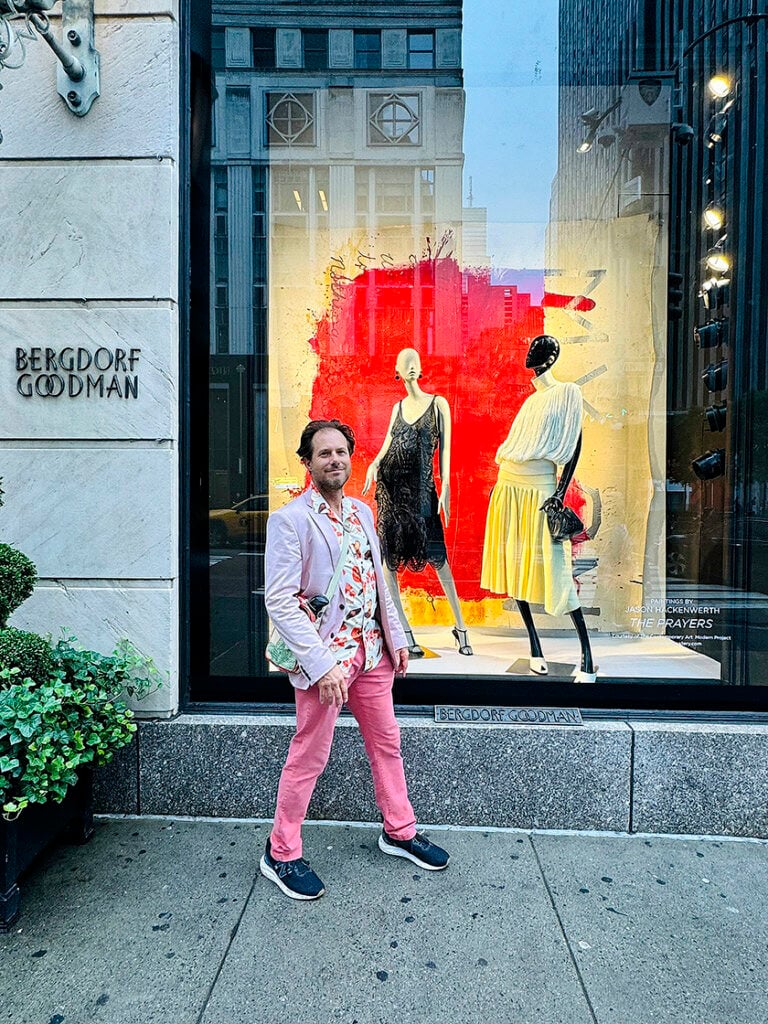
Jason Hackenwerth: Ephemeral Forms, Eternal Impact

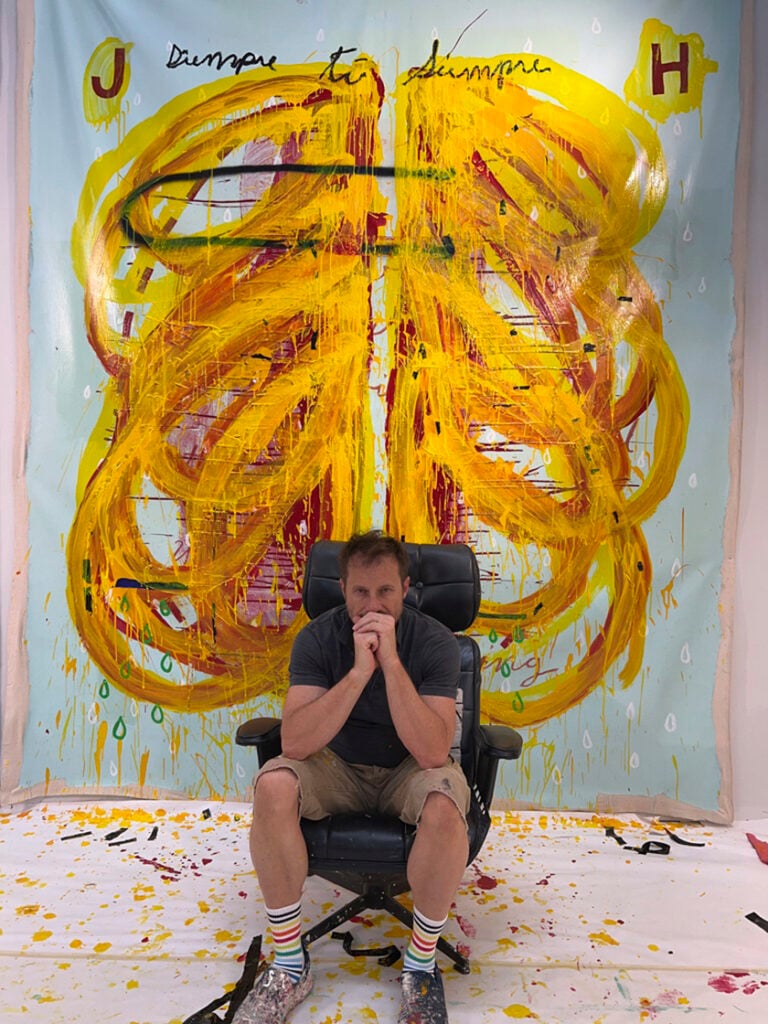
Few contemporary artists navigate the territory between spectacle and substance as deftly as Jason Hackenwerth. Based in Saint Petersburg, Florida, Hackenwerth has built an international reputation for work that is immediately captivating, art that invites delight while confronting impermanence and transformation. Across sculpture, installation, and painting, his work resists easy categorization, instead it unfolds as a question into how materials, bodies, and spaces come alive.

Born in St. Louis, Missouri in 1970, Hackenwerth’s early exposure to art came from everyday creativity — including his mother’s balloon twisting. What might have remained a novelty instead became a serious artistic endeavor. By exploiting balloons Hackenwerth positioned himself within a line of artists who challenge the stereotypical use of materials.

His formal education — a BFA in Printmaking from Webster University (1997) and an MFA in Painting from the Savannah College of Art and Design (2010) — provided the conceptual and technical grounding that distinguishes his work. This dual background is essential: it explains how his installations achieve both visual excess and structural intelligence, while his paintings retain a two dimensional sculptural sense of rhythm and spatial exploration.

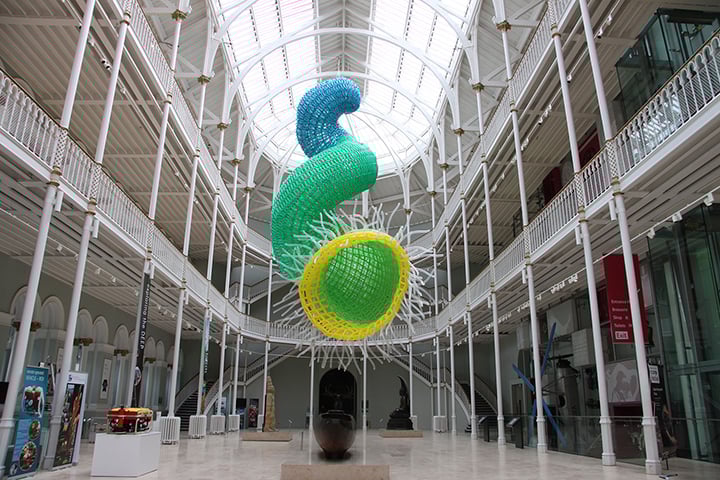
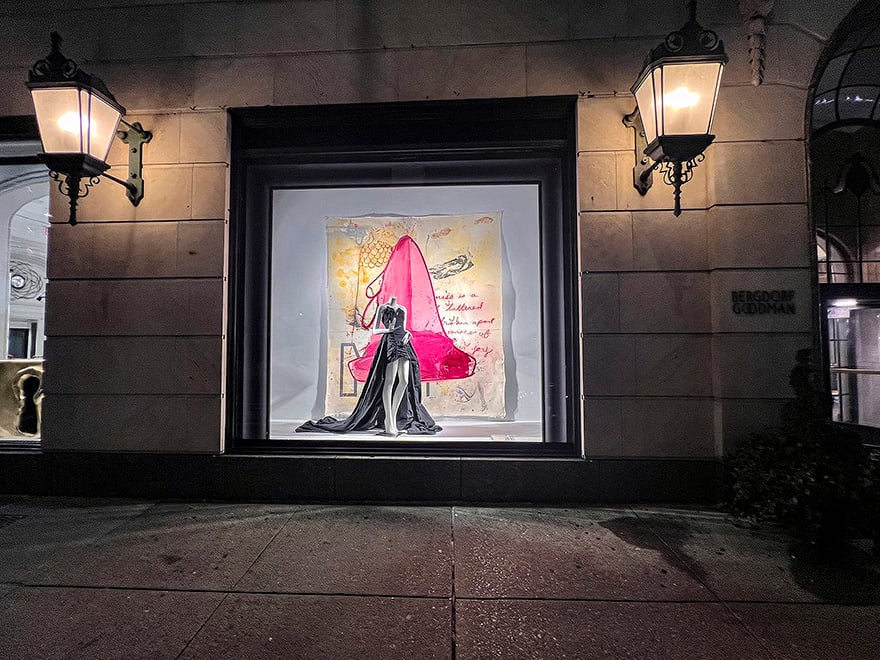
Hackenwerth’s work has been exhibited by institutions including the Solomon R. Guggenheim Museum, the Victoria and Albert Museum, and National Museums Scotland, affirming that his unconventional material choices operate comfortably within the highest levels of the contemporary art world.

Living Forms and the
Aesthetics of
Impermanence

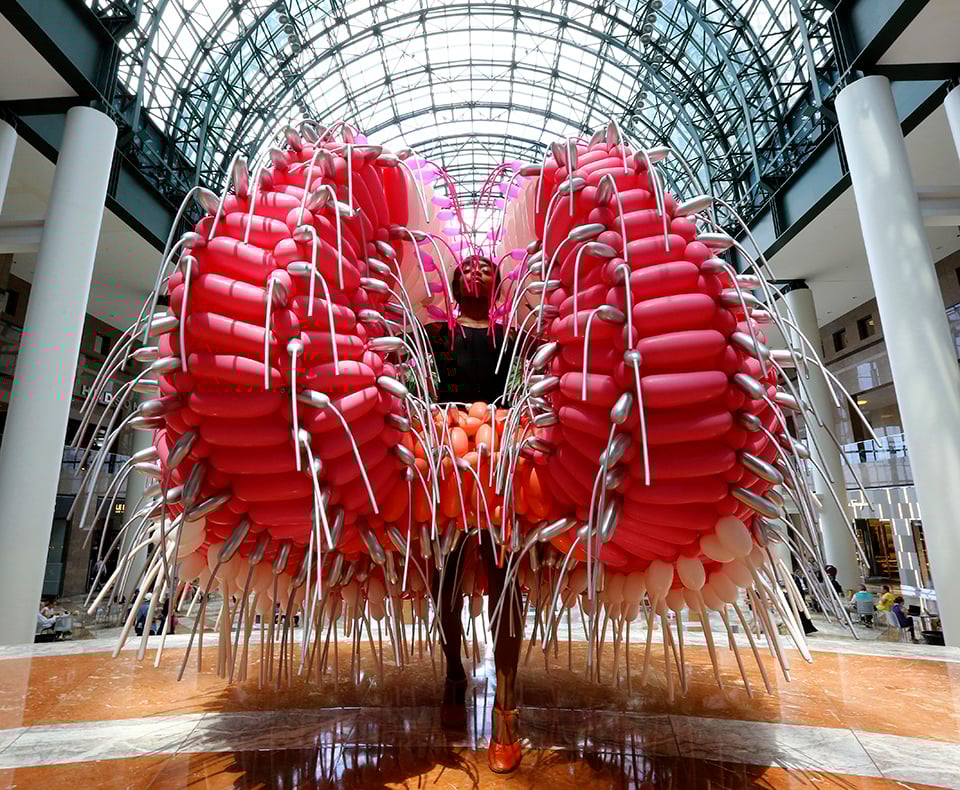
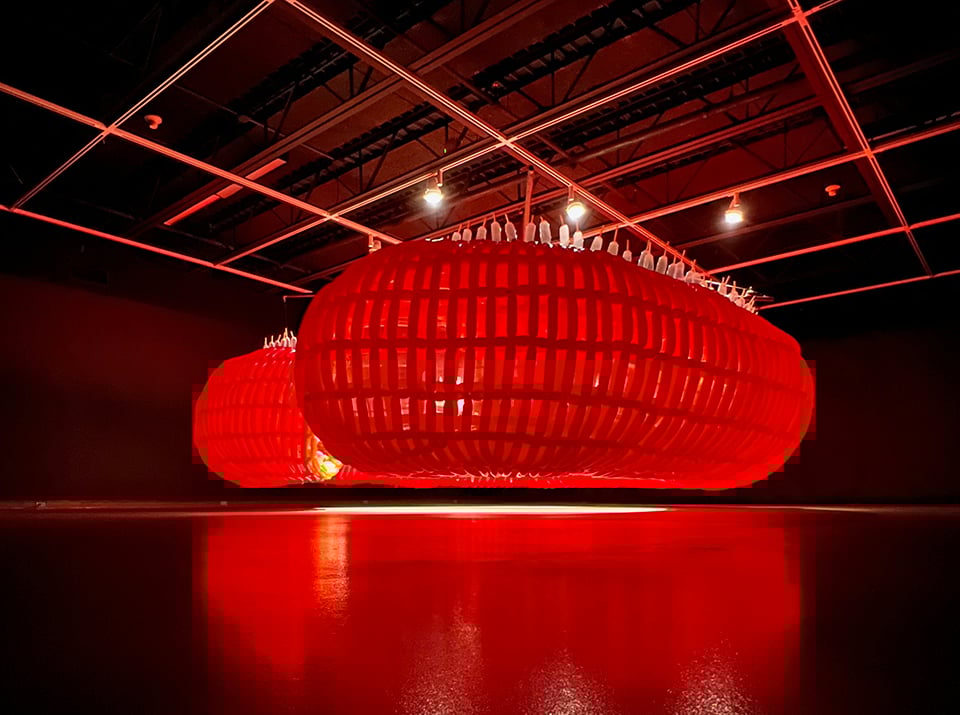
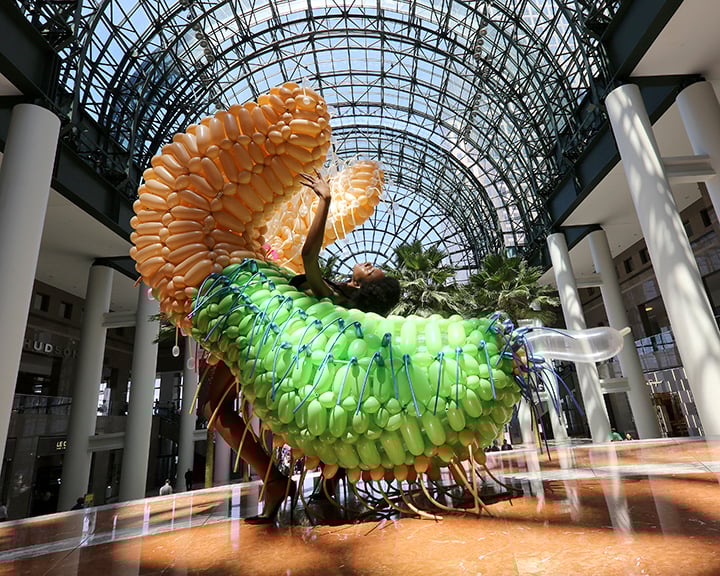
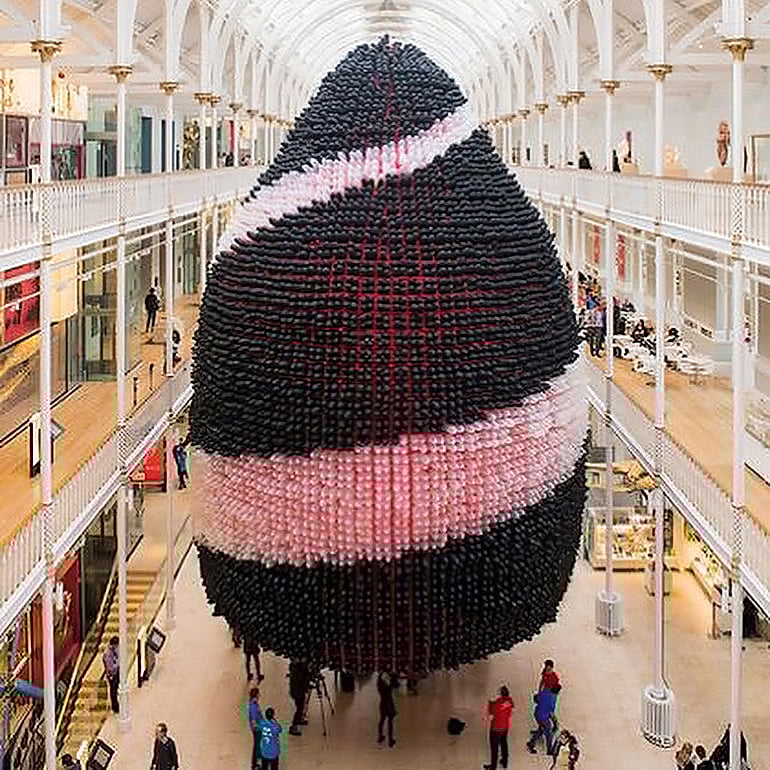
Hackenwerth’s balloon installations are best understood not as objects, but as events. Composed of thousands of hand-tied latex balloons, these sprawling, biomorphic structures appear to breathe, twist, and mutate within space. Viewers often describe them as creatures — part animal, part myth — an instinctive response that speaks to the work’s power.

Yet the emotional pull of these forms is inseparable from their fragility. Balloons age. They deflate, sag, and eventually collapse. Hackenwerth does not try to hide this reality; he embraces it. In doing so, he aligns his art with philosophical ideas around temporality, entropy, birth, and death. The work’s inevitable decay becomes part of its meaning, transforming delight into reflection. His installations ask a quiet question: What does it mean to be moved by something we know will not last?

Painting as
Psychological
Introspection

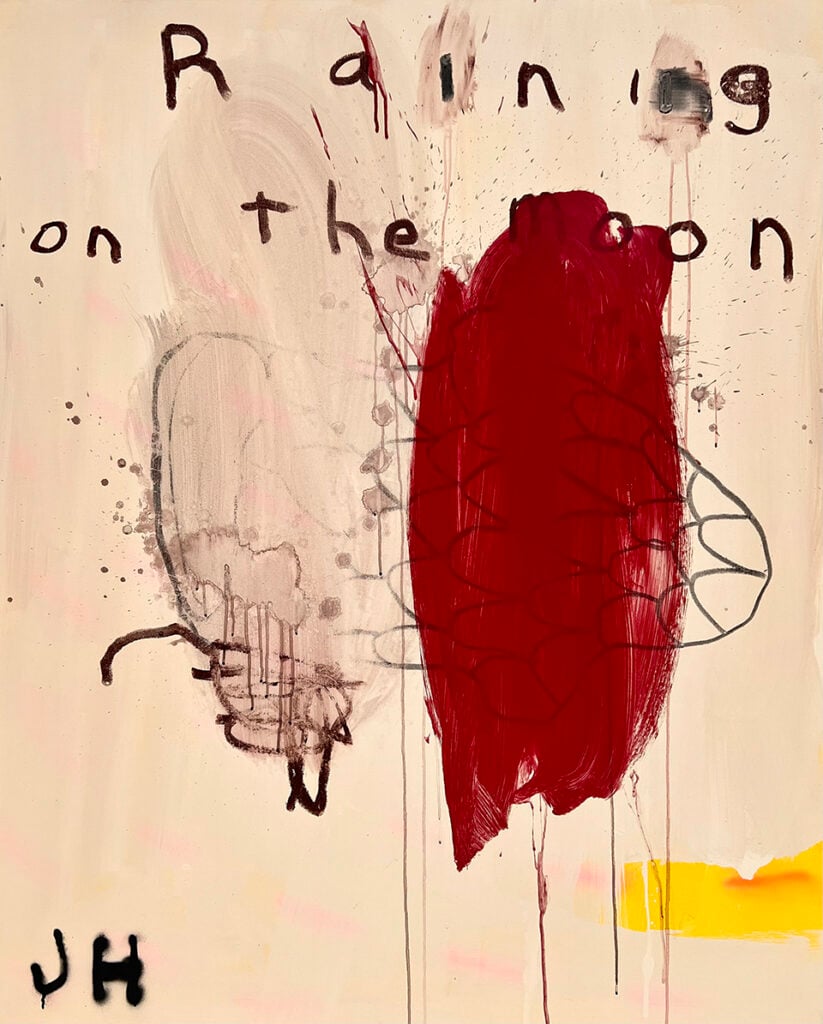
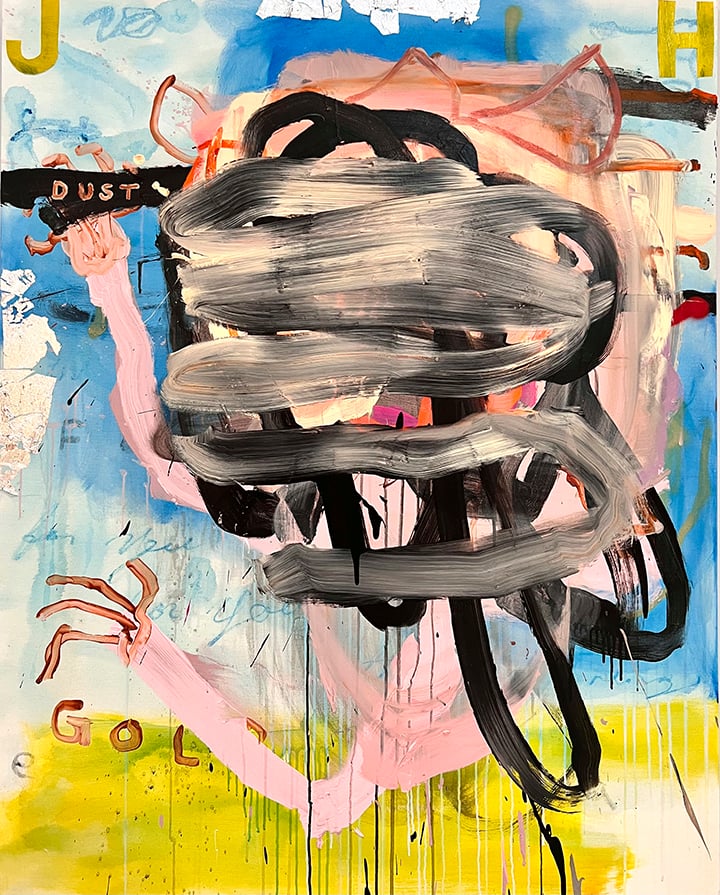
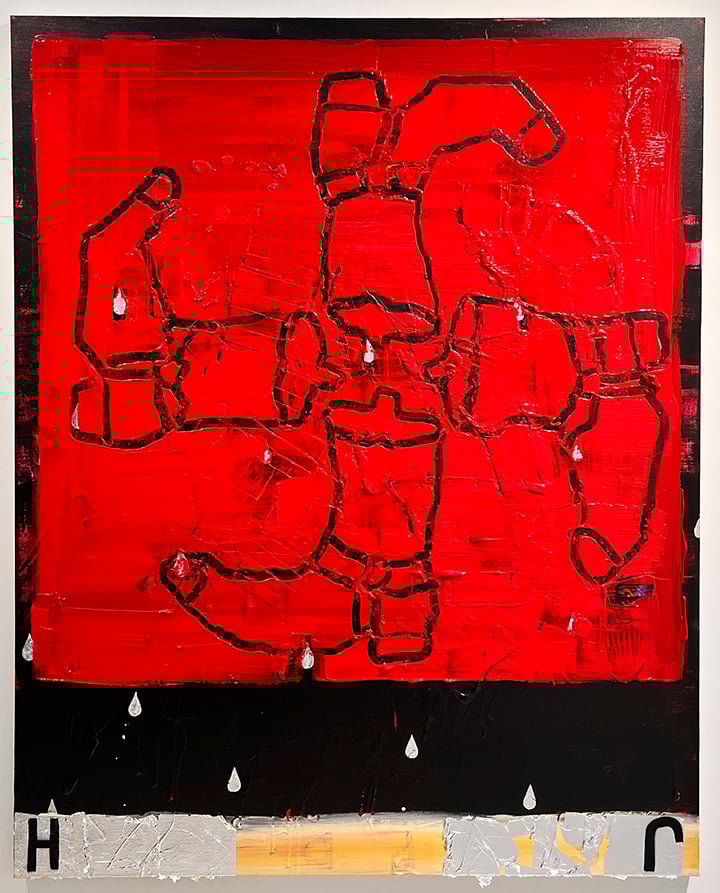
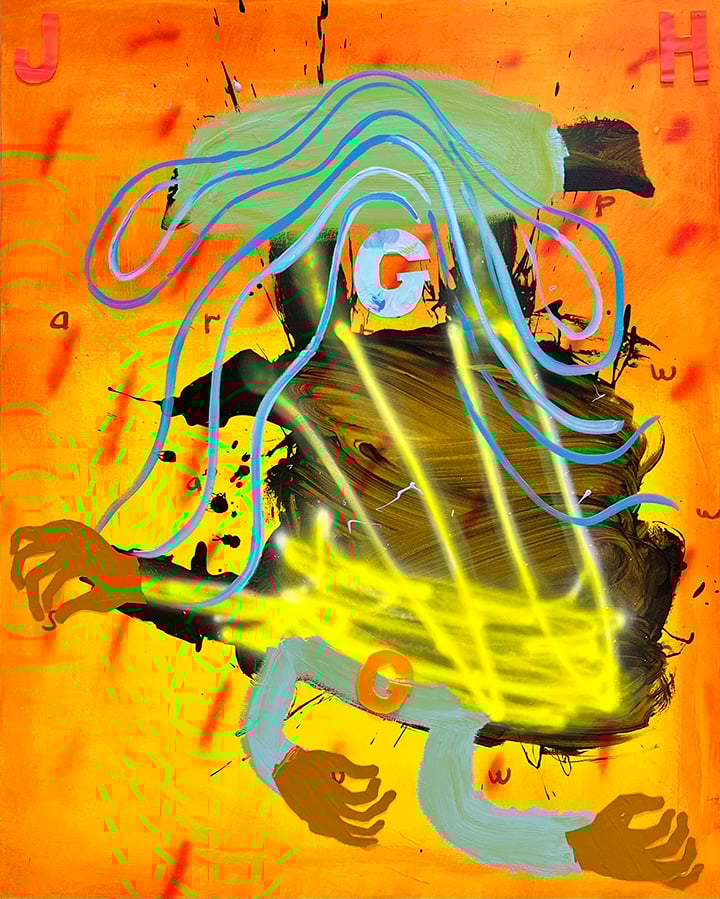
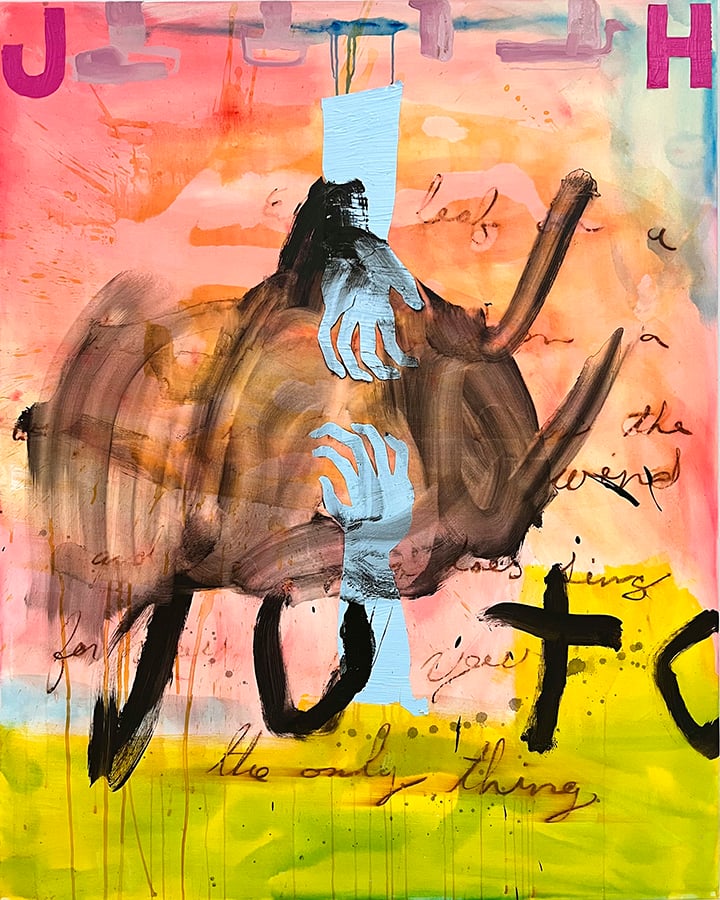
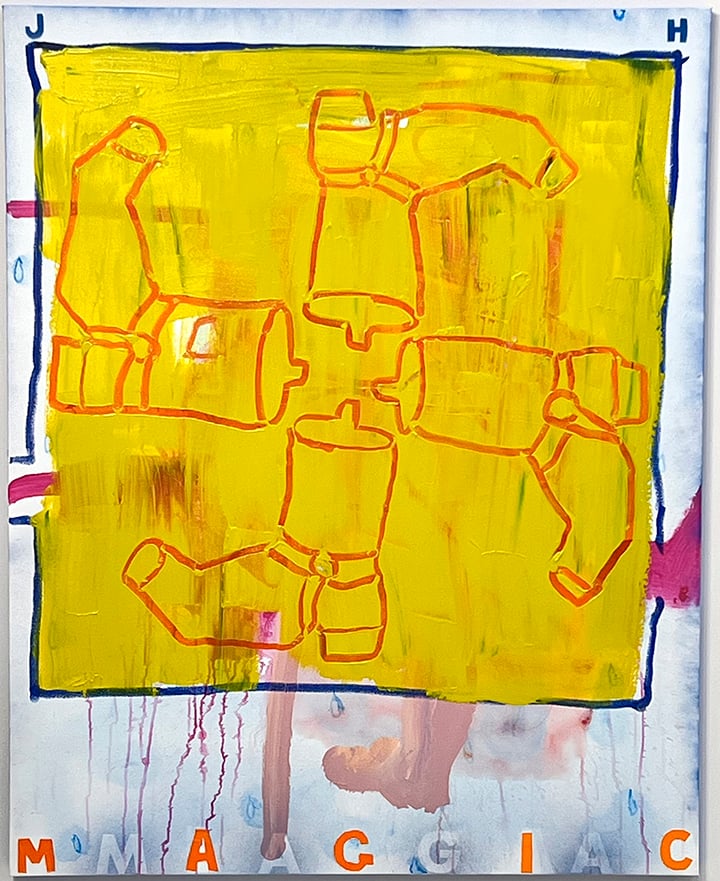
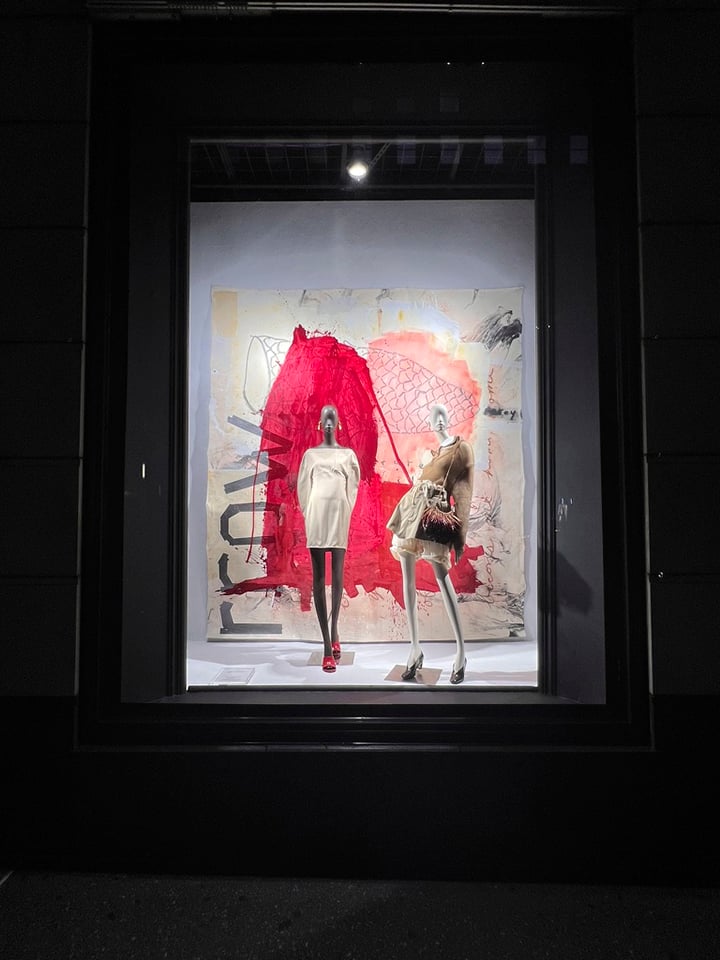
While the balloon installations command attention, Hackenwerth’s paintings offer a crucial counterbalance. These works are more introspective, they do not fight for structural balance. There is an abstraction of symmetry through emotional freedom. It’s what happens when a core, baseline human psyche gets splashed in vivid color onto canvas. Defining, classifying, or even discussing the merits of Hackenwerth’s paintings becomes an emotional journey into the analysis of a mind. You, the viewer, become the psychoanalyst. But, of course, your personal experience gets played out in real-time.

Critically, these paintings are not secondary to the sculptural work; they are complementary. Where the installations externalize energy, the paintings internalize it, tapping into sensation, memory, and emotion. Together, the two practices form a complete system — one outward-facing, one inward-looking — reinforcing Hackenwerth’s interest in the full spectrum of human perception.

Sixstar Art Studios:
Art as Collective Practice

Hackenwerth’s belief in art as a communal endeavor is most visible at Sixstar Art Studios, the Saint Petersburg–based artist collective and shared workspace he helped establish. Sixstar operates less as a traditional studio and more as a living artspace — one that prioritizes exchange, experimentation, and sustainability over isolation or competition.

Within this environment, Hackenwerth’s role reinforces a model of artistic success that includes mentorship, shared infrastructure, and mutual support. In an era when many artists work in isolation, Sixstar Art Studios represents an alternative — one rooted in exploration and long-term cultural collaboration.

Creative Pinellas and
Civic Involvement

Since relocating to Saint Petersburg in 2013, Hackenwerth has become deeply embedded in the region’s cultural fabric, particularly through his relationship with Creative Pinellas, the county’s official arts organization. A two-time recipient of the Creative Pinellas Professional Artist Grant, he exemplifies the type of artist the program was designed to support: one whose work resonates beyond the studio and contributes to a broader cultural ecosystem.

His involvement extends beyond funding. As a past President of the Board of Directors Hackenwerth has helped reinforce a model in which artists function not only as creators, but as civic participants. This alignment between personal practice and public responsibility reflects a mature phase of his career — one in which artistic excellence and community are combined.
Enduring Impact

Jason Hackenwerth’s work occupies a rare space — joyful without being frivolous, spectacular without being empty. Whether filling a museum with living color or distilling emotion onto canvas, his art insists on presence: physical, emotional, and communal.
In a cultural moment defined by speed and disposability, Hackenwerth shows us that what disappears can still leave a lasting imprint — and that wonder, when taken seriously, can have a profound artistic force. •

Sunscreen’s Twenty First Year

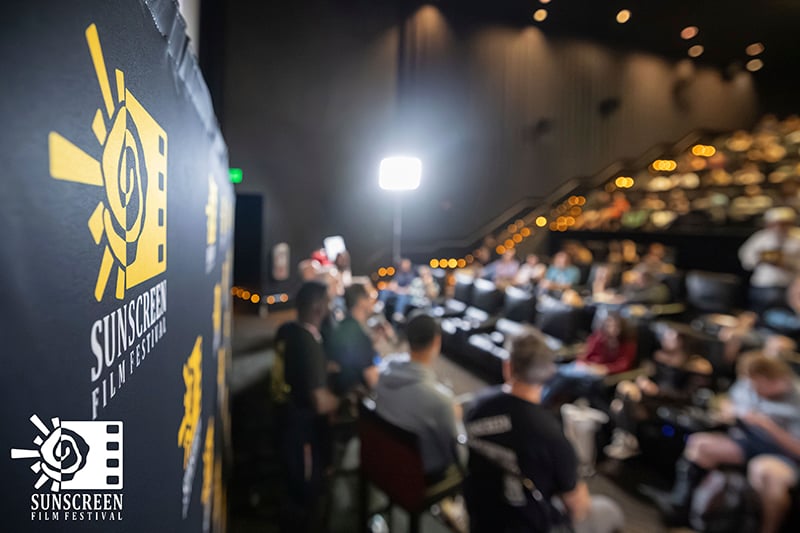
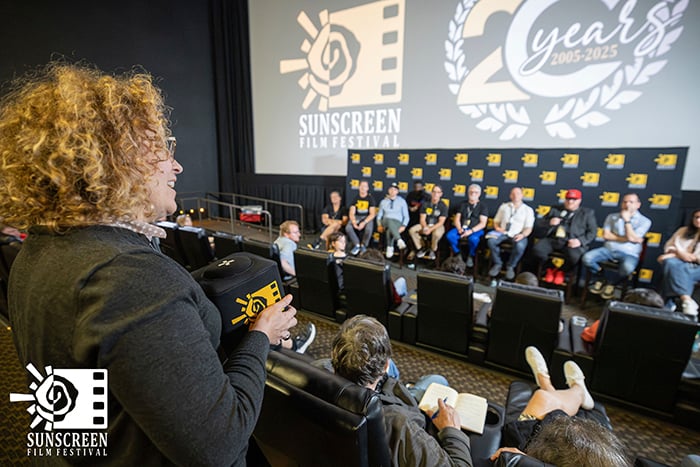
 “Why don’t we start a film festival?” Those six words planted the seed for a cultural phenomenon. After making his first feature in 2004, filmmaker Tony Armer found himself navigating the film industry, searching for connections and opportunities. What began as a lighthearted idea quickly took root and set in motion a festival that would transform the film community.

In 2005, the Sunscreen Film Festival was born. Now, celebrating its twenty-first anniversary, it represents a nationally respected celebration of film, drawing acclaimed guests, launching careers, and shaping a legacy no one could have predicted.

Armer says, “Several milestones stand out. Year five was a major turning point for us. We had incredible guests, gained significant notoriety, and saw the festival really begin to grow. Even earlier, our third year was a defining moment when John Travolta attended the festival. People couldn’t believe that such a small festival was able to attract someone of his stature, and that moment really helped launch Sunscreen’s reputation. Then having the Academy of Motion Picture Arts and Sciences involved as a sponsor was incredibly meaningful. It elevated the festival’s brand and reputation in a significant way.”

Sunscreen’s influence on the local film community remains one of Armer’s proudest achievements. “I know for a fact that the festival has helped launch the careers of numerous filmmakers and has brought millions of dollars in film production business to the area.”

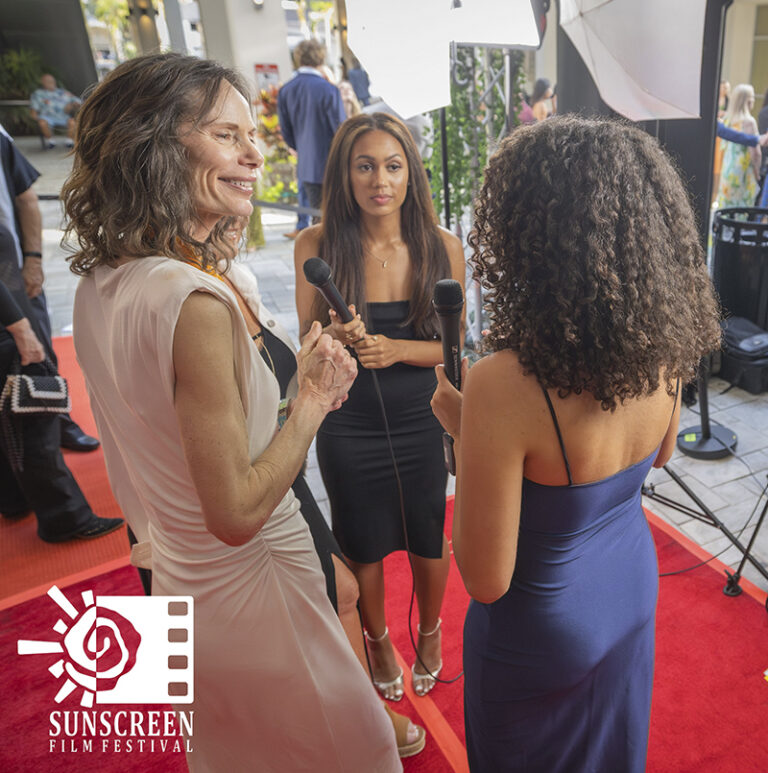
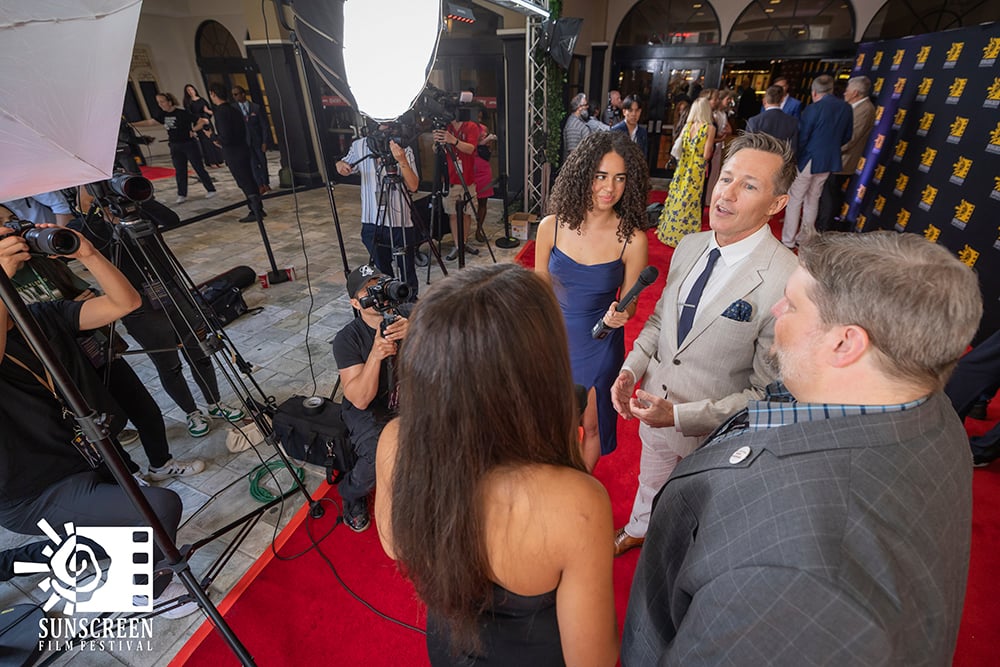
Sunscreen consistently ranks among the top 100 film festivals worldwide by filmmaker reviews, out of over 14,000 festivals. “Filmmakers regularly tell us Sunscreen is their favorite festival even after attending much larger events. We offer an intimate atmosphere while still delivering a top tier experience,” he says. “It’s that unique combination of a laid back, sunny environment paired with great films, strong networking, memorable parties, and outstanding educational workshops. There may be a red carpet, but no one is treated as more important than anyone else. Celebrities, filmmakers, and attendees all mix and mingle, creating a welcoming and genuinely fun atmosphere.”

St. Petersburg’s vibrant arts scene shapes the festival, while Sunscreen enhances the city’s cultural identity. Even with more than 7,000 attendees each year, Sunscreen remains committed to its filmmaker focused culture. “We’re very intentional about keeping the festival grounded and accessible. Even as attendance grows, we focus on organization, flow, and creating spaces where people can genuinely connect. Despite the size, the atmosphere remains friendly, down to earth, and interactive.”

Education has always been central to Sunscreen’s mission. The festival is recognized for offering an exceptional range of educational programming, providing more workshops and learning opportunities than nearly any other festival in the country. “Sunscreen was created by filmmakers, for filmmakers. I’m still actively writing, producing, and directing projects, as are many people involved with the festival. When I started out, I had no idea where to begin, and I want to give back by sharing that knowledge. Education is at the heart of what we do.”

Tony
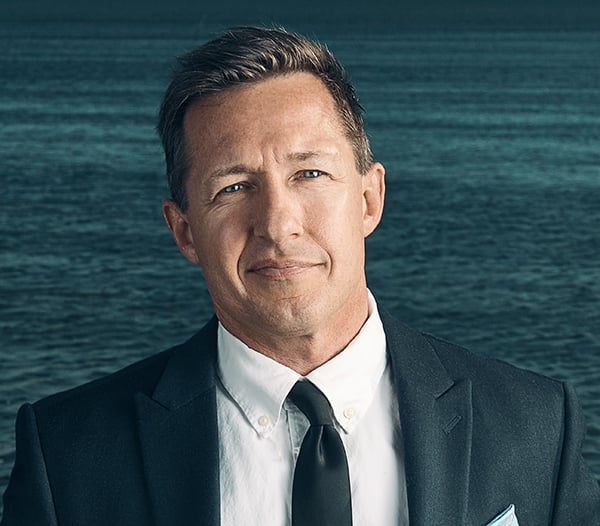
Tony Armer

That commitment continues in 2026 with strong core programming in cinematography, screenwriting, directing, producing, film finance, and distribution. “These are topics filmmakers want every year. We also introduce new and unique workshops, expand student focused programming, and create enhanced opportunities for emerging filmmakers.”

Armer has seen the industry shift in ways that continue to influence Sunscreen’s approach. “Independent filmmaking is always changing, and we adapt along with it, whether that’s offering workshops on vertical video or responding to how audiences discover films. Ultimately, filmmakers want their work seen, and we’re excited to continue providing a platform that helps make that happen.”

Sunscreen’s 2026 selections, announced March 6, are a mix of shorts, documentaries, and features that are both entertaining and thought-provoking. Major festival highlights include the Opening Night celebration, the Friday night Filmmaker Party, Karaoke night, and the Saturday Awards Ceremony.

Armer notes that film submissions often mirror current events and social issues, but he prioritizes variety to avoid programming too many similar themes.

One of Sunscreen’s signature categories, The CauseTainment Award, continues to evolve. “This is a newer category, and we’re still refining the process. We’re looking for films that tell powerful stories and make a genuine impact.”

The festival honors influential local film community members, remembering those lost and showing gratitude to key contributors.
Supporting young filmmakers remains equally important. “Through our educational programming and dedicated categories, we encourage student filmmakers to be fully engaged, not just networking, but screening their work alongside established filmmakers. That experience can be incredibly impactful early in a career.”

Armer expects the festival to keep adapting as the film industry changes but believes its core focus on bringing people together will remain strong. As Sunscreen prepares for year 21, Armer says, “When you combine films, education, networking, and celebration, it becomes something far more meaningful than just going to the movies, and that’s what Sunscreen will continue to be. I hope attendees leave feeling inspired that they saw great films, met great people, built meaningful connections, and had an unforgettable experience in St. Petersburg.” •

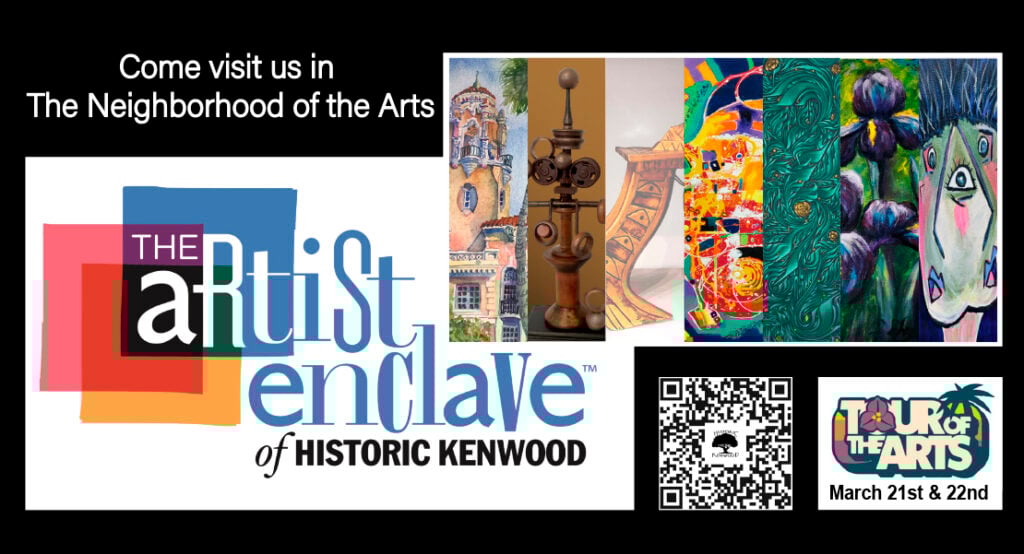
Annual Historic Kenwood Tour of the Arts

Over 30 Artists Featured

Saturday, March 21: 10 AM to 5 PM 
& Sunday March 22: 11AM to 5PM 
Tour begins at:
Seminole Park 2900 3rd Avenue North.  
For more information visit:
https://kenwoodartistenclave.org

The Artist Enclave of Historic Kenwood (AEHK) was created in 2014, when City Council approved Historic Kenwood to become an Artist Enclave Overlay District (AEOD) 

An Artist is defined by the Enclave as an individual who practices and/or who creates a product in one of the following categories: Fine Art, Craft Art, Design, Photography, Filmmaking, Musical, Literary or Performing Art.

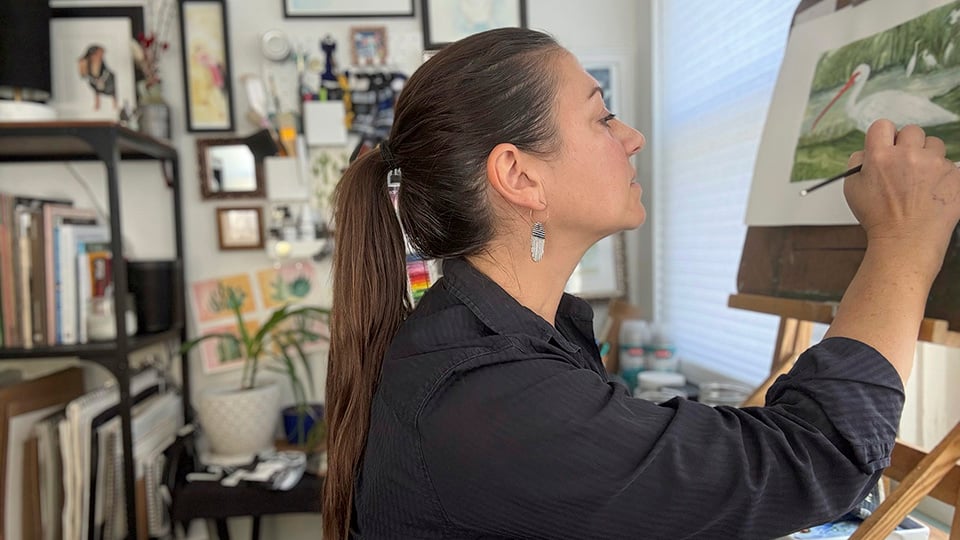
Leah van Heusden

The Enclave has a number of purposes. It allows artists to practice their art within an expanded space. Under typical zoning rules artist can only utilize a small space within their home to produce art. This flexibility allows artist to work in larger spaces, like a garage or garage apartment or in some cases to build a studio accessory structure.

Scott Solary
Scott Solary

The overlay district allows limited sales of ones art from their home, or to hold limited small exhibits. The overlay allows a musician to teach piano or voice lessons.

This designation also allows the neighborhood to hold events such as the Artist Studio Tours, this signature event, is an annual 2-day artist studio tour on the 3rd weekend in March. This event showcases the neighborhood bringing over 500 curious art enthusiasts.

These things would not be allowed in most zoning districts. Therefore the overlay regulations are in place to maintain a mix of small-scale home businesses that support the visual, performing and cultural arts, while maintaining the residential character of the Historic Kenwood neighborhood.

The Artist Enclave holds monthly meetings which allows emerging artist to mingle with more seasoned artists to share knowledge and support emerging artist.

Finally it allows Historic Kenwood to market the neighborhood as a Neighborhood that supports and encourages artists. This has lead to a number of artists moving to the neighborhood which adds creativity and culture.

The AEHK includes artists working in a broad range of art disciplines, creating works of the highest caliber and encouraging emerging artists to explore, develop, showcase, and market their creative voices. The AEHK membership organization functions under the umbrella of the Historic Kenwood Neighborhood Association (HKNA) 501(c)(3) nonprofit organization. If you Identify as an artist please join the AEHK and share your expertise. •

REAL MAGIC – The Zubricks

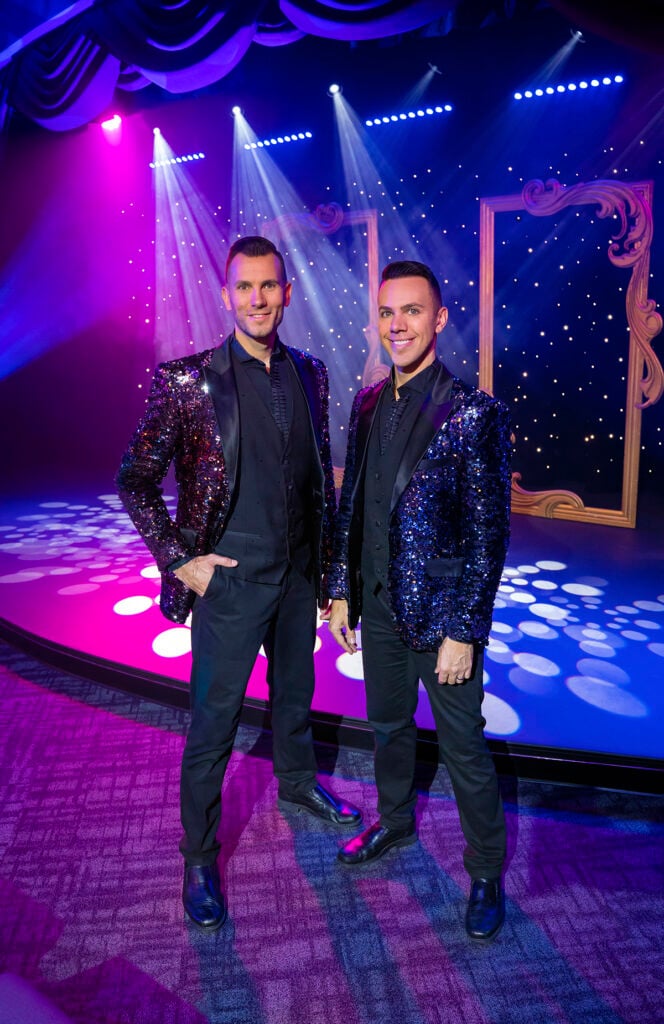
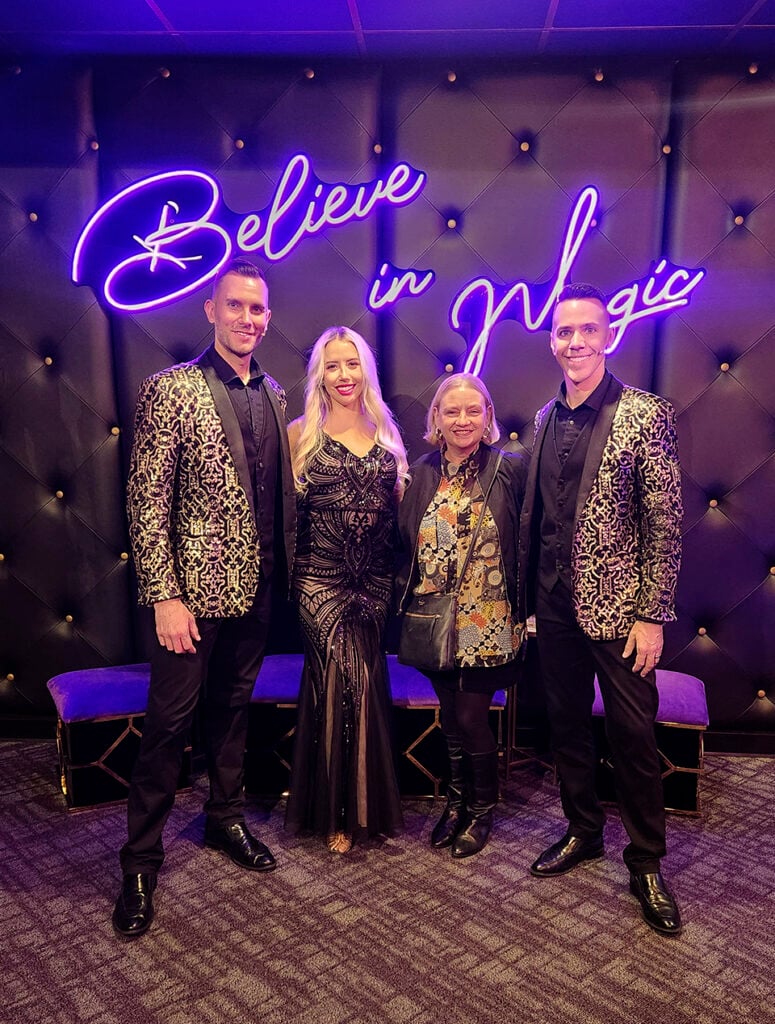
Thirty seconds into the show at the packed Zubrick Magic Theatre in St. Petersburg, it was clear we were about to experience something special.

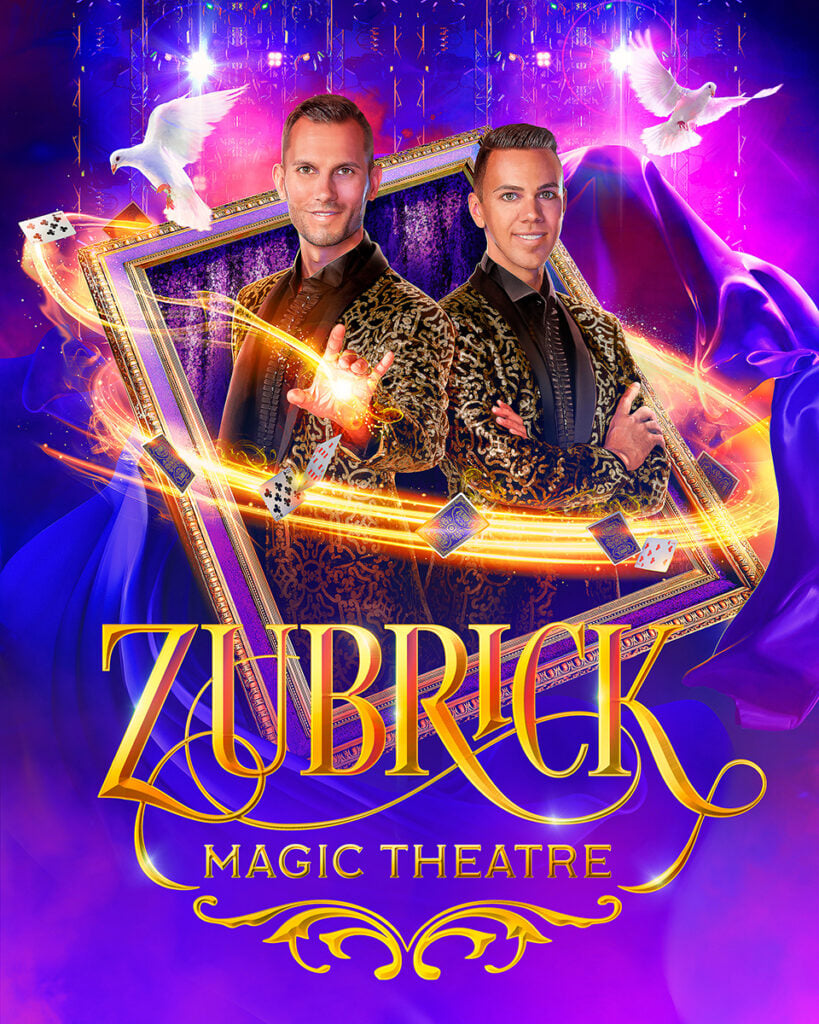
Magicians Ryan and Chris Zubrick, who are stage partners and spouses, immediately charmed the audience with their warm spirit, quick-witted banter and mind-boggling illusions.

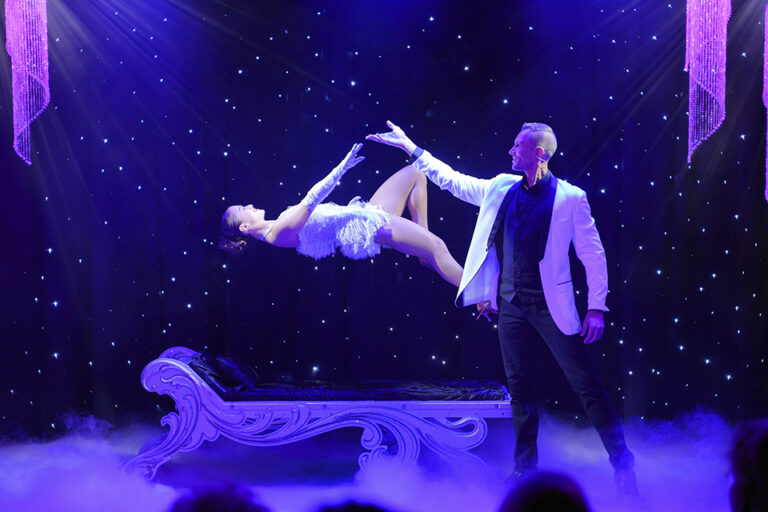
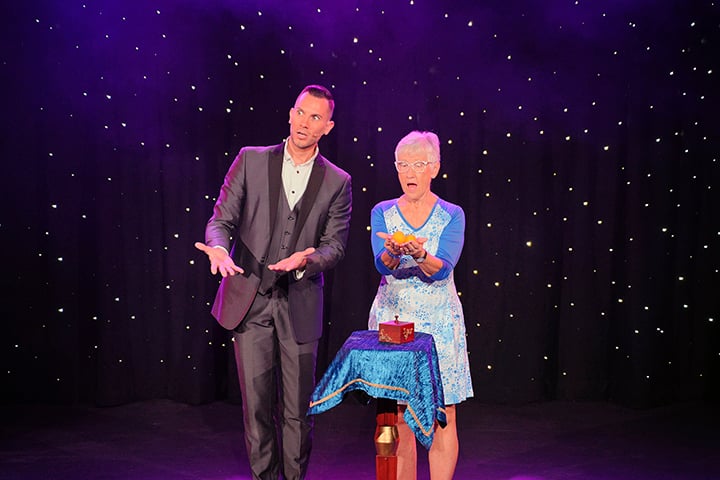
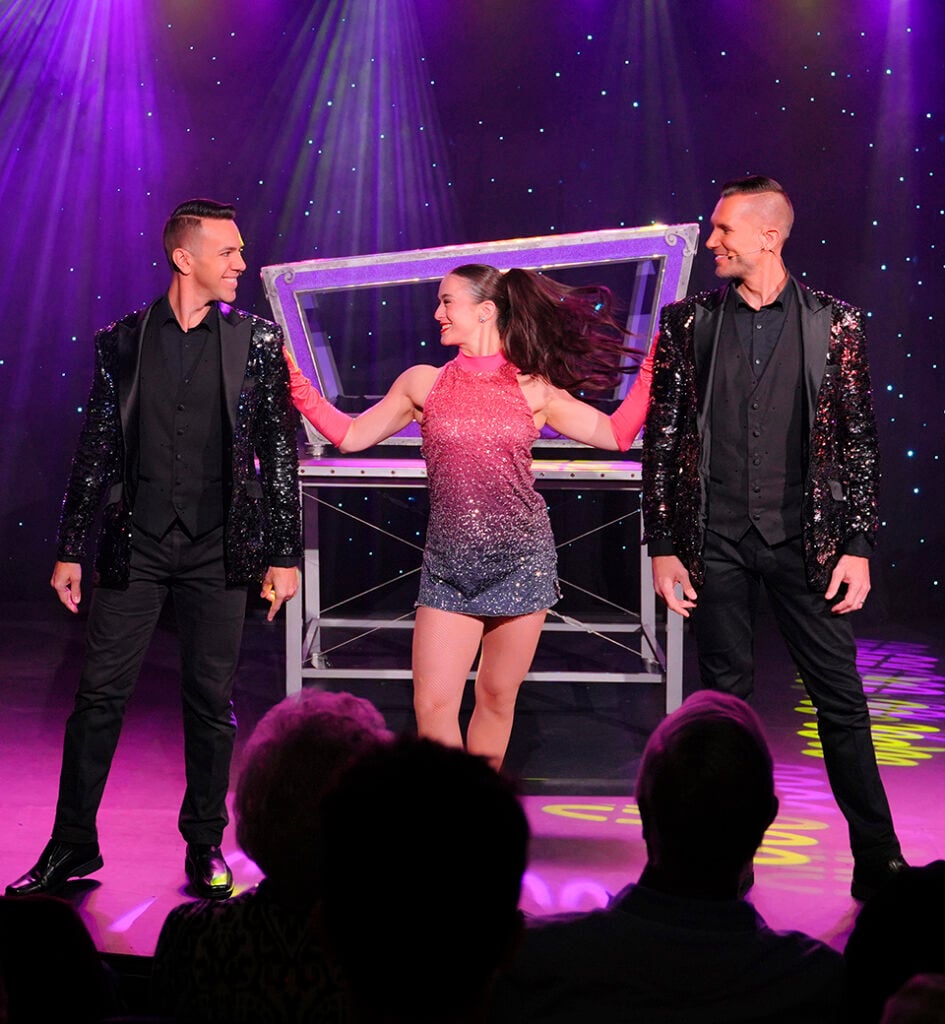
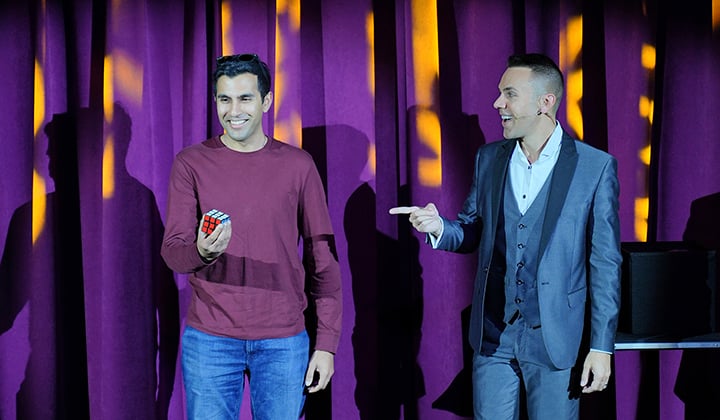
For the next 70 minutes, Chris and Ryan dazzled with a variety of tricks, including sleight of hand, a Rubik’s cube bit, an escape trick a la Harry Houdini, and lots of audience interaction and participation. They put their assistant, Brittany, in a box and sawed her into multiple pieces. In the finale, they made her levitate.

The Zubricks both hail from Michigan, and had similar experiences of discovering a passion for magic from a young age. As it turns out, Michigan is a mecca for magic, with the small town of Colon designation as “The Magic Capital of the World,” according to the American Museum of Magic’s website.

Both Chris and Ryan performed individually, but didn’t meet until a fateful event in 2005, when they were double booked for the same event. They made the best of the situation and performed together, and found that they had great on-stage chemistry.
“The result was remarkably impressive,” Chris said. “The audience really appreciated the kind of yin and yang performance that Ryan and I did, you know, the comedy and the sleight of hand. We had a lot of similar interests performing on stage. That’s really how it started.”

By 2007, after performing together around the Midwest, they got the opportunity to co-produce and headline their own show for a dinner theater in Saipan, a U.S. commonwealth in the Western Pacific that is the capital of the Mariana Islands.
What was meant to be a two year contract turned into an eight-year stint, followed by a move to Guam to work for the theater’s sister company.

They got married in 2013 and in 2017, welcomed their son, Oliver. The Zubricks stayed in Guam until the COVID-19 pandemic hit in 2020. They had to pack everything up and move back to the states. Unsure of where to go next, they discovered St. Petersburg on a trip to Florida.

“After we left Guam, we were looking for our forever home,” Ryan said. We knew we wanted to open up a theater somewhere …We just kind of fell in love with (the city). We saw all the murals, saw how artsy it was, did some more research on it, and just really liked the vibe here, and just kind of took a chance and moved here and really checked all of our boxes.”

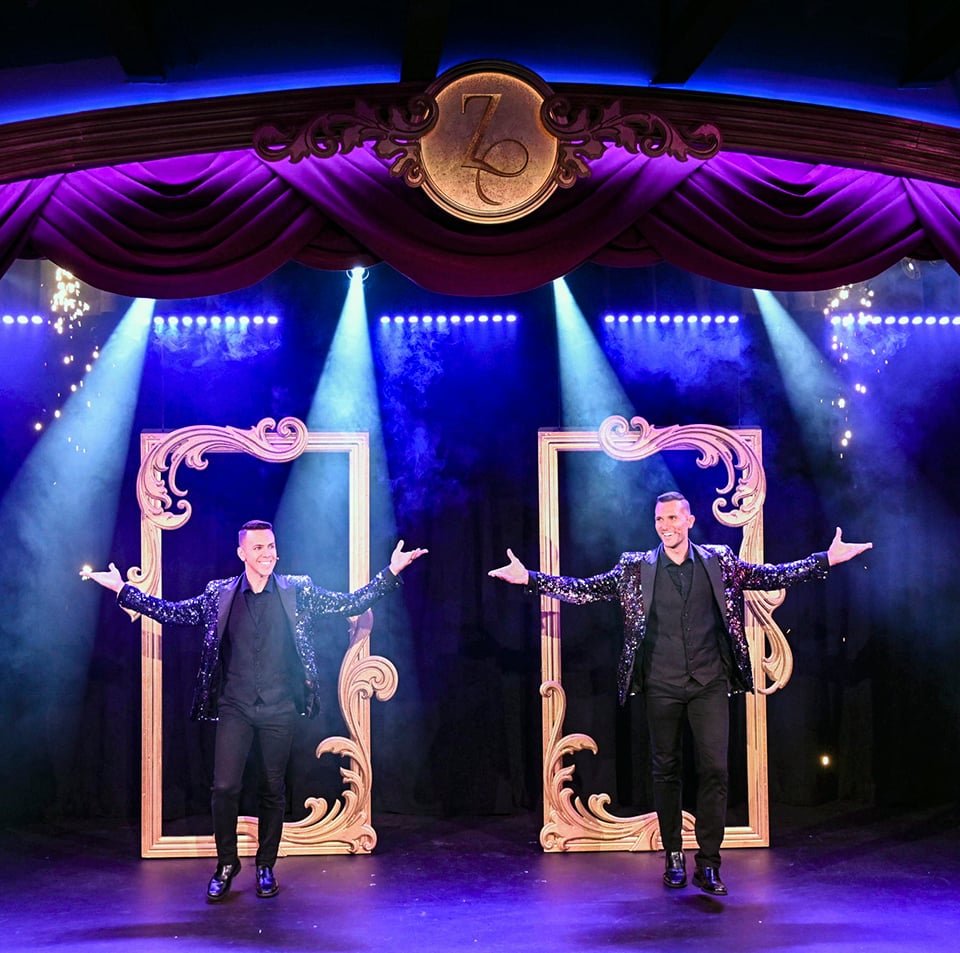
They found the building on First Avenue North that had been a former AAA call center. In a first for the couple, they had the opportunity to design their own theater.

Zubrick Magic Theatre

While the space is much smaller than they were used to at the dinner theater, at 100 seats it has the advantage of creating an intimate setting so they have a more personal connection with the audience, Ryan said. They did a lot of the design work and hung the lights and assembled the seats, making it a true labor of love.

They worried that building a theater during Covid was a gamble, Chris said, because they were unsure if anyone would want to come see live entertainment.

“Thankfully, the community has come out and supported us at a time when I think they needed magic the most,” Chris said.
The theater officially opened on July 29, 2021. Now five years later, crowds continue to pack the seats. Chris pointed out that the show is designed to entertain adults, while still being family friendly. He emphasized that it’s a “sophisticated Las Vegas-style show,” so there won’t be any hokey tricks.

Zubrick Magic Theatre

The Zubricks design every aspect of the show, from the tricks and choreography to costumes and lighting. They try to incorporate new bits every few months, and completely transform the show during the holiday season, which they pointed out is already a magical time.

They sell magic sets at the theater for those who become inspired to try their own hands at magic. After all, they said, sets like those are what got them started.

“Those small magic tricks that fool your friends can make a big difference,” Ryan said. •

Zubrick Magic Theatre. 1211 First Ave. N., St. Petersburg. There is parking in the alley behind the theater and an accessible back door. $50-$90.1-866-982-7425 (ZUBRICK). zubrickmagic.com.

Zubrick Magic Theatre

St. Petersburg Jazz Festival at WADA

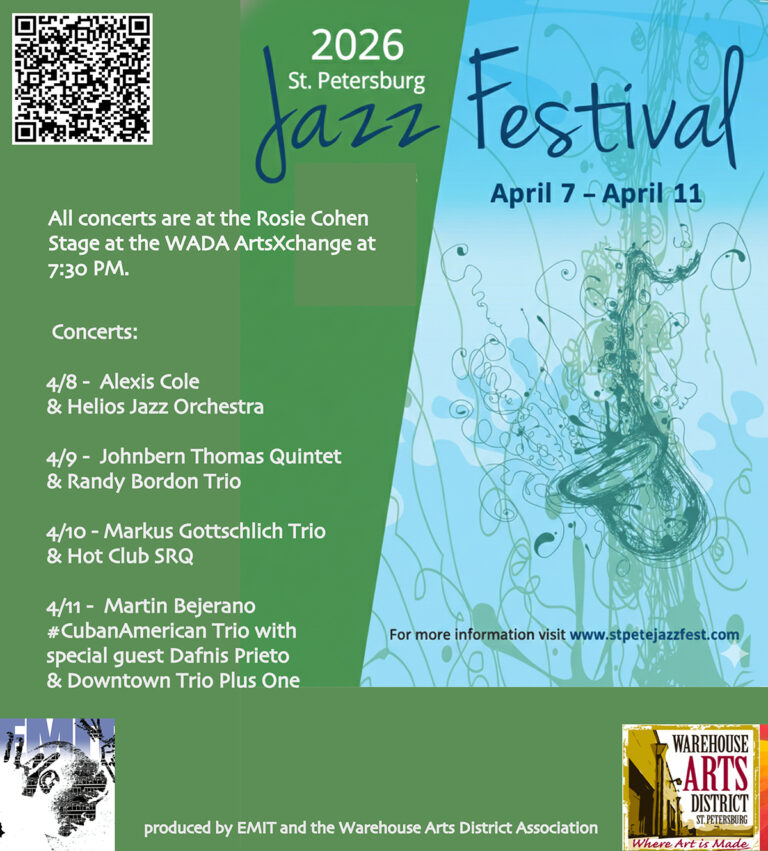
Now in its 17th season, the St. Petersburg Jazz Festival, happening April 8-11, has found new digs at the Warehouse Arts District Rosie Cohen Stage.

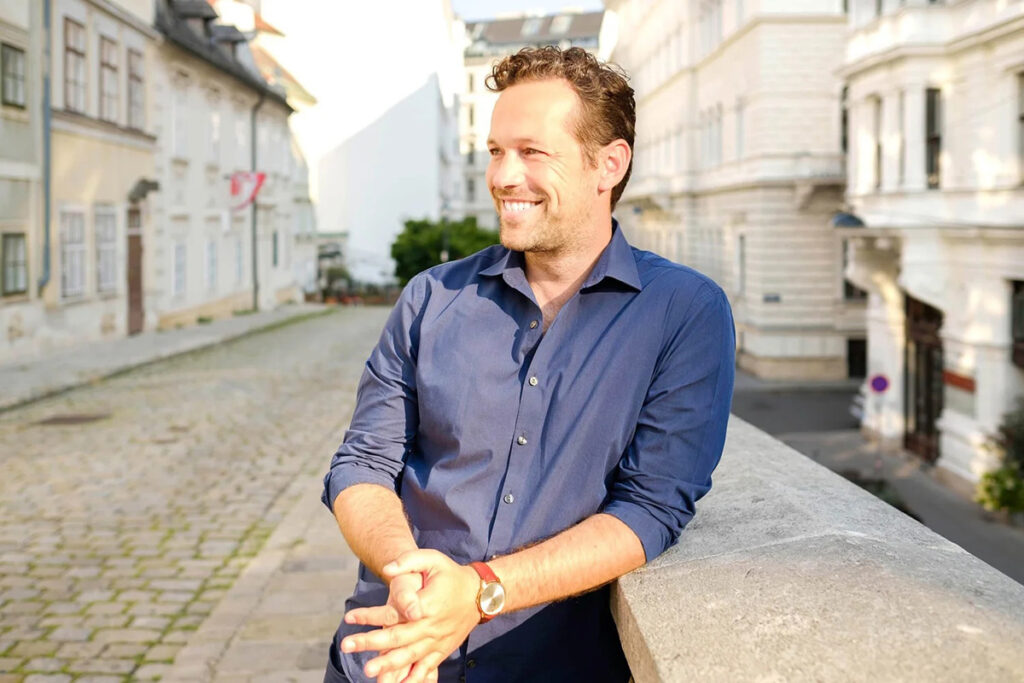
The festival was founded by David Manson, a multi-talented composer and arranger, trombonist, producer and recording arts educator at St. Petersburg College who, through his non-profit organization EMIT, has been presenting more than 600 concerts and workshops for 30 seasons.

This year’s schedule:
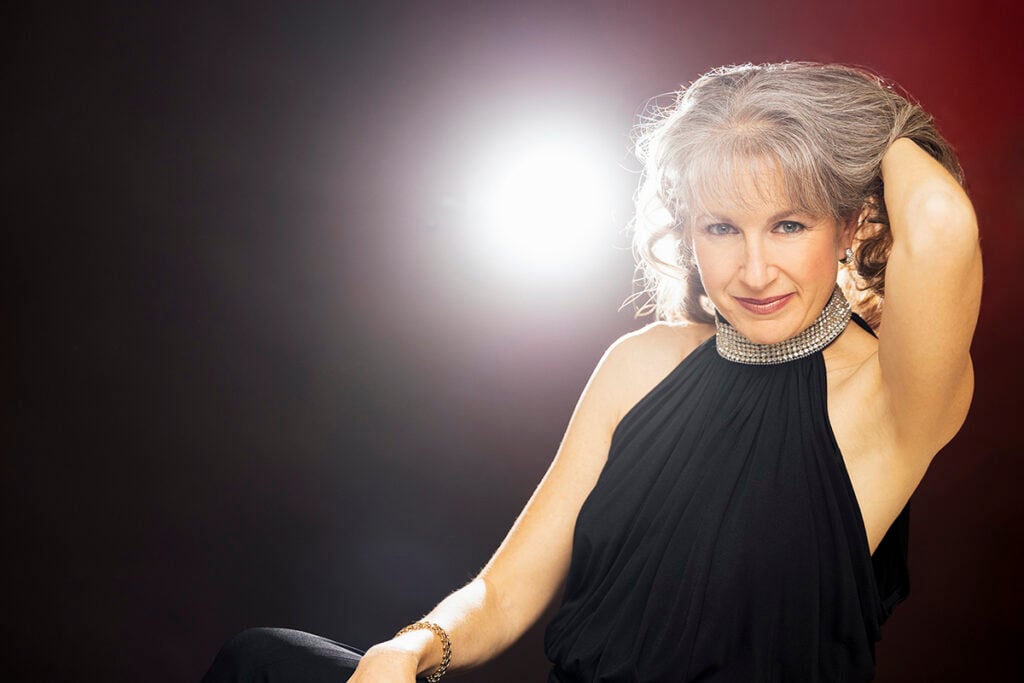
4/8 – Alexis Cole & the Helios Jazz Orchestra.
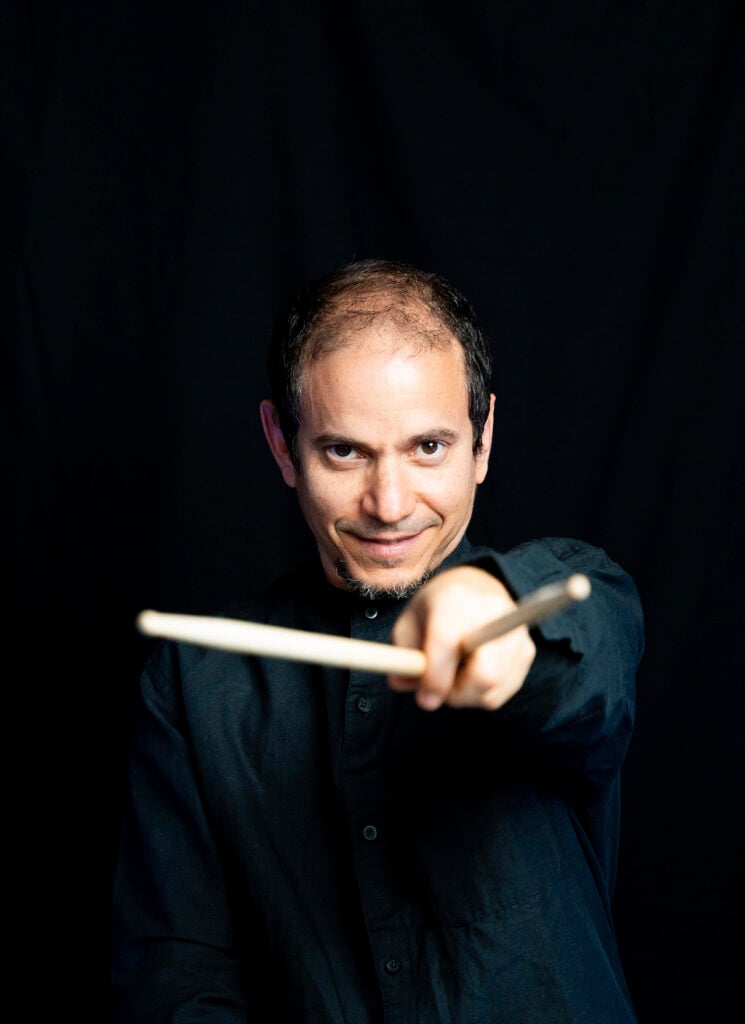
4/9 – Johnbern Thomas Quintet & Randy Bordon Trio
4/10 – Markus Gottschlich Trio & Hot Club SRQ.
4/11 – Martin Bejerano #CubanAmerican Trio featuring special guest Dafnis Prieto.

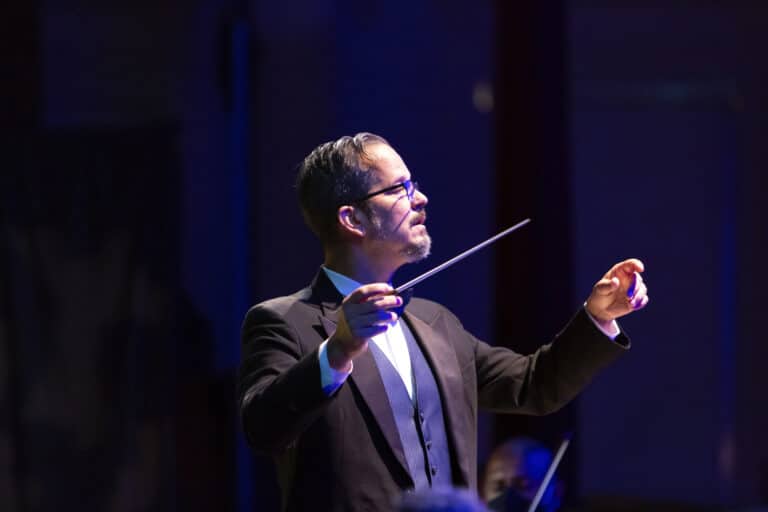
Manson directs the 18-piece Helios Jazz Orchestra and leads ensemble O Som Do Jazz.

“I created EMIT because I wanted to bring in, especially in the 1990s and 2000s, the kind of cutting edge, adventurous kind of music that we didn’t have here,” Manson said during a phone interview.
Bringing diverse styles of jazz to the area is still the goal, Manson said, which is reflected in this year’s lineup, which includes Haitian drummer Johnbern Thomas and Grammy Award-winning percussionist Dafnis Prieto.

In past years, the St. Petersburg Jazz Festival has been held at the Palladium, the Museum of Fine Arts, St. Petersburg and the Museum of the American Arts and Craft Movement.

But the Warehouse Arts District Rosie Cohen Stage is a good fit for the festival, Manson said. EMIT has done several concerts there previously and Manson said the space is really comfortable.

A harmonious factor is that Markus Gottschlich, the executive director of the Warehouse Arts District Association, is also a renowned jazz pianist whose trio is performing in the festival. As Manson pointed out, Gottschlich also directed jazz festivals, so he’s “on our same wavelength.”

“Working with Markus in the Warehouse Arts District allows us to put this on again, so we can continue,” Manson said. “This is our 17th annual festival, so we want to keep it going.”

Manson’s connection with St. Petersburg College enables him to provide free workshops with visiting artists. At this year’s festival, there will be a jazz vocal workshop with Alexis Cole on April 7 and a workshop with drummer Johnbern Thomas on April 9.

Tickets for individual concerts are $25 or a $60 package for all four. For more information, visit stpetejazzfest.com. Here’s the lineup:

Sing it loud: Opera Abounds Around Tampa Bay

Opera lovers new to the area will be pleased to know there’s no need to fly off to La Scala or Covent Garden to sate their musical appetites. Quality opera can be found on three sides of Tampa Bay, with established professional companies in Tampa, St. Petersburg and Sarasota.

Opera Tampa, founded in 1996 by composer-conductor Anton Coppola — an uncle of the famous filmmaker, Francis Ford Coppola — is the Straz Center’s resident opera company. Enjoying a close partnership with The Florida Orchestra, Opera Tampa has offered fully staged operatic productions for 30 years and counting.

Most of its productions are traditionally staged, a general rule for area opera companies. Thematically, it’s latest calendar of events — which kicked the new year with an operatic adaptation of “The Shining” — reflects a mix of contemporary and classic productions.

Coming up next for the troupe are two well-known operas: Mozart’s “The Magic Flute,” on Feb. 27 and March 1, and Verdi’s “Macbeth,” set for April 24 and 26.

All of Opera Tampa productions are staged in the Straz Center’s spacious Ferguson Hall, situated just off the downtown’s scenic Riverwalk. St. Pete Opera is in its 20th season, a milestone marked by an inventive slate of operatic and pop productions set to stretch into the summer.

Next up: Puccini’s masterpiece opera, “La bohème,” coming to the Palladium on June 5-14. St. Pete Opera’s current season, which kicked off in October with a cabaret production, will conclude at the Mahaffey Theater with a Fourth of July holiday concert.
The company’s “Mornings with the Maestro” are a fun way to get acquainted with its offerings. The sessions are billed as opera previews and feature St. Pete Opera’s artistic and executive director, Mark Sforzini.

“Maestro” tickets cost $40, with complimentary coffee and free valet parking. The programs start at 11 a.m. and are held at Opera Central, 2145 First Ave. S. in downtown St. Pete.
The “Maestro” session for “La bohème” is Friday, May 15.

Manatee and more
Sarasota Opera has a loyal fan base to match its impressive performance track record.
A subscriber’s recent online post reflected both: “They are the only opera company in the world to have staged all Verdi operas, and their festival orchestra comprises players from around the world.”

The Verdi kudo is for artistic director and avowed Verdi-lover Victor Derenzi, who’s leaving in May (with general director Richard Russell set to succeed him). As for the hat-tip to orchestral musicians, many who play in Sarasota Opera’s winter productions also perform in the classical festival held each summer.

Sarasota started staging its own operas — after booking out-of-town productions for several years — in 1974. Today, its operas primarily are staged in downtown’s Sarasota Opera House. Multiple productions including Verdi’s Il Trovatore run through March, so check the Sarasota Opera website for more information.

Elsewhere around Tampa Bay, the opera landscape is sufficiently fertile to sprout a non-profit company dubbed Opera for Earth, whose mission statement promises “performance and education for those who love the earth.”

“We strive to use 80% repurposed items for the stage,” notes Jodi Karem, performer and head of educational efforts for Opera for Earth. “This includes costume fabrics, prop pieces and set pieces.”

Opera for Earth’s latest season kicks off 2 p.m. March 1 at Trinity Presbyterian Church 2001 Rainbow Drive in Clearwater, featuring performances by resident ensemble Volare Tre of selections from Aida, Tosca, Cavalleria rusticana and other works. Then at 2 p.m. March 28 at Palm Harbor Library in Palm Harbor, Opera for Earth will present a lecture-and-concert program, “Dueling Divas.”

Fun with Felix
And finally, how about this for further recent evidence of the area’s estimable opera creds? The well-regarded and oft-experimental composer, Nathan Felix, recently premiered “The Meta Opera” — which he calls an “immersive opera” —at St. Pete’s Museum of Fine Arts.

“The opera (was) presented as an immersive production that pops up around the audience, much like a flash mob,” Felix explains.
Inspired by works in museum exhibit “In Caravaggio’s Light,” it featured area opera and theater talent including sopranos Samantha Sosa, Lauren Williams, Ariel Andrew and Serenna H. Jones; baritone Keenan Kade; tenor José Miguel; and actor Tommy Norton. •

Carl DiOrio is a Tampa Bay area journalist and a lifelong music lover. He can be reached at
carldiorio@gmail.com.

Mainsail Art Festival

 The Waterfront Weekend That Defines Spring in St. Pete!

Saturday, March 28, 2026
9:00am to 6:00pm
Sunday, March 29, 2026
10:00am to 5:00pm
www.mainsailart.org
Vinoy Park, downtown St. Petersburg, FL
701 Bayshore Dr NE, St. Petersburg, FL 33701
Free Admission

Mainsail

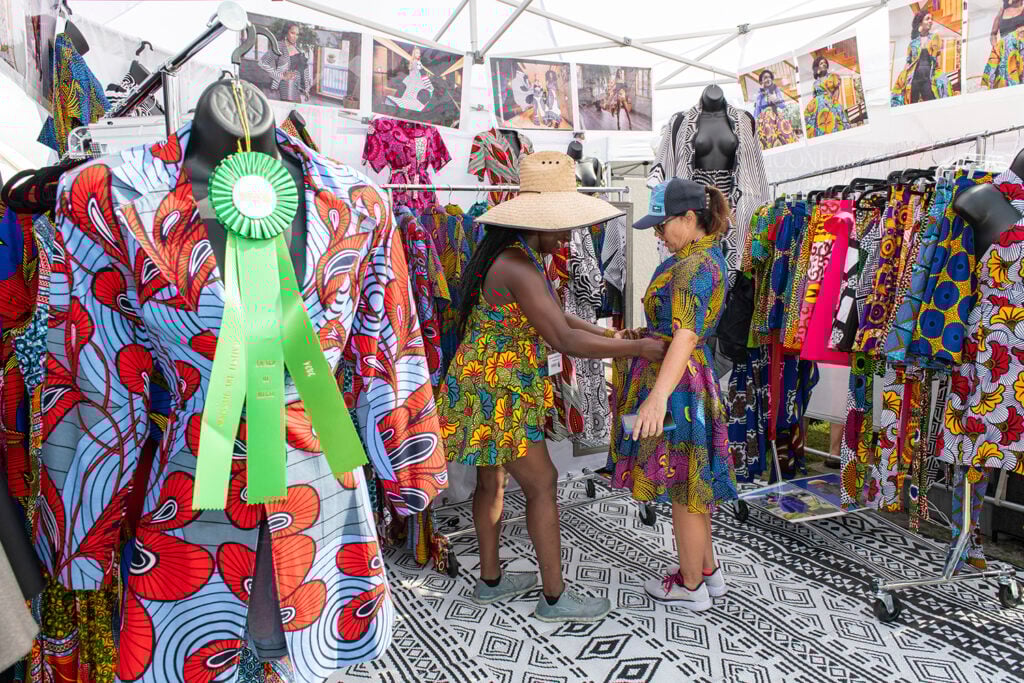
There are certain weekends in St. Petersburg when the city feels especially alive. The breeze off Tampa Bay carries music instead of just salt air. Strollers and sun hats dot the waterfront. Strangers pause mid-conversation to admire a painting, a sculpture, a hand-thrown vase. For more than five decades, that feeling has been annually ushered in by the Mainsail Art Festival.

On March 28 and 29, 2026, the 51st annual Mainsail Art Festival will once again transform Vinoy Park into an open-air gallery, welcoming more than 100,000 visitors to the downtown waterfront. Admission is free. No tickets are needed. Just art, music, food and the easy rhythm of a spring weekend in St. Pete.

Mainsail began in 1976 as part of the nation’s Bicentennial celebration. What started as the Saint Petersburg Sidewalk Arts and Colonial Crafts Festival quickly found its footing, and by 1977 it had a new name. Mainsail was chosen as a nod to the city’s nautical spirit and its close relationship with the bay. In its early days, a large sail was hoisted in South Straub Park as a visual signature. It was a simple symbol, but it captured something lasting about the festival’s identity, rooted in place, lifted by creativity.


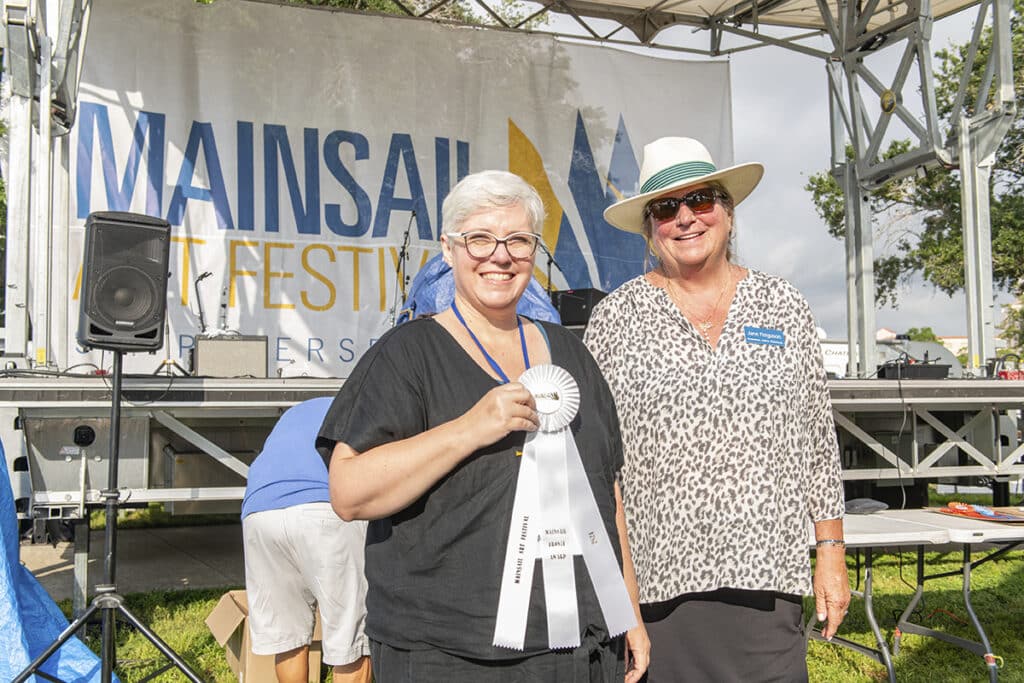
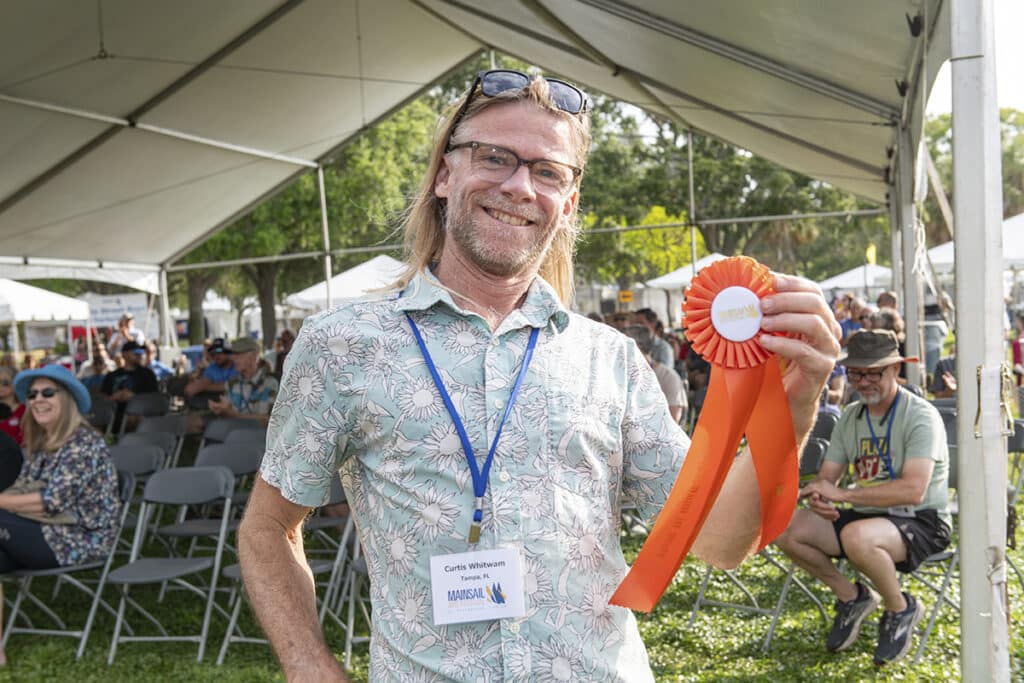
As the city grew, so did Mainsail. It moved from South Straub Park to North Straub Park in 1988 to accommodate larger crowds and expanded programming. In 2004, it settled into Vinoy Park, where the sweeping waterfront setting offers space for hundreds of artists and the thousands of patrons who come to see them. What began with modest prize money has evolved into a serious fine arts competition, now awarding $60,000, including a $10,000 Best of Show prize.

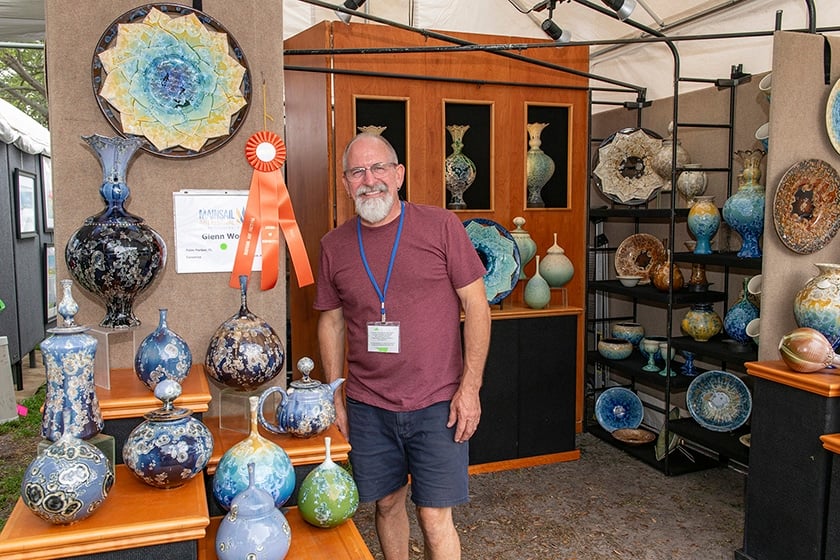
Today, more than 240 juried fine arts and crafts exhibitors represent 13 different mediums, from ceramics and glass to oil, watercolor, photography and wood. Nearly half of the artists are new to the festival each year, keeping the experience fresh while maintaining the high standards that have earned Mainsail national recognition from Sunshine Artist Magazine as one of the top fine art and design shows in the country.

The 2026 festival will be judged by Courtney A. McNeil, museum director and chief curator of The Baker Museum at Artis—Naples. With more than two decades of curatorial experience, including 15 years at Telfair Museums in Savannah, McNeil brings a discerning eye and deep respect for artists’ work. Her presence underscores the festival’s commitment to quality and artistic excellence.
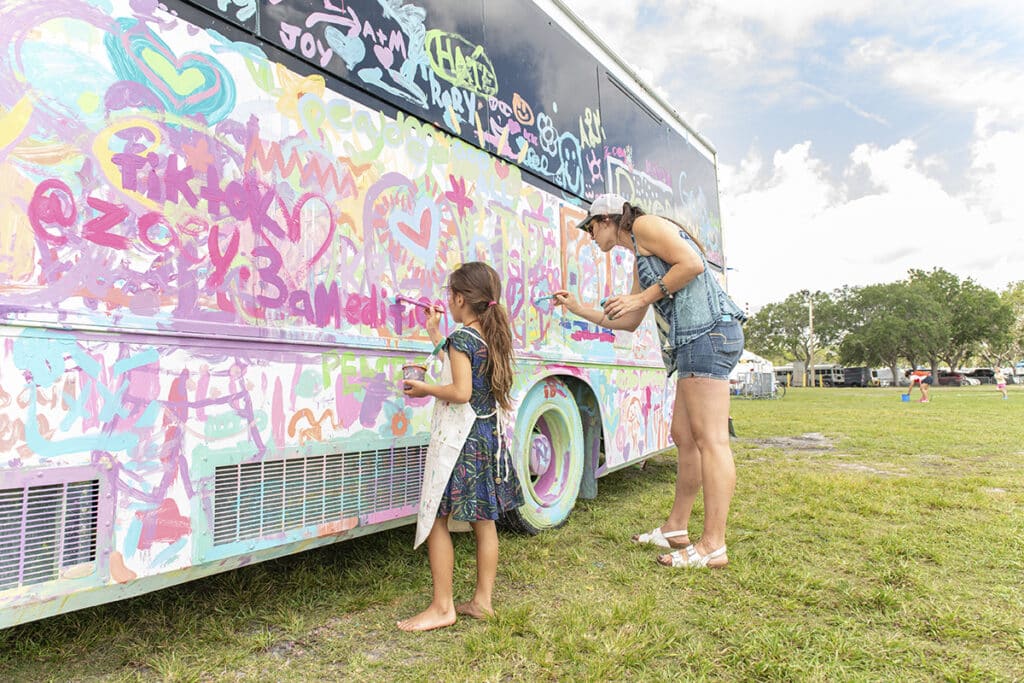
At the same time, Mainsail never loses its warmth. This is not an event reserved for collectors alone. It is for families with kids in tow, for teenagers discovering photography, for friends searching for the perfect gift.

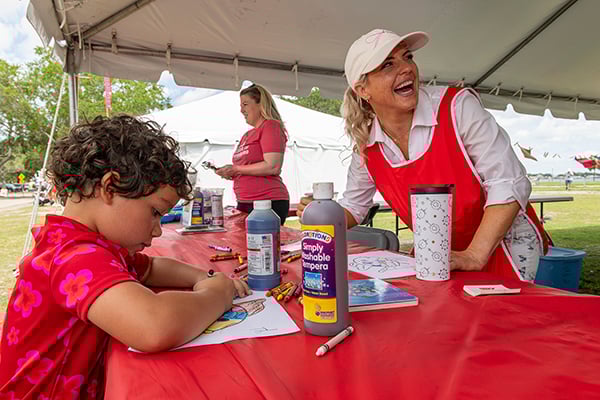
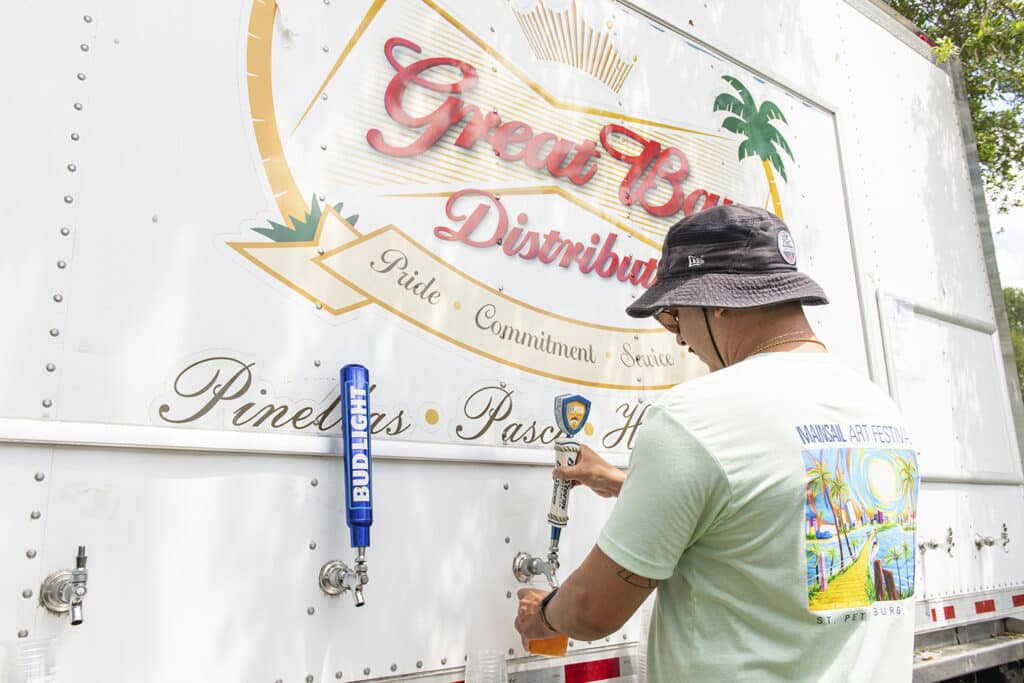
The Junior League of St. Petersburg hosts the Kids Create Craft Tent, where little hands can experiment with paint and paper. The Young at ARt Student Show highlights the next generation of local talent, giving students a platform and a moment in the spotlight. Live music floats through the park throughout the weekend, and the Culinary Arts Food Court and Beer Garden offers everything from quick bites to lingering lunches. It is a cashless event for promotions and beverages, making transactions simple and streamlined.

One of the most remarkable aspects of Mainsail is something many visitors never see. The entire festival is produced by an all-volunteer committee. There is no paid staff. Many committee members have been dedicating their time for more than a decade, planning year-round so that the rest of us can spend a carefree weekend by the water. Their pride in the event is evident in the details, from artist hospitality to accessibility, including a free wheelchair-accessible trolley shuttle running to the festival.

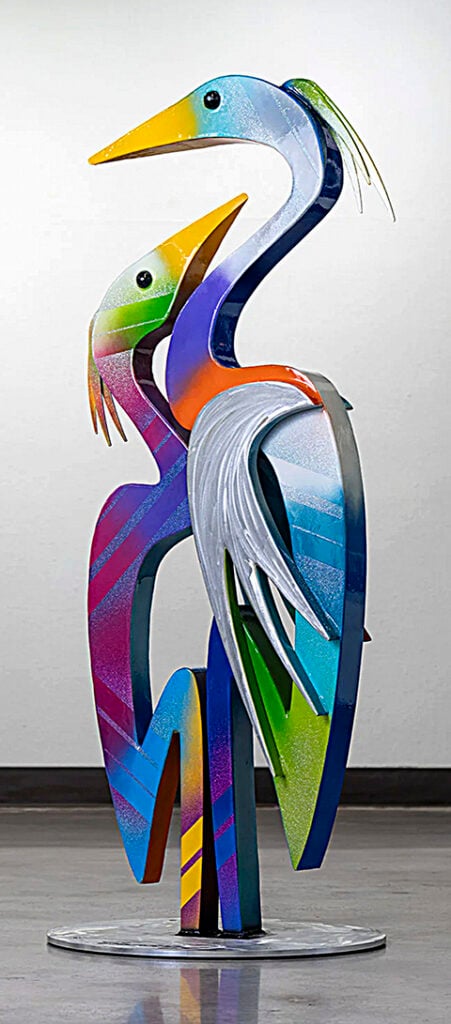
The 2026 featured artist, Clayton Swartz of Pinellas Park, embodies that local connection. A metal sculptor known for complex, biomorphic forms in vibrant colors, Swartz draws inspiration from sea life, faith and family. Trained in welding techniques such as MIG and TIG, plasma cutting, and custom finishing, he blends craftsmanship with imagination, creating works that invite viewers to pause and look again.

Clayton Swartz

What makes Mainsail a fixture on the spring social calendar is not only the art or the accolades. It is the feeling of community that settles over Vinoy Park each year. In a city that has embraced its identity as an arts destination, Mainsail remains a cornerstone. It reminds us that culture does not only live inside museum walls. Sometimes it lives under a tent, beside the bay, with a band playing in the distance and a colorful pelican sculpture sparking in the sunshine. •