Home Blog Page 23

ONE-ON-ONE WITH STAN ZIMMERMAN

AN INTERVIEW WITH A QUINTUPLE THREAT: PLAYWRIGHT, AUTHOR, DIRECTOR, PRODUCER, ACTOR

Celebration of the power of the arts at Powerstories Theater


September 20-21, 2024

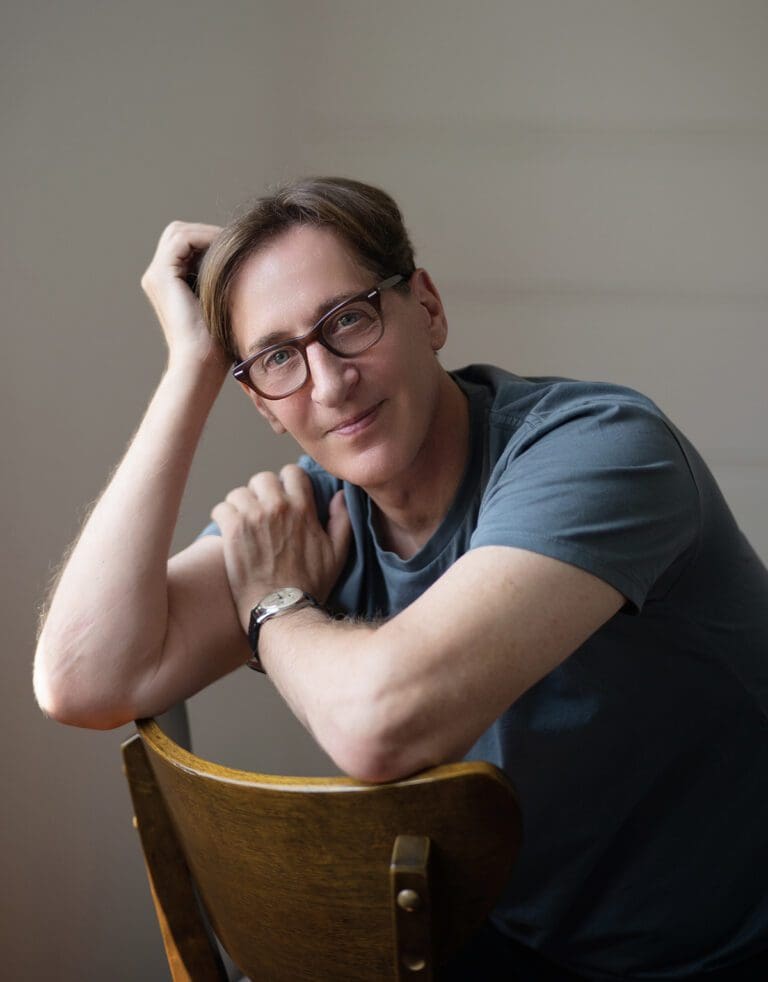
Powerstories presents a theatrical fundraising event featuring the celebrity staged reading of Stan Zimmerman’s poignant play, right before i go, narrated by  Zimmerman himself.

You may recognize the name from television and film connected to Gilmore Girls, Golden Girls, Roseanne, or  Brady Bunch movies, or his book, The Girls: From Golden to Gilmore, but Hollywood’s Stan Zimmerman has a special place in his heart for live theatre.

Zimmerman reflects on his extensive television and film career, shares insights with The Artisan Magazine about his poignant play right before i go, inspired by a friend’s tragic suicide, and discusses his latest book.

The Golden Girls tackled many social issues with humor and sensitivity. How did you balance these elements in your writing?

As staff writers on Season 1 of Golden Girls, we were told they didn’t want the episodes to feel like Facts of Life issue of the week. They wanted us to tell important but truthful stories that would feel organic for the four female characters and their age bracket. 

How did your experience on Golden Girls influence your later work on Gilmore Girls?

Golden Girls was kind of a Writing 101 class for us. We learned from the experienced writers we spent every day with, but I credit Rue McClanahan for teaching us about honestly exploring sitcom characters in all their complexities. She walked over to us on one of our first days on set and asked us to really challenge the character of Blanche. That’s how we came up with the “Adult Education” episode when Blanche had to deal with sexual harassment from her college professor. We took that lesson onto all the shows we worked on for the rest of our careers. 

How did you approach writing for the fast-paced, witty dialogue Gilmore Girls is known for?

I found consuming large amounts of coffee, much like the residents of Stars Hollow, helped in writing so many words for Gilmore Girls. Hour shows usually work out to one minute per page. Gilmore Girls scripts would sometimes reach more than 90 pages.

What do you think is the legacy of Gilmore Girls in the landscape of television today?

I believe the legacy of Gilmore Girls is that audiences are not scared of complex, multi-layered storylines. And that the world is starved for shows that mothers and daughters can sit down together and watch. A true shared experience. 

Roseanne had such early pro-LGBTQ representation, including a same-sex kiss and a gay wedding. How did you approach writing these groundbreaking episodes, and what was the reaction from the network and the audience when Roseanne aired these episodes?

 Jim and I wrote the infamous lesbian kiss episode for Roseanne. Using what Rue McClanahan taught us, we were challenging the “Roseanne Conner” character, who thought she was so cool until she was kissed by a woman. I also must give credit to Roseanne and her (then) husband, Tom Arnold. They fought the network, who did not want us to write or film that episode. Tom and Roseanne threatened to buy the episode back and pay for time on HBO. Luckily, ABC agreed to air it. Shockingly, the next day, we had huge ratings, and the world didn’t explode.

How do you think the representation in Roseanne influenced other T.V. shows and the broader media landscape?

I don’t believe we would have had the Ellen sitcom or Will & Grace without Roseanne. And we wouldn’t have had Roseanne without Soap, All in the Family, or Love, Sidney. We all stand on the shoulders of strong artists before us.

How did you transition from writing for television to playwriting?

I first started directing theatre right after our stint on Gilmore Girls. I loved directing published plays because no re-writing was involved. I just had to interpret the finished script. That is until Broadway producer Larry Hirschhorn, urged me to start writing for theatre. Now I can’t stop!

What inspired your poignant play right before i go first performed in 2015, with talkbacks following each performance?

With the death of my very close friend Kevin Gill by suicide, I saw there was so much shame around the topic. But I first thought I’m a comedy writer; how can I tackle a subject as serious as this? And then I thought, no, my perspective is an important one, and I also started searching online for real suicide notes because I wanted to know why he did what he did. I couldn’t get ahold of the note he had sent to his ex-boyfriend, and I was mentioned in the note, so I thought maybe these other notes would give me the answers to why. I just googled, and suddenly, I got Kurt Cobain, war veterans, and Virginia Woolf, and I would copy and paste them and put them in a folder. Then all of a sudden, I thought this was a play like Vagina Monologues or Love Letters with four actors on stools with music stands…. I found out more people our age have a problem talking about suicide. Young people are used to dealing with stuff like this because they’re out there communicating, reading, seeing everything, going to school, and not knowing if they’ll come home alive. They would keep me out on the street talking about the play for an hour. They just wanted to talk about it, and that’s when I knew that I had something. 

Lastly, what inspired you to write your new book, The Girls: From Golden to Gilmore, and what do you hope they will take away from reading it?

I wanted to answer the question I keep getting about how, as a man, I can write for women. I also wanted to celebrate all of the wonderful women I’ve worked with during my long career. And the wonderful women in my life outside of show business. Especially my mom, who was my biggest fan. I hope people come away from my book, seeing how, through perseverance and hard work, you can get past the tough times of constant “no’s” and rejection. I also want the readers to know how important it is to celebrate your uniqueness, no matter what field of work you go into. Really, just in life.
www.powerstories.com/arts-celebration-2024

The Jazz Legends Who Play On


“Jazz is freedom. You think about that.” – Thelonious Monk

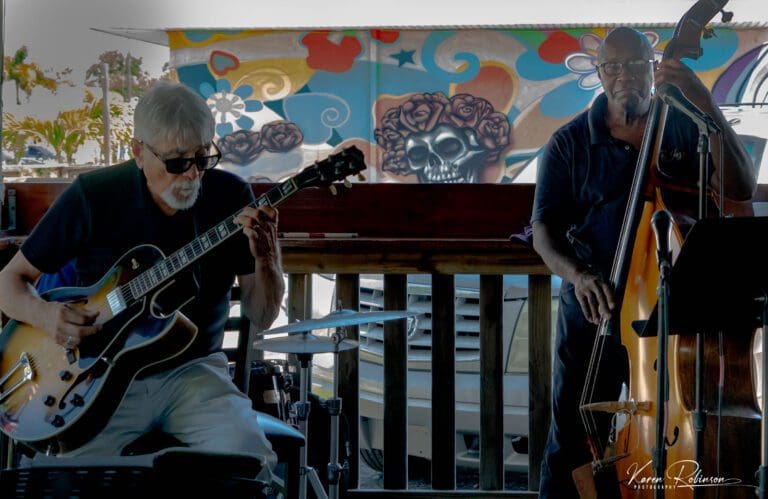
You can hear them nearly every Monday evening at the Hanger in St. Pete with the Al Downing Jazz Band. Three senior jazz musicians, for whom, as John Lamb succinctly says “There is only music. It’s all air.” And that’s how they sound, as easy as breathing, time standing still as the Hanger fills with the magic of the greats they often played with in the past.

If you want to get a seat, best arrive early, maybe at 6pm October to April when the Snowbirds are back, the price of admission being your purchase of some of the best food on the beach, airplanes in the distance taking off and landing thrown in for free. 

They play with the band from 7-9. Anyone can “sign up” and get a spot with the band, the composition of which changes as the night goes on.  

Make sure you are early, if you are like us and want a front row table where you can physically almost be part of the music, absorbing it into your pores. And you get a closer look, seeing their instruments, hinting at the stories of where they have been, worn and etched like themselves: catching the subtilis as they communicate through nods, glances and memories.

John Lamb (90) plays the standing bass, and like his instrument is the heartbeat of the group, his fingers dancing across the strings, coaxing out the deep resonant notes that anchor the band. He provides the walking basslines that outline the harmony and provide the foundation for the tunes, while giving it the rhythmic drive we all sense as the swing and the groove. 

Born in Vero Beach John started playing the tuba as a child. Like the other musicians we are highlighting, his career started in the forces in a military band. When the band’s usual bass player did not show up he filled in, the tuba giving him the “feel” to pick up the string bass quickly, a perfect match. He went on to tour with Duke Ellington in 1964 for three years, appearing on sixteen discs, one of them with Ella Fitzgerald.

Andy Foertach (80) leans into his trombone, the slide going effortlessly as it has for seventy years, providing harmonic depth to the band, often playing chords and counter melodies that compliment the main theme. Like the others, it’s much more than solos. He travels to his native Chicago yearly and is active in the music scene there. “Music makes me come alive – that feeling – you know.” he says “Lots of new young players have a lot of chops, but no soul. You must play with feeling – deep into your soul.”  He still practices hours every day, working continually to improve.

Charlie Robinson (82) joins the group with his vintage guitar, fingers gliding over the fretboard picking out the melody. He too provides the chordal accompaniment, known as “comping”.  His musical life has been what most of us imagine a musician to be, on the road constantly, going gig to gig. “Jazz, once you get into it it’s addictive. Follows you through life.” And what a life it’s been crossing America with jazz and R&B groups, playing the Apollo in New York City, Regal in Chicago and Howard Theatre in Washington, DC, and with a major influence, Winton Marsallis in Atlanta.

The Al Downing Tampa Bay Jazz Association sponsors the Monday Night Jazz Jam, hosted by Dwayne White. It is involved in bringing jazz to young people through playing in schools and bursaries. There is a place on their website where you can sign up to play, and another which tells you about Jazz in Our Area. If you go to a Monday night Jam be sure to talk to Downing’s daughter, Alvinette Downing McCleave, who attends every week, especially if you would like to help out. 

Al Downing (1916-2000) was very influential in our community. He was a Tuskegee airman, the first African-American Commissioner of the St. Petersburg Housing Authority, taught music at Gibbs High School and the St. Petersburg College Clearwater campus, and was the first African-American to play in the St. Petersburg Symphony Orchestra. 

Enn Ye Collection/Gallery

St Petersburg, Florida

EnnYe Collection was founded in 2016 by Zimbabwean sisters Matipa Mutsemi and Mercy Nyamangwanda, as a clothing brand. Named after their mother, Enny, EnnYe creates contemporary clothing, accessories and home accents using vibrant African print fabric sourced from Zimbabwe.  EnnYe’s clothing, which represents wearable art, has been featured in Milan Fashion Week, Forbes, the New York Observer, and various Tampa Bay and St Petersburg publications. EnnYe has recently been invited to the New York Fashion Week in September 2024.  

The artisan logo.
Screenshot

In 2023, EnnYe expanded its brand to include Shona stone sculptures unique to the Shona tribe of Zimbabwe. At the heart of EnnYe is a Shona Stone Sculpture Gallery which features unique stone sculptures made by both emerging and world renowned Zimbabwean sculptors of the Shona tribe. “Zimbabwe”, which means “House of Stone”, is home to various precious and semi-precious stones such as Opalstone, Serpentine Stone, Leopard Rock, Lepidolite, Butter Jade, Rose Quartz, Springstone, Dolomite, among others. Shona sculptures are a pride of the Shona people and EnnYe has established close and personal relationships with each sculptor represented in the EnnYe gallery. The goal is to bring awareness to the Shona culture and celebrate the talent of these Zimbabwean artists.

THE GALLERY 

The artisan logo.

The Stone Sculpture Gallery is managed by Vini Mutsemi, who is the Exhibition Director and Matipa’s husband and business partner. Being of the Shona tribe, and also having a genuine interest in stone sculptures, Vini is well versed in the art of sculpting as it relates to Zimbabwe. The Shona Stone Sculpture gallery has also become personal for our brand.  In an altruistic way, EnnYe feels obligated to give back to these many artists, who are struggling to make ends meet in a typical third world nation. Vini travels yearly to find emerging artists and foster solid relationships with legendary ones too.  Showcasing the artists’ work to the world, and publicizing amazing pieces of art, opens opportunities for the stories of these artists to be told. EnnYe also works hard to bring a different artist every year who gets an opportunity to demonstrate the skill of creating various pieces of art from a block of stone, using only hand tools. Different thought-provoking subject matters are communicated and unveiled from a block of stone. From abstract to animal pieces, this endeavor opens an opportunity for an artist to provide for their family. These exhibits are also educational for the audience, particularly art lovers. Topics of animal conservation, preservation and cultural or socio-economic issues bring us together as we realize how we are all interdependent as people.   

The artisan logo.

VINI AND MATIPA’S STORY

Vini and Matipa met in high school in Mutare, Zimbabwe where they became very good friends.  Matipa then transferred to another high school, and the two lost contact with each other for eight years.  During those eight years, Vini moved back to the United States (he was born in Atlanta, GA while his parents attended graduate school, but was raised in Zimbabwe) and earned his BA at the University of West Florida then an MBA at the University of Texas, Dallas. As fate would have it, Matipa was in Dallas TX attending Southern Methodist University where she earned a BBA in Finance. It was only a matter of time before the two met and rekindled their friendship. Vini and Matipa married in 2007, moved briefly to Miami where Matipa attended law school, then to Washington DC, and eventually settled in Saint Petersburg, Florida. They are parents to a five-year old daughter, Madai, who will typically greet you at the gallery and remind you to call her if you need any help.  They recently celebrated their 17 year anniversary this past August. 

MERCY’S STORY

Mercy, the brand’s co-founding sister resides in San Francisco.  She is often seen in the EnnYe store every few months on some of her visits but her super power is branding and fabric sourcing. She is the business behind the business. Most of the fabric seen within the store was carefully selected by Mercy, who travels to Zimbabwe to source vibrant prints for the brand. Outside of being a business woman, she is a nurse practitioner, who also attended the University of Texas for her BSN and MSN NP degrees. Most important job by far is being a doting aunt to Madai.

Nate Najar & Daniela Soledade

MAGNETIC DUO WITH MELLOW BOSSA NOVA VIBE

by Donna Sorbello

Katharine Hepburn once said of Fred Astaire and Ginger Rogers, “He gives her class, and she gives him sex.”, meaning, of course, sexual appeal. In the case of Nate Najar and Daniela Soledade, each, individually, has plenty of both. Together, however, they are a magnetic musical duo with a mellow bossa nova vibe.  A match made in musical heaven, the two found each other in 2018, and their paths have been intertwined ever since, both on stage and off. 

Daniela Soledade was born into a well-known, musical family in Brazil. Her grandfather was a respected composer and impresario. Her father, continuing in his father’s footsteps, added performing and recording to his musical talents. Also, being a producer at Globo, Brazils major TV network, that meant little Daniela, as early as age ten, was being called in to the studio whenever a child’s voice was needed. At thirteen, she was enrolled in the Villa-Lobos Conservatory where she learned music theory and studied flute, necessary in her family.  In Rio, at social gatherings, everyone contributed by playing an instrument. 

A woman in a dress sitting on top of a chair.

 At sixteen, a move to the U.S. with her mother, then divorced, meant a break from the conservatory. Trying to find her way in her new home of Tampa, and not yet fluent in English, at social gatherings Daniela did what was familiar. She pulled out her guitar. One day, she passed by the High School band room. Finally, she was truly home. Soon she was marching in a traditional band uniform, happily playing her flute. A lover of the outdoors, a degree in environmental science seemed the practical choice for college, but music was always pulling at her.  A few years in the field, not in nature, but in offices, designing water treatment plants, made her re-examine the life she had chosen. By now, she had two children. She bided her time until nursing her youngest had ended. When her daughter reached thirteen months that moment came. It was time to make music her career. But how? A serendipitous introduction by a close friend came as if the universe had decided to help put her dreams in place. She was introduced to Nate Najar, already an experienced guitarist and producer. He knew the ropes of the business. 

A man in a suit playing an acoustic guitar.

Nate Najar claims he has always lived on Fifth Avenue. Not the posh, New York, Easter route for parading one’s fashions, but the Fifth Ave in downtown St. Pete. He was born on one block of it and in later life moved to another. A vivid local memory from childhood were the trips with his grandmother to Maas Brothers department store, strolling through the men’s department to reach the first floor, corner, donut shop. Another, more impactful memory was when his music teacher, Mr. Van Landingham, took an interest in young Nate, and upon departing St Pete high school, left behind a box of vinyl LPs for his student. The box held a treasure trove of jazz musicians from Duke Ellington to Art Blakey. Nate, the rock and roller, was hooked. Something in those jazz rhythms and sounds reached him.  

Already knowing that the guitar was for him, he set off early on a musical journey, having the insight to know that experience, not college, was the way to his musical dream.  Arbors Records, a significant jazz label in Clearwater, was the equivalent of college for Nate. He was always there hanging out, to listen, to learn from the famous artists who came in to record. With requests from Nate, Bucky Pizzarelli gave him a lesson when in town. At sixteen, in his 1986 Lincoln Town car, he rode around St Pete and environs looking and listening for music venues, asking if he could “sit in.† He still marvels at how many professionals allowed a green teen to take on a few tunes, and with their own instruments! One generous musician was Tommy Patten, who glibly handed sixteen-year-old Nate his Gibson Johnny Smith guitar for a sit-in with Tampa Bay’s legendary Shawn Brown. Early on, Nate was learning from the best. Great jazz pianist, Jerry Libby, hired Nate for a three-year, five night a week gig at St Pete’s Tycoon’s Jazz club, sadly, a lost venue. Nate’s range of ability was stretching from jazz to classical guitar, and to Luther Van Dross, when Shawn Brown grabbed him for a regular gig some years after their first encounter. One teacher in later years, making indelible imprints on Nate in their ten-year relationship, as mentor and then as colleagues, is the renowned bassist and pianist, John Lamb. Apart from his influencing many local musicians in his role as educator, legendary Lamb’s impressive resume includes a few years with the Duke Ellington Orchestra, live and on recordings, which led to other gigs with other jazz greats. 

Nate, seemingly born with an entrepreneurial spirt, decided he wanted to record. Confident and ready, he sent his recordings to jazz radio stations, more plentiful at the time. He spread his wings, getting gigs across the states in places like New York and Washington. Nate has been the artistic advisor for the Suncoast Jazz Festival for many years, drawing well known musicians to Sand Key, an indication of his respected talent and musical wisdom.  

A man in a suit playing an acoustic guitar.

Nate always returned home to St Pete where, in 2018, the providential meeting between musically experienced Nate Najar, met beautiful, Brazilian, aspiring songstress, Daniela Soledade. Daniela was looking for a guitarist familiar with Brazilian music. A respected friend assured her Nate was the real deal. Nate, in talking of that time, said that A Moment of You, that first record he produced for Daniela, is the recording he is most proud of. There is nothing on that recording he says that he wishes he had done differently. A rare statement for most high achievers, especially when considering the years of producing he has done since. It also says something about the connection these two artists had from the start.  

Somewhere along the way, doing gigs, recording, Nate on guitar, Soledade on guitar and vocals, Daniela started feeling a sensation in her chest.  She googled it. 

Google told her she was in love. Nate, at just about the same time, remarked to Daniela that he was feeling something a little odd.  She, now knowledgeable, said, “It’s that you’re in love. I googled it.”  They have been together ever since, recording, making videos, traveling across the states, and last year, on a European tour. They will return to a few of those previously sold-out venues in Paris and London, next year, adding the Isle of Wight Jazz Weekend to the mix. 

Nate, remaining in the area despite intermittent touring, is very cognizant of how the jazz scene has wavered and developed in his hometown, and how that has had an effect on jazz throughout Tampa Bay. Studio 620 and the Palladium, he feels, have been major factors in that development. The significance of Jazz at the Palladium grew at varying times under the efforts of Rick Gee, Bill Hough, Mark Spano, Dar Webb and of late, Paul Wilborn, a skilled pianist and singer himself, who is a bit of a local impresario wunderkind. Nate, early on, inspired by fellow musician Chuck Redd, a percussionist, starting a weekly jazz cafe at the Smithsonian, brought that idea to the Palladium. What is now The Side Door, was, at that time, a large, open room.  With no lights, no stage, no chairs, nor tables, a jazz series was born. Chairs were rented. Eventually lights came. Local greats like saxophonist Jeremy Carter, drummer and pianist, John Jenkins, and aforementioned, John Lamb, all got to be heard and appreciated. Touring jazz musicians like Chuck Redd, saxophonist Harry Allen, and pianist Ray Kennedy, helped establish the Side Door as a venue “on the circuit. “I know, firsthand, the Side Door can feel wild and joyous. Nate gratefully delights in that for eighteen years; folks have kept coming to the Palladium to hear Nate Najars Jazz Holiday. The Palladium has helped develop, and continues to bring, world-class talent both local and from afar, to its two stages. September seventh the ticket at the Palladium will be Daniela Soledade “Brazilian Dream” with the Nate Najar Quintet, featuring Patrick Bettison on keyboard and harmonica, Joe Porter on bass, Carl Amundson on electric guitar, and, respected Brazilian drummer, Claudio Infante. A good time to catch Nate and Daniela since they fly to Paris for a return gig the next a.m. They’ll be back in St. Pete at Seven C Music on November 1st, with their Love and Bossa Nova Duet, and at the Suncoast Jazz Festival in Sand Key on November 22nd. 

Studio 620, developed under the astute guidance of local Icon, Bob Devin Jones has proved a different kind of opportunity for many musicians. Nate and John Lamb have performed there for years, developing musical pieces and testing styles in its small, relaxed space. Musician-composer Simon Lansky, and others, have been able to test out new material in front of an audience before recording. Fans at 620 have the opportunity to see respected musicians and discover those they’ve never heard of, in an intimate setting where they can reach out and touch the sound. 

Both Daniela’s and Nate’s past journeys have informed their musical collaborations.  One difference between them is that she likes to rehearse, “A lot” piped in Nate, and Nate, with his jazz roots, is content being more improvisational. Daniela says she sings with intention. She feels music is healing. She wants her audience to relinquish differences. I frequent jazz clubs and concerts for the sound, the thrill that goes through me. When I’m feeling the music, I’m in love, though not the same “in love” that Daniela googled. Whether it makes me feel joyous or melancholy, I agree with Soledade that music’s power is to bring us together. Done well, everyone is feeling at least a bit of the same thing. Nate, in agreement, picks up his guitar and plays four individual strings of a single chord, oddly heartbreaking, and we three immediately melt. 

So, as for class and sexiness; Long-haired Daniela is sexy in her leanness, and clear, mesmerizing vocal tones. The colorful Brazilian-inspired clothes she wears now against her tawny skin are a far cry from the boxy traditional suit, complete with epaulettes, of her band years. Nate, long and lanky, surely influenced by those strolls through Maas Brothers men’s department, is sometimes in jeans, but looking dapper with a hat cocked on his head. Often, he performs in beautifully tailored suits. When he plays, he hugs his guitar, revealing the tenderness of a lover. The variations in his style, and the nuanced skill of his diverse and intricate fingering and chords, can hold you, suspend you. Daniela says that their touring to Portugal, Italy, and other places, is like being on a continuous honeymoon. They are in love, doing something they love. They love the music they are making together. As for the class half of the equation, with their blended Virgo sensibilities, their thoughtful approach to the music they share, and the respect they have for each other, there is no doubt but that they are a class act.

The Art of Advocacy: Florida’s Cultural Crossroads

0

By Markus Gottschlich

At its essence, advocacy is the art of speaking for those who cannot. It requires not just a voice but a commitment, unyielding and immediate. There is no luxury of time to ponder when the moment arrives; response is paramount, as any EMT will tell you, for inaction can be fatal.

In Florida, the arts community finds itself at a critical juncture, one that might be likened to an arterial bleed. The Governor’s recent veto of funding for arts nonprofits has sent shockwaves through the cultural landscape. This move, unprecedented in its scope, has ignited a debate that transcends the usual political dichotomies. Historically, governors from both sides of the political spectrum have either supported the arts or, at the very least, refrained from undermining them. The arts have never been the sole preserve of one ideology or another. Moreover, the notion that this veto reflects a flaw in the nonprofit business model is misguided.

NON-PROFITS

Nonprofits, particularly in the arts, have always walked a delicate balance between earned income and contributed revenue, a dance involving both public and private funds. The idea that “real art” will naturally flourish under the invisible hand of the free market is, frankly, a fallacy. It is a charming fiction, but a fiction, nonetheless. Similarly, the belief that if we simply “take care of the art, the art will take care of us” portrays a fundamental misunderstanding of the relationship between art and commerce. Art, as history has shown us, has often relied on subsidies be they from Dukes, the church, or the state. Without such support, the kind of artistic freedom that allows for true innovation is often impossible. When commercial viability becomes the sole arbiter of value, art risks losing its soul, becoming mere entertainment rather than a means of expression and reflection.

It is perhaps not surprising, then, that in an election year, particularly one as fraught as 2024, there would be a tendency to prioritize entertainment over art. Distraction is often more palatable than introspection. This phenomenon, sometimes referred to as the “lipstick effect,” describes the curious uptick in sales of small luxuries during hard times, a balm for the collective psyche.

Yet if you think the arts community in Florida would quietly accept this fate, you haven’t been paying much attention.

In St. Petersburg, the response has been anything but subdued. Arts organizations have mobilized with a speed and vigor that speaks to the gravity of the situation. The Warehouse Arts District Association (WADA), in particular, has taken a leading role, not merely reacting but proactively positioning itself as a resource and advocate for artists and arts organizations. After all, it’s not a new stance for WADA; advocacy is built into its mission, the constant care for a sustainable environment for the arts is an ongoing concern. 

The Governor’s veto on June 12 marked the beginning of a fight that the arts community did not seek, but one it cannot afford to retreat from. What’s at stake with the potential erosion of diverse arts and culture programming is nothing less than the soul and identity of a community, especially one as rich and kaleidoscopic as St. Petersburg’s. If cultural offerings fail to reflect the varied and diverse communities that comprise a place, that place becomes transient, a stopover rather than a home where roots can grow and a true sense of belonging can flourish. Lastly, it has been starkly reaffirmed that, despite what some might claim, art and its presentation are inherently political. If it wasn’t before in Florida, it certainly became so on June 12.

NO FREE LUNCH

In the aftermath of this debacle, several truths have come into sharp focus. Art, like air or water, is often perceived as a free commodity. When something is provided for free long enough, convincing the public of its true value, or even asking for increased funding, becomes an uphill battle. It has also become clear that efforts to educate the public must go hand in hand with advocacy. “Free” is only free due to subsidies; there remains, as always, “no free lunch.”

Ultimately, advocacy, like leadership, demands the courage to do what is right when the moment calls for it. It requires a form of activism, a readiness to stand up, to speak out, and to act when the stakes are highest. True advocacy is not opportunism dressed in the guise of altruism; it demands authenticity and an unwavering commitment to the cause. Much of the cultural tapestry of St. Petersburg is woven by nonprofits that tirelessly pursue noble missions and worthy causes. These organizations are the backbone of the ecosystem that justifies St. Pete’s claim to being a “City of the Arts.”  Therefore, advocacy means that we must support the supporters.

Duncan McClellan Gallery – Bold New Chapter:

A story of vision, legacy, and renewal prepares for a new phase at the Duncan McClellan Gallery

Duncan McClellan has established one of the most beloved arts hubs in Tampa Bay. The glass art pioneer is now marking the 15th anniversary of Duncan McClellan Gallery with the announcement of a new chapter in their story by the end of the year.

Since its inception, Duncan McClellan Gallery has been a story of constant evolution with often dramatic results. McClellan first learned of the property “a former tomato packing plant” from artists Mark Aeling and Catherine Woods in 2009 when it was still off the market. At the time, the space bordering the Pinellas Trail and 24th street south was a barren, distressed lot within an undesirable area. Even in that setting, McClellan envisioned a sprawling tropical oasis that merged living vegetation with outdoor glass art. That sense of vision has been a perpetual source of renewal and growth in the ensuing 15 years, leading to achievements that would have been unthinkable to anyone else in his position that day in 2009. 

A collage of pictures with a truck parked in front and some buildings.
Duncan McClellan Gallery

Before the Dream: The future site of Duncan McClellan Gallery, as it was in 2009.

Just as glassblowing almost alchemically transmutes common sand into translucent glass, McClellan took the gravel and weed-filled lot and transformed it into a fine art gallery, glassblowing hot shop, and event space surrounded by more than 70 varieties of lush vegetation. From the seed of that vision grew a mesmerizing series of ripple effects that continue to extend far beyond the grounds of the property. In fact, the very idea for the now iconic St. Petersburg Warehouse Arts District may have been born on the property. 

Around 2009 or 2010, former St. Petersburg Mayor Rick Baker had first expressed the idea while speaking with McClellan on the back porch of the property. While the renovation of the building was not yet complete, it was already evident that it offered the possibility for a broader and more ambitious transformation of the surrounding neighborhood. “We need to call this the Warehouse Arts District”. McClellan recalls Baker saying as their conversation flowed, undoubtedly due to the prevalence of large, industrial structures there. As the idea of a broader district continued to take shape and emerge with more support, Duncan McClellan Gallery took the additional step of funding the contest to create the Warehouse Arts District logo. It is a story not unlike Miami’s famed Wynwood, although with a more organic, community-driven effort that was less dominated by monolithic investors like New York developer Tony Goldman’s role in Wynwood.

Fellow St. Petersburg arts pioneer Bob Devin Jones, who recently retired from his own nationally acclaimed St. Pete arts institution, The Studio@620, was another early supporter of McClellan’s burgeoning glass art scene in what was then the outskirts of the city. With Jones’ background in theater, this showed that from its inception McClellan was already attracting and engaging with communities from across different backgrounds and disciplines in the arts. Jones later recognized McClellan by awarding him a Studio Award in 2015.

Duncan McClellan Gallery walkway

A transformational impact: Duncan McClellan Gallery helped revitalize the surrounding area and spark the St. Petersburg Warehouse Arts District.

Alongside the development of the Warehouse Arts District, a second defined community identity was also beginning to take shape by around 2011: the Glass Coast. The term, likely originally coined by gallerist Mary Childs, identifies the impressive coalescence of a thriving glass art scene on the West Coast of Florida that has St. Petersburg as its epicenter. This community has grown to include The Chihuly Collection, the Morean Glass Studio, the Imagine Museum, Zen Glass Studio, and Sigma Glass Studio, among others. McClellan was not only on the forefront of this new community, but has been its effective diplomat, traveling far and wide bringing glass artists and collectors back to St. Petersburg to see this glass art haven with their own eyes, and thereby connecting it to wider audiences beyond Florida. As the unofficial, yet undisputed, Glass Coast ambassador, McClellan also helped with the opening of The Chihuly Collection site, associating the local scene with the highest levels of the international glass art market. This status would later be formally recognized when the St. Petersburg Arts Alliance named McClellan a Muse Arts Ambassador.

Another major development came in 2011 with the opening of the hot shop. This allowed not only for the display of glass art, but also the creation of it. The hot shop has been utilized by visiting glass artists, as well as to teach glass blowing students, and for educational demonstrations for the public. In fact, it became the first hot glass studio with regular free demonstrations in the city of St. Petersburg that was open to the public.

Rather than insulating the glass arts field as a specialty market, McClellan has helped the broader community within St. Petersburg become more interconnected. As the Second Saturday Artwalk became more established, McClellan helped push for the establishment and expansion of the Artwalk’s looper trolley, first launched in 2012, to make it easier for all the participating Artwalk venues to receive more foot traffic, even those that were away from the main hub of Central Avenue.

In 2012, another new outgrowth bubbled up from the ever-flowing fountain of ideas. This time it was for a more coordinated approach to their programming and outreach that also formalized McClellan’s deeper mission. The DMG School Project, a 501c3 nonprofit, emerged as an innovative new vehicle to launch community-engaging initiatives that expose more people to glass art. It has spanned to include the Duncan McClellan Gallery Lecture Series, a residency program, and even a Mobile Glass Lab to bring glassblowing offsite to areas that would not otherwise have access to demonstrations. As it developed, the DMG School Project has also partnered with other leading regional institutions including the Museum of Fine Arts St. Petersburg and Eckerd College, and also received the $50,000 Lightning Community Hero Award grant from Tampa Bay Lightning owner Jeff Vinik.

A group of people sitting in chairs watching an outdoor event at Duncan McClellan Gallery

Duncan McClellan has brought glass art education to many communities through his DMG School Project’s lecture series and demonstrations.

Cementing its reach far beyond its deep local roots, DMG now represents well over 100 artists, many of whom are also international. Impressively, most of the artists have also attended the gallery in person and given lectures and demonstrations in the studio. 

A major coup for the Duncan McClellan Gallery as an still-fledgling institution came in June 2010 after successfully securing the representation of the late Stephen Rolfe Powell, an artist and professor who was one of the leading pillars of the contemporary glass movement. Though Powell, a friend of McClellan’s, was very interested in joining the gallery, his assistant had strong reservations due to the history of the surrounding area. They were decisively won over after making a personal visit to the gallery and studio. And it has proved fruitful: McClellan recalls once selling a group of nine Powell sculptures as a single package to Miami-based art collectors. The gallery now has a collector base across the U.S., Canada, Mexico, France, Germany, the Czech Republic, Sweden, and Australia. 

In addition to this year’s 15th anniversary, the DMG team is also gearing up to mark another major milestone next year: 40 years of Duncan McClellan’s own journey with glass art. To finally follow his passion and launch his storied career as a leading Florida glassblowing artist, McClellan worked three jobs and sold over $150,000 of perfume and cosmetics from a cart to afford to study and blow glass professionally. 

After years of interest and pursuit, McClellan began his formal studies in Tampa’s Ybor City in the 1980s before traveling to New York City where he was mentored by leading glass artist John Brekke. He eventually became only the second American invited to study in the ARS Studio in Murano, Italy where he would also work and deepen his craft considerably. These experiences led him on the path of learning not only the process for creating glass art, but also the unique challenges that glass blowing brings, including cost prohibitive equipment and specialized settings. 

As he didn’t have his own studio at the time, McClellan decided to create a venue that would not only serve as a base for his own career, but help other established and aspiring glassblowing artists to succeed as well. This journey has since grown into the still-flourishing nexus we see manifested today, with a legacy that has helped change the arts landscape of Tampa Bay, and successfully placed Florida on the international glass art map. 

Inevitably, McClellan’s own personal art career has also blossomed alongside the communities he has helped build. Since launching his career, McClellan has exhibited his work throughout the U.S. and as far as Dubai, Japan, and in the United Nations. He has also gone on to win numerous awards and recognitions and is included in the permanent collection of several major institutions, including the Tampa Museum of Art, the New Orleans Museum of Art, Polk Museum of Art, the Museum of Art – DeLand, the Mobile Museum of Art, and the Walt Disney Company.

A group of colorful vases on display in a room at Duncan McClellan Gallery

A crystalized legacy: after 15 years, Duncan McClellan Gallery is now a leading arts hub with a still-flourishing impact.

His is undoubtedly a story of constant transformation. Not one to rest on his laurels, his wife Irene recalls that when discussing the progress made on any one project, McClellan frequently responds “It’s getting there, it’s getting there.” For McClellan, everything is a work in progress, and the work is never done. As one phase stabilizes, he expands his vision into unexpected new directions. 

Behind these continuous evolutions is a high-spirited ambitious itch for growth and, surprisingly, growth does reliably and organically follow each project. While not every idea makes its way into execution, like his infamous but not-entirely-joking “art zipline” idea that featured on the Tampa Bay Times April Fools edition of 2017, those that do manifest tend to last. 

Underneath it all, there is a restlessness and sometimes quirkiness mixed into McClellan’s approach and his unique way of thinking that shows a willingness to try things that others may not. It has an endearing sense of playfulness, a desire to experiment, to try new things, and reach new communities. There is also a keen instinct to innovate that keeps generating and attracting growth around their activities: the crowds keep getting bigger. The shows keep attracting new artists and collectors. And the ideas never stop. Nor does the impact. 

That remains true as the Duncan McClellan Gallery team prepares for their latest transformation: a new management structure. After 15 years, Duncan McClellan will be reshaping his role and his schedule. This will mean that his wife Irene will be taking over in an official capacity as the new General Manager.

Duncan McClellan accepts donation check from Vinik.

In typical Duncan McClellan fashion, rather than stepping back or slowing down, this transition is tied to further growth. It will free his day-to-day schedule and allow him to pursue more events, more travel, and explore more arts projects beyond St. Petersburg. McClellan will still be directing all aspects of their gallery and studio operations in a general way rather than the daily execution of it. This will also allow him to bring more people from out of town and better develop and expand the Glass Coast concept, another ongoing priority of his.

Among those ambitious new projects, McClellan is looking to find a creative partner to collaborate with in possibly adding a new restaurant to the site. Tentatively titled Dinner at Duncan’s, the project would allow McClellan to draw from his previous restaurant experience and create a unique and immersive fine art dining concept that will also enhance their on-site event hosting capabilities.

It is clear that McClellan has a very capable partner in Irene to not only keep things running at the gallery, but also to maintain their values, such as the way they engage with artists and the public, which will also help realize their vision to expand. She has developed long lasting relationships with all the regulars of the gallery’s scene and also has the knowledge and structure to carry out both new and existing projects.

Notably, the gallery will still remain open seven days a week and no other changes to existing services will take place beyond expanding into their new projects. And perhaps most importantly, Duncan will still be a constant presence there.

The official transition is planned to occur in October with the arrival of the new fall season, with an event in the works to mark the anniversary and this new era.

Party at Duncan McClellan Gallery

Reflecting on what keeps them both going after 15 years, Irene simply says “It’s a joy to be doing this.”

To the rest of us, the joy is still palpable.

The Gallery

iBOMS

While titles, names, monikers, etc. are used by humans to attain an understanding; a comfort, a grasping of a person, place, or thing, they are not necessary. While there will always be those who categorize and pigeonhole, doing this tends to auto-generate feelings and preconceptions. I was going to do a traditional interview here but felt it “less-than” what happens to be “just is” with Jabari. Included here are his art & thoughts. Poetic and not.    -Keith Matter

A person with paint on their face and hands
Screenshot

For those who need categorization:

Jabari is:

Young

An artist

Growing in popularity

Black

How’s that? 🙂

A painting of a person with a flower and umbrella
Screenshot

…stopping and taking a picture in front of the lights was all inspiring but I didn’t realize that the lights were guiding me to my next step in life down the road.


Yeshua has a database of those who worship him. Ogun has his own database and so does the Buddha. I believe that humans have the bandwidth to create pocket dimensions with our praise. In turn being able to tap into realms respectfully if you know what you’re doing. This is not always the safest thing to do. Just because people worship these deities and energies does not mean that the people tapping into these spaces are inherently good and you could come out with something that you don’t want. But in some cases moving righteously you are granted the most beneficial wisdom one could ever imagine.

A painting of zebras in the middle of a cloud filled sky.

…knowing this feeling of letting go completely was nothing short of frightening ecstasy.

…ways you as the artist can show many different forms of power and movement with just a simple line.

…anime has been a major influence. crazy power ups,character design,storyline or dynamic poses anime is a very influential source material.

A painting of a person in the water with butterflies.

“in the midst of rain

in the midst of lies

in the midst of dishonor

emotional regulation is ultimate

my soul full of the Leos rising sun

my hands and feet dipped in the easing grace 

of the libra moon”

A painting of a man sitting in the lotus position with a flower.

Often times my peers will Mistake my silence for me not caring but that could not be further from the truth. For my silence is me showing how much I do care by allowing time to bring me understanding.

…listening,watching, and observing all of the people that I encounter.

A painting of a man sitting in the lotus position with a flower.
Screenshot

“I died in a field yet I kept living.

I inhaled hell and continued breathing.

I passed through the veil with acceptance of the highest degree.

The Lord ignited my body as I fell to my knees.

I closed my eyes to sleep yet my mind continued walking.

March to the lake it called.

In these waters bathing 

it’s not only free but freeing.”


A painting of a person holding something in their hand.

Traumatic events are more than whirlpools that pull us down into the depths, they”re also waves waiting to be surfed. Falling is an inevitable but practice on falling forward not back.

Coming back to your center as a more developed seed is the best thing Artist and creators alike can do for the community. The magnetic fields we are building around these bodies with every decision good or bad is how we can determine our own trajectories.

A painting of two people embracing each other

When I listen to music it takes me into the realm of Emotion using the sounds to get the desired effect on the painting is one of the easiest ways of conveying feelings in a work of art.

A painting of a man with dreadlocks and a mohawk.

What I found through trials and tribulations is that practicing abstinence even if just for 30 days can give you insight and somewhat of a clear vision of your full potential. Recognizing that you are the strength that you need as an isolated creative.

Only you know where you would be hiding within yourself and it is up to you to go inside and make peace with who you’ve become, who you were, and who you will be.

A man sitting on top of a wooden deck.

ONE-ON-ONE WITH FRANK-N-FURTER 

AN INTERVIEW WITH CLAY CHRISTOPHER – THE ROCKY HORROR SHOW AT JOBSITE THEATER

Despite groans from family members, Clay Christopher carries himself with an air of assurance in the iconic ensemble. He has been affectionately nicknamed “the brown Tim Curry” throughout his professional career and is fully prepared to embrace this legendary character.

Christopher gets real about stepping into Frank-N-Furter’s platform shoes one-on-one with The Artisan Magazine. 

How do you prepare for this iconic campy role?

I would say that I have been preparing for this role my whole life. I’m a fan of The Rocky Picture Horror. I was probably too young to watch it the first time I came across it, but I was in the room, and it was on TV. It looked interesting and fun. People were singing, dancing, and dressed weirdly. I just took to it immediately. To see Tim Curry, who quickly became one of my favorite actors of all time, play the role of Doctor Frank-N-Furter just opened my world up. I won’t say that made me want to become an actor because I already knew at a young age that I wanted to be, but seeing Curry in this larger-than-life way showed me so many possibilities of what it could be like to be a movie star, to be on stage, and how much fun it could be.

What is your favorite musical number to perform, and why?

It absolutely has to be “Sweet Transvestite.”  That’s Dr. Frank-N-Furter’s big opening number and the first time we see him. It’s about 15-20 minutes into the show – what a great entrance of that character. The setting of the show is in the 1950s. Until that moment when Brad and Janet walk into that giant scary house, everything is kind of very 50s normal, Norman Rockwell. Then all of a sudden, this man in giant heels and a corset comes down an elevator singing rock and roll, talking about he’s from a different planet, that he’s a sweet transvestite – something so boldly against what’s going on in the 1950s. It’s one of the greatest songs in musical history, in my opinion, and one of the greatest character entrances. What a thrill it will be to get on stage and do that. 

What aspect of Frank-N-Furter’s personality do you find most intriguing to portray?

I find his undeniable charisma fascinating. He just exudes charisma out of every pore of his being. He’s so positive about everything he’s doing. He’s so self-righteous and all-knowing.

How does Frank-N-Furter’s character challenge traditional gender roles and expectations?

From the time that piece is set in the 1950s obviously, having a man dressed like that will stir many people up from that Norman Rockwell type of nuclear family dynamic. Whether you’re talking about today’s times or when the show came out in the 70s, he is completely unapologetic about how he presents himself. He doesn’t ask for acceptance. He demands it. And he doesn’t see anything or anyone that does not accept him as he is. Talking about the norms of it all and the expectations, he doesn’t give a flip about any of that, and that definitely goes against what anyone would expect. 

How do you maintain your energy during the show?

I feel like I’ve been preparing for it my whole life. I’ve been doing things to change my body and my mentality to prepare for the role. I’ve lost a considerable amount of weight and have taken very good care of my voice. I have prepared myself mentally to work on mindfulness, meditation, and positivity. Even though the role looks like all fun and games, it can get to a very dark place very quickly. You have to maintain a balance in your mind and body, so taking care of my health will help my stamina and help my energy. And I have asked for rehearsal heels so I can start walking around my house in my heels. 

What’s your process for getting into character before a performance?

I know the character very well. I understand that even though he exudes all this confidence, a lot of times, it comes from a place of deep personal insecurity that Frank-N-Furter must feel but never shows. He is, in fact, a fish out of water. He’s not of this planet. It’s not a Tim Currie impression, but I definitely want to pay homage to him.

If Frank-N-Furter could have a spin-off story, what new adventures would you like to see him tackle?

I would like to see him run for local office, mayor or city council. He would fit right in with our current demographic of politicians.

Have you discovered anything new about yourself through playing Frank-N-Furtur?

I realize I can trust myself more than I gave myself credit for previously.

What should the audience expect?

I want them to expect to have a great time and leave other expectations at the door. 

What do you hope the audience takes away from the Rocky Horror Show? 

It’s okay to be whoever the hell you want to be.

Bridging the Gap – Funding Florida Arts

0

Replacing lost funding for the arts in Florida can be challenging! 

funding options for arts organizations

Private Donations and Sponsorships:

Launch fundraising campaigns targeting individuals, foundations, and corporations. Develop relationships with philanthropists who have an interest in the arts. Encourage local businesses to sponsor arts events and programs.

Partnerships:

Collaborate with other nonprofits and community organizations to share resources and reduce costs. Partner with educational institutions for joint programs and funding opportunities.

Grants:

Apply for grants from national and international foundations that support the arts. Seek out new grant opportunities from private foundations and government agencies.

Crowdfunding:

Use platforms like Kickstarter, GoFundMe, or Patreon to raise funds for specific projects. Engage the community in funding drives by offering rewards or recognition for contributions.

Corporate Social Responsibility (CSR) Programs:

Engage with corporations that have CSR programs to fund arts initiatives. Propose arts projects that align with the company’s values and CSR goals.

Ticket Sales and Memberships:

Increase revenue through ticket sales for performances, exhibitions, and events. Develop membership programs that offer exclusive benefits to members in exchange for their financial support.

Merchandising:

Create and sell merchandise related to arts organizations, events, or specific artists. Offer limited edition prints, apparel, or other items that can generate additional revenue.

Fundraising Events:

Organize galas, auctions, and benefit concerts to raise funds.

Host community events that encourage donations, such as art fairs or charity runs.

Advocacy:

Advocate for local, state, and federal government support for the arts.

Mobilize the community to support arts funding through petitions, letter-writing campaigns, and public hearings.

Earned Income:

Develop income-generating programs such as art classes, workshops, and camps. Rent out spaces for private events or use them for commercial purposes when not in use for arts programming.

Endowments:

Create or grow endowments to provide a steady stream of income for arts organizations. Encourage major donors to contribute to endowment funds.

Volunteer Support:

Utilize volunteers to reduce costs associated with staffing and operations. Engage the community in volunteer opportunities that support arts programs.

By diversifying funding sources and building strong community and corporate partnerships, Florida can create a more resilient financial foundation for its arts organizations and programs.

Gianna Russo – Poetry

I’ve set my heart on a glimpse of you: Florida Golden Aster (Chrysopsis floridana)

listed as endangered in 1986

You are so rare I can’t find you.

It’s spring and your woozy stem has yet

to arise from the Florida scrub and blunt sun.

Once it shoots up, your whiskery leaves

will climb it all summer. 

Then, in the fall 

that’s cooling later and later these days,

your yellow-petaled face will unmask 

itself beneath a plushy crown:

a bloom the size of my thumb-knuckle.

You’ll stand tall as my grandson,

lanky as licorice. 

You’re native to this place, like me,

so somehow we’re cousins,

though your kind thrive less and less

as my kind crowd more and more. 

You might have all but disappeared. 

Come Autumn,

I’ll turn myself into a sleuth 

and wander the hammocks seeking you

in the sunny sand-patches that still remain,

somewhere beyond the suburbs of Pasco, 

the high rises of Hillsborough, 

the golf courses and strip malls, 

eternity pools and interstate, 

somewhere beneath a dazzling sky.

            Outside Lula, Georgia 

A famous white poet said, White people don’t write about race.                               

We need to write about race.          I was driving past the tiny town of Lula’”

first name of my mother. That got me thinking about our birthplace  ,                       

the South, then cotton, whips, the flag and blackface.

And that led to us white folks on my mother’s side.    A big hallelujah.         

Is that why I don’t write about race?                                                

For Black people who live there, Lula must seem a null space.

They’re just 9% to the white 90 and the history of us is a fistula

weeping from middle passage to lynching place.                      

The ghost of our housemaid could be a test case:

Our polished silver, her chapped hands.  I birth the memories like a doula.

The gleam leaves me struggling to write about race.  

How to reckon the value of my family’s white face? 

It all comes down to legacy, a lopsided ruler

that measures the crooked truth about our place.  

Our history’s impossible to erase.

My mother was christened Lula Belle.  She dropped the “Lula†

like I’ve dropped the rule that White people shouldn’t write about race.  

This poem, my passage to a map-less place. 

A woman with glasses and a black shirt

Kite Flying with Red Tide

Fourth of July, Indian Rocks Beach, Florida

The breeze heaves toxins. 

But since our eyes aren’t tearing up, 

since we’re not coughing,

we set up beach chairs

and you unroll the kite

you bought just for this sugar sand,

the fireworks and flag.  

We knew before we arrived that karenia brevis,

red tide, was debasing the Gulf.  

We watched reports, 

kept track of predictions

and still thought yes, we should go. 

This morning sand cleaners 

raked the shore,

scooped up putrefied pinfish, mullet, bluefish and drum, the dying and dead. 

Gotta keep the tourists coming

You hoist and lift the gray, plastic eagle, 

its wings wider that a dolphin’s fin.

The kite weaves and shudders,

urging you to loosen and tighten the string

like you’re pulling saltwater taffy,

like I’m doing any kind of good here,

my dark glasses aimed 

at the cirrus-streaked sky

 wide as a blue prairie.

Besides the vanished carcasses of blow fish, jelly fish, sting ray, horseshoe crab,

the brown pelicans are absent; 

sandpipers, too. They were my favorites: 

their skirring chatter chasing the waves. 

When the breeze dies, 

you let the kite nosedive to the sand. 

In the distance the cumulus huddle like pound animals.

Black skimmers and gulls stumble into sunset where

July’s bunched up like a heap of lit briquettes.  

Gianna Russo is the inaugural Wordsmith of The City of Tampa.  She is the author of All I See is Your Glinting: 90 Days in the Pandemic, with photographer Jenny Carey; One House Down and Moonflower, winner of a Florida Book Award.  She is the founding editor of YellowJacket Press. A lifelong educator who co-created the Creative Writing Program at Blake School of the Arts, Gianna is Associate Professor of English and Creative Writing at Saint Leo University where she teaches in both the undergraduate and graduate programs. In 2017, she was named Creative Loafing‘s Best of the Bay Local Poet.