Home Blog Page 19

Art as Personae

The Evolution of Conventions, Fandom, and Cosplay

Do you know conventions (cons), fandom, and cosplay can be traced back to the 19th century? The earliest gatherings featured Janeites, fans of Jane Austen, around 1870. Over 150 years later, modern Janeites, dressed in elaborate period costumes and writing romantic fiction about Mr. and Mrs. Darcy, attend cons with as much enthusiasm as fans of Star Trek, Star Wars, and Harry Potter.

The history of pop culture fan conventions has significantly grown and evolved in Florida. These events have always been places where like-minded people find identity and community. Early cons were modest affairs, often held in small venues like small hotel ballrooms, where fans gathered to discuss and listen to panels featuring industry insiders.

National science fiction fandom dates back to the World Science Fiction Convention in 1939, but locally, Omnicon started in South Florida in 1979. It focused on Doctor Who but included other guests and various media programs. Held in Miami, it ran for about eight years before trying to move to Orlando. However, the transition to a new city and the increasing competition from other conventions led to financial and logistical challenges, eventually causing it to fold in the 1990s.

Miami was also home to Florida’s first comic book convention in 1971, five years after the first Comicon in New York. Initially held in an unairconditioned Fireman’s Hall in Coral Gables, Miami Comicon quickly became popular among local comic book enthusiasts. Running through 1975, it set the stage for future conventions in the state and proved pivotal for the emerging comic book scene.

As the popularity of comic books grew, so did the conventions. By the early 1970s, comicons were becoming better organized and attracting larger crowds. While the focus was still primarily on comic books, the scope began to widen. As comicons grew in popularity, they began to attract a more diverse audience. Fans not only wanted to celebrate their favorite characters and stories but also to become them.

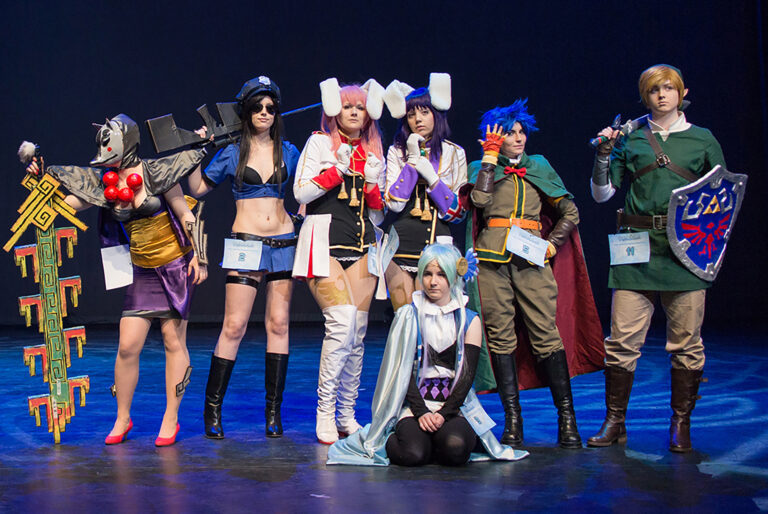
After attending the World Science Fiction Convention in Los Angeles in the 1980s, Nobuyuki Takahashi coined cosplay in Japan. Impressed by the elaborate costumes, he introduced the concept to Japanese audiences through his magazine, “My Anime.” Cosplay – involving creating and wearing costumes and accessories to represent a character – quickly gained traction in Japan and became integral to fan culture.

In the United States, cosplay also rose, with early cosplayers often crafting costumes by hand. This dedication and craftsmanship set the stage for a thriving subculture, turning passive media consumption into active participation.

The 1990s and early 2000s marked a significant turning point for comicons and cosplay because the internet now connected fans worldwide. Online forums, social media, and dedicated cosplay websites allowed cosplayers to showcase their work, share tutorials, and build a community. They also played a crucial role in promoting and organizing conventions, contributing to their growth and diversity.

Comic cons became more inclusive, embracing various pop culture genres, including anime, video games, movies, and television shows. This expansion naturally attracted a broader audience, making cosplay a prominent feature of the con experience. Cosplay contests and masquerades became highlights, showcasing incredible talent and creativity and transforming conventions into immersive experiences that thrill and excite attendees.
Today, MegaCon Orlando is one of Florida’s largest and most popular comicons, attracting thousands of people of all ages yearly. Self-described as “the mecca for all things geeky and great,” it features celebrity appearances, panels, cosplay contests, and an extensive exhibit hall covering all aspects of pop culture.

Florida Supercon, held annually in Miami since 2006, has become a staple event. It includes various pop culture elements such as comics, anime, and video games. Tampa Bay Comic Con, debuting in 2000, features a mix of comic book dealers, artists, celebrity guests, and cosplay activities and is steadily growing in popularity.

Holiday Matsuri in Orlando, running since 2011, focuses on anime and Japanese pop culture, featuring cosplay contests, dance parties, and unique holiday-themed events. Pensacon, held in Pensacola since 2014, has gained a reputation for its diverse lineup of guests and programming, covering various aspects of pop culture.

Celebrating ten years in 2025, Tampa Bay Screams is the longest-running horror convention in Tampa Bay. By fans and for fans of grindhouse, drive-in, arthouse, cult classics, and midnight movie cinema and pop culture, attendees celebrate horror, sci-fi, sword and sorcery and meet their favorite fright film celebrities.

BrickUniverse, the ultimate event for LEGO fans of all ages, is coming to Sarasota for the first time in January. Founded in 2014 by then-fourteen-year-old Greyson J. Riley, it celebrates the endless possibilities of LEGO bricks.

If it exists as a person, place, or thing, a convention has been or will be eventually born around it.

From early simple costumes to today’s elaborate and highly detailed creations, cosplay has evolved alongside the conventions. And with the advent of technology, such as 3D printing and digital fabrication, the future of costume creation is more exciting than ever.

Amanda McLelland, a cosplay enthusiast who attended her first con in 2002, explains her design process: “If I am designing from scratch, it can take anywhere from a couple of hours to a couple of days, depending on how complex or how strongly I feel about my choices. Cosplays generally take me about a month and a half to make if I am very focused on them. Still, I have several projects that I have been passively working on for years.”
Andrew Brunner, another cosplayer, shares his experience: “Most of my costumes are things that you can piece together. My proton pack for my Ghostbusters costume took about three months with the help of a friend. My favorite part about conventions is the costumes—not just wearing them myself, but seeing all the hard work everyone puts into theirs.”

Florida’s pop culture fan conventions have grown from humble beginnings into significant events that attract fans worldwide.
McLelland adds, “Conventions are about community. They are about spending time with friends from all over the country, enjoying a shared interest. Personally, cosplay also keeps me coming back to conventions as it is amazing to show off your hard work and learn from other cosplayers.” •

UPCOMING CONS

Charlie’s Comic Con 2025 January 11, 2025
Riverside Community Center, Fort Myers, FL

Sarasota Anime-Fest 2025 January 11, 2025
Sarasota Municipal Auditorium, Sarasota, FL

Brick City Anime Festival 2025 January 11-12
2025 World Equestrian Center Expo Building 1, Ocala, FL

Central Florida Comic Con 2025 January 17-19, 2025
RP Funding Center, Lakeland, FL

SWFL Anime-Fest Winter 2025 January 19, 2025
Embassy Suites by Hilton Fort Myers, Estero, FL

Tampa Bay Screams 2025 January 19, 2025
OCC Road House & Museum, Clearwater, FL

SSA+S Toracon 2025 February 1, 2025
Sarasota School of Arts & Sciences, Sarasota, FL

MegaCon Orlando 2025 February 6-9 2025
Orange County Convention Center, Orlando, FL

Blaquejack Studios – OliverJackson

Technique and Style

Can you tell us a bit about your background and how you got started in art?


I’ve always been interested in art. I remember during summer camp one year one of the councilors told my mom that she felt I had talent and skill in art and hopes that it’ll be something that I can pursue. I entered my first “art contest” in 3rd grade and represented my school in a larger citywide show. Then things sorta flatlined in art as I was involved with other activities with sports being one of them.

Oliver Jackson


Did you have any formal training, or are you self-taught?


My studies in art have been a mix of formal education and self taught. I have a Bachelor degree in Visual Communication (fancy way of saying graphic design). Studied fine arts at Herron School of Art as well as international art classes while living in Europe.


Can you walk us through your creative process? How do you go from an idea to a finished piece?


My creative process is similar to me designing. I tend to get an idea, which can come from any type of inspiration. And like a designer I’ll create multiple iterations, like comps in graphic design, that transfer into a series. Some are only 3 paintings, some are up to 80. And sometimes the series will morph. I started a series with watercolors and now pieces of that series are being done in acrylics. Always gotta be flexible in the creative process.


What mediums do you prefer to work with, and why?

Mostly the 2D mediums, watercolors, oils, acrylics. Graphite, charcoal, etc. it’s about having a level of proficiency that one can use the medium that best expresses the idea.
Do you have any rituals or routines that help you get into the creative flow?
Not really but I do prefer to draw in silence and paint with music.


How do you know when a piece is finished?


It will tell you when it’s completed. It’s never finished because as each person views it the work will take on another layer of life.


Where do you draw inspiration from for your work?


Nature, other works of art be it a painting, a musical composition, a dance piece or a work of poetry. And sometimes the dark part of humanity can serve as a catalyst for a work of art.


Are there recurring themes or messages in your art?


Well there is a theme to a series but not necessarily to my full body of work. Though someone may see a reoccurring message but if anything I’ll say I try to be more positive with my work. However that looks.


How do you stay inspired and motivated to create new art?


By traveling and experiencing life. I’m not really the type to disappear into my studio for weeks. I’ll work on pieces but I enjoy living life, new experiences meeting people great conversations. These are inspiring and keeps both creativity and curiosity going.


Have you faced any major setbacks in your career? How did you overcome them?


A few, 9-11 was the first. After that there was not much interest in the arts as most were reeling and just trying to survive. I was doing more graphic design work and I had major clients that went out of business which of course led to a lack of business for me. It was then that I made the decision to play the long game. It took roughly 17 years to get back fully into the arts. A more recent setback would be the back to back hurricanes of Helene and Milton. My studio flooded. Lost a large amount of supplies and equipment and over 50 paintings with water damage, damaged film negatives and prints, damaged and/or destroyed works on paper. But the studio is back together. Rebuilding and replacing supplies and equipment. And slowly re-streaching, cleaning and salvaging what I can. It’ll take time but its worth the journey.


How do you market and sell your artwork?


Through my website and participating in shows both solo and group. Locally and internationally.


What role does social media play in your art career?


Well I’m really trying to become more savvy with Social Media. It definitely has a place in the art ecosystem.


What advice would you give to aspiring artists trying to make a name for themselves?


Stay curious, practice and learn basics of business.


If you could collaborate with any artist, living or dead, who would it be and why?


Interesting, I mostly prefer collaborating with artist of a different discipline, writers, dancers and musicians. To me that is more exciting.


Can you share any tips or techniques that have significantly improved your art?


Color theory


What has been your most memorable exhibition experience?


My very first solo show I put on in my first studio. It was in the Stutz building in Indianapolis. Great show, well received. Nice write ups. It was when I first felt like a true artist. People really responded to my work and it was then that I felt deep down that I was on to something, that I could do this.


What’s next for you in your artistic journey? Any upcoming projects or exhibitions?


Well I’m still in recovery mode but as I’ve been working through I’ve been getting inspirations on incorporating the damaged items into new works so we’ll see how it all pans out. •

https://blaquejackstudios.com

The Reluctant Painter Who Sees Art Differently

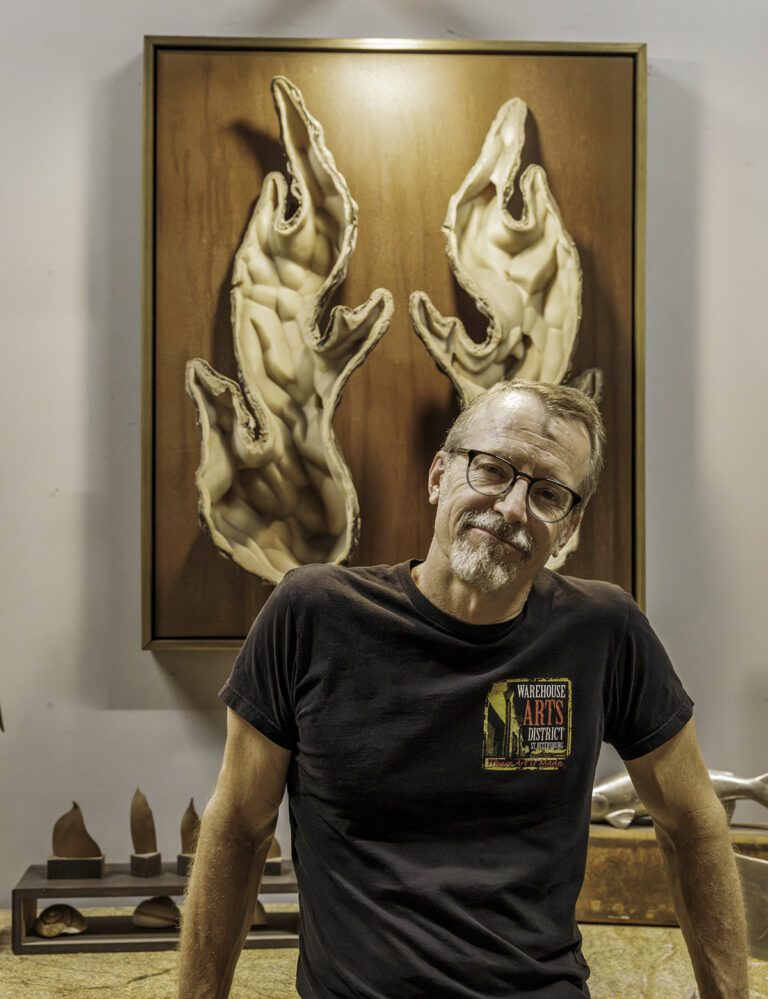
John Taormina

Born in 1978 in Massachusetts, John Taormina made St. Petersburg, Florida his home 15 years ago. What drew him initially to the city was its affordable living and inviting weather—two stark contrasts to the high cost of living in his native New England. At the time, St. Pete’s art scene wasn’t the dynamic hub it is today, and Taormina had no plans to immerse himself in it.

However, a life-changing injury to his hand set him on an unexpected path. Unable to use it for over a year, he was left with no way to work or play music—two of his main outlets, so Taormina turned to painting as a form of rehabilitation. As he regained strength, his growing body of work eventually led him to open a gallery. Finding a modest space on the 600 block of Central Avenue for $400 a month seemed like an easy solution. But the reality of running a gallery quickly proved more confining than Taormina had imagined. After just one year, he decided to close the doors and step away from the gallery world.

John Taormina

For Taormina, art is not a lucrative pursuit. “You could produce a painting every week and still not make as much as a plumber,” he says. “Even if you’re selling a bunch of paintings, unless they’re $10,000 each, it’s not a sustainable living.” Art, in his eyes, is a labor of love rather than a means to financial success. He often reflects on how ephemeral and disposable art can be. Taormina has found value in art sold at garage sales, once considered valuable but now overlooked and forgotten. He admits, “I don’t believe the reason to make art is to make money.”

For Taormina, making art is not a joyous activity. He describes the process as a physical challenge that often leaves his back aching, and his hours consumed. “It’s painstaking, it’s awful,” he admits. “Sometimes it’s enjoyable, especially if I’m high or drunk—but honestly, I don’t enjoy a lot of things.” While he respects artists who find joy in creation, he admits, “I admire people who enjoy the process. I don’t really enjoy making things myself. I like thinking about it, but not doing it.”

Asked how long it takes him to complete a painting, Taormina explains his methodical approach: “I had 10 months to make the work for this show. I broke it down, knowing how many pieces I needed to finish, so I could plan how much time to devote to each one. I’d start each piece and focus on one color at a time—working on the yellow across all pieces, for example—before moving to the next.”

Taormina’s process for titling his work is equally idiosyncratic. He used to listen to talk radio while painting, jotting down striking phrases that he later returned to when searching for titles. For his current series, he drew inspiration from more abstract sources, combining elements of physics and the Emerald Tablets to create meaning.

John’s most recent exhibition, The Moment of Inertia, was held at Leslie Curran’s ARTicles Gallery, where three works found new homes. This show came nearly a decade after Sculptures Dream Too, also at ARTicles, in January 2015.

At recent show
At John’s recent show on Central Ave.

Despite his gripes about the artistic process, Taormina finds satisfaction in the completion of a show. “The success of the show is simple—it got done,” he says. “Selling the work has never been my primary concern.” His gallery days, while short-lived, gave him a taste for the behind-the-scenes work of curating and connecting with others, even if the sales never came. “I wanted people to meet their future husbands and wives,” he jokes.


John Taormina’s art may not be about fame or fortune, but it speaks to a deeper, more personal journey. For him, painting is an arduous, sometimes painful process—but one that serves as a form of therapy, a means of communication, and a way to share a moment with others, no matter how fleeting. •

See/buy John’s work at:

https://www.articlesstpete.com

Nurturing The Arts

0

This has been a difficult year for our area. I’m certain everyone has been impacted by our recent storms in some way. For many of our citizens, the recovery will be a long one. These terrible events on top of our already escalating cost of living, unfortunately, makes the warehouse arts districts mission to support our creative community even more challenging.

I’m often asked whether the free market should be the deciding factor in the fate of the arts. I think you probably already know my answer to that, and because you’re here, I believe that at least some part of you feels similarly. I submit to you that while the free market is indisputably beneficial and deeply important in many, many regards, it cannot be the answer to all things. Some things require conscious intervention and forethought to protect them from the whims of a market that can be, at times, rapacious.

Those of us who live here, in this amazing, vibrant community, we must be the protectors and the champions. Our city is growing quickly, but we have an important history of protecting that which outweighs strict monetary accrual. Our cultural capital must be protected just as vigorously as our green spaces, because art is not optional to the human experience – it is vital. It can uplift, it can move, it can even provoke us. It brings us closer to ourselves, it helps us make sense of life, it transcends language and cultural barriers. Whether we’re creating it or experiencing it, art makes us more human. Artists convey that which is difficult to put into words. Our beautiful city has been recognized as an arts destination for over a century, (The Arts Club of St. Petersburg, currently known as the Morean Center of the Arts started in 1917). We need your help to preserve and continue building the rich legacy of the arts here.

Unfortunately, the arts have become needlessly politicized, an easy pawn in a zero-sum game of tit for tat. Cultural funding is in constant peril. Just this year Florida’s Governor vetoed funding for all state arts grants because of two small performing arts festivals that were slated to receive grants that amounted to less than two thousandth of a percent of the total budget. We need our citizens to be better than that. Considering that the arts have been consistently demonstrated to be a solid way to invest in communities with returns that would make even Warren Buffet smile, the logic is not only baffling, it’s completely absent.

Thus, it falls to the privileged class to take up the torch lest our creative community wither on the vine and its contributions be crushed under the boot heel of progress. There is much precedence for the affluent lending both their influence and their monetary support to the arts. Though they certainly weren’t alone, perhaps the most notable example is the Medici family of Florence, who were powerful merchants and bankers. They housed and supported developing artists, sponsored artist apprenticeships and are now remembered, more than 500 years later, as a significant driving force in ushering in the Renaissance. Due to their patronage Florence remains the cultural epicenter of the western world. It bears mentioning that Florence was already a wealthy, thriving, powerful city, but there was an understanding that great art, and great ideas could only make this already triumphant city even better. What do you want to see for our city? What legacy do you want to remain in 10, 50, or 100 years?

Though the creative community has been born of an organic and unique synergy of variables, keeping it intact through the tumultuous whirl of development and commerce must be an intentional and deliberate act. A rising tide should lift all ships, but our rapidly rising property values have been more akin to a storm surge, leaving our creatives battered and struggling. That’s why WADA exists; to navigate the sea of change for the creative community so it’s not lost but sustained by the very forces that threaten it – because those forces recognize its value is undeniable.

We call upon you as leaders of this community to nurture and invest in the future of the arts in our beloved city. •

Shining a Bright Light on Our Musical Treasures

If Florida is a cultural desert, then the Tampa Bay & Sarasota areas must be its oasis.

Denizens of seemingly all the other 49 states often can be heard to denigrate the Sunshine State’s cultural offerings, or opine on the supposed lack thereof. But as someone who’s been visiting the Tampa Bay area for decades, finally sinking permanent roots four years ago, I’ve only occasionally bought into such sniping — and then only relative to cultural options in major metropolitan markets.

I’m a Philly native and the Philadelphia Orchestra, aka the Fabulous Philadelphians, remains my fondest U.S. symphony orchestra, with the Los Angeles Philharmonic another personal favorite for its creatively programmed live performances.

But The Florida Orchestra ain’t chopped liver. Relative to other Florida orchestras from Orlando to Miami, the Tampa Bay area-based symphony is more like Delmonico steak. A check of the season schedules for the Palm Beach Symphony or Fort Myers’ Southwest Florida Symphony shows the bay area ensemble’s hefty, ambitious offerings in stark, and rather flattering, relief. And even the Jacksonville Symphony runs at best a close second to TFO in my view.

Then there’s the opera scene, which requires a similar relativity in appraising its merits. But its merits are many, including the mere existence in today’s challenging operatic marketplace of competing, successful institutions in St. Petersburg, Tampa and Sarasota. And if we embrace that latter market as Tampa Bay’s own (and why not?) it should be noted that the Sarasota Ballet’s renown is international in reach.

Musical Matters
Each issue, Classical Spotlight will focus on the many performance gems in our cultural backyard. In addition to classical music organizations there are, of course, scores of groups dedicated to other areas of the performing arts, such as theater, modern dance and more.

But it’s the classical music community that will be front and center here, along with the local organizations and individuals active in the field.

They operate with support from grateful bay area audiences and often from philanthropic donors, yet too frequently they fly below the media radar, with little news coverage or critical reviews.

The Florida Orchestra, or TFO as it’s often branded, is probably the highest-profile musical organization in Tampa Bay. There aren’t many people I’ve asked who were wholly unfamiliar with TFO or its offerings.

Then, too, there are organizations such as the Tampa Bay Symphony, a community orchestra whose mix of professional and part-time musicians has presented modestly priced concerts in St. Pete and Tampa for more than 30 years. Similar community ensembles of varying resources and scope abound, including the Pinellas Park Civic Orchestra and the Suncoast Symphony Orchestra in Clearwater.

At all of these groups, musicians and staff spend countless hours in rehearsals and other prep efforts. And if their resulting programs hold varied degrees of success, they also show an inspiring constancy to music forged over centuries of dedicated striving.
Meanwhile, the new musical season is well afoot, and checks of the relevant websites will show an array of program and location options. Ticket-price ranges are similarly broad.

This column doesn’t propose to offer much music criticism, per se. But hopefully it can help illuminate the dedicated organizations and talented individuals active on the local classical music scene, while addressing some musical topics.

Yet there’s more than just a tubthumping intent here: Could publicizing the local appetite for classical music entice more touring orchestras to visit the bay area? That’s my long-shot hope.

There’s no shortage of nationally touring pop, rock and country music bands stopping by (top jazz groups much less often). And there’s sure no shortage of rock tribute bands touching down in Clearwater, St. Pete and Tampa. But howzabout more touring classical groups, for goodness sake?

A couple years ago, I was tickled to see the Juilliard Quartet scheduled to play the Palladium, until the concert was canceled. The new date in early 2023, as part of the Palladium’s chamber music series, eluded me. But the notion of the famous string quartet holding forth on a St. Pete stage was thrilling, as top-notch touring chamber ensembles and symphony orchestras still are too much of a rarity here.

After all, there are huge numbers of highly cultured professionals to be found in the high-rise condos in downtown areas on both sides of Tampa Bay. And there are tens of thousands more, I reckon, among the hundreds of thousands of retirees who now call this area home — after lifetimes of living elsewhere in locales nobody would call cultural deserts.

So, watch this space for more about the many institutions and individuals plying the classical market locally. And don’t hesitate to give a shout if you see something that rings a bell — or don’t see something you’d like to shove into the spotlight.
First up, in the next Classical Spotlight: The Florida Orchestra. •

Energy, Power and Survival!

Energy, power and survival leap out of the 2025 Raymond James Gasparilla Festival of the Arts featured image “The Fight” by Ashli Harper

Story by Sarah Worth
Photos by Ashli Harper and Will Staples

Thick, raised paint to create movement and energy, along with choice of color, may take your mind to current headlines, but the motivation for these is not from today’s news.

In “The Fight” – the featured image for this year’s Raymond James Gasparilla Festival of the Arts (GFA) – the powerful message conveyed by artist Ashli Harper was one she was telling only to herself, and it wasn’t political, at least not most of it.

As with symbolism in much of art across millennia, the messages in “The Fight” go in a different direction than what viewers might interpret. When she first put brush to canvas, Ashli was having a very private conversation in her mind, telling herself to take the next step in her health journey.

This directive wasn’t about the dismantling of Roe v Wade, it wasn’t the election, nor was it Florida’s Amendment 4. It was about her own mental and physical health – she was urging herself to get past her recent cancer diagnosis and to get on with surviving.

That honesty, fully to herself, is in Ashli’s whole portfolio, and she approaches each project and piece with little preconceived notion of what the final image will be. In her work “Pain” – a closeup face of a Black woman seeming to scream in agony – the image came to Ashli when she was first diagnosed with cancer.

“It was all my pent-up angst,” she said.

Her no-firm-plan approach should not be construed as free styling, but more likely true emotion coming to life, perhaps an outlet, a pathway, for pushing off the burden she’s carried for too long.

“I paint what I’m feeling in the moment,” Ashli said. “For ‘The Fight’ I went into the studio and told myself I’ve been down and out long enough. I rallied myself. It was a big turning point for me. Through that painting, I changed from my ‘why me?’ phase to my ‘get down to business’ phase.”

The fact that the image is a woman – a strong Black woman – brandishing fists inside pink boxing gloves and preparing to throw a powerful punch to some unseen, but perhaps well-known, foe is the additional message Ashli doesn’t mind viewers interpreting out of her work.

Every woman has faced a battle when she’s had to decide if it’s fight or flight, so this goes beyond what I am personally facing. It’s about battles that every woman faces, daily.
~Ashli Harper

Ashli came to art early, enjoying it and seeing it as inspirational.

“I’ve always been creative,” she said, recalling the time in early high school when she drew a mural on the wall in her bedroom. “I was inspired! My mom, not so much. But she came around.”

Feedback on her drawing wasn’t always positive and a hypercritical teacher in Ashli’s senior year put doubt in her mind. This sidelined her art for over a decade. Then, in 2022, when her health took a turn, she felt the need to create again, as well as the need to release her pent- up emotions. So she reawakened her inner artist, shifting from her earlier focus on pencil sketching over to painting in full-color acrylics.

“I love texture, so I started with standard acrylics but quickly moved to thick acrylics to get the volume and layering I was looking for,” she said.

Her work was noticed quickly. In the 2024 Raymond James Gasparilla Festival of the Arts, she was named an Emerging Artist. And this year, her recent work “The Fight” made the top of the list for the GFA Featured Image, meaning it will be used on promotional materials for next March’s event. This designation certainly gives Ashli even greater exposure for her current work, but it also indicates there’s more to come from her.

In “The Fight”, her subject seems to be preparing to hit an opponent, her right gloved fist about to come forward in a powerful strike. To Ashli, the stance is not the closing hit or the knockout blow it looks to be. Because it’s not the end of her fight.

“I hope people can see and feel my genuine passion for life and empathy for others,” she said. “But it’s not a final punch; there may be more.”

Save the date:
View more of Ashli’s work at the 55th Annual Raymond James Gasparilla Festival of the Arts, March 1-2, 2025. Held at Julian B. Lane Riverfront Park, downtown Tampa, it’s a celebration of art, diversity, and community that continues to evolve and captivate audiences year after year.

Visit gasparillaarts.com for additional festival details

Want to Watch a Movie? Want to Act in One?

At Green Light Cinema, Catch an Art Film While Training To Be a Thespian

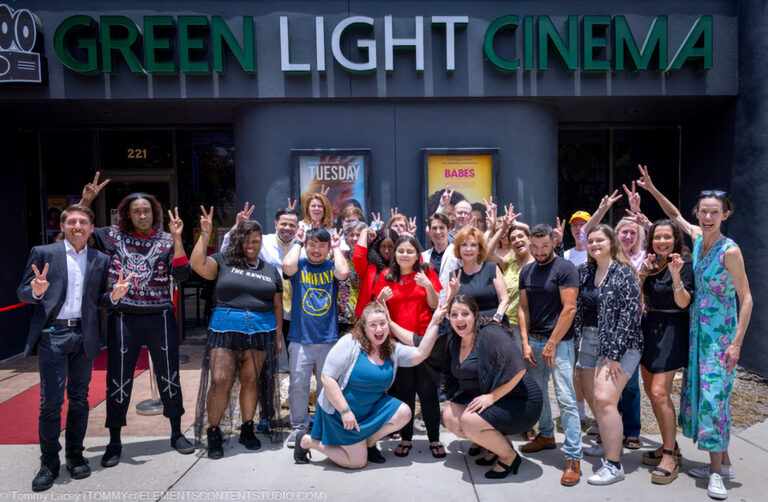
At Green Light Cinema, St. Pete’s art house movie theater, which houses a companion acting school, Station 12 Studio at Green Light Cinema, you can learn from film artists by watching carefully curated films. Or, you can take a semester or two of acting technique or improvisation from St. Pete Master Instructor, Eugenie Bondurant and her team, Sally Rachel Quinn and Rocio Escobar.

Green Light Cinema and Station 12 Studio
Green Light Cinema, St. Pete’s art house movie theater, houses a companion acting school, Station 12 Studio at Green Light Cinema

Mike and Sue Hazlett, owners of Green Light Cinema, arrived in St. Pete ten years ago. They had determined it was the only town in Florida that spoke to them. It was an especially great fit because they noticed St. Pete didn’t have an Art House Theatre.
Transplants from New England, the Hazletts had spent years in theatre, film, and the entertainment business. Working in high profile venues such as the Historic Theatre in Portsmouth, New Hampshire and the grand Music Hall in Portland, Maine, they had honed their skills from backstage to administrative positions. Through a labor of love, the duo turned a long vacated, downtown space into Green Light Cinema. Opening during the pandemic, followed by two movie industry strikes, meant years of no revenue. Less determined entrepreneurs would have not held out over those years. Instead, they weathered those days, refusing to give up. They were certain that their dream of sharing great films would be an asset to the community. Their hard work has helped them grow their small film house. In ratings. They are often first or second while always at least within the first five in all of Florida film houses. And that’s including the big guys like AMC. Working with major distributors from Sony Classics, Neon, and A24, to bring top current films, or sometimes offering more obscure indy or local films of the ilk that folks later boast about having seen, can be viewed for half the price of the bigger chains. The coziness of the space, its eighty comfortable seats, lets you feel you’re at a private viewing. Those who haven’t caught a film at Green Light should check them out.

Mary Rachel Quinn – Rocio (Ro) Escobar – Eugenie Bondurant
Mike and Sue Hazlett

Three nights a week Green Light becomes a training ground for actors. A partnership of kindred spirits was born at a Super Bowl gathering, says Mike Hazlett, when Eugenie Bondurant happened to state that she needed a space to give some acting classes. A working actress, Ms. Bondurant has been a theatre instructor for over 25 years. She arrived in St. Pete via New Orleans and L.A. The 6-foot Bondurant started out in modeling, and in L.A., was regularly out for commercial auditions. She took the logical leap of getting some acting training and then moved into film acting. By chance she ended up taking over a friend’s film-training class. She continued teaching various acting classes in L.A. for over fifteen years.

Ready to leave L.A., she moved to Tampa, then to St Pete. Once in the Tampa Bay area, she started teaching at the Patel School.

Eugenie Bondurant as Tigres in Hunger Games, Part II

The move from LA hasn’t slowed Ms. Bondurant’s success in film. On screen you might recognize her from Hunger Games, Part II, as Tigres, or as one of the hunters in Werewolf by Night. She is constantly taking off for a shoot in Atlanta, L.A, or elsewhere. Her heart, however, is always in St. Pete. It’s where her well-known and locally beloved husband, Paul Wilborn is the Executive Director of the Palladium, among many other hats he wears. He’s an author, pianist, and general mover and shaker.
Eugenie and Paul have had an inventive cabaret act for years, with Paul on piano and vocals, sometimes writing their material, while Eugenie sings, or “talksings” as she says, and of late, reads Paul’s stories incorporated into their act.

Another friend of Eugenie’s, Andi Matheny, was running an acting studio which Eugenie had been teaching at. Andi moved back to L.A., closing the studio. Suddenly, displaced acting students were clamoring for Eugenie to pick up the slack caused by Andi leaving. Enter Station 12 Studio.

The derivation of the name Station 12 Studio comes from a Screen Actors Guild rule of confirming someone is a member before they can be hired for a SAG gig. At the studio, unlike the SAG vetting process, it implies that anyone interested in training has the “Green Light” and is welcome.

Station 12 Studio, like Ms. Bondurant’s on-screen career, is thriving. But always looking for new rising stars! Students at Station 12 range from the curious, to the closeted actor, to senior learners wanting to chock a longtime desire off their bucket list, to experienced thespians honing and reinforcing their craft. The classes cover Improvisation, a Core class for basics, to Scene work. The Master Class serves those with sufficient development, or who are already seasoned actors. And there’s a bonus for attendees as classes conclude with an opportunity to showcase some of what folks have gleaned.

Anything Ms. Bondurant has learned in her long path in the film industry, whether in technique, or maneuvering a career in acting, she uses and shares with her class. She says she feels her students learn from her, but she also learns from them. Just as Mike and Sue are cultivating a community of viewers who might grow their knowledge and appreciation of good films, Eugenie, finds the classes form into an ensemble of supportive people. As she said, “if someone gets an audition, or even better, books a job, that’s a win for the group.”

Screenshot

How best to bring attention to two related art forms, film and acting classes, than to house them together? Green Light provides for all the patrons the theatre serves with “The best popcorn in town!”. Those sitting in the dark to view the films at Green Light might come for the Retro-80s festivals, for Second Screen Cult Cinema fests, for the Vertical Programming, such as the Trans, Gays and Lesbian films, or the present Golden Globe winners, such as Emila Perez. For extra fun, there’s also the weekly Hell On Heels event, showing Rocky Horror Show. The Hazletts are constantly changing it up, just as Ms. Bondurant might offer a different approach in her classes each semester, or have guest instructors.

The fact is, since the advent of streaming, it’s possible many great film houses may not survive. The larger ones are already showing strains in reduced attendance. I feel lucky that we have a welcoming, thoughtfully curated art house movie theater such as Green Light Cinema. Also, partnered with Station 12 Studio, having a training ground for actors, far from the costs of New York and L.A. classes, is yet another gift that caring, skilled artists are contributing to St Pete, and Tampa Bay. •

Green Light Cinema with Station 12 Studio
221 2nd Ave N, St. Petersburg, FL 33701

DRV Gallery Unveils a Packed Creative Calendar to Begin the New Year

0

Gulfport’s DRV Gallery’s bustling creative calendar for the first two months of 2025 includes its 3rd Annual Art for a Cause Exhibition, two artist-led workshops, a live concert by Latin jazz band La Lucha, and a solo exhibition by award-winning artist Rebecca Skelton.
The gallery’s 3rd Annual Art for a Cause exhibition is a juried show featuring 20 artists from throughout the state and will be judged by Keith Matter, Editor & Publisher of The Artisan Magazine. The exhibit will run throughout the month of January on Saturdays from 11 AM-4 PM. The annual event attracts talented artists who create work inspired by a cause of their choice, with a portion of the proceeds from the sale of their work going to a charity of their choosing.


On Saturday, January 18th, from 12:30 – 3:30 PM, award-winning artist and Instructor Rebecca Skelton will lead a workshop on tonal drawing.


DRV Gallery will play host to jazz trio La Lucha on Thursday, January 23rd. Doors open at 6 PM, with the band scheduled to perform an hour later.


The gallery will host its second workshop of the new year on Saturday, February 8th from 1-4 PM, as multi-award-winning artist and instructor Shawn Dell Joyce returns to DRV Gallery to instruct participants on color temperature in paintings.


DRV Gallery is located at 5401 Gulfport Boulevard South. For tickets and registration to these events, and to shop DRV Gallery’s online gallery, visit drvgallery.com. •

Brenda McMahon Gallery Rings In the New Year with Two Masters of Their Craft

0

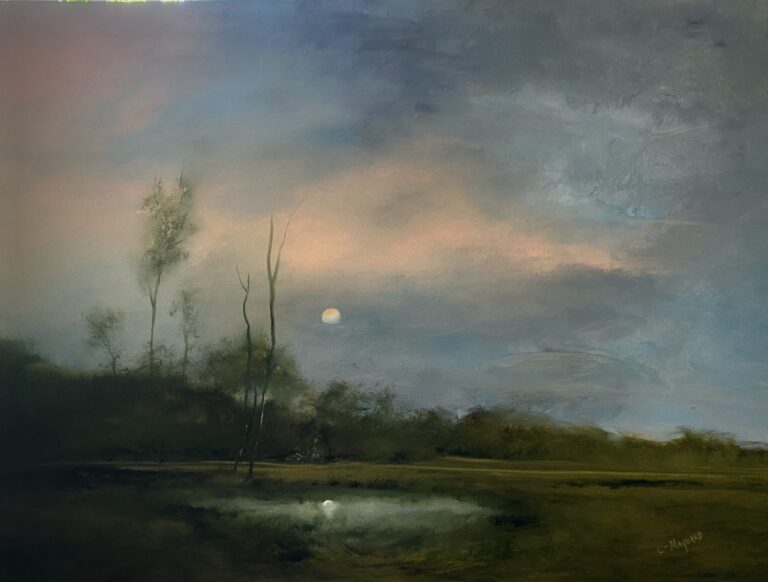
Brenda McMahon Gallery will ring in 2025 with two multi-award-winning artists as featured artists in January and February, welcoming painter and scholar Dr. Cora Marshall to begin the year, and tonalist master Larry Maynard in February.

Dr. Cora Marshall


On Friday, January 3rd, the gallery will debut Dr. Marshall’s work from 6-9 PM, and her show will continue throughout the month. Dr. Marshall studied at Parson’s School of Design and earned her PhD in Art & Education at New York University. Her work has been honored locally by the Dr. Carter G. Woodson African American Museum, Studio@620, Creative Pinellas Gallery, and Gallerie 909.
Decorated tonalism master Larry Maynard will make his debut at Brenda McMahon Gallery on Friday, February 7th in a solo exhibition from 6-9 PM. Maynard is the recipient of over a dozen awards at art shows and exhibitions throughout his distinguished career, and his work is deeply inspired by nature and the need for environmental renewal.


To follow updates on the events, follow @BrendaMcMahonGallery on Facebook and Instagram, or visit the gallery’s homepage at https://brendamcmahongallery.com/. Brenda McMahon Gallery is located at 2901 Beach Boulevard S in downtown Gulfport.

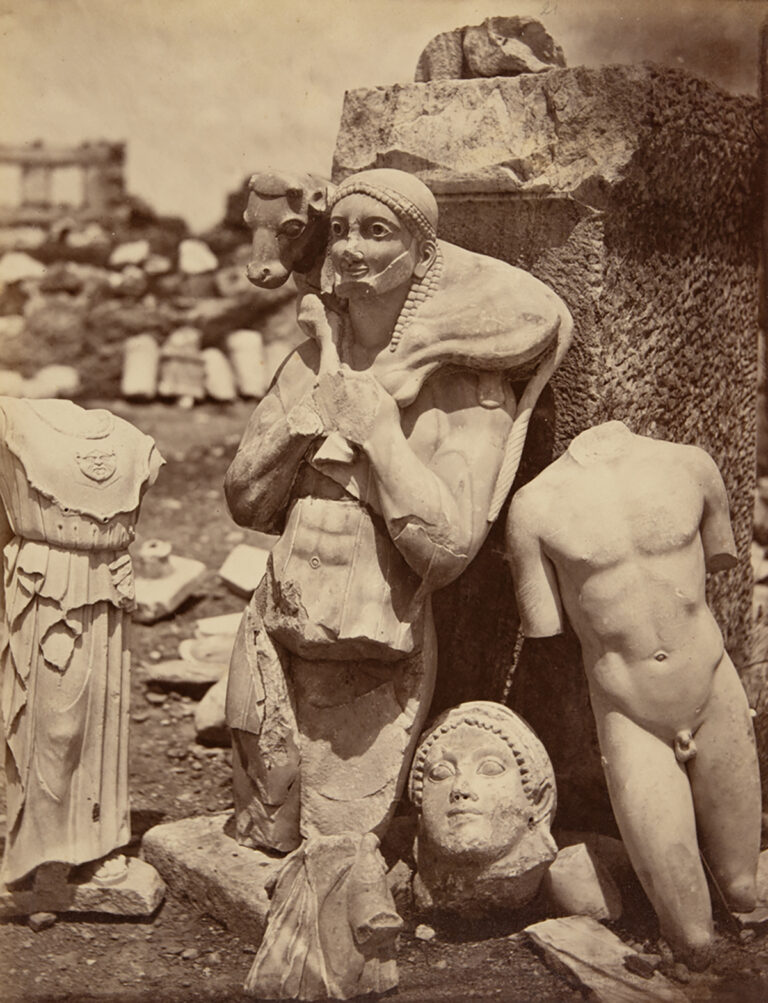
Collector’s Chat with William Knight Zewadski: 19th Century Photography Related to Ancient Athens

0

Join private collector Bill Zewadski for a gallery talk about the 19th century photography on view in the exhibition “Ancient Athens: Birthplace of Democracy.” The black-and-white photographs bring life to the ancient city of Athens, its arts and ideals, as it laid the foundations of popular government. They exhibition helps contextualize the Museum’s permanent antiquities collection while recognizing the continued importance of the cultural legacy of Classical Greece. •

Date: Thursday January 16, 2025
Time: 6 – 7 pm
Location: Tampa Museum of Art, Farish Gallery