Home Blog Page 16

Drew Marc Gallery:

A New Destination for Contemporary Art in Tampa

Tampa’s contemporary art scene continues to evolve, and the newly opened Drew Marc Gallery is adding fresh energy to the city’s growing cultural landscape. Located in the former Flying Fish Bike Shop on South MacDill Avenue, the gallery sits in the same plaza as Enoteca Wine Storage, making it a prime destination for art lovers and collectors alike.


Drew Marc Gallery is dedicated to showcasing exceptional contemporary artists, fostering creative dialogue, and bringing new artistic perspectives to the region. With a focus on emerging and established talent, the gallery curates a diverse selection of paintings, photography, sculpture, and jewelry, offering something for both seasoned collectors and those new to the art world.


One of the defining aspects of Drew Marc Gallery is its commitment to monthly exhibitions, ensuring that the artwork on display is always evolving. Each exhibition highlights different artistic styles and themes, providing visitors with a fresh experience every time they walk through the doors. While the exhibitions rotate, all works remain available, allowing collectors to explore past pieces and find the perfect addition to their collection.


Drew Marc Gallery is also elevating Tampa’s art scene by representing Hunt Slonem, one of the most celebrated contemporary artists of our time. Slonem’s work is featured in over 250 museums worldwide, including the MET, the Whitney Museum, and MoMA in New York City. His distinctive neo-expressionist style, best known for vibrant depictions of birds, butterflies, and bunnies, has made his work highly collectible.

With his pieces held in some of the world’s most prestigious collections, his market value continues to rise, making this a pivotal time for collectors to invest. Drew Marc Gallery is honored to make his museum-quality work accessible to the Tampa Bay area, further positioning the city as a serious player in the contemporary art world.


Upcoming exhibitions will continue to introduce new and exciting works. On Friday, March 7, and Friday, April 4, Drew Marc Gallery will debut fresh artwork from its roster of artists. These events will provide opportunities for collectors and art enthusiasts to engage with new works, meet artists, and experience the gallery’s evolving selection further solidifying its place as an ever-changing hub for contemporary art in Tampa.


Beyond its exhibitions, the gallery plans to host various special events, artist talks, and collector-focused discussions, creating a space where art lovers can connect, learn, and be inspired. Whether looking to start a collection, expand an existing one, or simply explore the latest in contemporary art, Drew Marc Gallery offers an inviting and enriching experience.


Now open in South Tampa, Drew Marc Gallery is set to become a key player in the city’s expanding art scene, contributing to its reputation as a vibrant destination for culture and creativity. Art lovers can visit the gallery at 2409 S. MacDill Ave. to experience its carefully curated exhibitions and discover the latest in contemporary art.


For more information, contact Drew Marc Gallery at 813-294-3638, email info@drewmarcgallery.com, or visit drewmarcgallery.com to stay up to date on exhibitions and events. •

2409 S. MacDill Ave. Tamp, Fl

Website

Museum of Motherhood

On a chilly January morning at The Factory St. Pete, a crowd gathered for the ribbon cutting ceremony of the Museum of Motherhood. A row of strollers lined the hallway and children were at play in the space. 

Museum founder Martha Joy Rose beamed as she called up her team of volunteers and board members before she cut the ribbon on the museum’s new Escape Womb Experience. 

St. Pete Chamber of Commerce president and CEO Chris Steinocher led the ribbon cutting and remarked that the Museum of Motherhood was “a 20-year overnight success story.” 

Indeed, it is. Rose, who goes by Joy, has been working towards her dream for a museum dedicated to the art, history and science of motherhood for decades.

In 1997, after a diagnosis of lupus, the mother of four formed the band Housewives on Prozac in New York, with the idea that women can still express themselves and have an identity post-motherhood. 

In 2002, Rose created the MaMaPaLooZa Festival that showcased similar female bands. It spread to 25 cities and four countries and evolved to include academic conferences and exhibitions.

The movement built over time, with the opening of the MommyGirl GoGo store replete with the first display of “mom-or-a-bilia” in Dobbs Ferry, New York. Collaborators were joining the movement, leading to the establishment of the Motherhood Foundation. 

Conferences happened and collectives were formed. A Motherhood Movement had taken fruition. 

By 2011, the Museum of Motherhood was established.  Rose held MoM popups in Manhattan;  the largest one was sponsored by Gymboree and ran for 29 months. 

Over time, the ideas for what a museum of motherhood would include became more clear. The field of mother’s studies also grew over that time,  Rose said. In 2014, Rose got a master’s degree in Mother Studies and started teaching at Manhattan College, where she curated exhibits. 

Rose moved to St. Petersburg in 2017 to be close to her children. In 2019, she created the  non-profit MoM Art Annex at her home in Historic Kenwood. But then the pandemic hit, making it impossible to have visitors. 

But when the pandemic subsided In 2023, things started moving. Rose’s bungalow was attracting guests as a source for research and hosted 178 tours of it over the year. Considering it the museum’s “coming out” year, Rose and her team began hosting garden parties and feminist pizza parties with her neighbors of the Artist Enclave of Historic Kenwood. 

With MoM getting more exposure, it was time to secure a public space that wasn’t Rose’s home. She rented a space at The Factory St. Pete where the artwork element of the museum was on full display. People drawn there during Art Walk interacted and a community formed.  

But when the building was sold last year, tenants shuffled around. MoM moved to a space on what’s now known as Gallery Row, next to FloridaRAMA.  The museum shares its space with the artist Paul LeRoy Gehres, known as “LeRoy King of Art.”  

Exhibits include a 20-pound pregnancy simulator vest, a display titled, “Call Your Mother” with a lip-shaped phone and a wall where visitors can write a message. There’s also a rotating selection of books guests can read. 

Over the past couple of years, the museum’s network of volunteers grew and the museum established a board of directors. Rose is extremely effusive about her team, saying she couldn’t do it without them. 

While the function of the museum is to be a center for education and exhibits “devoted to the art, science, and herstory of women, m/others, and families inclusive of all reproductive identities,” it has recently positioned itself as Tampa Bay’s “first and only women’s museum.” 

But that certainly doesn’t mean it’s only for women and especially not just for mothers. 

“The point is, we are all part of one big human family and we all come from a mother,” Rose said.  “We’re really interested in that study of, both academically and arts wise, what these creators make. We also are interested in the people they make.”

The endgame is to  eventually build a multi-level museum with floors dedicated to art, science, “herstory” and more. But first, fundraising needs to happen to pay the rent. 

With a goal of $30,000, MoM is offering potential donors a place on the Founders Circle with a $1,000 donation. The campaign is called “We Build Tampa Bay.” 

Another revenue stream is within the Escape Womb Experience, a red-hued room that combines artwork and scientific diagrams to explain the “nuances of conception, gestation and birth in a fun and informative environment.” Admission  ranges $15-$28. 

On March 18, the MoM is having an Art Auction fundraiser presented in partnership with Odeta Xheka’s OXH Gallery at The Spiral Staircase in Tampa. It will feature “Mother-Made” art pieces for sale. 

The weekend prior to the fundraiser, on March 14-16  MoM is holding its annual Academic and Arts Conference at USF St. Pete. Scholars, artists and community members will share their thoughts on the theme, “Fun, Sex and Crying Out Loud.” For more information, visit  mommuseum.org. •

Museum of Motherhood

DRV Gallery Showcases Visual and Performance Arts Excellence This Spring

0

DRV Gallery in Gulfport heads into the spring arts season with a full creative calendar of art openings, artist-led workshops, and live music. The gallery has become known in the region for its blend of award-winning visual artists alongside concerts by some of the most exciting musicians in the region.

On Friday, March 7th from 5:30-8:30 PM, the gallery will host an opening reception for New Horizons, a new solo-exhibition by abstract expressionist Amy Howell. The opening will feature live music by Southview Arts Founder Jim Gilmour and John Kelly, whose latest album Good Company was released in 2024. Howell’s exhibition will be on display through March 22nd, the same day that she offers a workshop at the gallery on Abstract Painting with a Palette Knife.

On Thursday, March 20th, the LaRue Nickelson Trio will perform live at the gallery, with Nickelson on guitar, Ian Goodman on drums, and Doug Matthews on bass. Nickelson is a jazz guitarist and composer from the Tampa Bay area who has performed across the world, and the concert pairs him with two of the most sought-after improvisers in the region.

Saturday, March 29th brings the first of three sessions in the gallery’s Creative Aging Series. The first session focuses on acrylic painting, with a second on April 26th on art journaling, and the final session on May 10th focused on watercolor painting. The series runs from 1:-2:30 PM on these select dates. 

April 4th brings a show by the Gulfport Plein Air Painters Show to the gallery. The show will be viewable on Saturdays from 11 AM – 4 PM throughout the month. On April 12th, multi-award-winning instructor and artist Janie Haskins returns to the gallery to teach a workshop on plein air painting.

 DRV Gallery is located at 5401 Gulfport Boulevard South. For tickets and registration to these events, and to shop DRV Gallery’s online gallery, visit drvgallery.com, or visit the gallery’s social media at @drvgallery on Facebook and @drvgallery22 on Instagram. •

Blooming at Brenda McMahon Gallery

0

When the Florida Department of Education released a list of nearly 700 books that were removed or discontinued from public schools during the 2023-2024 school year, multi-award-winning sculptor and activist Shelly Steck-Reale fought back, using art as a vehicle for reflection and conversation. On Friday, March 7th from 6 – 9 PM, Steck-Reale will continue and advance the conversation at a new exhibition of her work opening at Brenda McMahon Gallery and will return for an artist talk at the gallery on March 20th.

The new exhibit, named ‘And Still I Rise’ after the recently banned poem of the same name by Presidential Medal of Freedom recipient Maya Angelou, consists of seven sculptures of voices silenced by banned books: women, people of color, LBGBTQ+, the disabled, and immigrants, all sitting on a wood carved stack of banned books. The opening will also feature Tampa-based poet Stephanie Jackson performing a rendition of the title poem, as well as one of her original works.

Shelly Steck-Reale
Shelly Steck-Reale

Steck-Reale views the suppression of books as a threat to free speech, particularly voices from marginalized communities: “Though banning books has always been part of the authoritarian nature of suppression, I see it, and my art reflects it, as a metaphor for the silencing of voices overall,” says Steck-Reale. “We are not only experiencing erasure through book banning; but voices are also being silenced through unjust legislation, outdated systems of exclusion, and Executive Orders.”

On Friday, April 4th, the gallery welcomes painter Bobbi Pratte as its Featured Artist. Pratte’s love for flowers and gardening deeply inspires her paintings and are an ideal complement to the new season. Jazz singer Fiona Frensche will be on-hand with her sultry tunes, while saxophonist Henry Ashwood will be playing throughout the opening.

To follow updates on the events, follow @BrendaMcMahonGallery on Facebook and Instagram, or visit the gallery’s homepage at https://brendamcmahongallery.com/. Brenda McMahon Gallery is located at 2901 Beach Boulevard S in downtown Gulfport. •

“Postcards From Inside My Cranium”

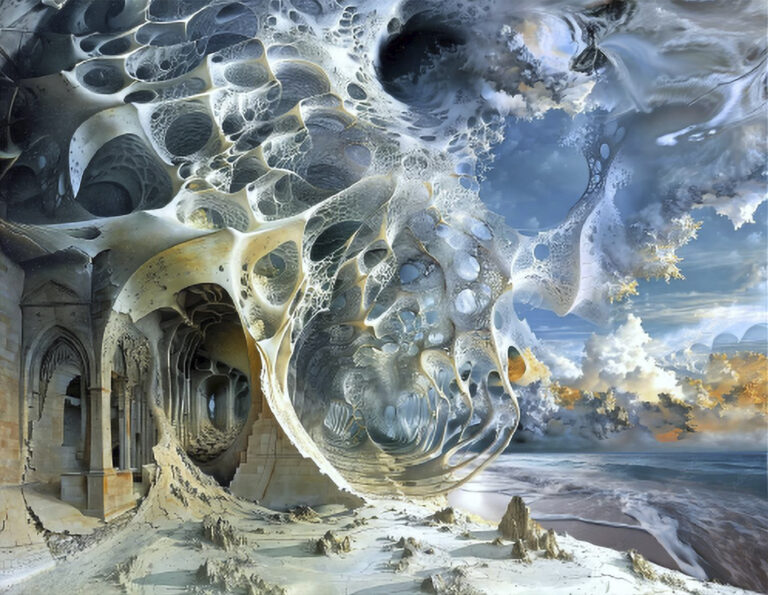
Postcards from Inside my Cranium, is the latest painting and Holographic 3D series from Louis Markoya.


“It is the deepest exploration of the imagery my mind creates and consumes. It is also the most “Dalinian” of all the series of work since the time I worked with Dali in the 70’s.”

The series illustrates vision just beyond the abilities of our senses. It represents continuity and evolution of Dali’s Nuclear Mystical period, where more is known of the physical makeup of our world, and of our brains. While The show consists of 8 original oils, they are also reproduced at the same size in full holographic 3D Lenticulars , LED backlit to provide color and contrast beyond what is available in nature, and fulfill Dali’s dream of presenting on a flat 2D surface, 3D in full color without and viewing apparatus, for a total of 16 unique artworks.

Screenshot

The ideas and imagery presented here all are outgrowths of the DNA Dali left running through my system and still today reproduces and expands to dream larger and more sophisticated dreams to use technology to further art and expand the minds of viewers. Knowing Dali’s passion for mathematics and even computer art, I am certain Dali would be fascinated by both fractal geometry and AI. Always attempting to be at the forefront of science and technology, this show is a vehicle Dali would most certainly be using in his work were he here today.

The series not only illustrates vision just beyond the senses, but includes the modern effects of social media, fake news, advanced math and more and more sophisticated computing abilities. •


Imagine Museum
1901 Central Avenue
St. Petersburg, FL 33713

Screenshot

Art Smart

0

Coffee House | Art Gallery | Picasso Museum

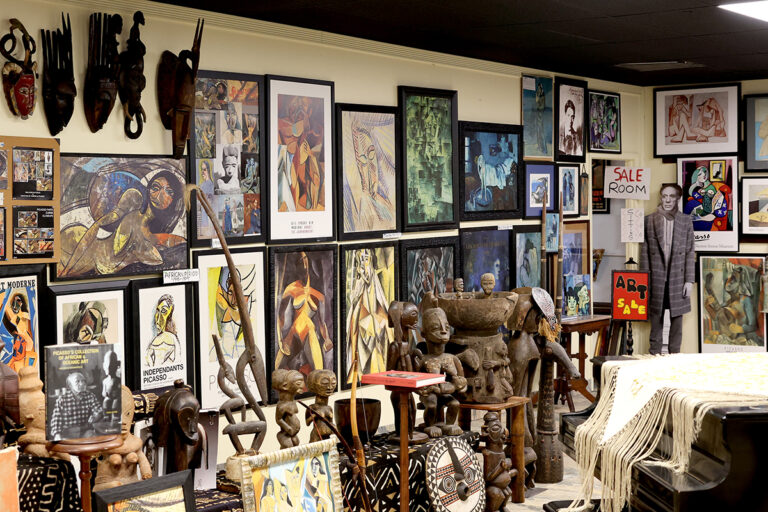
One of the more unique art-oriented establishments in the Bay area, Art Smart in Dunedin is a combined coffee house, art gallery and Picasso Museum and is owned and run by Mario Gutierrez.

It’s located in an unassuming strip center space with a large patio in front. The façade belies the huge content of creativity within. The counter on your left as you enter is a fairly typical café serving counter, a bit quirkier, with stickers, photos, artwork and statues somewhat haphazardly, yet organized, all over the place. With a quick glance to your right, the extent of the content within becomes apparent. Another world awaits. …But coffee first.

Art Smart’s coffee beans, all roasted in-house, are bought in bulk. The idea is cost, quality of product and price to the consumer. There are no Starbucks prices at Art Smart, but there is the attention to flavor and satisfaction. Buy an iced coffee and Art Smart has ice cubes made from coffee. Ensuring your coffee’s flavor and taste does not become diluted as the ice melts. That’s the attention we’re talking about. Buy a cup, or take home a bag of freshly roasted beans, ground or whole, at a price you will appreciate.

Wander with your coffee into the living space of Mario. Everything has its place. The paintings, many from local artists, are organized and displayed with professionalism. After browsing a few aisles of beautiful art, you enter the realm of Picasso. Mario is a Picasso aficionado, an expert. The bulk of Art Smarts Picasso collection, collected over many years, includes prints, posters, and statues from Picasso’s African Period. Picasso’s African Period, which lasted from 1905 to 1909, was the period when Picasso painted in a style which was strongly influenced by African sculpture, particularly traditional African masks and art of ancient Egypt, in addition to non-African influences including Iberian sculpture, and the art of Paul Cézanne and El Greco.

Over years of collecting Picasso memorabilia Mario believes he is the owner of three authentic, original pieces of Picasso art. One of which he has had the University of Tampa test the age of the paint, and it falls into the date range of Picasso’s African Period. This predates the start of the Cubist period and would make the piece the first cubist painting on record. If verified to be authentic it would have a potential auction value of one hundred million dollars. More on this in a later issue.

Beyond the Picasso Museum there are rooms somewhat hidden away in the back. There is a buyers/framing area, and there is what we will call an overflow room packed with an abundance of more art, available at affordable prices.

Exploring Art Smart, with your coffee, may take the better part of an afternoon but you will not have seen it all. A return visit may be in order. •

When the Righteous Triumph

Revealing Tampa’s Hidden Civil Rights History

A pivotal moment in Tampa’s Civil Rights history remains largely unknown, even to many locals. This chapter, absent from history books, resurfaced through a 2023 play commissioned by Stageworks Theatre. Directed by Karla Hartley, the production highlights the historic sit-ins at the F.W. Woolworth lunch counter on North Franklin and East Polk Streets and the groundbreaking Tampa Technique.

Written by Tampa playwright Mark E. Leib, When the Righteous Triumph captures the February 29, 1960 sit-ins led by Clarence Fort, President of the NAACP Youth Council, and civil rights leader Rev. A. Leon Lowry, who mobilized approximately 40 George S. Middleton and Howard W. Blake High school students to stand against segregation. For five days, they marched, staged sit-ins, faced refusal of service, and then respectfully exited, all to integrate Tampa’s ‘Whites Only’ lunch counters.

Leib discovered a book, Saloons to Steakhouse: A History of Tampa, and found a chapter titled “The Place at the Table,” which covered the sit-ins. He spoke with Fort, Rev. Lowry’s widow, and others involved in the protests. He also studied interviews with Klan members to ensure the story’s accuracy.

“As I researched it more closely, I discovered all sorts of shocking things I didn’t know even though I was born in Tampa. In 1960, an African American was not allowed in a movie theater, a bowling alley, at Lowry Park Zoo, or to sit at a public lunch counter and have a cup of coffee. They were allowed only to stand at the end of the counter, take their food, and leave. I thought this was something I didn’t know anything about, and probably most people in Tampa don’t know.”

Then-Mayor Julian Lane introduced the Tampa Technique, deploying police to protect the sit-in demonstrators and prevent violence.

Leib explains, “He didn’t want Tampa to become a byword for racial oppression. It already happened in Montgomery and Little Rock, and what those cities meant to people throughout the United States was a home for prejudice and violence. (In the Tampa Technique), the police did not arrest anybody who was not doing anything violent and made sure that the white protesters did not get close enough to the demonstrators to do them harm, and it worked very well.”

By September, Tampa’s lunch counters were integrated. Mayor Lane never won another election in Florida.

Among these courageous activists was former Florida Senator Arthenia Joyner, then a 17-year-old Middleton High School student, who stood up to racism by sitting down.

“We were asked if we would want to participate in a lunch counter sit-in, and, of course, I said yes. I wanted to go and participate because I felt that I was not being treated equally, and consequently, having experienced prejudice- that was the term in the ‘60s. It wasn’t called racism or discrimination – And so I had experienced prejudice, and I was anxious to be invited to claim dignity and respect.”

In 2025, Senator Joyner joined prominent community and political leaders Pam Iorio, Dick Greco, Bob Martinez, retired Judge E.J. Salcines, former state CFO and candidate for governor Alex Sink, former U.S. Representative Jim Davis, and Shirley Lowry (Widow of Rev. Lowry) to raise $500K to bring When the Righteous Triumph to Straz’s Jaeb Theatre.

Clay Christopher, who plays Rev. Lowry, is grateful for his time with Shirley Lowry. “The most rewarding part of this project has been the relationship I cultivated with Mrs. Lowry. She has been so accessible in helping me learn more about the Reverend and has become like another mother to me. She blessed me with many of the Reverend’s clothes. I wear Reverend Lowry’s clothes in the show, and getting to wear the man’s clothes – there’s something magical about it.”

Leib explains the importance of realizing this true story happened only three generations ago.

“These demonstrations and this bigotry that I write about was not a long time ago when if you were an African American, you didn’t dare drive through parts of Plant City. You could get lynched, and as long as Americans are not vigilant about keeping racism from resurging, it can resurge.”

Christopher added, “As my character says, at the end of the show, there’s still a lot more work to go, and unfortunately, that’s still true today, and sometimes, when peaceful people can’t get their voices out, it can cause chaos. I hope our message in the play sheds some light on what can happen and what should happen moving forward in our lives today.

“I’d like them (the audience) to learn that Tampa was once the epicenter of a civil rights movement that they’ve usually heard only took place in other cities and states, that the issues involved are of immediate interest to them and relevant. I’d like them to know that racism was alive and well only 65 years ago in Tampa. And it’s not dead yet.”

Senator Joyner is honored to see her story brought to life on stage, hoping it will shed light on the striking parallels between past and present struggles marginalized communities face.

“It is a continuous fight. I think it’s always to me, as a black woman, if you aren’t white in America, you’re going to experience racial injustice. You can never stop fighting for the right to dignity, respect, and all the Constitution says we should have – life, liberty, and the pursuit of happiness. And I want the same things everybody else has for my grandchildren, nieces, and nephews. We work twice as hard to do that other people don’t have to do, but we’re never going to stop the fight for equality and social justice in this country.

“I think the play will open their eyes as to what happened back then, and then people will be in a position to maybe educate themselves on what is happening now and how it relates to what they can do to ensure that we never go back. Nobody should be mistreated. Nobody should be trampled on. We need to work together to make America live up to its promise. The question becomes, can somebody turn the clock back and take us back to this?”

When the Righteous Triumph is a testament to the resilience and determination of those who fought for civil rights. This production serves as both an educational experience and a poignant reminder of the struggles and triumphs that shaped Tampa.

When the Righteous Triumph returns to the Jaeb Theatre for 7:30 PM performances on March 6th, 7th, and 8th and 2 PM matinee performances on March 8th and 9th with pre and post-show discussions with sit-in participants and local leaders. Over 10,000 local students are expected. For information and tickets, visit stageworkstheatre.org. •

Luci Westphal Goes Biophilic

Stop. Look. Appreciate. 

The biophilia hypothesis is the belief that humans are genetically predisposed to be attracted to nature. It states that all humans inherently love the natural world, or as artist Luci Westphal puts it, “that we are of and long for nature.” The term comes from Greek and translates to “love of life.” Psychologist Eric Fromm coined the term, and biologist Edward O. Wilson popularized it in the 1980s. 

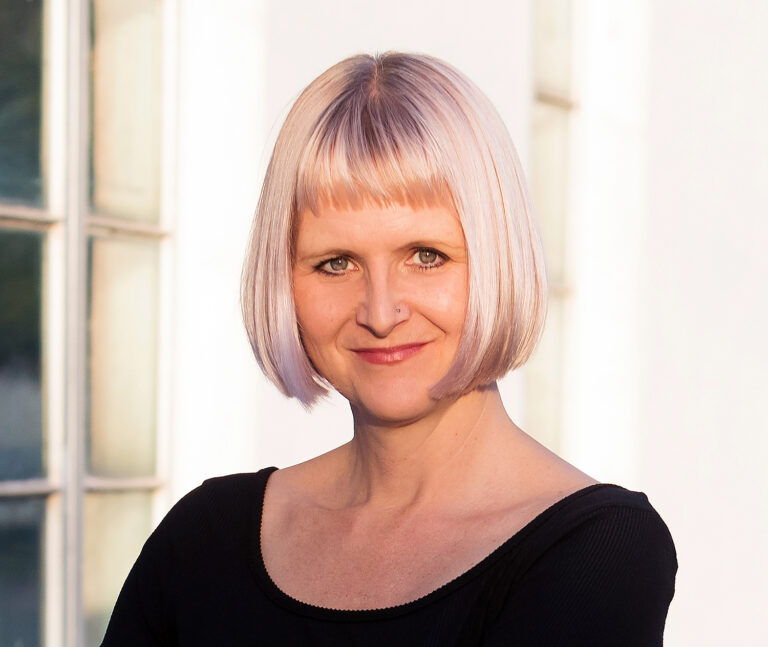
Artist and filmmaker Luci Westphal says that the word “biophilic” has been used to describe her recent work—and it’s a good fit. It’s one of those words that is both specific and a little open-ended. How do you explain art that reflects the natural world but also aims for something deeper? Westphal says her goal is “to have a direct impact on people’s well-being through my work and to help them discover, appreciate, share, and protect the uplifting beauty and healing power nature holds.” Even after decades of creating, earning awards, grants and showcasing her work in exhibitions, Westphal still lights up when talking about the joy of being an artist. Not all creatives stay so inspired, but chatting with Luci feels like talking to someone just starting out, brimming with excitement for what’s next. 

Westphal grew up in Haseldorfer Marsch near Hamburg, Germany. She began photographing at the tender age of eight years old, learning her way around a darkroom at the elbow of her father who is an artist and photographer. Somehow, not long out of high school, she found herself in Gainesville, Florida—of all places. The experience turned out to be surprisingly positive,and when she returned to Germany she worked and saved to come back. It was on her return to Florida that she met her future husband and kept chasing her creative dreams. She started with filmmaking, majoring in it at Florida State University in Tallahassee, and then dove headfirst into a career that took her from Brooklyn to Berlin, always blending her love of art and storytelling into every step of the journey.

Working mostly on documentaries at that time, she strove to make meaningful work that amplified underrepresented voices and highlighted issues in society. These included the documentaries “All God’s Children” about missionary kids and the difficulties they face, and “All’s Well and Fair,” an ongoing project where she interviews three separate families every ten years. 

A job opportunity for her husband and fellow artist, Scott Solary, then brought the couple to Colorado, where the change of scenery and pace reignited Westphal’s passion for photography, alongside her film work. This included her weekly video series she called her “Moving Postcards.” These one-minute videos offered cinematic snapshots of locations, events, and people, creating a condensed yet vibrant portrait of each place. For seven years she crafted these 60-second mini-films, capturing the essence of Berlin, Brooklyn, and Ft. Collins. Through this project, Westphal deepened her connection to nature and became more aware of how vital the natural world is to people’s well-being and joy. Viewers frequently shared how her work helped them experience nature in new, sometimes surprising, ways—giving them access to beauty they might not have otherwise found.

In 2018, she returned to Florida, settling in Tampa Bay. Here, she continued developing her outdoor lifestyle company “Happier Place,” while also working as a visual, social, and biophilic artist. Through both pursuits, she remains dedicated to inspiring people to spend more time outdoors and to stop, look, and appreciate the world. Her photographic work has evolved to include tangible formats such as prints and hand-transfers to wood, which often feature urban graffiti and gritty streetscapes in addition to nature. She has also started creating what she calls Moving Stills. These unique pieces are portable frames showcasing long unedited nature videos that play on a continuous loop without camera movement or sound. The Moving Stills offer an immersive experience, capturing a series of moments strung together like a window into the natural world–where nothing extraordinary occurs, yet every detail invites a deeper appreciation of nature’s quiet beauty.

You may have seen her work at the Creative Pinellas Gallery in the 2024 exhibition featuring Emerging Artist Grant recipients. Her dynamic interactive mixed-media installation included a shelter made from photo-infused wooden walls, live wildflowers, and items alluding to someone taking shelter. It invited the public to leave messages on the inside walls and to contemplate both what is beautiful in the urban outdoors and how we all have the basic housing needs. This installation won a Creative Loafing Best of the Bay Award for “Best Art Fort.” 

Westphal’s work can be viewed throughout the Tampa Bay area, including the annual Historic Kenwood Artist Enclave Studio Tours (March 15 & 16 in 2025) and at her Studio 114 in the ArtsXchange within the Warehouse Arts District. She also assists students and teachers at John Hopkins Middle School Magnet Art Program.

Upcoming opportunities to experience her art include an exhibition titled “Post-Historic St. Pete,” which explores the theme of duality in urban development by presenting her art along Central Avenue at the Craftsman House Gallery and Cafe, Forever Florida Gallery, and along the 3-block walk between. On top of these endeavors, Westphal is working on a deeply personal project with her father, who still lives in Germany and has been diagnosed with ALS. This ongoing project highlights their shared love of photography and the outdoors, combining family, art, and a meaningful reflection on nature during a challenging time.

Luci’s advice to aspiring artists? She shares a German concept called “über den eigenen Schatten springen,” which translates to “jumping over your own shadow.” It’s about overcoming your limitations and fears to do something outside your comfort zone—essentially pushing yourself beyond what you think you’re capable of. This, she believes, is where real growth can happen—not just for artists, but for all of us. Feel the fear and do it anyway. This is how we grow. And as natural beings in this vast, beautiful world, growth is essential. Luci Westphal’s biophilic work serves as a reminder for us all to embrace and love our lives. •

Luci Westphal (Documentarian) – In A Minute Portrait (Week 366)

Luci Westphal Website

Cover Artist Victoria Kudryavtseva

0

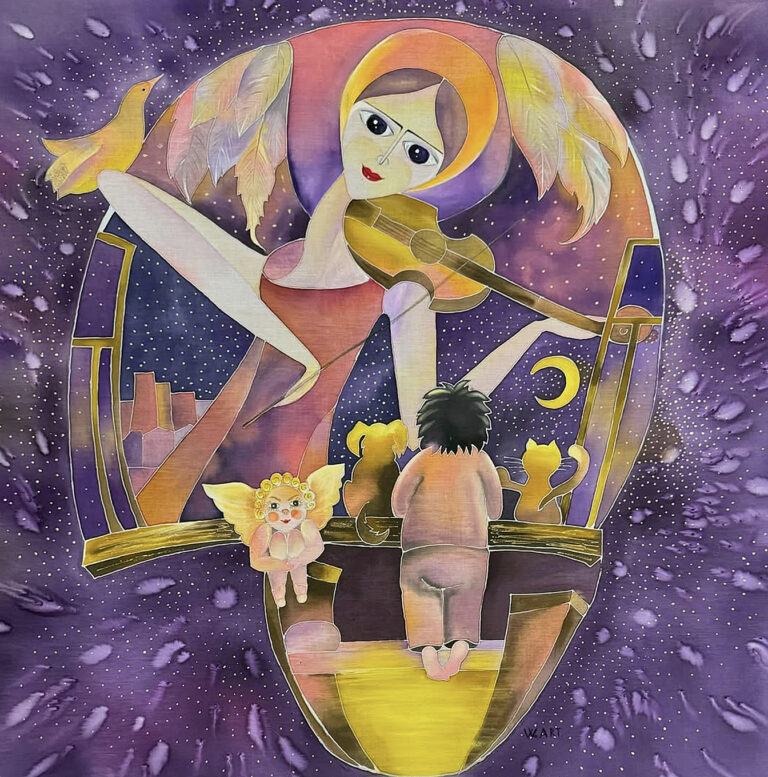
My name is Victoria Kudryavtseva, I am engaged in artistic ceramics and painting on natural silk and cotton (batik). My creativity is a very exciting process to me! It’s like magic, when the white material begins to live and glow in my works and emotions.

My creativity is very diverse, I paint all types of batik; cold, hot and batik in watercolor technique. My creativity serves as a means of self-expression and a way of communicating with the world and people around me. I graduated from an art college, but for 25 years art was a hobby for me, I devoted a lot of time to other things and responsibilities, but at the same time I always painted pictures, created interior items and works of art on silk.

Victoria Kudryavtseva

10 years ago, I rethought my attitude to my art and devoted all my time to creativity and self-presentation. I became a full-time artist, every day, seven days a week. When I paint silk, I pay attention to small details: how the tube of reserve passes over uneven areas of silk, how the paint spreads on the fabric. I love to watch white silk become multi-colored. I love to immerse myself in extremely complex work, so that everything around me ceases to exist, only me and my art.

Ideas come from everywhere. It happens that I saw a picture and it inspired me. Or I painted a scarf and liked the intermediate stage. I remembered this step and then reproduced it as the main drawing. And then one day I took a photo of the seashore and after a few days I realized that this was a ready-made design that would look great on fabric. And it worked! You can paint anything on silk, there are no restrictions.

I like to change the standard batik painting. Thanks to my extensive artistic experience and many years of practice, I have developed an individual artistic technique of painting on silk. I like to create paintings on complex spiritual and moral themes, combining decorative and applied art and thematic paintings that change the direction of standards in the technique of painting fabric.
I am very interested in thematic competitions on given topics, in which I present a separate representative in this technique; This is quite a complex and large-scale task that allows you to change the standard idea of a drawing on silk, which makes it possible to introduce the viewer to this type of art.

At the moment, I am a participant and winner of more than 20 exhibitions, auctions and competitions in Europe and the USA; Most of my works are stored in private collections. This gives me a great incentive to create new projects. •

Kudryavtseva Victoria
Artist-decorator
Email: kakiv77@gmail.com

The Florida Orchestra Merits Local Love, Wider Recognition

As Larry David might say, The Florida Orchestra is pretty, pretty, pretty good.

If that sounds like damning with faint praise, let me quickly make amends: TFO – its acronymic branding — is arguably the top symphony orchestra in Florida and one of the leading regional ensembles in the Southeast.

Certainly, its $14 million annual operating budget suggests as much. Few regional orchestras have bigger corporate kitties, and in prestige perhaps only the Nashville Symphony shines brighter, with the Atlanta Symphony Orchestra ranked among the nationals.

For me, the most impressive humble brag TFO might offer is that it’s been steadily headed in the right direction since its creation in 1968 from the merger of the St. Petersburg Symphony (founded in 1958) and the Tampa Philharmonic (1959).

Initially christened the Florida Gulf Coast Symphony, the musical marriage was marked rather literally in a ceremony in the middle of Tampa Bay. It adopted the TFO name in 1984.

Irwin Hoffman, a protégé of renowned conductor Serge Koussevitsky, was the TFO’s first music director. He died in 2018 at age 93.

By almost any metric, TFO has marked notable improvement, year after year. Its funding base has continued to swell, while its musical fare seems only to climb in quantity and quality each season.

The organization’s current music director and talented chief baton-waver — Michael Francis, a Brit married to a gal from Lutz — oversees an impressive number of activities, including some on the “community engagement” front that seems a forte.
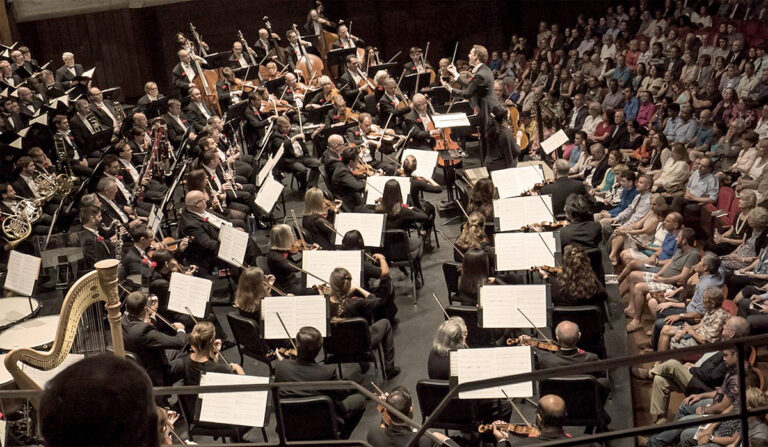
With 70 full-time musicians and conductors, TFO performs 150 well-attended concerts each year. Offerings range from its Masterworks programs, Morning Matinees and Soundwaves chamber series to Pops concerts and youth-oriented educational programs.
Under Francis, TFO and sister organization the Master Chorale of Tampa Bay have taken on some ambitious programming in recent seasons, including two huge Mahler pieces —Mahler’s 2nd (“Resurrection”) Symphony last season and his Symphony No. 3, set for May. Their staging requires enormous talent resources, and there can be no fiddling about over musical demands either.

“Programming the Masterworks series is a journey that balances familiar classics with new discoveries,” Francis told The Artisan recently. “My goal is for each concert to tell a story and spark a meaningful conversation that stays with our audience long after they leave the concert hall.”

The TFO music director added that he aims to “challenge and stimulate” the musicians with programming that also requires “building trust” with patrons.

“We aspire that our audiences will come, even though they might not recognize a composer or a piece,” he said. “My hope is that people will be excited to continue the journey with us year after year.”

TFO presents its Masterworks concerts in three venues: Ruth Eckerd Hall in Clearwater, the Mahaffey Theater in St. Petersburg and the Straz Center in Tampa. The orchestra also presents chamber concerts in more intimate performance halls and churches.
In August, TFO floated a $30 million proposal to build a space for rehearsals, education programs and offices, though it’s unclear if that level of fundraising is feasible. (The orchestra now rehearses at the Mahaffey but occasionally must set up elsewhere. TFO has offices nearby, at 244 Second Avenue N.)

“One option is the proposed Center for Music Education and Innovation — an expansion of the Mahaffey Theater that would provide fixed rehearsal space, classrooms and offices — but it is not the only option,” TFO spokesperson Kelly Smith said recently.

Managing upward


Francis’ predecessor, Stefan Sanderling, clashed with management over finances and programming — common areas of conflict when such relationships go sour. He left TFO after its 2014 season, despite having two years remaining on his contract. Both sides, it seems, wanted out.

Francis’ initial tenure went over so well with the suits upstairs they handed him a new 10-year pact starting with the current season. Now that’s job security — and well won, for my 2 cents.

TFO’s board of more than three dozen members is chaired by Linda Cassaly, who’s also involved locally with the Tampa Oratorio Singers.

Ignacio Barron Viela has been TFO’s chief executive office since August 2023, after a brief tenure in the same role with the Reno (Nev.) Philharmonic and a four-year stint as executive director of the Billings (Mont.) Symphony. Viela tops an administrative and operations staff of 30. There’s also a 44-person board of consultants and 18-member board of advisors.

In addition to corporate sponsors, TFO donors include several well-heeled individuals, such as Rick and Amy Smith, who sponsor the Soundwaves chamber series, and Suzette and Monroe Berkman, who underwrite resident conductor Chelsea Gallo. Others fund section principals’ salaries.

Bottom line: TFO ain’t hurting. Which makes it feel a bit bush league when execs come out before concerts to urge further support. That’s routine for community orchestras, not so much for professionals.

Lax on wax?


I said earlier that TFO’s ascension to the top of comparable musical ensembles has been “almost” entirely positive. For me, the one exception would be its lack of recording history under Francis, whose personal discography is impressive. TFO’s sole notable recording — of Delius’ “Appalachia” and “Sea Drift” — dates to 2012 during Sanderling’s tenure.

After I moved to the area in 2020, I told a friend in California how impressed I was by my first TFO concert. She replied that she hadn’t ever heard of them recording, so how good could they be?

Overstated by a good bit, of course, but it’s a point unlikely to be lost on musicians from outside the area whom TFO might like to recruit. Recordings add to a player’s professional standing and represent supplemental income for ever-underpaid career musicians.

All in good time, I suppose. For now, it would be churlish to pick such nits, considering the many musical bounties offered by the orchestra. •