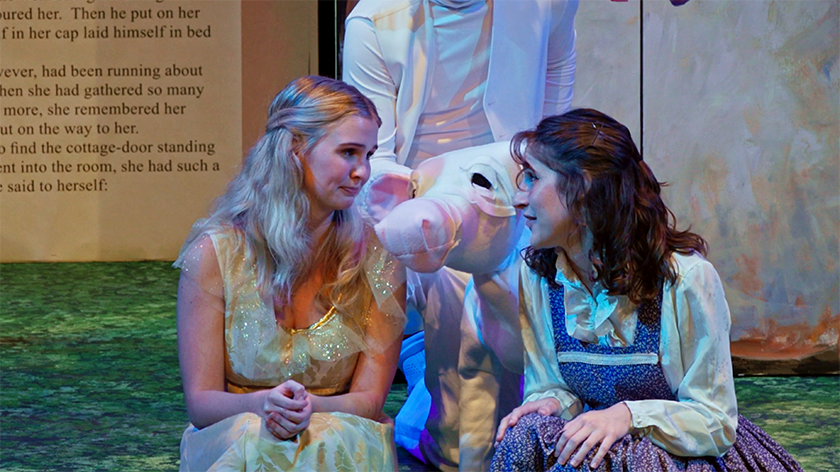
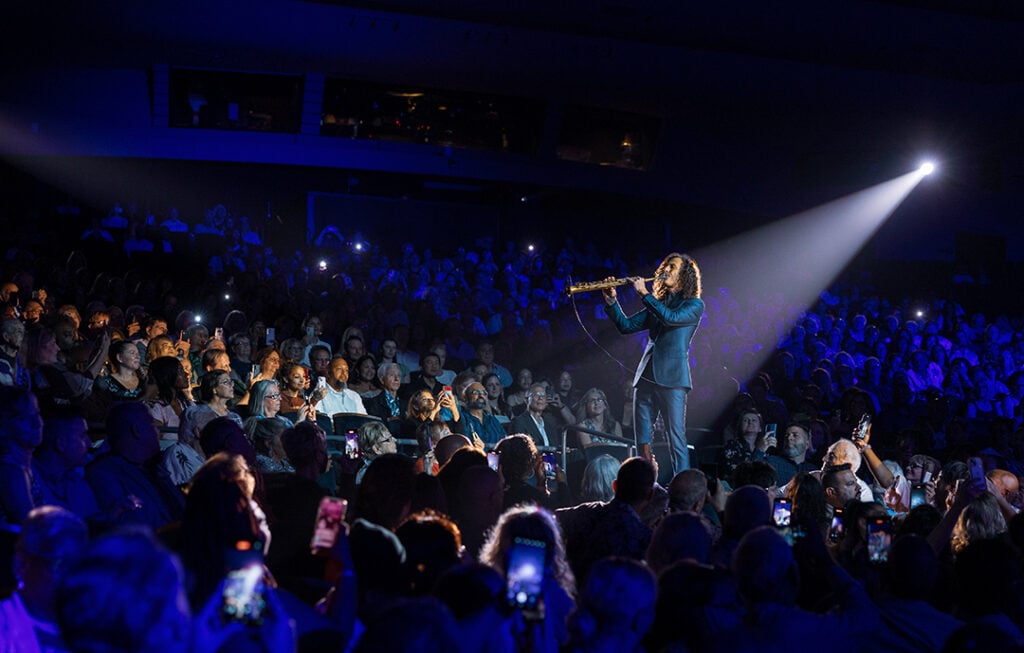
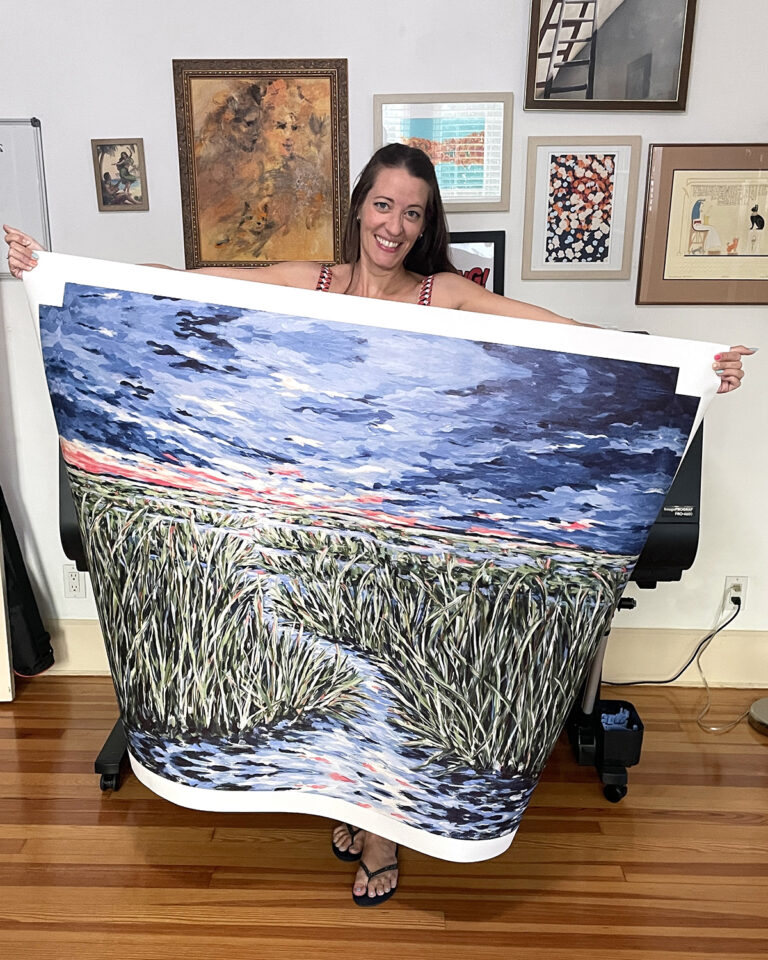
The Duke Energy Center for the Arts – Mahaffey Theater is proud to announce a special one-night-only event featuring Broadway star Laura Bell Bundy, best known for originating the role of Elle Woods in Legally Blonde the Musical. Friday, July 18, Bundy will headline a cabaret-style fundraiser performance, featuring two solos, plus a special number from Wicked, where she starred as Glinda on Broadway. She will join the Legally Blonde Jr. summer campers from Mahaffey’s Class Acts program for a collaborative performance. In its third year, the Mahaffey Class Acts Summer Camp provides transformative performing arts education for students across the region.
Ms. Bundy will lead a private workshop with the students, working with them to refine their performance, offer professional insights, and provide one-on-one coaching before their show the following week. The workshop itself is not open to the public, but the evening performance provides a unique opportunity to celebrate the impact of arts education and support future programming.
Guests will enjoy a Cocktail Dinner Reception, behind-the-scenes tours of the ballroom and stage set, and an opportunity to meet the cast of Legally Blonde Jr. The evening features raffle drawings and VIP seating in the front section for the performance, all in support of local arts education.
“We are thrilled to welcome Laura Bell Bundy to the Mahaffey stage—not only as an extraordinary performer but as an inspiring mentor to our Class Acts students,” said Bill Edwards, CEO and Founder of Bill Edwards Foundation for the Arts. “It’s an incredible opportunity for these young performers to learn directly from a Tony-nominated Broadway star. This event reflects our Foundation’s ongoing commitment to ensuring every child has access to quality arts education. These camps—and the impact they create—are exactly why we do what we do.”
This event serves as a fundraiser to support youth arts education, with all proceeds benefiting the Mahaffey Class Acts Summer Camps, which are made possible through the support of Bill Edwards Foundation for the Arts. •
Event Details: Date: Friday, July 18, 2025 Time: Cocktail Reception & Dinner 6:00 PM | Cabaret Performance to follow at 7:30 PM Location: Mahaffey Theater, 400 1st Street SE, St Petersburg, FL Tickets: VIP $125/pp, GA $45/pp | Space is limited. BUY TICKETS Ticket Info: 727-300-2000
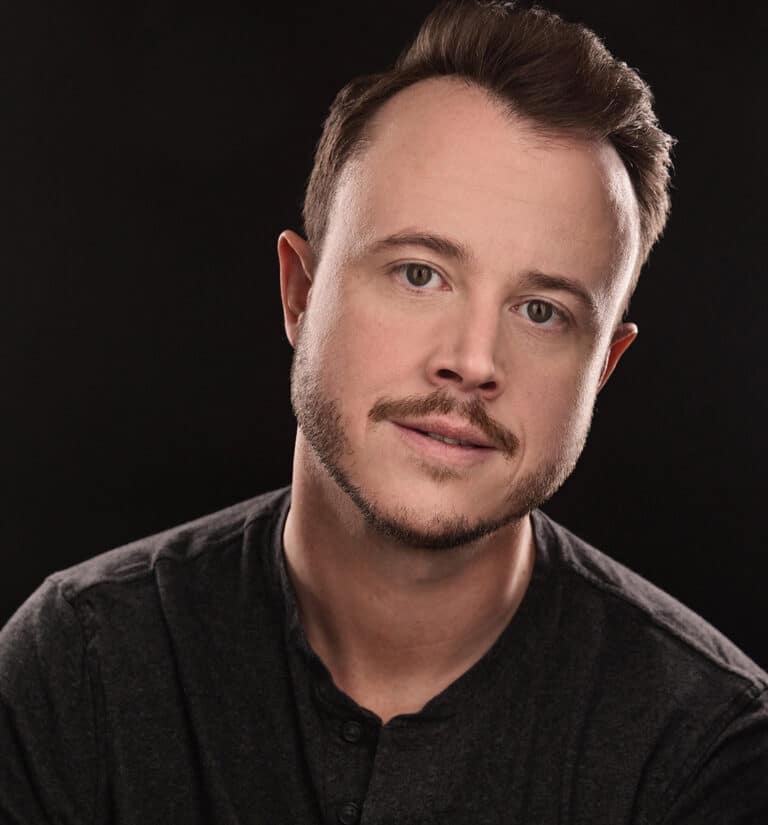
After dazzling on Broadway, Quinn VanAntwerp now takes on the challenge of bringing Gordy to life in the touring production of Shucked. The musical, with its sharp humor and heartfelt moments, offers VanAntwerp a chance to embrace the role of the charmingly flawed “corn doctor” from Tampa, weaving a tale that dances between satire and sincerity.
In this interview with Artisan Magazine, Quinn opens up about his journey with Shucked, sharing insights into the humor, challenges, and joy of stepping into Gordy’s boots. From his initial skepticism about a musical centered on corn to his deep appreciation for the creative brilliance behind the production, he reflects on the evolution of the show and his own artistic discovery along the way.
Your character, Gordy, is a unique guy. How would you describe him in three words, and what made you want to step into his boots?
I would say he is a survivor. He’s resilient and charming, hopefully.
I think for much of my career I’ve played nice guys, and that’s always fun to be a nice guy, but there’s something really wonderful about playing the bad guy, the villain of the story and finding a way to redeem those characters and make them believable. Honestly, he reminds me a little bit of an homage to Harold Hill, even though he’s maybe not as successful at his conning craft as he was. It’s been really fun to step into this role. I got to be part of the Broadway casting. I just couldn’t say no to signing on for another chapter of taking it across the country. I get to be the one that brings Gordy Jackson home to Tampa, which is where he’s from.
What was your first impression when you read the script or heard the music?
When I first got this audition, I was like, they’re making a musical about corn? Is that what I want to be a part of? And the first moment I read this script I knew it was probably the funniest show I’d ever read. That was four years ago, I think. And I’ve been working on the show for over three years through its development process, and the Broadway production. The music is fantastic, but it’s the team of creative people that they brought together. That first time we started working on it, I knew I had found something that was going to be very singular in my career. We just basically would get together every day and all wholeheartedly dive into making each other laugh. And we did that for years, until we got to where we are now. I like to think that, of those thousands of these jokes didn’t make it, the best ones did. And I think that’s what makes Shucked so special – that there are so many great jokes, and obviously, it’s the music too.
Shucked walks a tightrope between satire and sincerity. What’s the trick to keeping Gordy, the corn doctor, grounded in all of the chaos?
It’s a really fun exercise as an actor how to ground that belief in something real so that people can laugh. He’s in a real tight spot. Even though I’m the bad guy and I drive a lot of the plot, I’m also kind of the audience because I’m the visitor or the outsider that comes into this very charmingly quaint, rural town from the big city of Tampa. I like to imagine myself as the audience, and I get to guide the audience through this new world that we’re going through together.
The comedy is rapid fire and razor sharp. What has been your funniest audience reaction so far?
You know we’re in Atlanta right now and maybe it’s not the funniest one, but I I didn’t realize that I had a line about Atlanta until I said it. In New York, you don’t think about that, but all of a sudden you end up in new cities and towns and people find different parts of the show funnier than others. And so, Tuesday night in Tampa is kind of exciting. What is Tampa going to love? It keeps us sharp. I think it really makes you feel like you’re creating the comedy on the fly, which is when comedy works best.
What has been the most unexpected thing you’ve discovered about yourself through playing this role?
I think sometimes we don’t believe in ourselves, and we also don’t believe that we can be loved for who we are. At first when I started playing Gordy, I thought, OK, he’s kind of the bad guy – a smarmy, charming con man, but really I’ve realized that all those things are true, but also by the end, you’re hoping that he’s accepted for who he is. I think that is the power of this piece. I’ve really learned there is something really important about community and who your chosen family is. I am moved by his journey. These people can love him regardless of his foibles.
Shucked feels like wildly original, but also weirdly timeless. What do you think it says about the world right now? And why do audiences connect so deeply with it?
Lots of people leave the show and say I really needed that. It’s so uncommon these days to agree on something, so going out to the theater, listening to great music, and laughing together with thousands of people is just so rare. It’s light-hearted fun, a night at the theater that you will leave in a better mood than you came. I also think it does that extra thing of reminding us that we can all find common ground if we try hard enough. I think people really resonate with that message, even though it’s a very simple one. If Gordy could give one piece of advice to the audience, what would it be? And would Quinn agree with it? I guess his advice might be that the ends justify the means. I wouldn’t agree with it. I think maybe even Gordy at the end of the play might not agree with it – not to give away his journey, but it really matters how you treat people. You want to go fast? Go alone. If you want to go far, go together.
When the people leave the theater, what do you hope they take with them besides the newfound respect for agriculture?
It’s a brand-new musical. It’s not based on anything. Yes, it’s about corn, but it’s about a lot more than that. Hopefully they leave being like I had no idea what to expect from this show, but I’m so glad I went because I really needed to laugh like that. I’ve had a lot of really cool jobs in my life. I’ve been in many fun TV shows and part of Big Broadway hits, but this one – I don’t know. I can’t quit it. There’s something really special and heartfelt about this show.
If Gordy had a Tinder bio, what would it say?
Well-dressed Florida man… Trust me, I’m a doctor. There’d be a lot of him holding up crocodiles his friend caught, that he’s pretending that he caught, and a lot of bright colors and Hawaiian shirts. •
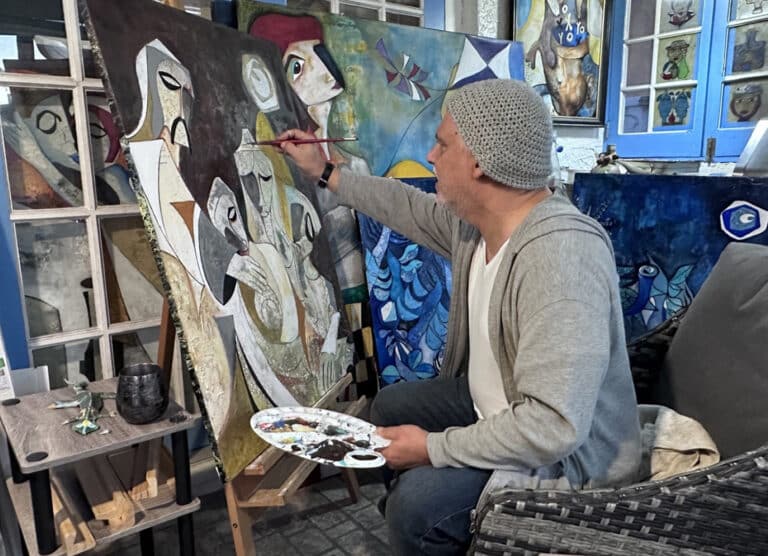
After nearly a quarter-century of painting in the Tampa Bay Area, Edel Alvarez Galban—known artistically as AGalban—is embarking on the most ambitious artistic endeavor of his career.
AGalban, a practicing physician and prolific painter, has been a steady force throughout Florida’s growing art scenes. But in the last three years, his profile has grown considerably. He now finds his work in the permanent collections of the Tampa Museum of Art, the Wilzig Museum, and one of Florida’s largest public libraries. He was also commissioned to create the artwork for Guillermo Fragoso’s album 5 Herencia, and served as the inspiration for a major character in the 2025 international award-winning film Líneas, for which he also created original paintings. In a new milestone, Galban successfully secured support from the National Endowment for the Arts (NEA), the State of Florida, and Creative Pinellas to launch the ambitious Flora & Fauna exhibition, which would ultimately draw more than one thousand visitors and significant coverage.
Exterior of the Sagrada Familia Basilica, taken during Galban’s transformative July 2024 trip. Courtesy of the artist.
Then came a moment in July 2024 that changed everything: a spiritual near death experience at a world-famous site. Galban was visiting Barcelona, the home of both his greatest artistic inspirations: artist Joan Miró and architect Antoni Gaudí. It was his fourth — and most impactful — visit to the city, as well as the first shared with his wife Rebecca and children, Lucy and Lennon. While seeing the iconic La Sagrada Familia Basilica, Galban felt deeply fatigued and unwell. As a medical doctor, he recognized his symptoms to be those of a heart attack and, to avoid causing alarm, encouraged his family to explore the basilica without him as he rested on a seat.
Interior of Peace Memorial Presbyterian Church in Clearwater, Florida featuring original signed Louis Comfort Tiffany stained glass windows. Photo by Antonio Permuy.
As he observed the basilica from the air conditioned visitor’s center, Galban felt its architecture come alive to him amidst the intensifying cardiac episode. He began noticing several details in the facade that he had never seen before on his previous visits, and began to photograph and sketch them. Upon returning to the U.S. and receiving major heart surgery, he felt called to create a series of works in honor of Gaudí’s genius.
Watching this powerful set of works emerge, Galban knew they needed to be unveiled in a similarly unique way. The result is Sacred Pilgrimage: Gaudí and Galban, his first-ever traveling solo exhibition. Co-curated by Tarin Mohajeri and Antonio Permuy, the exhibition has emerged as a team effort that has garnered a grant from the Gobioff Foundation, and is joined by the AIA Tampa Bay Center for Architecture and Design as an educational partner.
God’s Architect, a Surrealist portrait of famed architect Antoni Gaudí, by AGalban. Courtesy of the artist.
The exhibition takes a novel approach. The “pilgrimage” in the title anchors the exhibition back to its spiritual origins, placing the works in the setting of various sacred sites to reconnect them with his life-changing experience at the basilica. The concept also nods to the historical role of churches in Western Europe as primary patrons of public art. This historical public art would often be experienced by locals as well as travelers journeying from church to church through the various pilgrimage travel routes to popular sacred sites such as Rome, Jerusalem, and Galicia. Here, however, Sacred Pilgrimage takes the journey to viewers by touring several community-rooted venues, many with spiritual significance.
The pilgrimage begins June 25th 2025 with an opening reception at Peace Memorial Presbyterian Church in Clearwater, a historic setting famous for its rare Tiffany stained-glass windows. The launch event will feature classical guitar by Miko Krupa, wine and cheese charcuterie arrangements, and remarks by architect and Sagrada Familia enthusiast Peter Hauerstein from the AIA Tampa Bay Center for Architecture and Design.
Gallo Gaudiano, by AGablan. Courtesy of the artist.
In August, the exhibition will travel to The Portico in Tampa. Once the site of downtown Tampa’s first church, The Portico remains a spiritual center and is now a hub for community-building through art and social initiatives. These include cultural workshops, programs for the homeless, and hosting the popular Café con Tampa lecture series spearheaded by Tampa Councilman Bill Carlson. In September, the show will arrive at Creative Pinellas, a nod to the success of last year’s Flora & Fauna exhibition.
Future stops include a planned Miami debut at a yet-to-be-confirmed landmark church, followed by the nation’s oldest city, St. Augustine, in 2026. The final leg of the tour will take place in Barcelona—the city where the story began—exactly 12 months after the launch to coincide with both the 100th anniversary of Gaudí’s death and the projected completion of La Sagrada Familia.
Thematically, Sacred Pilgrimage expands on Galban’s signature visual themes. Each work in the exhibition displays his fluidly organic Cubist style and Surreal scenes against dramatic color field backdrops infused with moody atmospheres and symbolism. One standout work, God’s Architect, transforms Gaudí himself into his own architecture in a powerful metaphor begging for reflection. Another highlight, Gallo Gaudiano, features a vivid blue rooster, a recurring symbol in Galban’s native Cuba, yet here reinterpreted with sculptural elements drawn directly from the Sagrada Familia’s façade. The piece has already become one of the exhibition’s most emblematic images, featured in promotional materials and reproduced as a limited edition print.
Torre de La Sagrada Familia 1 (Sagrada Familia Tower 1), from the series Gaudí y Yo (Gaudí and I), by AGalban. Courtesy of the artist.
Beyond its aesthetic ambition, the exhibition is also a philanthropic one. All works are available for purchase, with a portion of proceeds supporting the work of each host venue. Each stop will also feature special events: panel discussions, guided tours, lectures, and art workshops designed to deepen engagement and enrich audiences. Additionally, some select works will also feature educational reference photographs of the exact sites of the basilica that inspired them.
Through Sacred Pilgrimage, Galban invites viewers to experience a compelling homage to divine illumination captured through his art, Gaudí’s architecture, and the creative spirit that flows through both.
More than a typical exhibition, this is a transformative journey of gratitude, inspiration, and discovery.
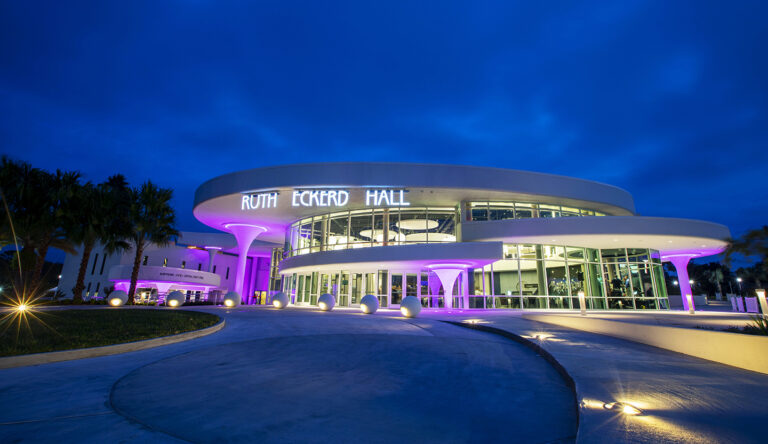
Since 1983, Ruth Eckerd Hall has been synonymous with epic live entertainment, Broadway tours, world class concerts, arts education, and so much more. As a multi-use, multi-genre, cultural epicenter for Clearwater and beyond, Ruth Eckerd Hall has set a high standard for top tier entertainment for over four decades.
Ruth Eckerd Experience
But, do you know the story of how the beloved Ruth Eckerd Hall came to be? Here we’ll share the beginnings of the Clearwater jewel – how the historic Kapok Tree Inn was integral to its existence, and how it’s grown with the community. We’ll talk to President & CEO, Susan M. Crocket, whose own personal history is richly intertwined with that of the institution she loves, and we’ll relive some of the most iconic moments at REH through the years while looking ahead to future plans and upcoming powerhouse dates.
How a Tree Planted the Seeds of a Cultural Legacy
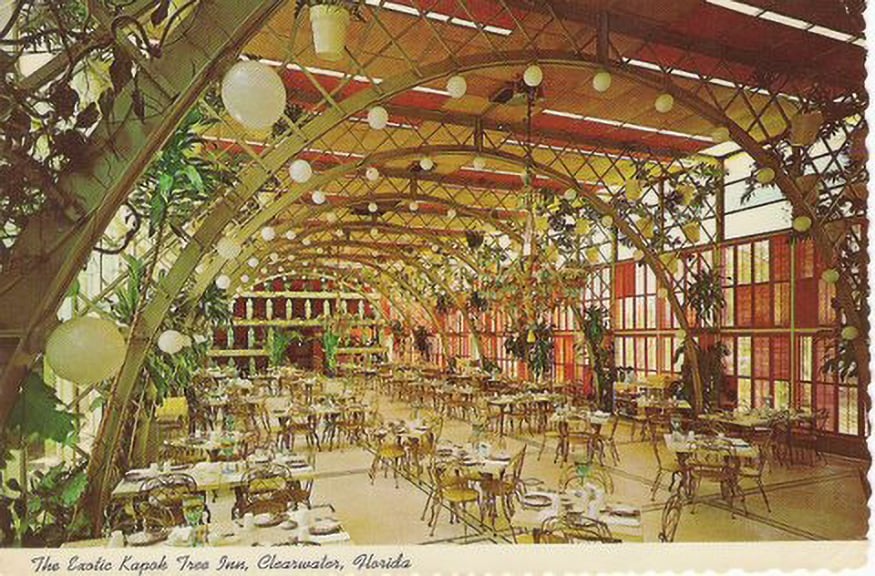
Even though it closed its doors in 1991. The Kapok Tree Inn enhanced forever our area’s restaurant culture, becoming as popular as any roadside Florida attraction. Many still remember the Baumgardner family, who owned and ran the much loved venue built near and named for the massive Kapok tree that stood guard over acres of Clearwater orange groves.
Richard B. Baumgardner proudly grew his family’s legacy of serving good farm fresh food to tourists and locals alike and built the Kapok Tree Inn into a culinary mainstay as well as a precious piece of Florida history.
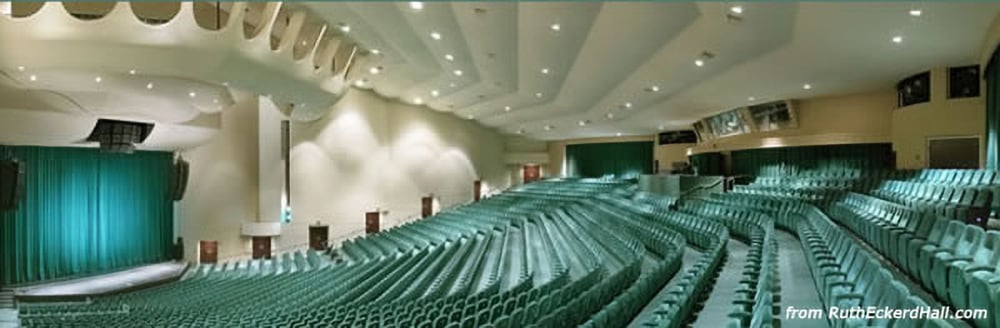
At the time of Mr. Baumgardner’s death in 1976, Clearwater officials were trying to plan to build a new municipal auditorium in the style of the then Bayfront Center. (Now The Mahaffey) Voters were not of like minds, however, and a measure to proceed with such a complex failed. Enter June Baumgardner, widow of the late restauranteer, to salvage the dream. She donated 38 acres of property to the City with two conditions: that the build begin within two years and that it bear the name of her husband. Under the supervision of the Frank Lloyd Wright Foundation, in 1983, The Richard B. Baumgardner Center for the Performing Arts opened with a performance by the Suzuki Children of Japan.
You may be wondering, wait, isn’t it named Ruth Eckerd Hall? Well, yes and no. Ruth Eckerd Hall, which has become synonymous with the venue, refers to the performance auditorium itself – a space that Jack and Ruth Eckerd, of drug store fame, as fundraisers and founders were instrumental in building. The entire complex, which includes Ruth Eckerd Hall, the Murray Theatre (Home of Marcia P. Hoffman student productions), the Margaret Heye Great Room, and more is still and formally known as The Richard B. Baumgardner Center for the Performing Arts. A statue of the late namesake was dedicated in 1987.
Since 1983, there has been nothing but growth including facelifts and major renovations along the way, as well as the additions of BayCare Sound and The Bilheimer Capitol Theatre. •
Ruth Eckerd Hall President & CEO Susan M. Crockett
The Interview
TA: How long have you been Ruth Eckerd Hall President & CEO? How do you see yourself upholding the legacy of this storied institution?
SMC: “I was appointed President & CEO in 2018, but having been with the organization since 1988, I’ve had a front-row seat watching the Ruth Eckerd Hall story unfold. I’ve seen the area develop, bringing more entertainment options and competition for our patron’s attention. I witnessed educational priorities shift, nudging arts education out in a competition for limited school resources and student’s time. Programming had to evolve to remain relevant, meeting the tastes and needs of the community and ensuring access to arts for each generation. Infrastructure was reinvented as technology rapidly transformed how we serve our customers. Lots of change. What has never changed is the passion of our staff, our patrons, our students, and our artists. Today’s audiences are just as excited as our first audiences were when the lights go down. Today’s donors are just as committed to our mission as our founders were. Our team, although double in size, still refers to itself as a family, welcoming those who enter our home. That’s the legacy I am actually aware of and stewarding – that means ensuring quality experiences for those we serve each time we reach deeper or grow larger.”
TA: What do you consider to be one of Ruth Eckerd Hall’s most fascinating historic facts?
SMC: “I laugh at myself when I share this memory from my early days at the Hall. I received a call to rent the auditorium for a business presentation. It must have been 1989 or so. It was my job to draw up the contract on my electrictric typewriter and coordinate all the details. The morning came and my contact arrived with her boss who would be making the presentation. I escorted them around, so he could get comfortable with the space and where his guests would be. Bill Gates drew a nice crowd that day who came to see him demonstrate a new product called “Windows.” I was clueless!”
Baycare Sound
TA: What do you see as Ruth Eckerd hall’s place/contribution to the arts community?
SMC: “While many may associate Ruth Eckerd Hall with Motown, Woodstock, or classic rock legends, the digital generation flocks to see their favorite Social media star at the Bilheimer Capitol Theatre or to dance the night away at an EDM festival at the BayCare Sound. From stand-up comedy to musicals, country to jazz, offering an exciting and diverse programming mix is core to our identity – making us unique in both volume of shows and variety.”
TA: How did the BayCare Sound and Bilheimer Capitol Theatre come to be, and how do they compliment Ruth Eckerd Hall?
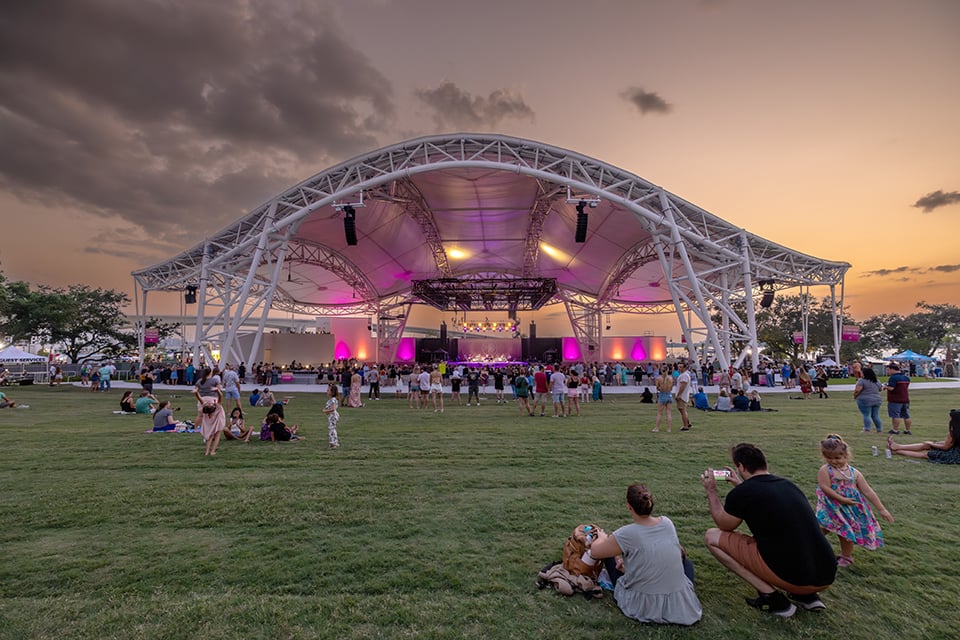
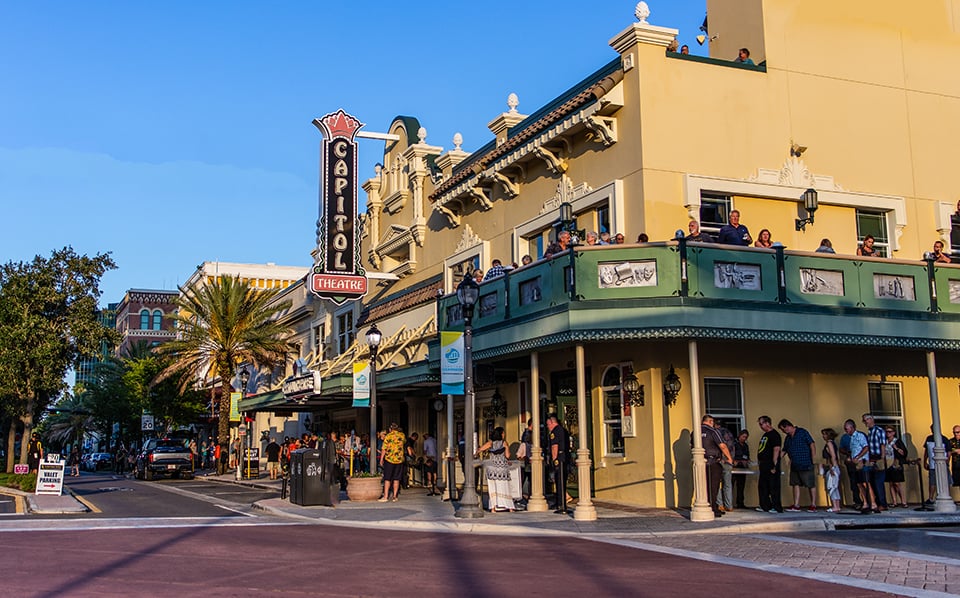
SMC: “The Bilheimer Capitol Theatre was built in 1921, accommodating vaudeville tours and screening early motion pictures. People share their memories of Saturday morning cartoon reels and Friday night first dates. But by 2009, it was crumbling, in foreclosure, and likely to be torn down. Ruth Eckerd Hall and the City of Clearwater partnered to save the landmark. It was given new life with updated systems, loge boxes, additional restrooms, and a 1920s facelift. With 700 seats, it provides an intimate experience with a line-up of over 125 shows each year. Several years later, the City reimagined its downtown corridor, including Coachman Park. The plans for the waterfront property included a new bandshell, a feature that traces back to the City’s early days. They determined that investing in additional infrastructure would lead to more use and drive economic growth. The result is the BayCare Sound, a boutique amphithatre that seats 4,000 under a canopy with room for another 5,000 on the lawn. Ruth Eckerd Hall was selected to program and manage the venue. Having multiple stages with a capacity range from 200 to 9,000, plus the flexibility of going from theater-style to cabaret, to comedy club, to outdoor festival, brings endless possibilities.”
TA: Talk about Ruth Eckerd Hall’s legacy of theater education.
SMC: “From its first days, Ruth Eckerd Hall offered student workshops and theater for young audiences. Arts education has always been at the heart of what we do, evolving over time to include a full range of on-site instruction, classes, camps, and student productions. In 2003, the community funded the expansion of education space to meet increasing demand. The new structure was named The Marcia P. Hoffman School for the Arts to honor a Ruth Eckerd Hall Founder and long-term child advocate for arts education. Over the past decade, with a strategic approach to overcome physical and financial barriers, the school also offers services at 31 community sites including Title 1 schools and retirement facilities, bringing the teaching artist to the student. Over 62,000 students participated in 2024, true to the school’s commitment that no child is ever turned away.”
TA: What are some of yor favorite shows, and is there a record of most successful show(s)?
SMC: “I believe the record for longest show was our 5th Anniversary Gala – A Night to Remember. It lasted over five hours and featured impersonator, Rich Little, Carol Channing, Alvin Alley Dance Company, Joffrey Ballet, Gregory Hines, and more. Knowing what I know now, I can’t imagine the logistics of pulling that one off! We’ve had so much amazing talent on our stages, from Mikhail Baryshnikov, Yo Yo Ma, Julie Andrews, and Dolly Parton, to Aretha Franklin, Al Pacino, Ed Sheeran, and Johnny Mathis.” (Mathis appeared this past February at age 90.)
TA: Moving Forward, what is the vision for future growth and development? How Does Ruth Eckerd Hall keep its history alive?
SMC: “A priority is ensuring that our facilities remain beautiful and functional, with amenities that wow our guests. We operate three individual facilities, each with its own vibe, so we will continue to develop the artist line-up and fan experience at each. The excitement is still palpable from launching the BayCare Sound, and we’re embracing the opportunity to position it as a top venue in the industry. Feedback from fans and artists alike confirm it’s on its way there. Ruth Eckerd Hall on the Road, our division that books and produces entertainment from Pasco to Lee County continues to grow – and being part of major sporting events, private celebrations, and new festivals energized our team while creating deeper community ties. There are alway ideas being explored. There’s never a shortage of creativity on this team, and I have no doubt, some of what we’re dreaming today, will become a part of legacy.” •
Black boots march across the nation Hands held high with straight stiff salute Confusion and fear mark the mood As more black shirted men gather. Did we ever expect them here With steel blue eyes and stern faces Seeking out the flawed and impure Yet, there they are an uncontrolled force. The lawful courts do now permit An effort to allow one race Selected people gathered up And secretly vanish from sight. What is America today This nation once was, is no more A dim memory of the past How did it happen oh so fast!
REBIRTH
Winter leaves a straw lifeless plain The frosty bleak ground lies silent Little stirs but a small guest That scavenger finds few treats. The weather forever changes All sallow fields caress the sun Warmer evenings soften the earth Morning dew stirs the dormant. What appeared deceased comes to life A hard soil leaves a footprint Green shoots appear as straw gives way Icy clime shifts to pleasant days. The worst of times a memory Tender nights follow bitter weather Blooms appear on the dead tundra Spring starts a rebirth and resets.
SILENT LABORS
The factories muted Just metallic noise heard Autotrons do the work No humans anywhere. Where are all the people? The streets empty and bleak Shuttled off to someplace Any who can say where? Products move off the line Unseen buyers e-pay Products move, silent, fast. Windows show no faces. Tall empty buildings stand Neighborhoods have no life Local shops now shuttered Barren, sterile, silence.
THE CARDBOARD MAN
From afar an average man Yet a strange empty appearance Fixed without any connection Just a blank face and dead blue eyes. Well dressed and handsome to the gaze Yet little is seen or absorbed Clearly a witness but unmoved Commotion makes no impression. Nothing is learned or understood There is no concern or feeling An observer that does not see With senses that never receive. Yet he is little different Then many who address the day Untouched by all that surrounds them The cardboard men for all to see.
Dr. Marc J. Yacht, MD, MPH is a retired medical doctor. He spent several years in private family practice and then joined the Florida Department of Health. He was appointed Executive Medical Director, Pasco County Health Department (1987-2007). Dr. Yacht has served as past Presidents of the Pasco County Medical Society, the Florida Public Health Association and was active on local, State and national committees and boards addressing Public Health related issues. Currently, his interests are music, poetry writing, and submitting OP-EDS relating to current national issues. He and his wife are both retired. Their three children are married. He and his wife currently reside in Hudson, Florida. Email: Mjyacht58@gmail.com
Kenwood Resident (St Pete) Michael Singleton Publishes Childrens Poetry Book
POETRY PARTY: A Children’s Poetry Book with Developmental and Optimistic Life Lessons by Michael Singleton
Step into a colorful world of inspiring tales where animals, children, and even shoes discover the beauty of being unique. In this heartwarming collection of rhythmic stories and poems, young readers will meet characters like Ozzie, the Ostrich, who learns that running fast is just as special as flying, and, Tiny Tim, who shows that heart matters more than height. Each story explores important life lessons celebrating differences, embracing kindness, building confidence, and finding courage in everyday challenges. With playful language and uplifting messages, this book invites kids to reflect on what makes them and everyone around them special and teaches optimistic thinking. Perfect for reading aloud or cozy bedtime moments, Everyone Shines in Their Own Way is a joyful celebration of empathy, self-love, and the power of friendship.
About the author Michael Singleton
My master’s degree is in child clinical psychology and I have always worked with children and loved creating atmospheres in which they are having fun and smiling. Even when a teenager, I would write poems often and became a published poet. When my son began showing an interest in poetry, he served as my muse for this Poetry Party book. Combining my background in child psychology and poetry ended up making for a fun project in which all poems have developmental stories and lessons of learned optimism. This book celebrates kindness, uniqueness, creativity, helping others, and many more developmental themes in a fun way using animals and children and playful pictures to go along with the poems. It was my intention to make it so family or friends who read it with children are able to develop healthy conversations inspired by each poem.
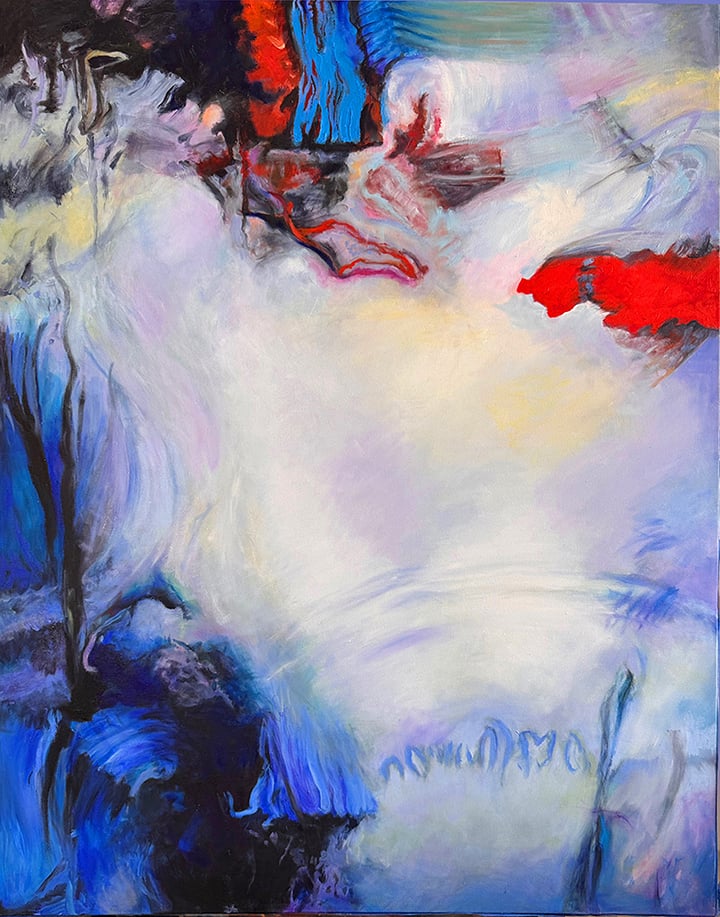
In the heart of the gallery, where silence echoed louder than whispers, hung an enigma crafted from colors that defied logic. It was an abstract tapestry, a cacophony of strokes that danced upon the canvas like whispered secrets waiting to be deciphered.
Amidst the murmurs of uncertainty, stood a man, a mere spectator caught in the web of chaos and beauty. He traced the vibrant lines with his gaze, trying to unravel the mystery woven by the artist’s hand.
Each brushstroke was a daring rebellion against conformity, a rebellion that invited the audience to break free from the shackles of certainty and plunge into the abyss of interpretation.
As the man immersed himself deeper, the colors whispered tales of their own. The vibrant reds spoke of passion unbound, the blues echoed melancholy lullabies, while the yellows sang of joyous liberation.
The chaos of abstraction unveiled a different reality—a realm where the mind roamed free, unburdened by the constraints of concrete definitions. The canvas was not just a riot of colors but a gateway to introspection, inviting voyages through the labyrinth of imagination.
In that moment, the man understood. Abstract art was not a puzzle to be solved but a mirror reflecting the kaleidoscope of emotions within. It was an invitation to embrace the unknown, to find beauty in the uncharted territories of the mind.
As he stepped away from the canvas, a newfound appreciation bloomed within him. He realized that within the realm of abstraction, every stroke was a story untold, waiting for the curious soul to breathe life into its narrative.
You’ve probably heard that you can charge more by limiting your print runs, but if you’re not sure how, or whether it actually works, you’re not alone. Limited Editions have long been marketed as a way to boost perceived value and create urgency, but in today’s saturated, fast-moving art world, do they still hold weight?
Limited Edition prints were born in the days of the printing press, as the plate degraded over time with each print passed through the press. Nowadays, the majority of reproductions originate from digital files and are recreated on high-tech printers, so limiting how many are produced can seem arbitrary.
That said, Limited Edition prints are a great way to add value and demand for your fine art prints. You can charge more for them because there are only a handful of these prints in the world.
Are Limited Editions right for you? Here are some important Considerations:
Choose your edition size carefully. Are you going to offer 10 or 200? Well-known artists can get away with smaller editions at higher prices, while emerging artists may offer a larger number at a lower price to generate interest and FOMO.
Sign and number each Limited Edition print by hand. For example, 4/25 would indicate the fourth of twenty-five prints in a LE run. Include a Certificate of Authenticity, just as you would an original work of art. This should include your name, title of the work, edition number, medium, and print date.
Be honest. Once you reach the last print in a LE series, do not print anymore. Remember: you are charging more and your reputation is on the line, so be sure to keep careful track!
A final note: If you are just starting out and do not have much of a following yet, consider sticking with open edition prints for now. Limited Editions will serve you better when there’s higher demand and you are working with more reputable institutions.
When you’re ready to launch your collection of prints, contact Amazing Art Printing – St. Pete’s finest art print shop. We take all of the guesswork out of the printing process so all you have to do is sit back and collect your profits. Simply visit www.easelmanagement.com/amazing-art-printing or contact us at rosemary@easelmanagement.com. •
   I was born in New York but moved to Florida where my early formative years were steeped in the sunlight and the botanical diversity of the south.
   I have always drawn and painted since early childhood. Like all children, I loved it. I just never stopped. My passion, then and now made every moment feel alive with a profound sense of presence and purpose. When not drawing or painting, I explore as much as possible the flora and fauna, as well as the waters and animal life of my surroundings.
As a young adult, I was a single teenage mother. During this time I attended USF, St Petersburg, Eckerd College, and at City & Guilds College in London England while living in and working on the William Morris House. I was only in the UK for part of the time I was at Eckerd.
   From the age of 20 I made a living by the primary skill I had, working as a freelance illustrator. My work included packaging design, particularly food packaging, medical illustration as well as several cookbooks, children’s books one of which was a children’s book on Helen Keller for Random House and adult and young adult fiction and non-fiction, and over 50 book covers. You can find this work in grocery stores, department stores, bookstores, and libraries and maybe in your refrigerator.
   I also taught at Eckerd College and Ringling College of Art & Design and currently teach one class at the Morean Art Center.
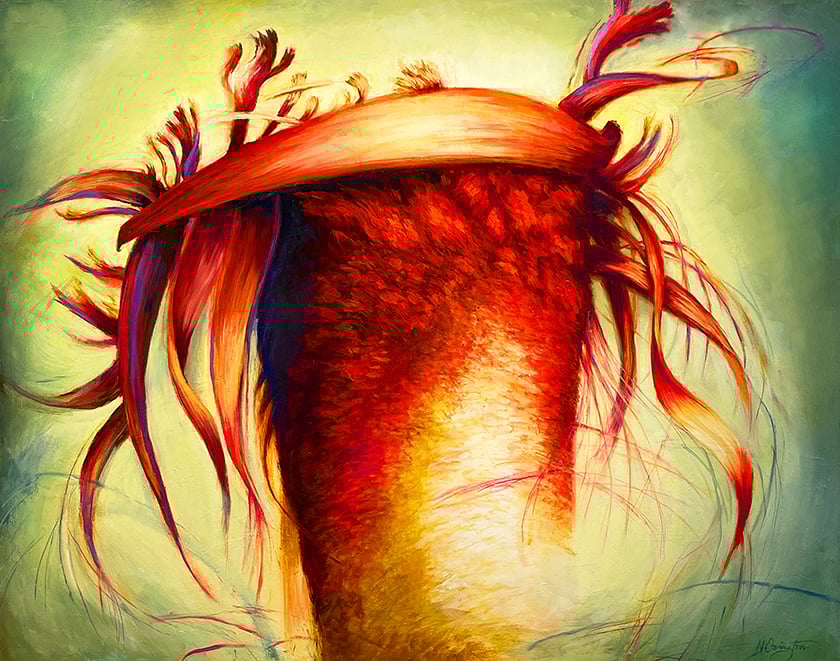
The southern landscape remains a constant muse, with its luminous light and rich ecology. My subject matter, rooted in direct observation and memory testifies to the richness of nature, merging abstraction with figuration to explore themes of time, movement, and rhythm.
   It is my fervent hope to continue to create work that is fresh, alive, and invigorating: to challenge myself to venture into the unknown, to leave work that will inspire, challenge, and enrich and nourish those who view my work.
I hope that the value of art continues to be revered and incorporated into everyday life and to enrich the human experience.
My work has been shown at The Tampa Museum of Art, The Florida Museum of Women Artists, the Brevard Museum of Art, and the FL State Capital, and through various galleries. I currently have work showing at Tempus Projects in Ybor City. In addition, I have had artists residencies at the Moulin e Nef in Auvillar France, the Hambidge Center, and twice at the VCCA in Sweet Briar, VA.
Interview with Neverne Covington: Drawing the Unseen
Q: Neverne, your work has such an ethereal quality—layered, textural, and deeply emotive. How would you describe your artistic practice?
Neverne Covington: Thank you. I would describe my practice as contemplative. Drawing is my foundation—it’s how I think and how I process the world. Whether I’m working with charcoal, oil paint or mixed media, I’m always searching for that liminal space between observation and imagination. The act of mark-making is meditative for me. I’m interested in revealing something beneath the surface.
Q: Your work often incorporates botanical and anatomical elements. What draws you to these themes?
Covington: I’ve always had a deep respect for the natural world. There’s a kind of quiet intelligence in plants and the environment—an architecture that’s both functional and poetic. I think of these forms as metaphors for the body, memory, for resilience and transformation.They’re also a way to talk about fragility and strength simultaneously.
Q: You’ve exhibited widely and have taught at various institutions. How does teaching influence your studio practice?
Covington: Teaching is a conversation. It keeps me engaged and reminds me of the importance of curiosity. When I work with students, I’m constantly challenged to articulate my choices and to remain open to discovery. That energy inevitably seeps back into my own work. It’s a reciprocal relationship.
Q: Can you walk us through your studio process? How do you begin a new piece?
Covington: It usually starts with drawing—very loose, gestural sketches. I often work in series, so start with small studies, since I tend to work large. From there, I build layers—sometimes on paper, sometimes with cold wax medium or oil. The process is very physical. I work standing up, I rotate pieces, I step back often. It’s about listening, letting the work lead.
Q: Who or what has influenced your art the most?
Covington: I’m deeply inspired by artists like Kiki Smith, and Louise Bourgeois—artists who use materials in tactile, intimate ways. I also love the old masters like Turner and Caravaggio. Literature and poetry are big influences too. I often draw inspiration from writers like Rainer Maria Rilke, Sharon Olds and Enid Shomer. There’s a shared sensitivity between words and images that I find compelling.
Q: You live and work in Florida—how has that environment shaped your vision as an artist?
Covington: The light, the heat, the lushness—all of it gets into the work. Florida is a place of contradictions: beauty and decay, abundance and loss. I think living here has attuned me to subtle shifts in mood and atmosphere. There’s a certain quiet intensity as well as a thunderous roar that I try to capture.
Q: What are you currently working on, and what’s next for you?
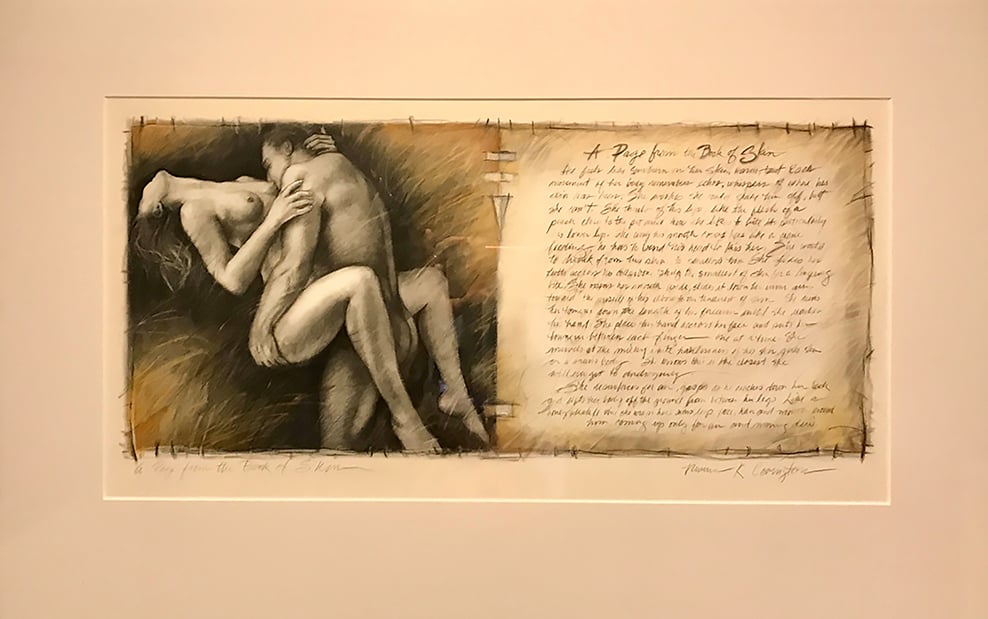
Covington: Right now, I’m exploring a new body of work that focuses on memory and mapping—how we trace emotional landscapes over time. I’m also experimenting with oil sticks, cold wax and encaustic monotypes. I continue to make one of a kind original artists books. As for what’s next, I’m always looking for new ways to push the boundaries of drawing as a medium.
Q: What advice would you give to emerging artists trying to find their voice?
Covington: Be patient with yourself. Make the work that feels honest, not the work you think people want to see. Stay curious. Look at everything—art, nature, literature, film—and find connections. Most importantly, keep showing up. The act of making is where the voice begins to reveal itself. •
Series by Neverne Covington
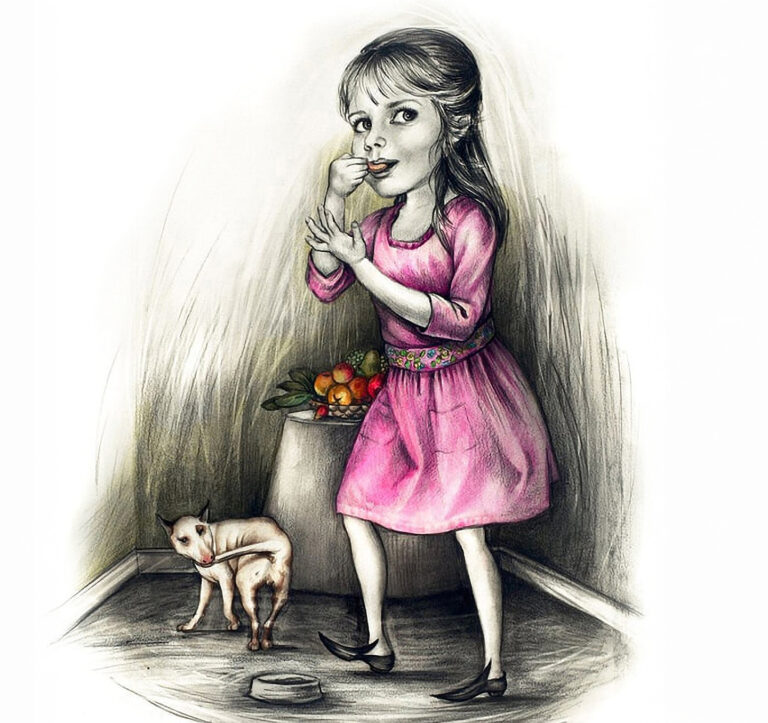
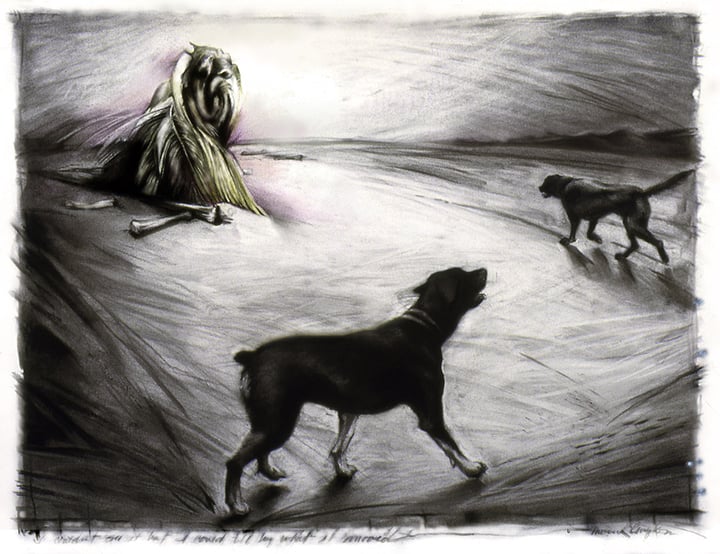
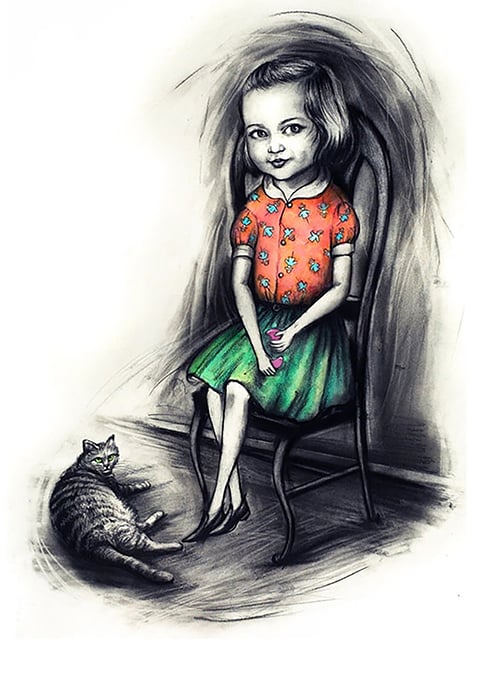
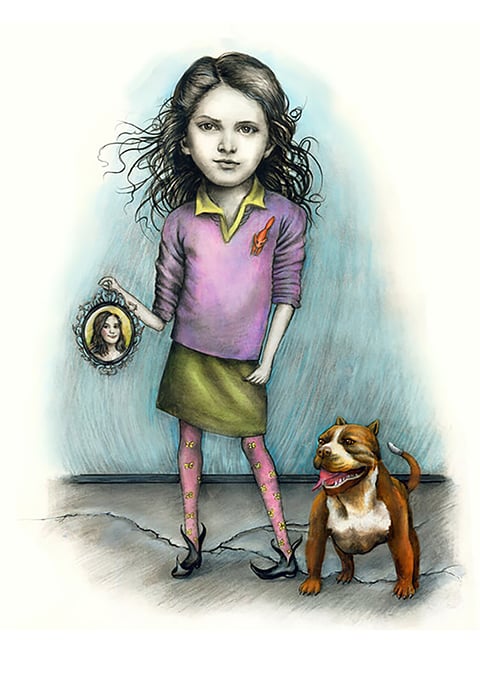
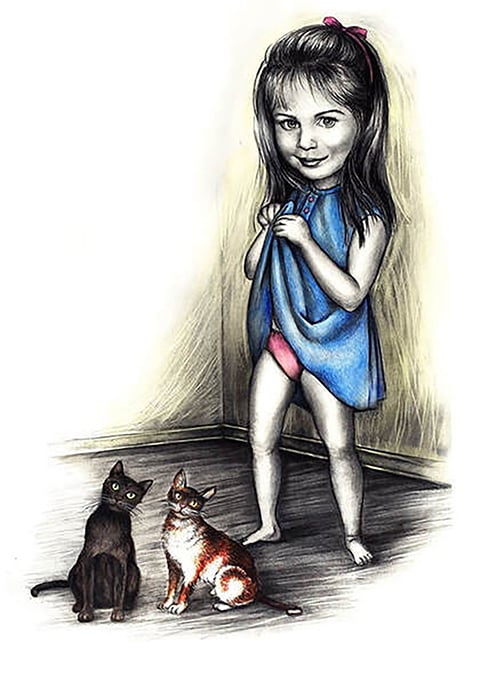
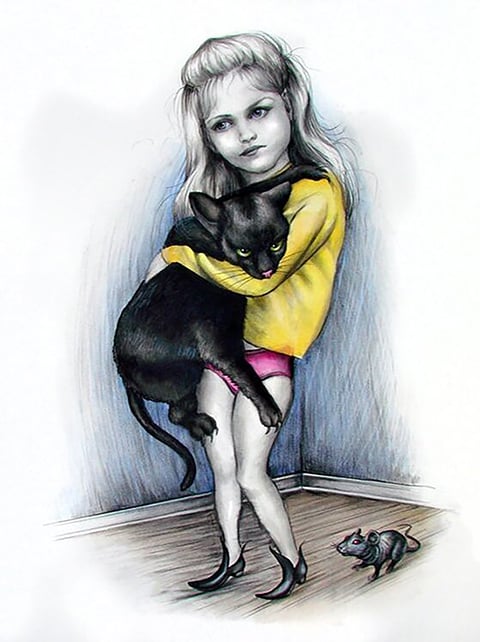
The Sisters Grimm is a collection of charcoal-and-wash drawings, each measuring 22” × 30”, showcasing young girls—likely sisters—presented alone or together. Each drawing is titled with a short, proverb-like warning: e.g., “You’re going to be the death of me,” “Step on a crack, break your mother’s back,” “Don’t point that at your Sister,” and more. The series is a visually and emotionally rich exploration of what once was innocent guidance or superstition—but now feels charged with tension. Covington uses the metaphor of sisters and whispered warnings to tap into memory, family dynamics, and protective anxieties. Familiar imagery and phrases spark recognition, yet undercut them with unexpected emotional weight. Viewers might see sibling dynamics, social commentary about protecting girls, or memories of childhood taboos.
Figurative and expressive: The drawings capture youthful innocence but are overlaid with foreboding or ironic phrases.
Juxtaposition of innocence vs. warning: Covington plays with the tension between nostalgic children’s sayings and unsettling undertones—hinting at protective instincts, sibling rivalry, or darker implications.
Minimalist palette: The charcoal and wash technique complements the stark, haunting mood of each piece.
There’s an old chestnut tossed about by music-industry types paid to put butts in seats at classical concerts. It goes something like this: “People ask me what they need to know to enjoy classical music, and I always respond, ‘Not a thing — just come to a concert and let the music’s magic carry you along.’”
Humbug.
I’m not a professional musician — and I definitely don’t play one on TV — but I’ve managed to acquire a good bit of understanding about the classical repertoire, how it’s played, and who does it best and why. And my enjoyment of concerts and recordings has increased steadily as my understanding has improved.
Of course, first and foremost the love and understanding of any kind of music requires one to listen to a lot of music, especially for those unschooled in a musical instrument. So anyone unacquainted with many classical works can do themselves a treat simply by jumping into the pond and catching a couple of live concerts — which they are mostly likely to enjoy.
It won’t cost you a bundle to attend concerts by community ensembles: The Tampa Bay Symphony charges just $25 admission, and the Pinellas Park Civic Orchestra’s programs are free. And the wonderfully professional Palladium Chamber Series sells tickets starting at an incredible $15.
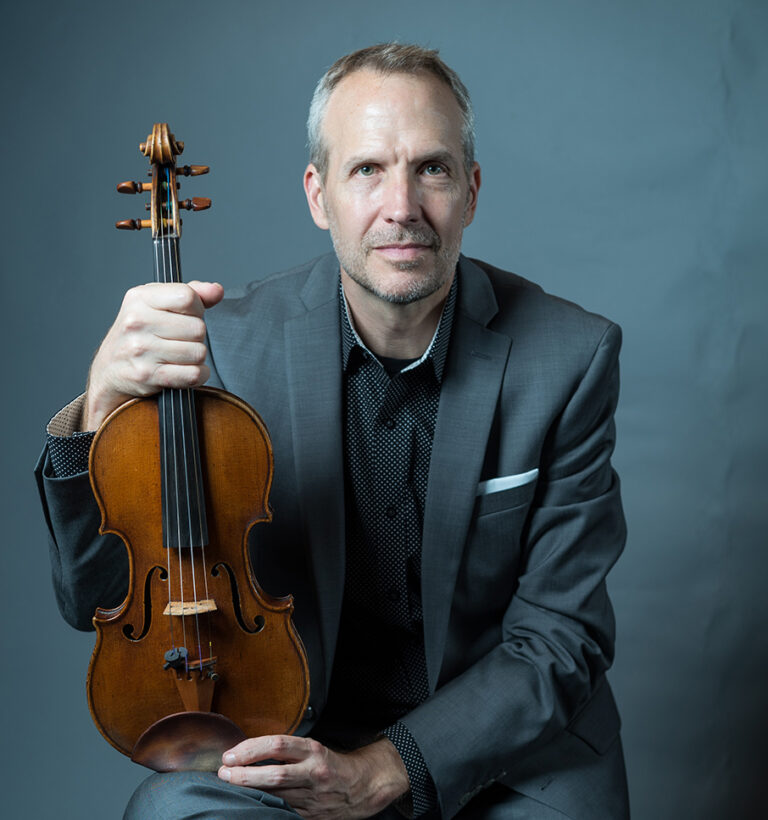
The Palladium series recently hosted the fabulous Calidore String Quartet, which has achieved international renown for its concerts and recordings, especially its Beethoven treatments. Other series programs include various string groups featuring Jeffrey Multer, the accomplished concertmaster of The Florida Orchestra and one of the founders of the Palladium series.
But there are also lots of other ways to develop an “ear” for classical music. Maybe the easiest: listening to classical radio stations. In the bay area, there’s Sarasota-based WSMR. The station’s signal tends to break up in parts of Pinellas and Hillsborough counties (though smart devices will stream it clearly). Happily, the station simulcasts as WUSF-FM over the HD2 stream, and many car radios feature HD 1 & 2 settings these days.
Discovering that capability has transformed my listening habits behind the wheel. The evening drivetime show with DJ Mark Michaud is a personal favorite, and the station’s weekly show on contemporary classical music, hosted by area composer Tyler Kline is not to be missed. A Sarasota Orchestra concert is broadcast each Tuesday night.
Smart devices also can stream other radio stations from all around the country. I love taking those kinds of virtual listening trips. It can be interesting to compare their respective programming approaches. WSMR/WSUF skews a bit more toward light classical than stations that program more symphonic fare, for example.
Online discoveries All by itself, lots of listening to classical music will help develop an ear for the sorts of instrumentation and orchestration common to classical music. But then, why not go a bit further and read up a bit, maybe check out a music blog? Check out concerts on YouTube, offering musical insights via soloist close-ups and other visual cues. Leonard Bernstein’s series of “Young People’s Concerts” are among the more famous video delights.
You might consider reading one of the many books that serve as primers on classical music. One I’d recommend: “What to Listen for in Music,” by Aaron Copland.
I’d also suggest acquiring some classical recordings. There are hundreds released every year, and that sort of “buy-in” will serve you well the next time you peruse the concert schedules of local ensembles.
Early on, I found Debussy, Dvorak, Liszt and Beethoven among the most accessible composers, but you soon will find your own comfort zone. Maybe pick out a favorite in each classical music period — Baroque, Classical, Romantic and so on. Headphones or earbuds can be helpful for singling out individual instrument sections.
Challenging composers There are such things as “difficult” composers, but there are none to fear (OK, maybe Schoenberg, though I persevere.) A friend of mine is a big fan of all things Anton Bruckner. He’s a card-carrying member of the Bruckner Society who’s traveled with the group to the composer’s Austrian hometown. Sol has been proselytizing about Bruckner symphonies for the 40 years I’ve known him and tends to point newbies toward Bruckner’s 4th Symphony (I’d add the 7th).
For most, Bruckner is an acquired taste. I once might have said the same about Mahler and Shostakovich, yet today they are two of my very favorite composers. During the pandemic, I got quite chummy with box sets of their symphonies and they remain in regular rotation on my home stereo.
But I should be clear: For those seeking a toehold grasp on the classical repertoire, don’t be afraid of singling out the composers that you “get.” Then go visit your local concert hall and record store — or maybe just turn on the radio. •
Photo courtesy of TFO/Matt Dine Jeffrey Multer, concertmaster of The Florida Orchestra and co-founder of the Palladium Chamber Series, frequently plays with chamber ensembles taking part in the series — one of the most affordable, top-quality classical music offerings in the Tampa Bay area.